Imagine running a crypto exchange where holding even a single coin in a hot wallet without full collateral is illegal. That is the reality for businesses operating under the Financial Services Agency, or FSA, in Japan. While many jurisdictions offer loose guidelines, Japan has built one of the world's strictest regulatory frameworks, driven by the need to protect investors after major failures like Mt. Gox. For anyone looking to understand how crypto exchanges operate legally in Japan, the rules are not just suggestions; they are rigid technical and financial mandates that define the entire market structure.
The core of this regulation lies in the distinction between payment services and financial instruments. Historically, most cryptocurrencies were treated under the Payment Services Act (PSA), which required registration but kept oversight relatively separate from traditional securities law. However, the landscape is shifting rapidly. With recent moves to reclassify certain digital assets under the Financial Instruments and Exchange Act (FIEA), Japan is preparing to treat investment-grade tokens much like stocks and bonds. This transition signals a new era where compliance becomes even more complex, but investor protection reaches unprecedented levels.
The Regulatory Foundation: PSA vs. FIEA
To navigate Japanese crypto laws, you first need to understand the two main legal pillars. The Payment Services Act serves as the baseline for most cryptocurrency activities. It defines what counts as a "crypto-asset" and mandates that any business facilitating exchanges must register with the FSA. This isn't optional; operating without registration is simply illegal. The PSA focuses on ensuring that exchanges have solid corporate governance, adequate capital, and robust security measures to prevent another disaster similar to the 2014 Mt. Gox collapse.
On the other hand, the Financial Instruments and Exchange Act (FIEA) is stepping in to handle assets with specific characteristics. In June 2025, the FSA proposed moving tokens with investment-like or governance features under the FIEA umbrella. This means that if a token functions like a stock or a bond, it will face mandatory disclosures, insider trading regulations, and stricter market conduct rules. This dual-track system creates a clear hierarchy: simple utility tokens stay under the PSA, while investment-grade tokens move to the FIEA. For exchanges, this means auditing every asset on their platform to determine which legal framework applies, adding a layer of complexity that smaller players often struggle with.
Licensing Requirements: The Barriers to Entry
Getting licensed in Japan is not a quick administrative task; it is a full-scale legal and organizational project. The FSA looks beyond paperwork to assess the genuine stability of an operator. Here is what you need to know about the practical requirements:
- Local Entity: You must establish a physical presence in Japan, typically as a Kabushiki Kaisha (joint stock company). A foreign entity cannot simply register remotely; you need a local office and a Japanese bank account.
- Capital Requirements: The minimum capital requirement is generally over 10 million yen, though actual costs vary based on the specific license type and business model. This ensures that only financially stable operators enter the market.
- Corporate Governance: The FSA examines your management team, internal risk controls, and overall corporate structure. They want to see qualified compliance personnel and a clear chain of command.
- AML and KYC: Strict Anti-Money Laundering (AML) and Know Your Customer (KYC) procedures are mandatory. Regulators conduct thorough assessments to ensure these aren't just box-ticking exercises but functional systems.
The process is often described as a "quality stamp." If you pass, the market views you as a serious player. If you fail, you don't get a second chance easily. This high barrier to entry has filtered out many low-quality competitors, leaving behind exchanges that can afford to maintain high standards of security and transparency.
The Cold Wallet Mandate: Technical Security Standards
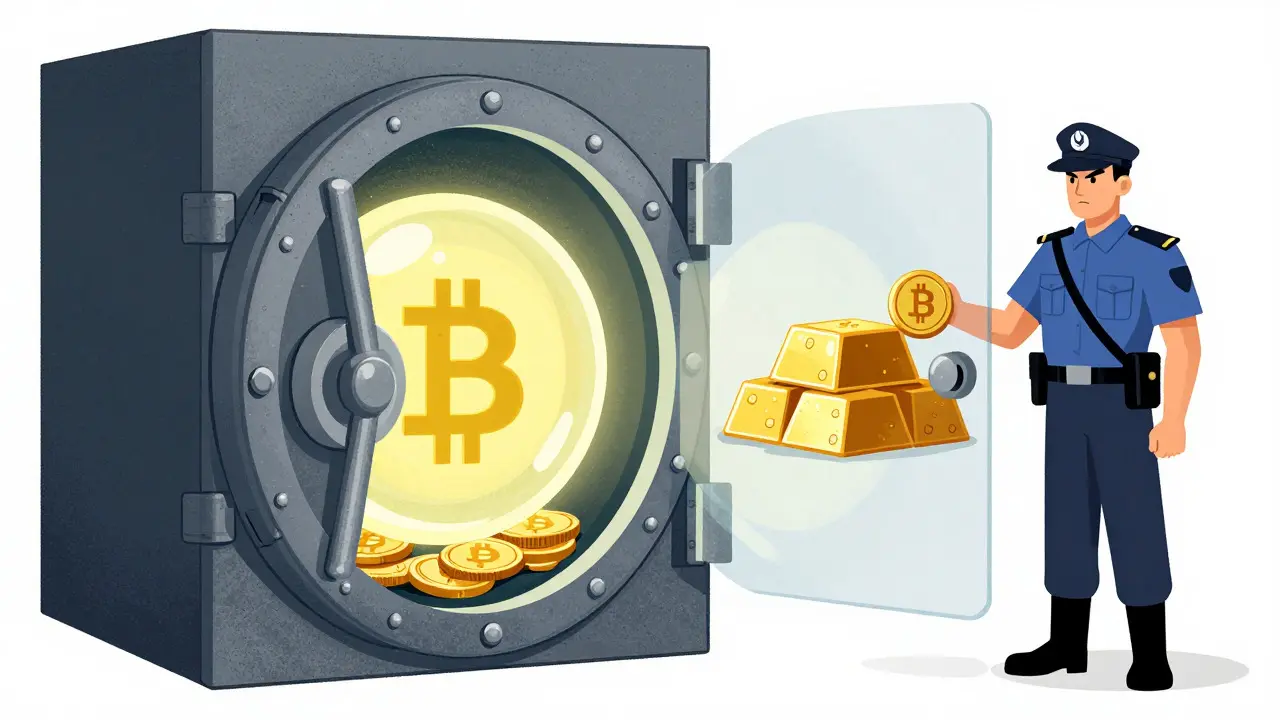
One of the most distinctive aspects of Japanese regulation is its focus on technical custody. Unlike many countries that leave storage methods up to the exchange's discretion, Japan has a legal mandate regarding cold wallets. By law, client cryptocurrency must be held in offline cold wallets to minimize the risk of hacking.
The rule is specific: at least 95% of user assets must be kept in cold storage. But what happens if an exchange wants to keep some coins in hot wallets for faster transaction processing? They can, but only if they back every yen of those hot wallet assets with their own capital. This means the risk stays with the operator, not the user. If a hacker steals from the hot wallet, the exchange is liable to make customers whole because they failed to fully collateralize the risk. This approach forces exchanges to invest heavily in secure infrastructure and careful risk management, directly benefiting end-users who no longer have to worry about exchange insolvency due to poor custody practices.
Market Impact and Adoption Rates
You might wonder if such strict rules stifle growth. Surprisingly, Japan remains a global leader in crypto adoption. As of 2025, the country has achieved a 14.70% cryptocurrency adoption penetration rate, with projections to reach 15.26% by 2026. The number of crypto users is expected to grow to 18.69 million by next year. This suggests that clarity and safety drive long-term adoption more than permissiveness does.
The revenue in Japan's crypto market is projected to reach $2.0 billion in 2025, with a steady growth rate of 3.44% leading into 2026. Major public companies, such as Metaplanet, have become significant holders of digital assets, signaling institutional confidence in the regulated environment. When the government provides a clear legal path, institutions feel safe entering the market. This contrasts with jurisdictions where regulatory uncertainty keeps large players on the sidelines.

Upcoming Changes: The 2026 Shift
The regulatory landscape is evolving fast. The formal bill implementing the move of certain digital assets under the FIEA is expected in early 2026. This change will introduce several key updates:
- Mandatory Disclosures: Token issuers will need to provide detailed information to investors, similar to stock prospectuses.
- Insider Trading Rules: Market manipulation and insider trading will be explicitly prohibited for FIEA-regulated tokens.
- ETF Pathways: Clearer legal paths for regulated crypto ETFs, including spot Bitcoin products, will open up new investment opportunities.
This shift aligns crypto oversight with securities regulation, making it easier for traditional finance firms to participate. It also addresses common pain points like unclear white papers and inaccurate disclosures, which the FSA has identified as major risks in the current market. By treating investment tokens like securities, Japan aims to eliminate scams and build trust with mainstream investors.
Taxation and Future Outlook
While regulations are tightening, taxation remains a point of discussion. Currently, profits from digital asset sales can be taxed up to 55%, which is significantly higher than the flat 20% tax rate applicable to stocks and bonds. This discrepancy has been a source of frustration for many investors. The FSA is advocating for reforms to align crypto taxes with traditional financial instruments, which could further boost adoption by reducing the tax burden.
Japan's approach offers a blueprint for other nations. By prioritizing consumer protection, technical discipline, and clear legal definitions, the country has created an environment where legitimate businesses thrive. While the high barriers to entry may slow down innovation speed compared to more permissive jurisdictions, the long-term stability benefits are undeniable. For global players, understanding these nuances is critical. Entering the Japanese market requires deep preparation, but the reward is access to one of the most mature and trusted crypto ecosystems in the world.
| Attribute | Payment Services Act (PSA) | Financial Instruments and Exchange Act (FIEA) |
|---|---|---|
| Scope | General crypto-assets, utility tokens | Investment-grade tokens, governance tokens |
| Licensing Body | FSA Registration | FSA Approval (Securities License) |
| Custody Requirement | 95% Cold Wallet Mandate | Standard Custody + Disclosure |
| Disclosure Needs | Basic Operational Info | Mandatory Investor Disclosures |
| Expected Effective Date | Current | Early 2026 (for reclassified assets) |
Is it illegal to run a crypto exchange in Japan without FSA registration?
Yes, operating a crypto-asset exchange service provider (CAESP) without registering with the Financial Services Agency is illegal under the Payment Services Act. There is no gray area; you must have the official license to operate legally.
What is the cold wallet mandate in Japan?
The mandate requires that at least 95% of client assets be stored in offline cold wallets. If an exchange uses hot wallets for liquidity, they must back every unit of currency in those hot wallets with their own assets to cover potential losses.
How will the 2026 FIEA changes affect crypto tokens?
Tokens with investment or governance features will be reclassified under the Financial Instruments and Exchange Act. This brings them under securities-level regulation, requiring mandatory disclosures, prohibiting insider trading, and enabling regulated ETFs.
What is the minimum capital requirement for a crypto exchange in Japan?
The minimum capital requirement is generally over 10 million yen, though the exact amount can depend on the specific license type and business model. Companies must also demonstrate sufficient reserves to cover operational risks.
Does Japan have a specific tax rate for crypto profits?
Currently, crypto profits are taxed as miscellaneous income, which can result in rates up to 55%. This is higher than the 20% flat rate for stocks and bonds, but reforms are being discussed to align crypto taxes with traditional financial instruments.