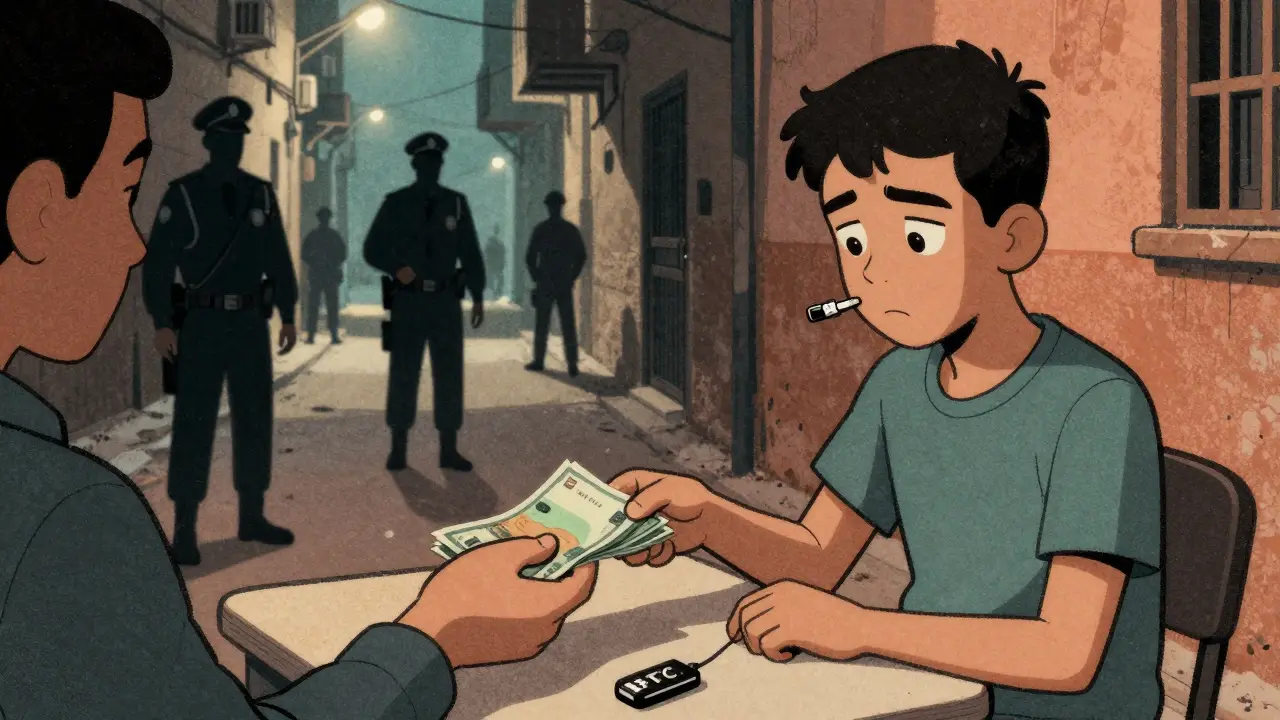
On paper, owning Bitcoin or using Ethereum in Tunisia is a crime. Not a gray area. Not a risk. A crime punishable by up to five years in prison. Since May 2018, the Central Bank of Tunisia (BCT) has enforced one of the strictest cryptocurrency bans in the world. No trading. No mining. No payments. No exchanges. Not even holding crypto in a wallet is legally safe. And yet, people still do it.
What Exactly Is Banned?
Tunisia’s ban isn’t partial. It’s total. The BCT’s 2018 directive shuts down every possible way to interact with cryptocurrency. If you’re in Tunisia, you can’t buy Bitcoin on Binance. You can’t mine Ethereum with a rig in your garage. You can’t pay for coffee with Dogecoin. You can’t even receive crypto as a gift without risking legal trouble. The law treats crypto like foreign currency smuggling. Operating an exchange? Illegal. Marketing tokens? Illegal. Mining and selling coins for Tunisian dinars? Illegal. Banks are required to block any card transactions going to foreign crypto platforms. Customs agents can seize ASIC miners at the airport. Merchants who accept crypto as payment face fines and possible jail time. This isn’t just about stopping speculation. The government’s stated goal is to prevent capital flight and money laundering. Tunisia’s economy has been under pressure for years-foreign reserves are low, the dinar is weak, and inflation creeps up. The central bank fears that if people start moving money out of the country using crypto, it could destabilize the whole financial system.Who Enforces the Ban?
Three agencies are in charge: the Central Bank of Tunisia (BCT), the Ministry of ICT & Digital Economy, and the Financial Market Council (CMF). The BCT leads enforcement, but the others play supporting roles. The CMF, for example, doesn’t regulate crypto now-but it would if the ban ever lifted, since it handles tokenized securities. Enforcement isn’t just about fines. It’s about deterrence. In 2021, a 17-year-old student was jailed for exchanging a small amount of Bitcoin for cash. The case made headlines. It sparked protests. It even reached the cabinet. The teenager wasn’t a criminal mastermind-he just wanted to buy a laptop. But under Tunisia’s currency control laws, that act was treated like smuggling gold across borders. Businesses face even stricter rules. All financial institutions must follow full Anti-Money Laundering (AML) protocols: Know Your Customer (KYC), Know Your Business (KYB), Enhanced Due Diligence (EDD) for high-risk clients, and retention of records for 10 years. Suspicious activity must be reported to the Tunisian Financial Analysis Committee (CTAF) within 10 days. These rules were designed for traditional finance-but now they’re being stretched to cover anything crypto-related.Why Tunisia, and Not Other Countries?
Tunisia isn’t alone. Only eight countries have total crypto bans: China, Qatar, Egypt, Algeria, Morocco, Nepal, Bangladesh, and Tunisia. Most of the world took a different path. Germany, Singapore, Switzerland, and even El Salvador created legal frameworks. They taxed it, regulated it, licensed exchanges, and let people trade. Why did Tunisia choose total prohibition? One reason is control. Central banks in developing economies often fear losing power over money. If people can bypass the dinar using crypto, the central bank can’t control interest rates, inflation, or currency value. Another reason is infrastructure. Tunisia’s banking system is underdeveloped. Regulating crypto would require new tech, trained staff, and international cooperation-all expensive and slow. Neighboring countries like Morocco and Algeria took similar paths. But while Morocco has started exploring blockchain for public services, Tunisia hasn’t. That’s changing slowly.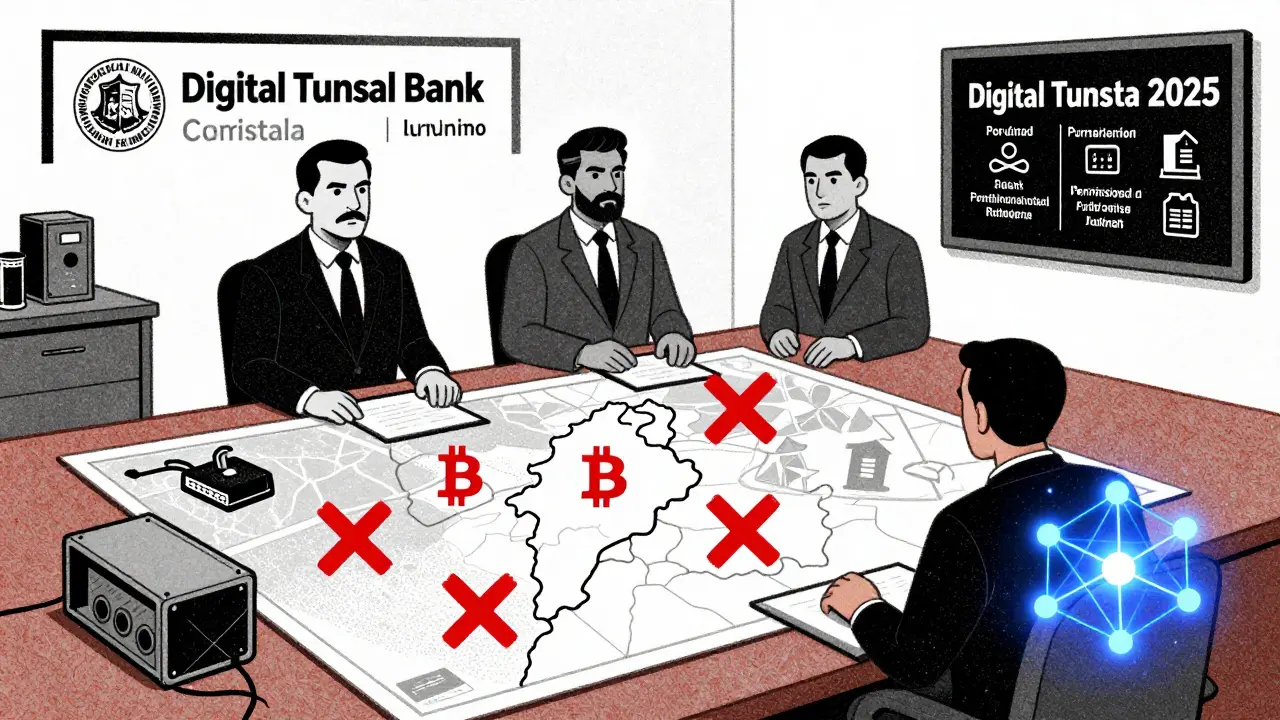
Is Anyone Still Using Crypto?
Yes. Quietly. Before the ban, Bitcoin was already being traded through private chat rooms and peer-to-peer networks. The ban didn’t kill interest-it just pushed it underground. Today, small groups still trade crypto using cash meetups, WhatsApp groups, and encrypted apps. Some people use VPNs to access foreign exchanges. Others buy crypto from friends who’ve traveled abroad. But mainstream adoption? Nearly zero. No major Tunisian business accepts crypto. No bank offers crypto wallets. No ATMs exist. The legal risk is too high. Even tech-savvy young people avoid it-not because they don’t understand it, but because they can’t afford to get caught. There’s one exception: the regulatory sandbox. Launched in 2020, it lets a handful of startups test blockchain applications under strict supervision. Companies like VFunder (for crowdfunding), Hydro E-Blocks (for carbon tracking), and No Phobos (for AI-generated NFTs) are allowed to run pilots. But here’s the catch: their servers are hosted outside Tunisia. Their users are mostly foreign. They’re not breaking the ban-they’re working around it.What About Blockchain? Isn’t That Different?
Yes. And that’s where things get interesting. Tunisia doesn’t hate blockchain. It just hates crypto. The government’s Digital Tunisia 2025 plan explicitly mentions using blockchain for land registry digitization, public subsidy distribution, and supply chain tracking. These are all permissioned blockchains-controlled, private, and monitored by the state. That’s a key distinction. Blockchain as a tool? Accepted. Cryptocurrency as money? Forbidden. It’s like allowing a car engine but banning gasoline. The technology is useful. The currency isn’t. This split view is common in authoritarian or highly regulated economies. China does the same thing-banning Bitcoin while pushing its own digital yuan on a blockchain. Tunisia is following that playbook: embrace the tech, reject the money.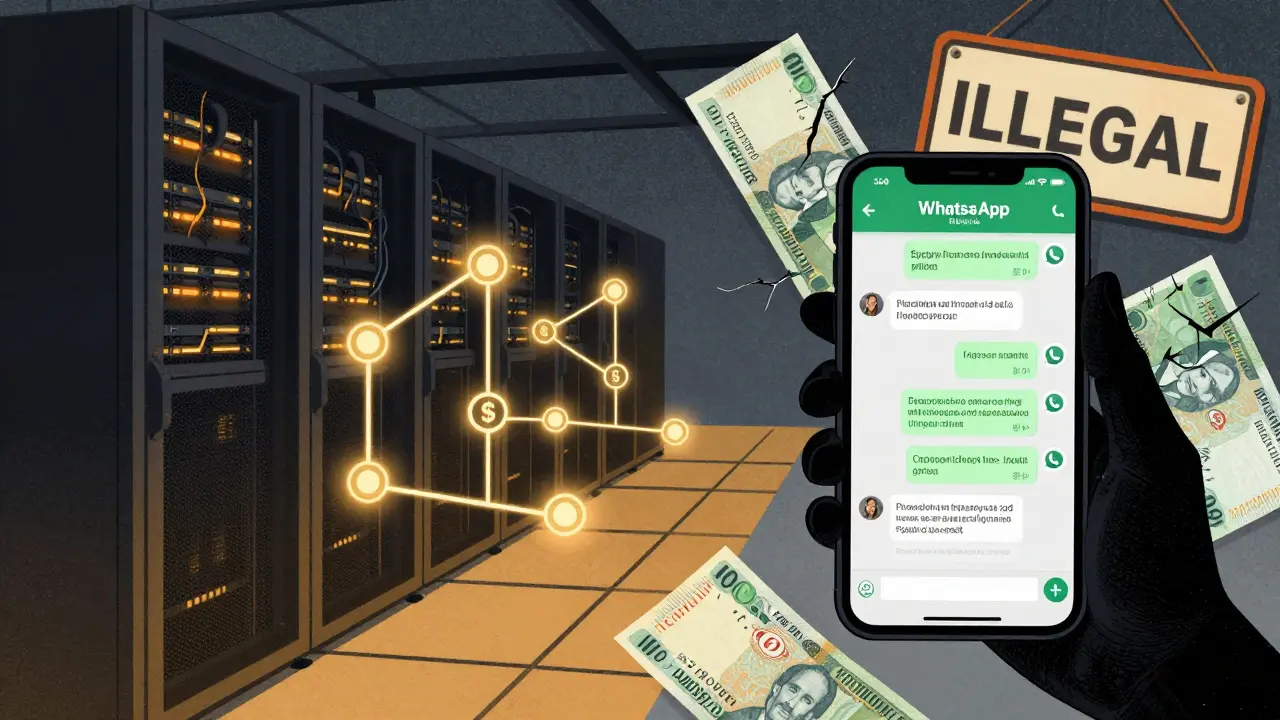
Is the Ban Going to Change?
There are signs it might. In 2025, a parliamentary committee began drafting a bill to decriminalize simple possession of cryptocurrency. The goal? Create a licensing system for exchanges and wallet providers, similar to what Singapore or Japan have. The BCT has signaled openness to this shift. The regulatory sandbox proved blockchain can be used safely. And with inflation eating away at the dinar, more Tunisians are looking for alternatives to traditional savings. But change is slow. The central bank still worries about capital flight. The finance ministry fears losing control. And with unemployment high and foreign investment low, policymakers aren’t rushing to take risks. Still, the 2021 jail case showed public opinion is shifting. Young people are tech-literate. They see crypto as freedom from a broken system. The government can’t ignore that forever.What Does This Mean for You?
If you’re in Tunisia: don’t buy crypto. Don’t mine it. Don’t accept it as payment. Even holding it could get you in trouble. The law is clear. The penalties are real. And enforcement, while uneven, is getting more active. If you’re a foreigner doing business in Tunisia: don’t assume crypto payments are okay. Even if a local vendor says they’ll accept Bitcoin, it’s still illegal. You could be implicated in a violation. Stick to dinars or international wire transfers. If you’re a developer or entrepreneur: focus on blockchain applications that don’t involve native crypto tokens. Build tools for supply chains, land records, or identity verification-but keep the infrastructure offshore. That’s the only safe path right now.Where Is Tunisia Headed?
Tunisia stands at a crossroads. On one side: total prohibition, isolation, and a growing tech-savvy youth population frustrated by economic stagnation. On the other: a regulated, monitored crypto market that could attract investment, reduce reliance on the dinar, and bring financial inclusion to the unbanked. The world is moving on. PayPal accepts crypto. Microsoft lets users buy games with Bitcoin. El Salvador treats Bitcoin as legal tender. Tunisia is one of the last holdouts. The question isn’t whether the ban will end. It’s when. And how messy the transition will be. For now, crypto in Tunisia remains illegal. But it’s also alive. Quietly. Underground. Waiting.Is it illegal to own cryptocurrency in Tunisia?
Yes. While the 2018 Central Bank of Tunisia directive doesn’t explicitly say "owning crypto is illegal," any activity involving crypto-buying, selling, holding, or receiving it-is treated as a violation of currency control laws. Possession alone isn’t prosecuted in every case, but if you’re found with crypto and can’t prove it came from legal sources, you risk fines or jail time. The law treats it like unregulated foreign currency.
Can I mine Bitcoin in Tunisia?
No. Mining is explicitly banned. Importing ASIC miners is risky-customs can seize them. Even if you get equipment in, selling the mined coins for Tunisian dinars violates the 2018 directive. The central bank considers mining a form of unregulated financial activity that threatens monetary control. There are no legal mining farms in Tunisia.
Can Tunisian banks process crypto transactions?
No. All Tunisian banks are legally required to block any transactions to or from foreign crypto exchanges. Cards linked to Tunisian accounts are automatically declined when used on platforms like Binance or Coinbase. Banks also monitor for suspicious transfers that might indicate crypto trading. Violating this rule can result in penalties for the bank itself.
Are there any legal ways to use crypto in Tunisia?
Not directly. But Tunisia’s regulatory sandbox allows startups to test blockchain-based tools like supply chain tracking, digital receipts, and carbon credits-so long as they don’t involve native cryptocurrencies. These projects must use permissioned ledgers, keep servers outside Tunisia, and operate under strict limits. It’s a loophole for technology, not money.
What happens if I get caught with crypto in Tunisia?
You could face fines, asset seizure, or imprisonment of up to five years under Tunisia’s currency control laws. The severity depends on scale. A teenager exchanging $50 in Bitcoin got jailed in 2021. A business running a crypto exchange would face the maximum penalty. Enforcement varies, but the legal risk is real and growing.
Is Tunisia planning to legalize crypto in the future?
There are signs it might. In 2025, a parliamentary committee began drafting a bill to decriminalize crypto possession and create a licensing system for exchanges. The Central Bank has shown interest in blockchain for public services, but not for crypto as money. Any change will likely be slow, cautious, and limited to regulated platforms-not open markets.
Why does Tunisia allow blockchain but not crypto?
Because blockchain is a tool. Crypto is money. Tunisia wants to digitize land records, track subsidies, and improve transparency-without giving up control over its currency. Permissioned blockchains let the government monitor everything. Cryptocurrencies let people bypass the state. The government supports the former and fears the latter.
How does Tunisia’s crypto ban compare to other countries?
Tunisia is among the strictest. Only eight countries have total bans. Most nations, including Germany, Japan, and the U.S., regulate crypto instead of banning it. Tunisia’s approach is closer to China’s-banning private crypto while building a state-controlled digital currency. But unlike China, Tunisia lacks the infrastructure to replace crypto with its own digital currency yet.


Heather Crane
January 25, 2026 AT 16:50This is such a fascinating case study! I love how Tunisia is separating blockchain tech from crypto currency-it’s like allowing the engine but banning gasoline. Brilliant move, honestly. The regulatory sandbox is genius: innovation without chaos. I wish more countries would think this way instead of just banning everything out of fear. The youth deserve better than isolation!
Julene Soria Marqués
January 27, 2026 AT 01:03Okay but like… why is this even a thing? People just want to buy stuff without the government breathing down their necks. I mean, it’s 2025. You can’t just outlaw technology because you’re scared of losing control. This feels like banning the internet because someone used it to post cat videos. Also, jail for a 17-year-old? That’s not justice, that’s absurd.
Bonnie Sands
January 27, 2026 AT 18:39Y’all know this is all a distraction, right? The real goal is to push people toward the digital dinar-which is basically a surveillance tool. The central bank doesn’t care about money laundering, they care about tracking every single cent you spend. Crypto is the only thing keeping people free from the state’s digital prison. And guess what? They’re already testing facial recognition at ATMs. It’s all connected. Don’t be fooled.
katie gibson
January 28, 2026 AT 12:01OMG I’m literally crying rn. This is the most dramatic thing I’ve read all week. A 17-YEAR-OLD gets JAIL TIME for buying a laptop?? Like, who even wrote these laws??? The government is literally punishing kids for using the future. And now they’re pretending to be progressive with their ‘blockchain sandbox’? Please. It’s a PR stunt. They want to look like they’re not total dinosaurs. But they’re still holding onto 1990s economic panic like it’s a security blanket. I’m so mad.
Ashok Sharma
January 30, 2026 AT 10:28This is very important issue. Many people in developing countries face similar problems. Tunisia is trying to protect its economy. But also, young people need opportunities. Maybe better education and legal pathways will help. Not punishment. Hope things improve soon.
Margaret Roberts
January 31, 2026 AT 01:43Let’s be real-this isn’t about money. It’s about control. The same people who banned crypto are the ones who shut down social media during protests. Crypto is freedom. And freedom scares them. They’d rather keep people poor and obedient than risk losing power. The sandbox? A joke. It’s just a way to say, ‘We’re not totally evil.’ Meanwhile, people are still trading in WhatsApp groups. They’re not waiting for permission-they’re just doing it.
Jonny Lindva
February 1, 2026 AT 14:30I really appreciate how this post breaks down the difference between blockchain and crypto. That’s the key point most people miss. Tunisia’s not anti-tech-they’re anti-unregulated-money. And honestly? That’s not crazy. Look at how chaotic DeFi got in 2021. A regulated path makes sense. The sandbox proves it’s possible. I just hope they don’t wait until the black market is too big to fix.
Darrell Cole
February 2, 2026 AT 02:12Everyone’s acting like Tunisia is the villain here. But let’s look at the facts-capital flight is real. The dinar is collapsing. When your economy is this fragile, you don’t let people move billions out via untraceable tokens. This isn’t authoritarianism-it’s economic triage. The US and EU have the luxury of regulation. Tunisia has the luxury of survival. Stop pretending your crypto bro ideology is moral superiority. It’s not. It’s reckless.