Vietnam Crypto Remittance Calculator
The article states Vietnam handles over $91 billion in cryptocurrency transactions annually, with 21 million adults using crypto for cross-border payments. Traditional services like Western Union charge 7% fees. Crypto remittances (using USDT) typically cost 0.5%.
Key Insight: People in Vietnam save an average of $32.50 per $500 remittance by using crypto instead of traditional services.
Estimated savings shown for Vietnam's crypto remittance scenario
Based on Vietnam's market rates: 7% traditional fees vs. 0.5% crypto fees. This reflects real-world savings for remittances sent to Vietnam using USDT or other stablecoins.
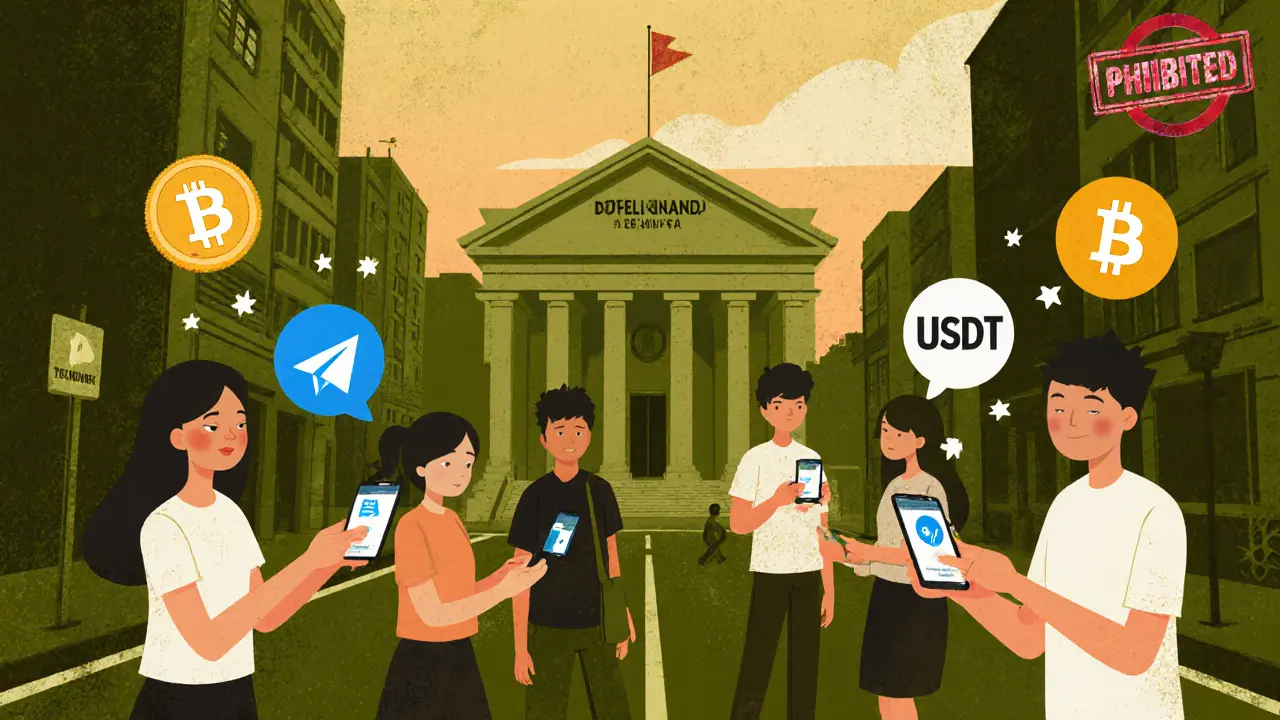
Every year, over $91 billion in cryptocurrency flows into Vietnam. That’s not a typo. It’s more than the annual GDP of dozens of small countries. And yet, the Vietnamese government doesn’t allow crypto as legal tender. No banks process Bitcoin payments. No ATMs spit out Ethereum. You can’t pay for pho with Solana. So how does this happen? And why does it keep growing despite the rules?
Money Moves, Even When It’s Not Official
Vietnam’s crypto scene isn’t about banks or exchanges sanctioned by the state. It’s about people. Over 21 million Vietnamese adults have used crypto in the past year. That’s nearly one in four adults. They’re not just buying Bitcoin as a gamble. They’re using it to send money home from abroad, to trade in games like Axie Infinity, to access DeFi yields that local banks won’t touch. The $91 billion figure isn’t speculative hype - it’s the sum of real, daily transactions tracked by Chainalysis and other blockchain analytics firms.The government doesn’t ban crypto outright. It bans use as payment. That’s the loophole. You can own it. You can trade it. You can earn it. You just can’t use it to buy a phone or pay your rent. So people do it anyway - through peer-to-peer platforms, over Telegram groups, via offshore exchanges with local deposit methods. Mobile wallets like Momo and ZaloPay became the invisible bridges between fiat and crypto. You top up your digital wallet with cash at a convenience store. Someone else sends you USDT. You cash out later. No bank involved. No paperwork. Just trust and speed.
Why Vietnam? It’s Not Just Luck
Vietnam didn’t get lucky. It built this. The country has one of the youngest, most tech-literate populations in Southeast Asia. Over half the population is under 35. Internet penetration is above 70%. Mobile data is cheap. And there are over 560,000 IT professionals - many of them under 30 - who understand blockchain better than their parents understand banking apps.The 2021 Axie Infinity boom was the spark. Thousands of rural workers in places like Da Nang and Can Tho started playing Axie daily, earning more in crypto than they made from farming or factory work. They didn’t need a bank account. They just needed a smartphone and a Wi-Fi connection. That’s when crypto stopped being a luxury and became a livelihood. Now, Vietnam has its own blockchain infrastructure - Ronin Network, developed by Sky Mavis, processes over 2 million daily transactions. It’s used globally, but built in Ho Chi Minh City.
That’s the difference. In other countries, crypto is a side hustle. In Vietnam, it’s part of the economy’s architecture. Local teams are building wallets, DeFi protocols, and NFT marketplaces that serve users in Nigeria, Brazil, and the Philippines. The talent isn’t waiting for permission. They’re building while regulators debate.

The Rules Are Changing - Slowly
In September 2024, Vietnam took its first real step toward regulation. The government launched a five-year pilot program allowing crypto trading under strict oversight. It’s not legalization. It’s controlled experimentation. Licensed exchanges can now operate, but only with KYC, anti-money laundering checks, and no direct fiat gateways. You can’t deposit VND directly into a crypto exchange. You have to use third-party P2P platforms - which means the $91 billion still flows through the gray market.Why not just legalize it? Because the central bank fears losing control. If people start using crypto to avoid currency controls, the dong could weaken. If crypto becomes a savings tool, people might stop depositing money in banks. That’s a risk the state isn’t ready to take. But the people have already taken action. The government’s move was less about stopping crypto and more about trying to catch up.
What’s surprising is how little resistance there is. No mass protests. No crackdowns. Just quiet adaptation. People keep trading. Developers keep building. The market grew 55% between July 2024 and June 2025 - one of the highest growth rates in the world. That’s not because the rules changed. It’s because the people didn’t wait for them to change.
Who’s Behind the $91 Billion?
It’s not Wall Street. It’s not hedge funds. It’s students, farmers, gig workers, and IT freelancers. A 22-year-old in Hanoi might earn 10 USDT a day playing a blockchain game. A mother in Hue sends $500 monthly to her sister in the U.S. using USDC, bypassing Western Union’s 7% fee. A software engineer in Da Nang stakes his ETH on a local DeFi protocol and earns 8% APY - better than any Vietnamese savings account.The top five crypto assets in Vietnam are Bitcoin, Ethereum, USDT, SOL, and AXS. USDT dominates because it’s stable. People don’t want to gamble with their rent money. They want to preserve value. And they’ve found that crypto does that better than the dong, which has lost over 12% of its value against the dollar since 2020.
Even with restrictions, Vietnam’s crypto market is projected to hit $22.4 billion by 2033. That’s not because regulations are getting looser. It’s because the demand is too strong to suppress. Every restriction creates a workaround. Every ban spawns a new tool. Every limitation pushes innovation into the shadows - where it thrives.
What This Means for the Rest of the World
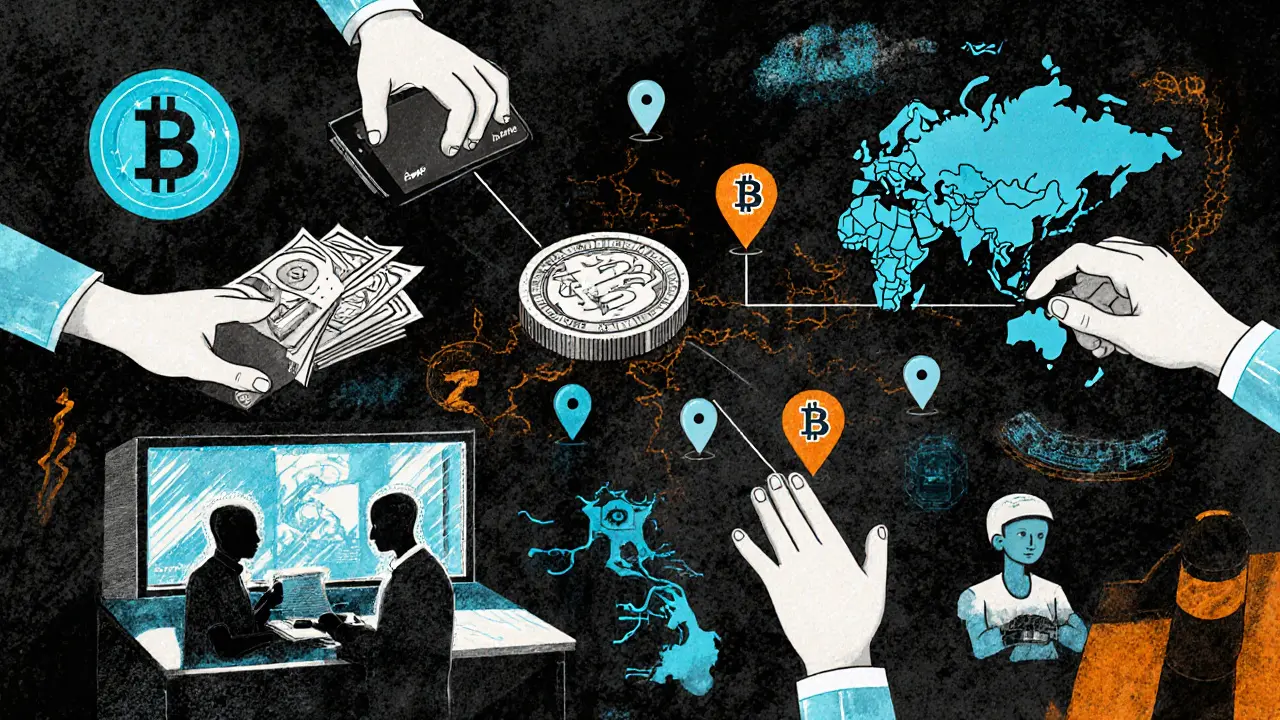
Vietnam is a warning sign for governments that think they can ban crypto. You can outlaw it as payment. You can shut down exchanges. You can fine people. But if people have smartphones, internet, and a need to move value - they’ll find a way. The real question isn’t whether crypto will be banned. It’s whether governments will adapt or get left behind.India and Pakistan are also top adopters. But Vietnam is different. It’s not just adoption - it’s creation. While other countries consume crypto, Vietnam builds it. Its developers are contributing code to global protocols. Its users are testing new DeFi models. Its economy is quietly integrating blockchain into daily life - without permission.
The $91 billion isn’t a statistic. It’s a statement. It says: people will use what works. Even if the rules say no.
What’s Next?
The next five years will be critical. If Vietnam’s pilot program expands to allow direct fiat on-ramps, crypto could become a mainstream financial tool. If the government tightens restrictions further, the market will go deeper underground - but it won’t disappear. The talent, the demand, the infrastructure are already here.What’s clear is this: Vietnam didn’t wait for approval. It built its own financial future. And the world is watching.

Alan Brandon Rivera León
November 29, 2025 AT 09:50Vietnam’s crypto scene is one of the most organic examples of financial autonomy I’ve ever seen. No state backing, no banking system approval - just people using what works. It’s not rebellion, it’s necessity. When your currency loses 12% in value and your neighbors are earning more playing a game than working 12-hour factory shifts, you adapt. No drama. No protest signs. Just phones, Wi-Fi, and USDT.
I’ve talked to Vietnamese students in Austin who still send money home this way. They laugh when I ask if it’s risky. ‘More risky than leaving savings in a Vietnamese bank,’ they say. And they’re right.
It’s not about Bitcoin as investment. It’s about Bitcoin as utility. And that’s the real story here.
Ann Ellsworth
November 30, 2025 AT 10:55Let’s be brutally honest - this isn’t innovation. It’s regulatory arbitrage dressed up as grassroots genius. The $91B figure is inflated by wash trading, P2P shell accounts, and Axie farmers cashing out via unregulated gateways. Chainalysis doesn’t distinguish between legitimate remittances and laundering via Telegram bots.
And don’t get me started on ‘built in Ho Chi Minh City’ - Ronin was funded by a16z. The ‘local talent’ is just executing Western VC blueprints. This isn’t a revolution. It’s a loophole economy masquerading as a movement.
Ankit Varshney
December 1, 2025 AT 15:34India has over 100 million crypto users. We don’t need to wait for permission either. But we also don’t pretend it’s some grand cultural triumph. It’s just people using tech to solve real problems - like sending money home or avoiding inflation. Vietnam’s story is similar. The difference? They’re better at telling it.
Ziv Kruger
December 1, 2025 AT 23:02What does it mean when a government bans something so deeply embedded in daily life that it becomes invisible? It means the state has lost its monopoly on value.
This isn’t about crypto. It’s about trust. People trust their phones more than their banks. They trust strangers on Telegram more than their central bank.
And that’s the quiet earthquake. Not the $91 billion. Not the wallets. Not the nodes.
The earthquake is the collapse of faith in institutions.
We’re all just watching from the sidelines.
Heather Hartman
December 2, 2025 AT 04:11This gives me so much hope. People finding ways to thrive despite broken systems? Yes please. 🙌
Imagine if every country let its people build solutions instead of just policing them. Vietnam didn’t wait for a seat at the table - they made their own table. And now the whole world is sitting around it.
Catherine Williams
December 3, 2025 AT 09:33I’ve been following this for years. The thing that blows me away isn’t the numbers - it’s the quiet dignity of it all.
A mother in Hue sending $500 to her sister in the U.S. using USDC? No fees. No delays. No bureaucracy.
That’s not crypto. That’s human ingenuity.
And the developers in Da Nang building DeFi tools for Nigeria? That’s not just code - that’s global solidarity in action.
Let’s stop calling it ‘gray market.’ Let’s call it justice.
Paul McNair
December 3, 2025 AT 18:39Ann, you’re missing the point. Yes, Ronin got VC funding. But the code, the testing, the user feedback - that’s all Vietnamese. The engineers aren’t just coders. They’re players, farmers, students who lived the problem first.
This isn’t Silicon Valley exporting tech. It’s Ho Chi Minh City solving its own crisis - and the world benefits.
And Paul? You’re right. This isn’t about legality. It’s about legitimacy. When 21 million people choose a system over their own government’s, that’s not a loophole. That’s a referendum.
Mohamed Haybe
December 5, 2025 AT 07:40Stop glorifying Vietnam. Their economy is built on scams and crypto gambling. They don’t build anything - they copy. The only reason they’re growing is because their youth are desperate and dumb. We in India have real infrastructure. Real discipline. Real economy. This crypto madness is just another Western illusion they swallowed whole. Vietnam is a cautionary tale. Not a model.
Marsha Enright
December 6, 2025 AT 07:59One sentence: Vietnam didn’t break the rules - they rewrote them with their phones.
And honestly? We should all be paying attention.