
Ever wondered how Bitcoin stays secure without a central bank or server room full of admins? The answer lies in a tiny number buried deep inside every block header: the nonce. It sounds like a minor detail, but this 32-bit integer is the engine that drives Proof of Work, making blockchain mining both a computational puzzle and a security shield. Without it, anyone could rewrite history on the ledger. With it, adding a fake transaction becomes astronomically expensive.
You don't need a PhD in cryptography to understand what a nonce does. Think of it as a random dial you turn until the lock clicks open. In this guide, we’ll break down exactly how this "number used once" works, why it matters for your crypto investments, and how it differs from other consensus methods like Proof of Stake.
The Core Concept: What Exactly Is a Nonce?
A nonce stands for Number Used Once, which is a randomly generated or pseudo-random number that serves as a variable in cryptographic hashing processes. In the context of Bitcoin, which is the first decentralized cryptocurrency powered by Proof of Work, the nonce is a specific field within the block header. It’s not just any number; it’s a 32-bit integer, meaning it can range from 0 to roughly 4.3 billion. That might sound like a lot, but when you’re dealing with SHA-256 hashes, it’s barely a drop in the ocean.
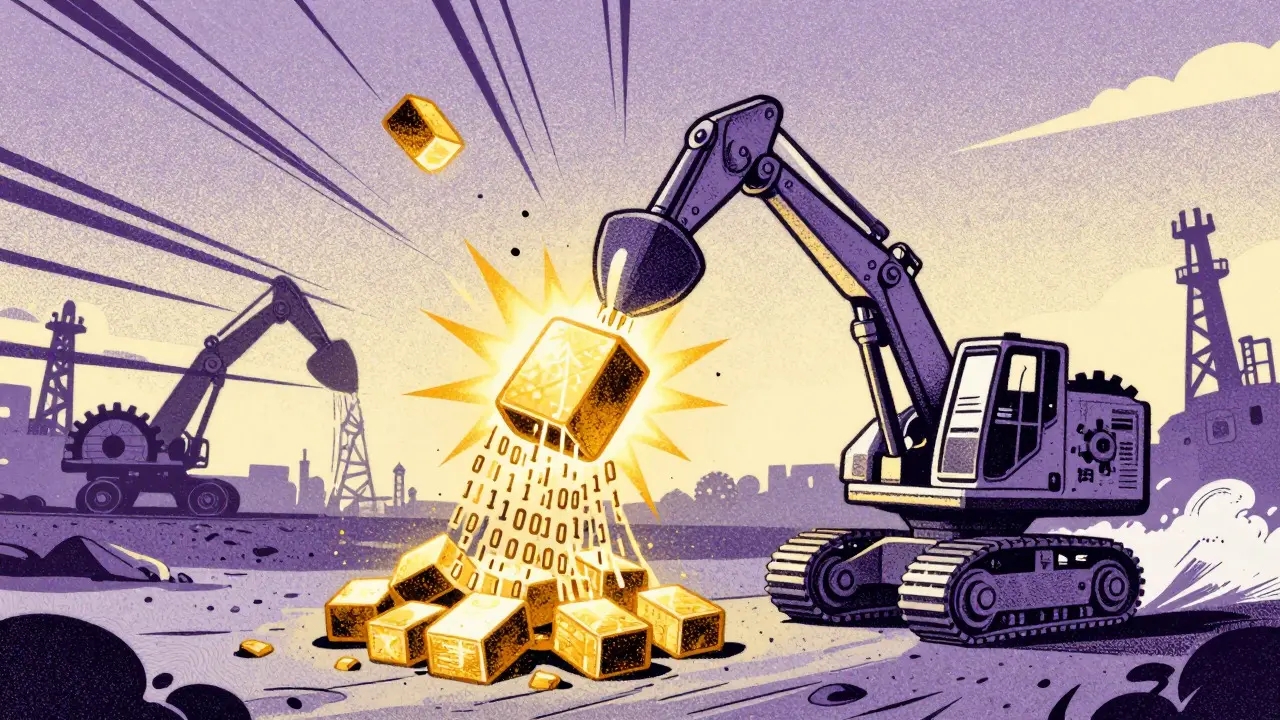
Here’s the key insight: the nonce is the only part of the block header that miners are allowed to change freely during the mining process. Everything else-the list of transactions, the timestamp, the previous block’s hash-is fixed. Miners tweak the nonce, run the data through a hash function, and check if the result meets the network’s difficulty target. If it doesn’t, they pick a new nonce and try again. This trial-and-error loop is the heartbeat of blockchain mining.
How the Nonce Powers Proof of Work
To understand the nonce, you have to understand Proof of Work (PoW), which is a consensus mechanism where validators compete to solve a complex mathematical puzzle to add blocks to the chain. PoW relies on the concept of a cryptographic hash. A hash function takes an input (like a block’s data) and spits out a fixed-length string of characters. The magic rule? Even a tiny change in the input results in a completely different output.
In Bitcoin, the network sets a "difficulty target." For a hash to be valid, it must start with a certain number of zeros. As of recent years, Bitcoin requires about 19 leading zeros. The probability of hitting this target by chance is roughly 1 in 70 trillion. So, how do miners find the right combination? They use the nonce.
- Assemble the Block: A miner gathers pending transactions and creates a Merkle tree root.
- Set Initial Values: The block header includes the version, previous hash, Merkle root, timestamp, difficulty, and an initial nonce (often starting at 0).
- Hash It: The miner runs the entire header through the SHA-256 algorithm twice.
- Check the Result: Does the hash start with enough zeros? If yes, the block is valid. If no, increment the nonce by 1 and repeat.
This process is deterministic yet unpredictable. You can verify the hash instantly, but finding the correct nonce requires brute force. There’s no shortcut. This is what makes the system secure: the only way to cheat is to do more math than everyone else combined.
Nonce vs. Extra Nonce: Solving the 4.3 Billion Limit
Here’s a common point of confusion. We said the nonce is 32 bits, giving us ~4.3 billion possibilities. But Bitcoin’s hash rate exceeds 400 exahashes per second. How do miners keep up if they only have 4.3 billion options per block? The answer is the Extra Nonce, which is an additional field in the coinbase transaction that allows miners to expand the search space beyond the standard 32-bit nonce limit. When a miner exhausts all 4.3 billion nonce values without finding a valid hash, they change the extra nonce. This changes the Merkle root, which effectively resets the entire hashing problem. By combining the standard nonce and the extra nonce, miners create a virtually infinite search space. This dual-layer approach ensures that even with massive computational power, the mining process remains efficient and scalable.
Why the Nonce Matters for Security and Decentralization
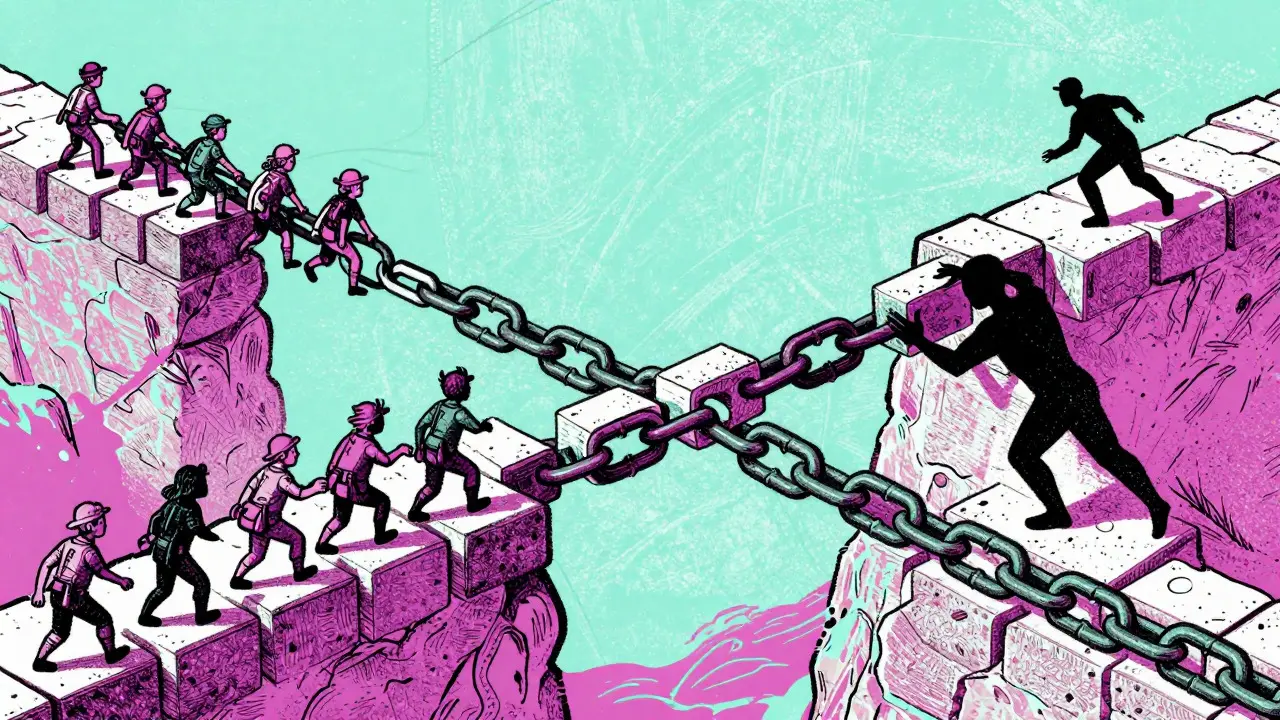
You might ask: why go through all this trouble? Why not just let anyone add blocks? The nonce ensures that adding a block requires significant energy and hardware investment. This cost acts as a barrier to entry for bad actors. If you wanted to rewrite a past transaction, you’d need to re-mine that block and every subsequent block faster than the rest of the network. Given the global hash rate, that’s nearly impossible unless you control over 50% of the total computing power-a scenario known as a 51% attack.
Moreover, the nonce creates a fair lottery. Dr. Andreas Antonopoulos, author of *Mastering Bitcoin*, describes the nonce as the element that prevents any single entity from predicting block creation. Since the hash output is random relative to the input, no one knows which nonce will win until they find it. This randomness keeps the network decentralized because success is proportional to effort, not status or location.
| Mechanism | Uses Nonce? | Energy Consumption | Primary Validator |
|---|---|---|---|
| Proof of Work (Bitcoin) | Yes (Core component) | High | Miners (ASIC Hardware) |
| Proof of Stake (Ethereum 2.0+) | No | Low (~99.95% reduction) | Validators (Staked ETH) |
| Delegated Proof of Stake | No | Medium | Elected Delegates |
Real-World Impact: From Mining Pools to Energy Costs
The nonce isn’t just abstract theory; it has real-world financial implications. When the Bitcoin halving occurred in 2024, the block reward dropped from 6.25 BTC to 3.125 BTC. Suddenly, miners had to work harder (find nonces faster) for half the payout. This triggered a wave of efficiency improvements in mining software and hardware. Companies like Bitmain and MicroBT released new ASICs capable of terahash-per-second speeds, specifically optimized to iterate through nonce values more efficiently.
For individual investors, understanding the nonce helps explain why Bitcoin prices fluctuate. If electricity costs rise, some miners shut down, reducing the network’s total hash rate. This can lead to longer block times temporarily, as it takes longer to find the right nonce. Conversely, if new, efficient hardware enters the market, the hash rate spikes, and the network adjusts its difficulty every 2,016 blocks (roughly two weeks) to maintain a 10-minute average block time. This dynamic balance is entirely driven by the collective search for valid nonces.
Frequently Asked Questions
Is the nonce random?
Technically, no. Miners usually increment the nonce sequentially (0, 1, 2...) rather than picking truly random numbers. However, because the hash function scrambles the input so thoroughly, the resulting hash looks random. The order of trying nonces doesn't matter for the final outcome, only that you eventually hit the right one.
What happens if a miner finds a valid nonce?
The miner broadcasts the new block to the network. Other nodes verify the hash to ensure it meets the difficulty target. If valid, the block is added to the chain, and the miner receives the block reward plus transaction fees. All other miners then discard their current work and start mining the next block using the new block's hash as the previous hash.
Does Ethereum still use nonces?
No. Since its transition to Proof of Stake in September 2022, Ethereum no longer uses nonces for consensus. Validators are chosen based on the amount of ETH they stake, not by solving nonce puzzles. This shift eliminated the need for high-energy mining hardware on the mainnet.
Can I mine Bitcoin at home using a computer?
It is highly unlikely to be profitable today. The competition is dominated by industrial-scale ASIC farms. While you can technically participate, the odds of finding a valid nonce before a large pool do are infinitesimally small. Home mining is now mostly a hobby or educational exercise rather than a revenue source.
What is the difference between a nonce and a salt?
In general cryptography, a salt is a random value added to a password before hashing to prevent rainbow table attacks. A nonce is similar but is specifically used in contexts where uniqueness and freshness are critical, such as preventing replay attacks in blockchain or API calls. In Bitcoin mining, the term "nonce" refers specifically to the variable adjusted to find a valid block hash.