
Astar (ASTR) isn’t just another cryptocurrency. It’s a multi-chain smart contract platform built to connect Ethereum and Polkadot ecosystems - and it’s already powering real-world applications from logistics to loyalty programs. If you’ve heard of ASTR but aren’t sure what it actually does, here’s the no-fluff breakdown.
What Astar Network actually is
Astar Network started as Plasm Network in 2019, but rebranded to Astar in September 2021. It officially launched its mainnet on January 17, 2022. Unlike standalone blockchains like Solana or Avalanche, Astar operates as a parachain - meaning it’s directly connected to and secured by the Polkadot relay chain. This gives it inherited security without needing its own validator network.
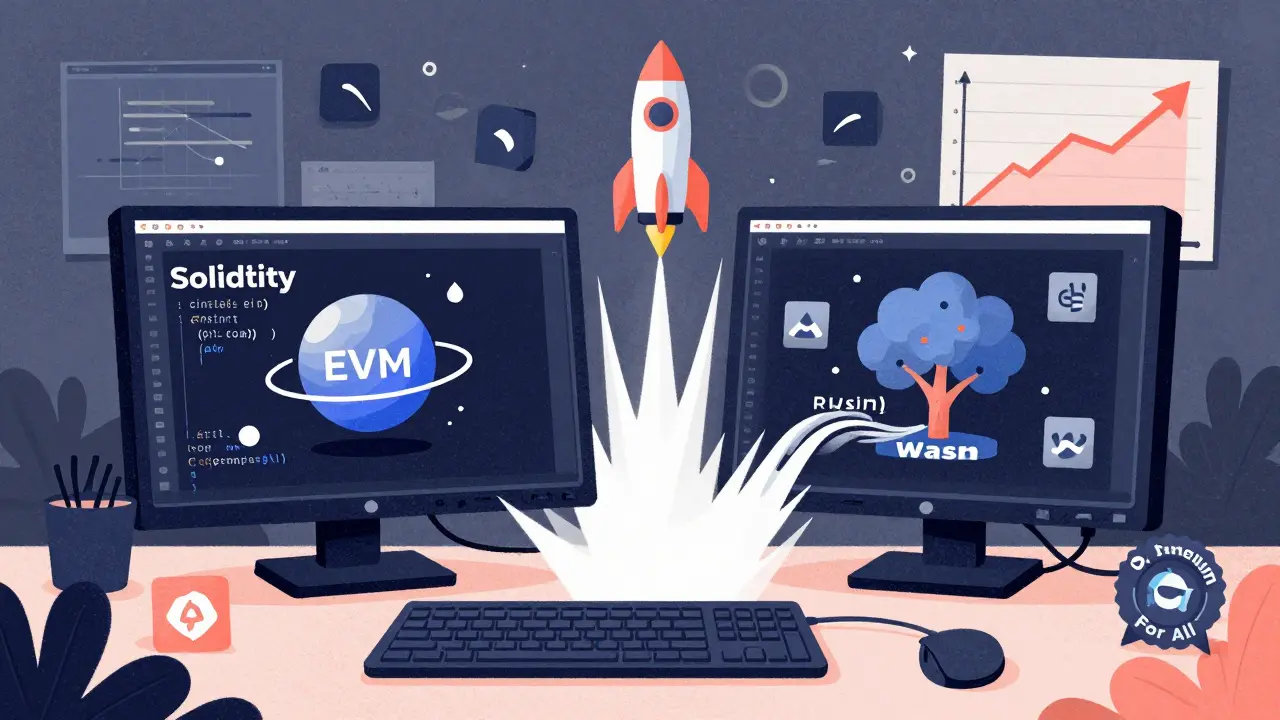
Its core mission? To let developers build decentralized apps (DApps) that work across multiple chains. Most blockchains force you to choose: Ethereum-style smart contracts (Solidity) or Polkadot-native ones (Rust). Astar says: why not both? It supports two virtual machines - the Ethereum Virtual Machine (EVM) and WebAssembly (Wasm) - so you can deploy code written in Solidity, Rust, or even Move without rewriting everything.
How Astar’s dual-layer architecture works
Astar isn’t just Layer 1. It’s also Layer 2. That’s unusual. Its Layer 1 runs on Polkadot’s Nominated Proof-of-Stake (NPoS), which keeps things secure and decentralized. But its Layer 2 is a zkEVM built with Polygon’s Chain Development Kit (CDK). This means it can process transactions faster and cheaper while still being fully compatible with Ethereum tools like MetaMask.
Here’s what that looks like in practice:
- Transaction speed: ~2,000 TPS (transactions per second)
- Average gas fee: $0.0003 per transaction (as of Q4 2025)
- Finality time: 12 seconds (cutting to 6 seconds in Astar 2.0, planned for Q2 2026)
This dual-layer setup lets Astar handle high-volume DeFi apps without sacrificing security. It’s like having a highway (Layer 1) and a toll-free express lane (Layer 2) on the same road.
The ASTR token: more than just a currency
ASTR is the native token of the network. Total supply is 7 billion, with 4.2 billion currently in circulation (as of January 2026). It’s not just used for paying fees - it powers the whole economy.
Here’s what ASTR does:
- Gas fees: Pay for every transaction on the network
- Staking: Stake ASTR to earn rewards (current APY: 8.7%)
- Governance: Hold at least 100 ASTR to submit or vote on protocol upgrades
- DApp staking: This is the big one
DApp staking is Astar’s secret weapon. Instead of just staking to validators, you can stake your ASTR directly to specific DApps - like a DeFi exchange or NFT marketplace. In return, you earn a share of that app’s revenue. Developers get steady funding without selling tokens or taking venture capital. Over 350 DApps are already using this model, including ArthSwap, Astar’s native DEX, which processes nearly $500 million in monthly volume.

How Astar compares to Ethereum, Polkadot, and Solana
Let’s cut through the noise. Here’s how Astar stacks up:
| Feature | Astar (ASTR) | Ethereum | Polkadot | Solana |
|---|---|---|---|---|
| Primary VM Support | EVM + Wasm | EVM only | Wasm only | Solana VM |
| TPS Capacity | ~2,000 | ~15 | Varies by parachain | ~2,400 |
| Gas Fees (avg) | $0.0003 | $1-$20+ | $0.01-$0.10 | $0.0001 |
| TVL (Total Value Locked) | $2.7B | $78B | $2.1B | $8.9B |
| Unique Innovation | DApp staking | DeFi dominance | Parachain ecosystem | Speed + low cost |
Astar doesn’t beat Ethereum on TVL or Solana on speed. But it’s the only platform that lets you build once and deploy across both Ethereum and Polkadot. If you’re a developer tired of choosing between ecosystems, Astar removes that trade-off.
Real-world use cases beyond trading
ASTR isn’t just for speculators. Big companies are using it:
- Japan Airlines launched a loyalty points system on Astar in September 2025, letting customers redeem miles across partners without third-party intermediaries.
- Mazda uses Astar’s blockchain to track parts from suppliers to assembly lines, reducing fraud and improving recall efficiency.
- Japanese fintech startups are building DeFi apps that bridge yen-denominated assets with crypto, thanks to Astar’s strong regulatory footing in Japan.
These aren’t experiments. They’re live, production-grade systems. And 58% of Astar’s active developers come from Japan, South Korea, and Southeast Asia - a clear signal of where adoption is growing fastest.
What users say - and what they hate
Reddit and Discord are full of praise for Astar’s low fees and EVM compatibility. One user wrote: “Migrated my Solidity contract from Ethereum in two days. Gas fees dropped from $12 to $0.03. Game changer.”
But there are pain points:
- Bridge instability: Transferring assets between Astar and Ethereum sometimes fails. The new Unified Bridge reduced this by 40%, but it’s still a headache.
- Wasm documentation: If you’re building in Rust, the guides are less beginner-friendly than Solidity tutorials.
- Wallet issues: MetaMask occasionally glitches when switching between EVM and Wasm apps. Some users switch to SubWallet or Talisman for smoother experience.
Developer support is strong - 85% of technical issues are resolved within 24 hours, according to Astar’s internal data. The Discord server has over 68,000 members, and the official GitHub docs rate 4.5/5.
What’s next for Astar?
The January 2026 launch of the Astar Collective Score (ACS) system is a major shift. ACS rewards users not just for holding ASTR, but for actively using DApps - like staking, trading, or voting. Early data shows a 22% increase in token velocity since rollout.
The Soneium For All incubator is handing out $30,000 grants to projects integrating ASTR into the Soneium ecosystem - a move backed by Polygon Labs. Over 47 teams applied in the first week.
The biggest update? Astar 2.0 is coming in Q2 2026. It will cut finality time in half, improve cross-chain messaging, and add native support for more EVM-compatible chains. Analysts at Delphi Digital predict a 300% growth in ecosystem value by end of 2026, driven by enterprise adoption in Asia.
Should you care about Astar (ASTR)?
If you’re a trader looking for the next 10x coin - Astar’s market cap is $1.82 billion. It’s not a microcap. Growth will be slower, but steadier.
If you’re a developer - Astar is one of the few platforms that removes the “EVM or Polkadot?” dilemma. You can build with Solidity and still tap into Polkadot’s security and cross-chain tools.
If you’re a long-term believer in multi-chain futures - Astar is betting big on interoperability, and it’s already shipping real products. It’s not the flashiest chain, but it’s one of the most practical.
The risk? Too many parachains. Too many Layer 1s. The market is crowded. But Astar’s unique DApp staking model and enterprise traction give it a real edge - if it can keep executing.


Jill McCollum
January 15, 2026 AT 06:21Stephen Gaskell
January 16, 2026 AT 08:23CHISOM UCHE
January 17, 2026 AT 13:46Pat G
January 19, 2026 AT 08:39Alexandra Heller
January 20, 2026 AT 08:12myrna stovel
January 20, 2026 AT 18:03Hannah Campbell
January 21, 2026 AT 20:10Bryan Muñoz
January 22, 2026 AT 05:18