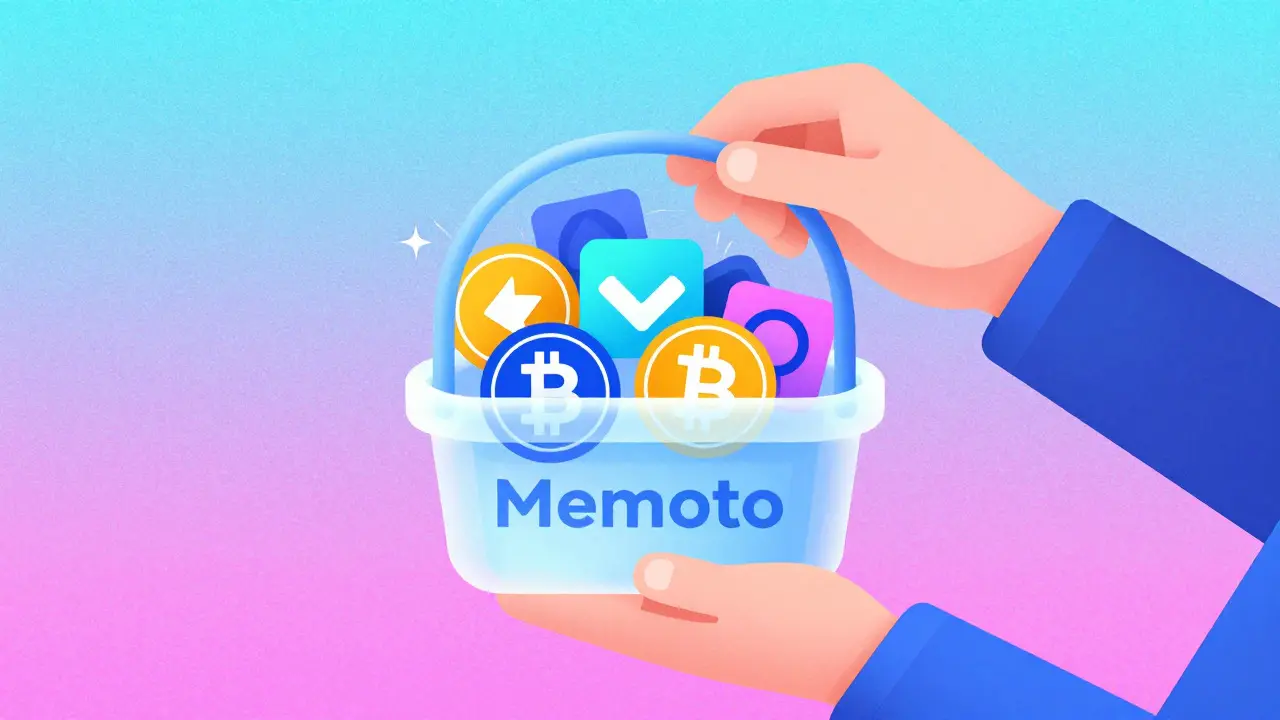
Imagine building your own cryptocurrency index fund in under five minutes without writing a single line of code. That is the promise of Memento (DEXTF), a protocol that lets anyone create and manage digital asset portfolios on the Ethereum blockchain. If you have ever wanted exposure to a basket of tokens but found traditional finance too slow or centralized exchanges too restrictive, this might be exactly what you are looking for. But before you buy, let's break down what it actually does, how it works, and whether it fits your investment strategy.
The Core Concept: Decentralized Exchange-Traded Funds
To understand Memento, you first need to grasp the concept of an Exchange-Traded Fund (ETF) in the crypto world. In traditional finance, an ETF is a basket of assets that tracks an index, like the S&P 500. You buy one share, and you get exposure to all those companies. In crypto, Index Coop and PieDAO were early pioneers, letting users buy pre-made baskets of tokens.
Memento takes this idea further by making it fully decentralized and customizable. It allows you to create your own XTF (Exchange Traded Fund) tokens. These are ERC20 tokens that represent a specific portfolio of other cryptocurrencies. Instead of just buying what someone else decided was popular, you can build a fund based on your own thesis-say, a mix of top DeFi governance tokens or a basket of emerging Layer-1 projects.
The key difference here is control. With Memento, you are not just a buyer; you can be the fund manager. The protocol handles the complex backend logic, allowing you to focus on the strategy. This democratizes fund management, which used to require significant technical expertise and capital.
How DEXTF Works Under the Hood
Technically, DEXTF operates as an ERC20 token on the Ethereum blockchain. Its contract address is well-documented on Etherscan, ensuring transparency. When you create an XTF fund, the protocol generates a unique smart contract for that specific fund. This means each fund functions as its own tradable token.
Here is the workflow:
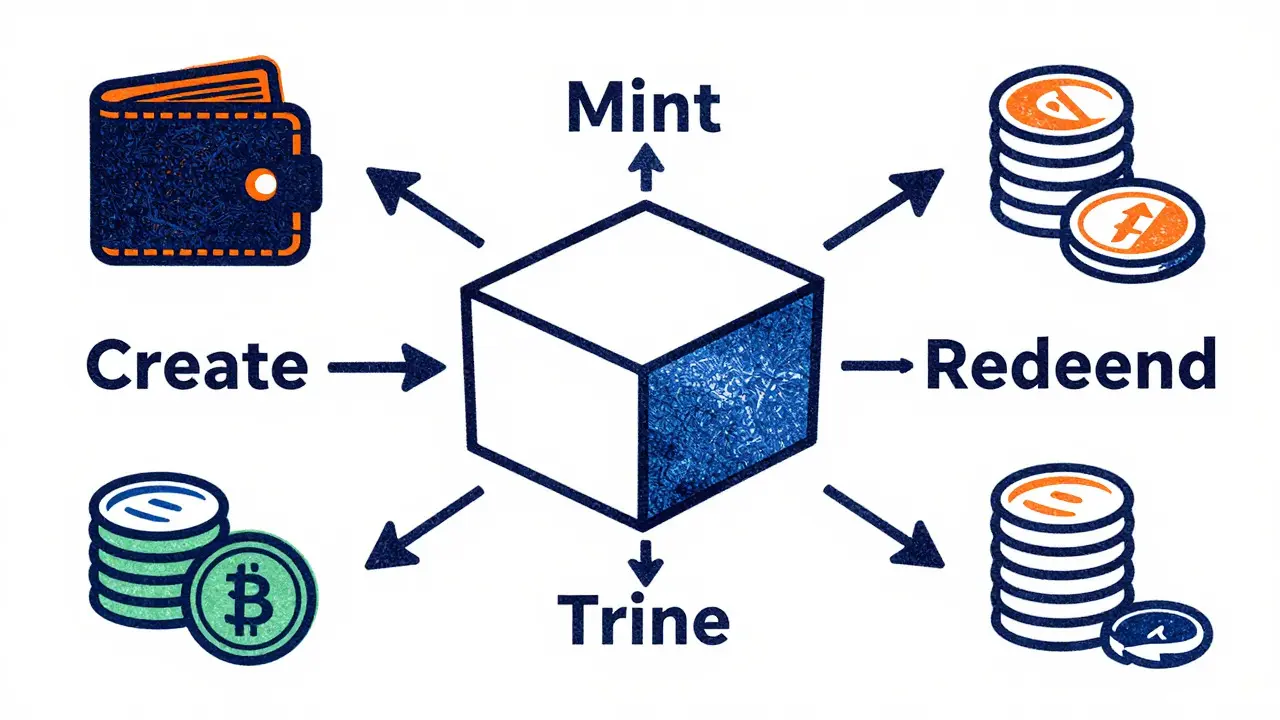
- Create: You select up to 15 different tokens (the limit was recently increased from 10 in Protocol v2.1) and define their weights.
- Mint: Other users deposit these underlying tokens into the pool to mint shares of your new XTF fund.
- Trade: Because the XTF is an ERC20 token, it can be traded on any exchange that supports it, or held in wallets like MetaMask.
- Redeem: Users can burn their XTF shares to redeem the underlying assets at any time.
A critical feature of Memento is its philosophy: "only the bare minimum logic should be on-chain." Unlike competitors that rely heavily on price oracles to automatically rebalance funds, Memento keeps the chain simple. This reduces the risk of oracle manipulation and lowers gas costs, though it means rebalancing might require manual intervention or external triggers depending on the fund design.
Why Choose Memento Over Competitors?
The decentralized fund space is crowded. So why use Memento instead of Index Coop or TokenSets? Let's look at the trade-offs.
| Feature | Memento (DEXTF) | Index Coop | TokenSets |
|---|---|---|---|
| Customization | High (Create your own) | Low (Pre-set indices) | Medium (Algorithmic sets) |
| Oracle Dependency | Minimal | High | High |
| Token Support | 70+ Tokens | 120+ Tokens | Varies |
| Fees | Dynamic (0.25% - 0.75%) | Fixed (0.5% - 1.0%) | Variable |
| Complexity | Low (User-friendly UI) | Medium | High (Developer-focused) |
Memento shines in flexibility and simplicity. If you want to build a niche portfolio that doesn't exist elsewhere, this is your tool. However, if you prefer a "set it and forget it" approach with automatic rebalancing during high volatility, Index Coop might be more robust due to its heavier reliance on oracles and established infrastructure. Remember, less on-chain logic means fewer attack vectors, but also less automation.
Risks and Challenges to Consider
No DeFi protocol is without risks. Here is what you need to watch out for:
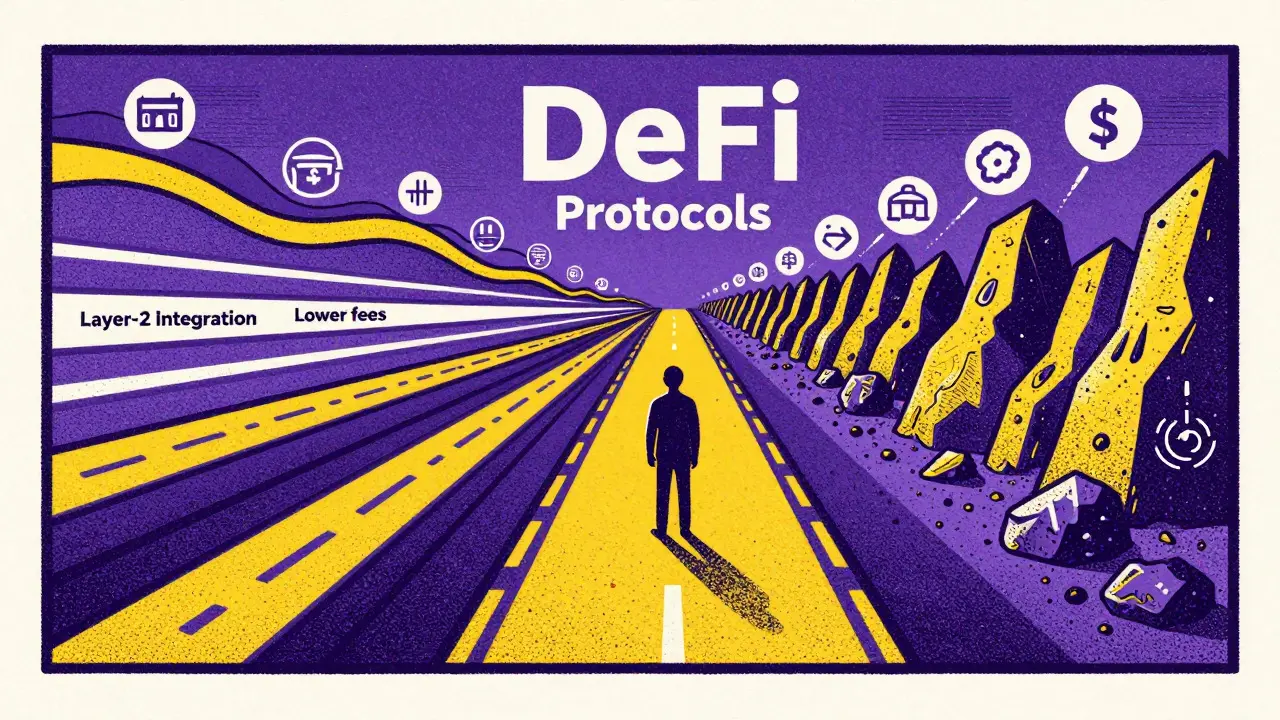
- Gas Fees: Since Memento lives on Ethereum mainnet, creating or redeeming funds can be expensive during network congestion. Users have reported paying $15-$25 in gas fees for transactions. This makes small-scale investing inefficient unless Ethereum Layer-2 solutions become fully integrated.
- Smart Contract Risk: While audits by firms like CertiK have identified and patched vulnerabilities, no code is perfect. Always do your own research (DYOR) before locking funds.
- Liquidity: As a newer protocol with a market cap around $9.4 million, liquidity can be thinner than major competitors. Large trades might slip prices significantly.
- Regulatory Uncertainty: The SEC has hinted that some decentralized funds could be classified as securities. This creates long-term uncertainty for protocols enabling public fund creation.
Also, note that DEXTF itself is a utility token. Its value is tied to the usage of the platform. If people stop creating funds, demand for DEXTF may drop. Currently, the circulating supply is about 65.8 million tokens, with a max supply of 100 million.
How to Get Started with Memento
If you decide to try it out, here is the step-by-step process:
- Set Up a Wallet: Install MetaMask or another Web3 wallet. Ensure you have some ETH for gas fees.
- Buy DEXTF: Purchase DEXTF tokens from supported exchanges like Coinbase, Gate.io, or MEXC. Transfer them to your wallet.
- Connect to Memento: Visit the official Memento website and connect your wallet.
- Create or Join a Fund: Browse existing XTF funds or click "Create New Fund." Select your desired tokens and set the allocation percentages.
- Deposit Assets: Approve the token transfers in your wallet and confirm the transaction.
The interface is designed for beginners, so you shouldn't need coding skills. However, understanding basic DeFi concepts like slippage and gas limits will help you avoid costly mistakes.
Future Outlook and Roadmap
Memento is actively developing. Recent updates include Protocol v2.1, which reduced gas costs by 22% and increased the token limit per fund. Looking ahead, the roadmap includes integration with Ethereum Layer-2 networks like Optimism to drastically lower fees. Cross-chain capabilities are also planned, which would allow funds to hold assets from multiple blockchains, not just Ethereum.
Industry analysts remain cautiously optimistic. Dr. Sarah Chen from Messari noted that while Memento's market traction is modest compared to giants like Index Coop, its minimalistic approach aligns with sustainable DeFi growth trends. If they successfully mitigate gas fees through L2 adoption, Memento could capture a larger share of the retail investor market.
Is Memento (DEXTF) a good investment?
Investing in DEXTF carries high risk. It is a utility token for a niche DeFi protocol. Its value depends on the adoption of the Memento platform. If more users create funds, demand for DEXTF may rise. However, it faces stiff competition from larger protocols. Always diversify and never invest more than you can afford to lose.
What is the difference between DEXTF and XTF?
DEXTF is the governance and utility token of the Memento protocol. You use it to pay fees or vote on proposals. XTF refers to the individual Exchange-Traded Fund tokens created within the protocol. Each XTF represents a specific basket of assets, like a custom index fund.
Can I create a fund with any cryptocurrency?
Not any cryptocurrency. Memento currently supports over 70 ERC20 tokens on Ethereum. You can only include tokens that are whitelisted by the protocol. This ensures security and compatibility with the smart contracts.
Are there fees for using Memento?
Yes. There are two types of fees. First, Ethereum gas fees for every transaction, which vary based on network congestion. Second, management fees set by the fund creator, typically ranging from 0.25% to 0.75% annually. These fees are paid by the investors in the fund.
Is Memento safe to use?
Memento has undergone security audits by firms like CertiK, and vulnerabilities have been patched. However, DeFi protocols always carry smart contract risk. Additionally, because it minimizes oracle dependency, it avoids certain manipulation risks but requires users to be more vigilant about fund performance.