
You’ve seen the ticker TEN and probably wondered what it actually does. It’s not Bitcoin. It’s not Ethereum. In fact, if you look at the charts today, you might barely notice it moving. So why does it exist?
Tokenomy (TEN) is a utility token tied to a specific digital asset platform that aims to bridge retail investors with institutional-grade crypto finance services. It operates on the Ethereum blockchain as an ERC-20 token. But here is the catch: it is a micro-cap asset with very low liquidity, meaning buying or selling large amounts can be tricky.
If you are holding TEN or thinking about buying some, you need to understand that this isn’t a speculative meme coin chase. It’s a tool designed for a specific ecosystem rooted in Southeast Asia. Let’s break down what it is, how much it costs, and whether it fits your portfolio.
The Origin Story: From Indonesia to Global Ambitions
To get TEN, you first have to understand who built it. The team behind Tokenomy comes from Indodax, which was formerly known as Bitcoin Indonesia. Indodax is a major player in its region, boasting over 900,000 registered users and regulation by Indonesia’s Commodity Futures Trading Regulatory Agency (BAPPEBTI).
The founders wanted to do more than just run an exchange. They launched Tokenomy to create a "one-stop solution" for wealth management. Think of it as a hybrid between a traditional brokerage and a crypto exchange. Their goal? To let entrepreneurs issue their own tokens for crowdfunding while giving regular investors access to yield products, loans, and trading tools usually reserved for institutions.
This background matters because it gives TEN a layer of legitimacy that many random tokens lack. It’s backed by a regulated entity in Labuan, Malaysia, and partners with a top-tier Indonesian exchange. However, being backed by a reputable team doesn’t automatically make the token itself a high-performing investment.
How Much Is TEN Worth Right Now?
Let’s talk numbers. As of July 1, 2026, the data is a bit messy-which is common for small-cap coins.
| Metric | CoinGecko | CoinMarketCap | Bitget |
|---|---|---|---|
| Price (USD) | $0.004574 | $0.004245 | ~$0.0088 (FDV implied) |
| 24-Hour Volume | $93.89 | $0.00 | N/A |
| Market Cap | $528,238 | $0.00 | $0.00 |
| Total Supply | 200,000,000 TEN | 200,000,000 TEN | 200,000,000 TEN |
| Circulating Supply | 120,000,000 TEN | 0 TEN | 0 TEN |
See the problem? CoinGecko shows a market cap of half a million dollars, while CoinMarketCap shows zero. Why? Because there is almost no trading volume. When only a few people trade a coin every day, data trackers struggle to calculate accurate prices and caps.
In early 2025, TEN traded around $0.01 on exchanges like Binance and Kraken. By mid-2026, it has dropped by more than 50%. This decline reflects both broader market trends and the specific lack of demand for this particular utility token. If you buy TEN now, you are entering a market where liquidity is thin. You might find it hard to sell quickly without affecting the price.
What Can You Actually Do With TEN?
TEN is not designed to be money you spend at a coffee shop. It is a utility token. Its primary jobs within the Tokenomy ecosystem are:
- Fee Discounts: This is the biggest perk. Standard trading fees on the Tokenomy exchange are 0.25%. If you pay those fees using TEN, they drop to 0.125%. That’s a 50% savings. If you trade frequently on their platform, holding TEN makes financial sense.
- Access to Crowdfunding: The platform allows businesses to issue their own tokens. TEN holders may get early access or exclusive deals in these initial offerings, similar to how venture capital works but open to retail users.
- Platform Utility: It acts as the currency for various features like staking, dual-currency deposits, and crypto loans within the app.
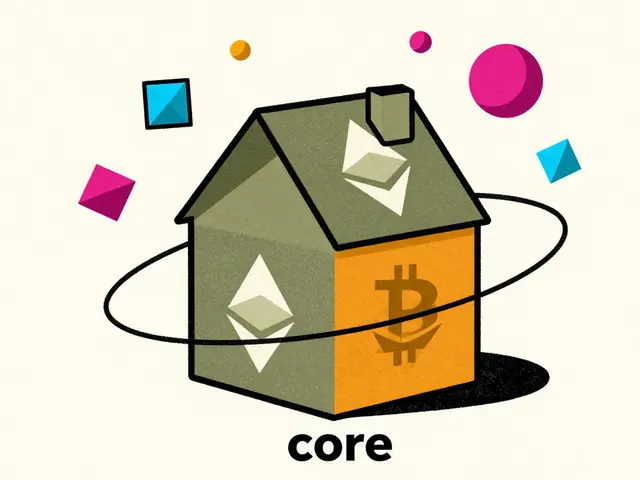
Essentially, TEN is the "key" that unlocks better rates and opportunities inside the Tokenomy house. Outside of that house, it has limited use cases.

Technical Specs: How It Works Under the Hood
Technically, TEN is straightforward. It runs on the Ethereum blockchain using the ERC-20 standard. This means:
- Compatibility: You can store it in any wallet that supports Ethereum, such as MetaMask or Ledger.
- Transparency: All transactions are public and verifiable on the blockchain explorer.
- Interoperability: It can be swapped on decentralized exchanges (DEXs) that support ERC-20 tokens, though liquidity pools for TEN are likely shallow.
The total supply is fixed at 200,000,000 TEN. There is no inflationary mechanism printing new tokens endlessly. However, as noted earlier, data providers disagree on how many are currently circulating-some say 120 million, others say none. This discrepancy often happens when tokens are locked in smart contracts, held by the team, or simply not actively traded on tracked exchanges.
Risks You Need to Know Before Buying
I’m going to be direct here. Investing in micro-cap tokens like TEN carries significant risks. Here is what could go wrong:
- Liquidity Trap: With daily volumes sometimes near $0, you might buy TEN and find no one wants to buy it back from you later. Slippage (the difference between expected price and executed price) can be huge.
- Data Inconsistency: As seen in the table above, major trackers don’t agree on the basics. This makes technical analysis nearly impossible.
- Exchange Delistings: Binance explicitly states TEN is not available for purchase or trade on their platform. Relying on smaller exchanges increases counterparty risk.
- Regulatory Shifts: While Tokenomy is licensed in Labuan and partnered with BAPPEBTI-regulated Indodax, crypto regulations change fast. Any shift in Malaysian or Indonesian policy could impact operations.
Don’t invest money you can’t afford to lose. Treat TEN as a high-risk, niche utility play rather than a core portfolio holding.

Who Is Tokenomy For?
TEN isn’t for everyone. It makes sense for:
- Active Traders on Tokenomy: If you plan to use the exchange heavily, holding TEN saves you real money on fees.
- Southeast Asian Investors: Given the strong ties to Indodax and local regulatory frameworks, users in Indonesia and neighboring regions may find more utility and support.
- Venture-Curious Retailers: If you want exposure to early-stage tokenized assets and crowdfunding campaigns managed by a vetted team, this ecosystem offers that gateway.
It does not make sense for:
- Passive HODLers: Without strong buy pressure or widespread adoption, price appreciation is unlikely to outperform major assets like BTC or ETH.
- Global Mainstream Users: The platform is still relatively unknown outside its core demographic, limiting network effects.
Final Thoughts on Tokenomy (TEN)
Tokenomy (TEN) is a legitimate project with a clear purpose: to serve as the fuel for a regulated crypto-finance platform born out of Indonesia’s largest exchange. It’s not a scam, and it’s not a vaporware concept. But it is also not a household name.
The low price ($0.0045 range) might look cheap, but remember: cheap doesn’t mean undervalued. With a market cap under $1 million and negligible volume, TEN is a tiny speck in the vast ocean of cryptocurrencies. Its value depends entirely on the success of the Tokenomy platform and its ability to attract users who will actually use the fee discounts and crowdfunding features.
If you’re interested, start small. Use it to test the platform’s fee structure. See if the user experience matches the "institutional quality" claims. And always keep an eye on the liquidity charts-if volume stays near zero, exit strategies become difficult.
Is Tokenomy (TEN) a good investment?
TEN is a high-risk, micro-cap utility token. It is not suitable for conservative investors. It may offer value if you actively trade on the Tokenomy exchange to save on fees, but as a standalone investment, its low liquidity and inconsistent market data make it speculative. Always do your own research and never invest more than you can afford to lose.
Where can I buy Tokenomy (TEN)?
TEN is not listed on major tier-one exchanges like Binance for direct purchase. You may find it on smaller centralized exchanges or decentralized platforms that support ERC-20 tokens. Check aggregators like CoinGecko for current trading pairs, but be aware of low liquidity and potential slippage.
What is the total supply of TEN?
The total supply of Tokenomy (TEN) is fixed at 200,000,000 tokens. However, data providers vary significantly on the circulating supply, with reports ranging from 0 to 120 million tokens, indicating complex distribution or locking mechanisms.
Is Tokenomy regulated?
Yes, Tokenomy operates under a license from the Labuan Financial Services Authority in Malaysia as a money broker. Additionally, its key partner, Indodax, is regulated by Indonesia’s BAPPEBTI. This provides a layer of compliance not found in many unregistered crypto projects.
Why is the price of TEN so low?
The low price reflects its status as a micro-cap asset with limited demand and trading volume. Unlike Bitcoin or Ethereum, TEN serves a niche utility function within a specific regional ecosystem. Low liquidity and lack of listing on major global exchanges contribute to its sub-cent valuation.
Can I stake TEN for rewards?
The Tokenomy platform offers staking products and fixed-term deposits. Holding TEN may grant access to these yield-generating opportunities within the ecosystem, but specific APY rates and terms should be verified directly on the official Tokenomy dashboard as they change over time.
What is the relationship between Tokenomy and Indodax?
Tokenomy was founded by the team behind Indodax (formerly Bitcoin Indonesia). Indodax is the largest crypto exchange in Indonesia. Tokenomy acts as a venture arm and community VC, leveraging Indodax’s infrastructure and user base to offer advanced wealth management and tokenization services.

ELNORA JEFFERSON
July 3, 2026 AT 07:17This whole thing looks like a scam to me. Why would anyone trust a token with such messy data? I feel so tired reading about all these new coins that promise the world but deliver nothing. It’s just noise.
Carol @minaszilda
July 4, 2026 AT 12:52I see where you are coming from. However, it is important to look at the utility aspect. If you use the platform, the fee discount is real. Not every tool needs to be a moonshot. Some things are just for specific jobs. Keep an open mind.
Nicole Woessner
July 5, 2026 AT 07:45the indonesian market is huge and growing fast. Tokenomy has a real backing from Indodax which is regulated. This gives it a layer of trust that most random tokens do not have. You should look into the local adoption rates in Southeast Asia because that is where the action is right now
Jon Milton
July 7, 2026 AT 02:02Look, I get the skepticism. But dismissing it entirely ignores the strategic position they hold in Labuan and Indonesia. It is not about flipping it for quick gains. It is about ecosystem integration. If you understand the regulatory landscape in SEA, this makes sense as a long-term hold for active traders on their platform. Peace out.
Rebecca Shoniker
July 8, 2026 AT 08:54You are completely missing the point!! The risk/reward ratio is terrible! With slippage that high and volume near zero? It is a trap! Do not listen to the hype! Protect your capital! This is exactly why retail investors lose money! Stay away!!!