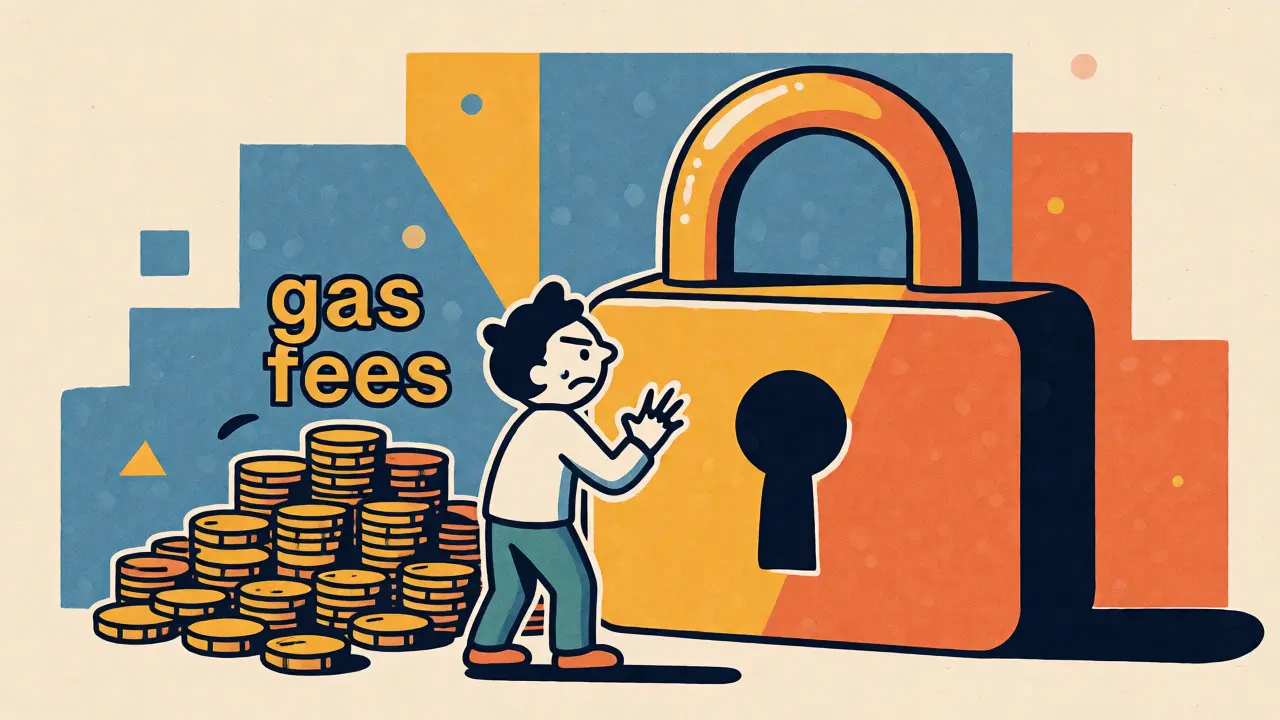
Most traders hate two things: getting liquidated because a centralized exchange froze their account, and paying $50 in gas fees just to place a trade on Ethereum. Aboard Exchange is a decentralized derivatives platform designed to fix these pain points by combining institutional-grade order books with cross-chain efficiency. If you are looking for leverage without custody risk, this might be the tool you have been waiting for. But does it actually deliver? We dug into its architecture, trading pairs, and fee structures to see if Aboard lives up to the hype or if it is just another DeFi experiment that will fade away.
The Core Promise: Institutional Tools in a Decentralized World
Traditional finance (TradFi) offers robust tools for fund managers, while Decentralized Finance (DeFi) offers transparency. Usually, you have to pick one. Aboard tries to bridge this gap. The platform consists of two main components: an advisory protocol and an order-book decentralized derivatives swap. This isn't just marketing fluff; it changes how you interact with your capital.
The advisory protocol lets fund managers publish strategies on-chain. Investors can then copy these trades transparently. No black boxes. No "trust me" promises. You can verify the performance metrics directly on the blockchain. For retail traders, this means access to professional-grade strategies without needing a minimum investment of six figures. It’s a smart move, especially as the line between retail and institutional trading continues to blur.
Cross-Chain Capabilities: Breaking Down Silos
One of Aboard's biggest selling points is its multi-chain integration. It doesn't lock you into Ethereum mainnet, where gas fees can eat your profits alive during high congestion. Instead, it operates across Ethereum, Arbitrum, and Binance Smart Chain (BSC). Why does this matter? Because speed and cost dictate profitability in derivatives trading.
Aboard uses third-party cross-chain solutions to enable instant withdrawals and token transfers. This reduces friction significantly. Imagine you want to hedge your ETH position using USDC on Arbitrum. On many older DEXs, bridging assets takes time and costs money. Aboard aims to make this seamless. According to their documentation, they prioritize low-cost transactions, which is critical for high-frequency traders who cannot afford to wait minutes for confirmation times.
Trading Pairs and Leverage: What Can You Actually Trade?
Let's look at the numbers. As of late 2025, Aboard supports seven perpetual contract pairs. These include major assets like BTC, ETH, AAVE, and USDC. While seven pairs might sound limited compared to Bybit’s 100+ listings, it reflects a focused strategy. They aren't trying to list every meme coin overnight. They are concentrating on liquidity-rich majors.
Leverage is where things get interesting. Aboard allows up to 25X leverage on cross-margin positions. This sits comfortably in the middle of the market. Coinbase offers a conservative 3X for retail users, while BitMEX historically offered 100X (though often with higher risks). 25X gives you enough firepower to amplify gains without requiring the extreme margin management skills needed for 100X platforms. However, remember that leverage cuts both ways. A 4% move against you at 25X leverage wipes out your entire position.
| Feature | Aboard Exchange | dYdX | GMX |
|---|---|---|---|
| Architecture | Cross-chain Order Book | App-Chain (Cosmos) | AMM-based Oracle |
| Max Leverage | 25X | 20X | 50X |
| Asset Support | 7 Perpetual Pairs | Dozens of Assets | Major Majors + Alts |
| Unique Feature | Advisory Protocol | High Throughput | Zero Slippage Trades |

The Advisory Protocol: Copy Trading Meets On-Chain Transparency
If you are not a day trader, the advisory protocol might be your reason to use Aboard. Fund managers create strategies-say, a delta-neutral arbitrage strategy on ETH-and publish them. Investors deposit funds into a pool managed by these parameters. Everything happens on-chain. You can audit the manager's historical performance before committing a single dollar.
This contrasts sharply with traditional hedge funds where you rely on quarterly reports. Here, immutability is key. Once a strategy is published, its rules are fixed unless explicitly updated via governance. This reduces the risk of "style drift," where a manager suddenly starts gambling on altcoins instead of sticking to their stated blue-chip focus.
User Experience and Technical Requirements
Since Aboard is a DeFi protocol, there is no "forgot password" link. You need a Web3 wallet like MetaMask or WalletConnect. If you have never used a DEX before, expect a learning curve. You need to understand gas fees, slippage tolerance, and how to approve token allowances.
The interface is web-based. There are no dedicated mobile apps mentioned in current documentation, which is common for newer DeFi platforms. You will likely trade through a browser on your desktop or mobile device. The lack of extensive user reviews on Trustpilot or Reddit suggests either a recent launch or a niche user base. This scarcity of public sentiment data means you should start with small amounts to test the waters.

Risks and Regulatory Considerations
No review is complete without discussing the downsides. First, oracle reliability is critical in derivatives. In 2023, Synthetix faced issues due to price feed errors, causing millions in liquidations. Aboard relies on external price feeds. If those feeds glitch, your positions could be liquidated incorrectly. Check their insurance fund mechanism-if it exists-to see how they handle such edge cases.
Regulation is another wildcard. The CFTC in the US has stepped up enforcement against unregistered derivatives platforms. With 17 enforcement actions against DEXs in 2024 alone, regulatory uncertainty looms large. Aboard’s multi-chain approach complicates compliance further. Different jurisdictions treat cross-chain swaps differently. Always keep tax implications in mind, especially when moving assets between chains.
Who Should Use Aboard Exchange?
Aboard isn't for everyone. It shines for:
- Intermediate Traders: Those who understand leverage but want better UX than raw smart contracts.
- Fund Managers: Who want to distribute strategies transparently.
- Cross-Chain Users: Traders active on Arbitrum and BSC who want unified access.
It is less suitable for beginners who haven't mastered spot trading yet, or those who require hundreds of exotic altcoin pairs.
Final Verdict: A Niche Player with Serious Potential
Aboard Exchange tackles real problems: high fees, custody risk, and opaque fund management. Its cross-chain infrastructure and advisory protocol offer unique value propositions. However, the limited number of trading pairs (seven) restricts its appeal for aggressive altcoin traders. If you stick to majors like BTC and ETH, the 25X leverage and low-cost execution make it a compelling alternative to centralized exchanges. Keep an eye on their roadmap for pair expansion and community feedback, as adoption rates will determine long-term viability.
Is Aboard Exchange safe to use?
As a decentralized platform, safety depends on smart contract security and oracle reliability. Unlike centralized exchanges, you retain custody of your keys, reducing theft risk from exchange hacks. However, you must trust the code audits and the stability of the price feeds used for liquidations.
What is the maximum leverage available on Aboard?
Aboard Exchange currently offers up to 25X leverage on its perpetual contracts. This applies to cross-margin positions, allowing users to utilize their collateral more efficiently across different asset classes within the platform.
Which blockchains does Aboard support?
Aboard operates across multiple networks, including Ethereum, Arbitrum, and Binance Smart Chain (BSC). This multi-chain approach helps reduce transaction costs and improves speed compared to Ethereum-only platforms.
How many trading pairs are available on Aboard?
As of the latest data, Aboard supports seven perpetual contract pairs, focusing primarily on major assets like Bitcoin (BTC), Ethereum (ETH), Aave (AAVE), and USD Coin (USDC).
Can I copy trade on Aboard Exchange?
Yes, through the Aboard Advisory Protocol. Fund managers can publish trading strategies on-chain, and investors can allocate funds to these strategies, effectively copying the manager's trades in a transparent and immutable manner.



Caro Kinsella Ireland
November 1, 2026 AT 18:38It is truly fascinating to observe how Aboard Exchange attempts to harmonize the rigidity of institutional finance with the fluidity of decentralized protocols. The advisory protocol, in particular, represents a significant step toward democratizing access to professional-grade strategies without the traditional gatekeeping mechanisms.
We must acknowledge that this integration of cross-chain capabilities addresses a genuine pain point for traders who have long suffered from siloed liquidity and prohibitive gas fees. By allowing seamless movement between Ethereum, Arbitrum, and BSC, the platform not only enhances user experience but also fosters a more interconnected DeFi ecosystem.
However, one must remain cautious about the reliance on third-party cross-chain solutions, as these introduce an additional layer of complexity and potential risk vectors that are not present in single-chain environments. The transparency offered by on-chain verification of fund manager performance is a commendable feature that builds trust in an industry often plagued by opacity.
For those of us who value open-mindedness and constructive dialogue, it is essential to view such developments not merely as financial tools but as social experiments in trustless coordination. The reduction of custody risk through self-custody wallets empowers users, yet it simultaneously places the burden of security entirely on their shoulders.
I believe that if Aboard can maintain its focus on liquidity-rich majors while gradually expanding its pair offerings, it will find a sustainable niche among intermediate traders seeking balance. The regulatory landscape remains uncertain, particularly with the CFTC's increasing scrutiny, which necessitates a proactive approach to compliance rather than reactive adaptation.
Ultimately, the success of this platform will depend on its ability to deliver consistent uptime and reliable oracle feeds, ensuring that liquidations occur fairly and transparently. We should encourage continued innovation in this space, provided that safety measures evolve in tandem with feature expansion.
Robert Koomans
November 2, 2026 AT 09:21Oh, look at another DeFi 'revolution' promising to fix what broke three years ago.
The sheer audacity of marketing seven trading pairs as a 'focused strategy' rather than a glaring lack of development resources is almost poetic in its delusion.
You expect me to believe that a platform with no mobile app and a learning curve steeper than Everest’s eastern face will lure away my precious capital from GMX or dYdX?
The 'advisory protocol' sounds like a glorified copy-trading feature wrapped in buzzwords to justify higher management fees for fund managers who probably couldn't trade their way out of a paper bag.
Cross-chain efficiency is a nice phrase, but let’s be honest: bridging assets across chains is still a nightmare of slippage and wait times, regardless of what their documentation claims.
Twenty-five times leverage is a cute number, sure, but until I see actual volume data proving they aren’t just a ghost town with a fancy UI, I’ll remain unimpressed by the hype cycle.
The comparison table is laughably simplistic, ignoring the fact that dYdX has actual throughput and GMX has zero-slippage trades, whereas Aboard seems to offer... hope.
If you’re an institutional trader, you’re laughing at the idea of trusting a Web3 wallet interface over a Bloomberg terminal, and retail traders are too busy getting rekt on meme coins to care about your delta-neutral arbitrage.
This isn’t a bridge; it’s a toll booth on a dirt road leading nowhere.
Save your breath, save your gas fees, and maybe write some code instead of whitepapers.
Erick Lanza
November 3, 2026 AT 04:05I appreciate the detailed breakdown, though I feel a profound sense of melancholy regarding the inherent risks involved in such platforms.
The mention of oracle reliability strikes a deep chord, reminding me of the countless times I have watched portfolios evaporate due to momentary price feed glitches.
It is emotionally exhausting to consider that even with self-custody, one is never truly safe from the invisible hands of smart contract vulnerabilities or regulatory crackdowns.
I wonder if the developers realize the psychological toll that high-leverage trading takes on individuals who are already stressed by the volatility of the crypto market.
The promise of institutional tools feels hollow when contrasted with the reality of losing sleep over liquidation prices that seem to target your specific entry point.
I am drawn to the transparency of the advisory protocol, yet I fear that the immutability of on-chain data cannot protect investors from poor strategic decisions made by fund managers.
There is a certain sadness in knowing that the 'seamless' cross-chain experience might still involve friction that drains both time and emotional energy.
I hope that the community support for Aboard remains strong enough to weather the inevitable storms of regulatory uncertainty and technical failures.
My heart goes out to the beginners who might jump into 25x leverage without understanding the catastrophic consequences of a four percent move against them.
We must tread carefully, for the allure of decentralization often masks the cold indifference of algorithmic execution.
DESI B KI VINES
November 3, 2026 AT 13:59Hey guys, great review! Really helpful info here for anyone looking to get started with derivatives.
Just wanted to add that starting small is key, especially with new platforms like this one.
Don't let the FOMO push you into high leverage right away, take it slow and learn the ropes first.
The cross-chain thing is definitely useful if you're already active on Arbitrum or BSC.
Make sure to check out the audits before putting in any serious money, safety first always!
Good luck everyone, keep grinding and stay safe out there!
Brittney Cortez
November 5, 2026 AT 08:39Look, i dont care about your 'philosophical' debates on decentralization, i want to know if i can actually make money here.
Seven pairs? Seriously? That is barely enough to build a diversified portfolio, let alone hedge properly.
If i cant trade SOL or DOGE or whatever is pumping today, why would i bother leaving Binance?
The UX better be buttery smooth because i am not dealing with clunky interfaces all day.
And yeah, the advisory thing sounds cool but i dont trust random fund managers with my cash unless they have verified track records i can see instantly.
Gas fees on ETH mainnet are still a ripoff so hopefully arb works well cause i aint paying $20 per swap.
Just sayin, less talk about 'institutional grade' and more focus on actual liquidity depth please.
Im gonna test it with $50 and see if it sucks or not.
Sarah Boudreau
November 6, 2026 AT 16:45This looks so promising! I love that we finally have options that don't require giving up our keys to centralized exchanges.
The idea of copying strategies on-chain is really exciting for people who aren't pro traders yet.
I'm hoping the mobile experience gets better soon because trading on desktop isn't always convenient.
Fingers crossed that the oracle issues mentioned don't happen here, safety is so important!
Can't wait to try it out once I feel more confident with Web3 wallets.
Jason White
November 7, 2026 AT 13:11The United States Commodity Futures Trading Commission has been increasingly aggressive in its enforcement actions against decentralized exchanges, and Aboard Exchange is not immune to this regulatory scrutiny.
It is imperative that American taxpayers understand that moving assets across chains may trigger taxable events that are difficult to track without specialized software.
The notion that decentralized platforms exist outside the purview of US law is a dangerous misconception that has led to significant legal battles for many projects.
Furthermore, the reliance on external price feeds introduces a systemic risk that could lead to incorrect liquidations, thereby causing unjust financial losses for US citizens.
We must prioritize national security and financial stability over the unchecked experimentation of DeFi protocols that lack proper oversight.
The lack of a dedicated mobile application suggests a lack of commitment to the broader consumer base, which includes millions of Americans who rely on smartphones for daily transactions.
Investors should exercise extreme caution and consult with qualified tax professionals before engaging with platforms that operate across multiple jurisdictions.
Transparency is good, but it does not replace the need for robust regulatory frameworks that protect consumers from fraud and malpractice.
The future of trading in America depends on strict adherence to existing laws, not on the whims of blockchain developers.
Let us not forget that every dollar lost to a glitch or a hack is a dollar taken from the hard-working families of this nation.
Wilson Andres Lopez Martinez
November 8, 2026 AT 00:36Money is just a shadow of value, and Aboard tries to catch that shadow with nets made of code.
But shadows slip through fingers, do they not?
Seven pairs are few, like stars in a cloudy sky.
We seek speed, but time is the only true currency.
The chain connects, but the mind disconnects from reality.
Leverage amplifies greed, and greed blinds the eye.
Trust the math, but doubt the man who wrote it.
Is it safe? Nothing is safe in a world of change.
Flow like water, trade like wind.
The block remembers, but the soul forgets.