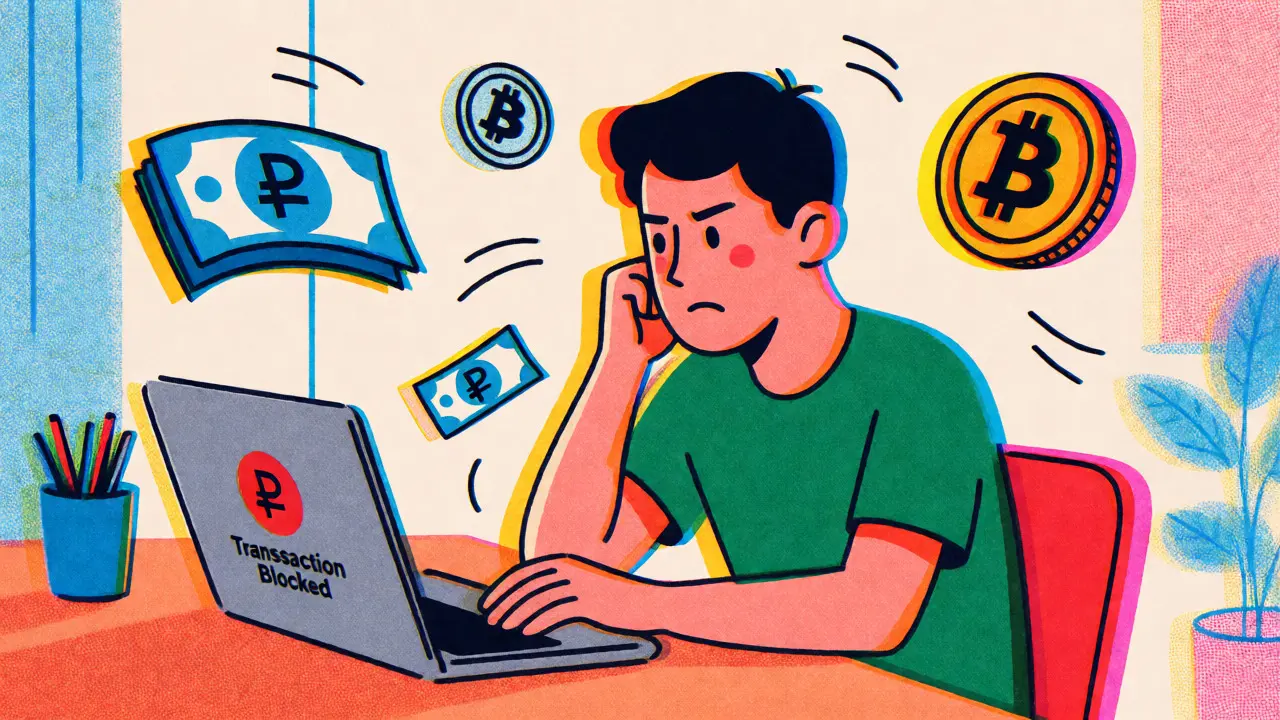
Trying to buy Bitcoin with a Russian bank card often feels like playing whack-a-mole. You click "deposit," your bank blocks the transfer, or worse, the exchange freezes your account because of some obscure compliance flag. It’s frustrating, especially when you just want to manage your own money. But here is the good news: you aren't stuck. While the landscape has shifted dramatically since 2022, several major international platforms still welcome Russian users, and new local solutions have emerged to fill the gaps.
This guide cuts through the noise. We’re not talking about theoretical possibilities; we’re looking at where you can actually trade right now in August 2026. We’ll cover which exchanges accept rubles, how the new "qualified investor" rules affect you, and why that weird new stablecoin called A7A5 is suddenly everywhere in Moscow’s crypto circles.
The Big Shift: Who Actually Accepts Russians?
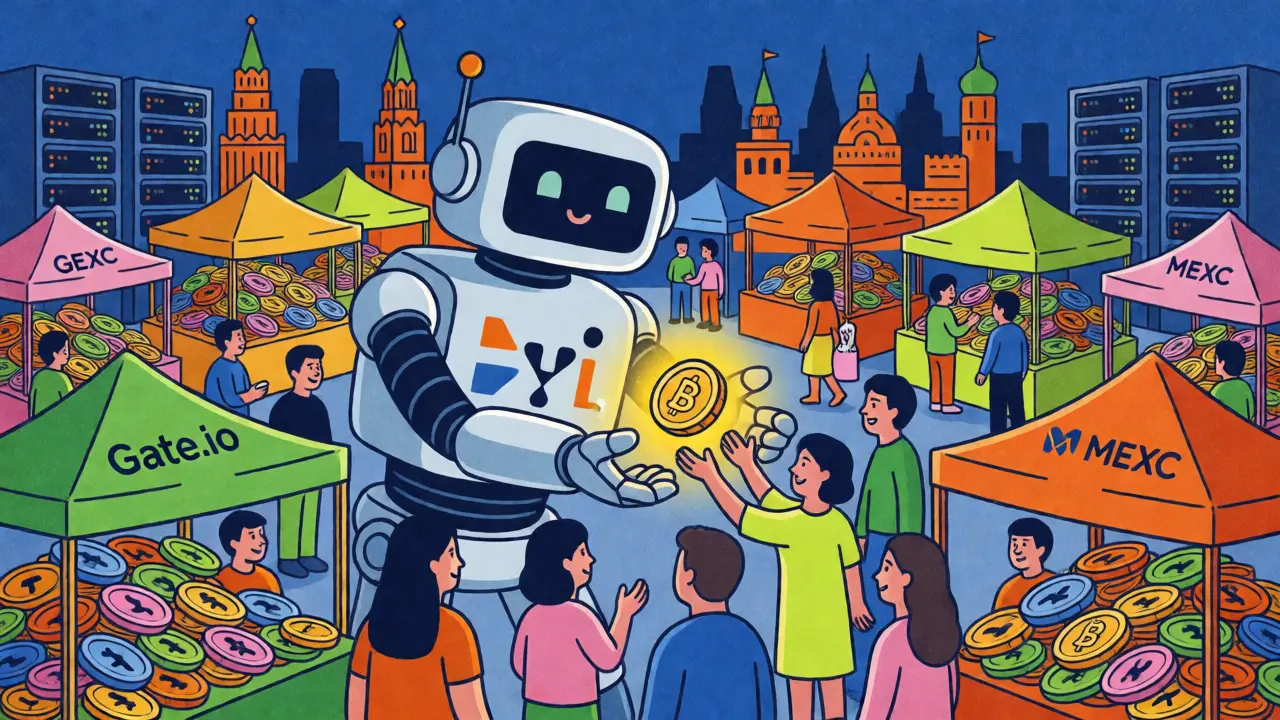
If you remember Binance, you know they pulled out hard. For years, it was the default choice, but its exit left a vacuum. Today, the market has reorganized around a handful of resilient players. As of mid-2026, six primary exchanges consistently support Russian Ruble (RUB) deposits and serve Russian investors without blocking them at the gate.
Bybit is currently the top pick for most people. Why? Because it balances accessibility with functionality. They offer full Russian language support, spot trading fees as low as 0.1%, and access to over 2,000 cryptocurrencies. More importantly, their deposit methods work. You can use Sberbank, Tinkoff, or standard bank transfers. If you are starting out, this is probably your safest bet.
Then there is Gate.io, which wins on variety. If you are hunting for obscure altcoins or meme tokens that haven’t hit the big leagues yet, Gate.io lists over 3,600 assets. It’s less polished than Bybit, but if you need exposure to specific projects, it’s unmatched.
For those interested in high-yield staking, MEXC offers eye-catching rewards, sometimes exceeding 600% APY on certain new listings. Just be careful-high yields often come with higher volatility. Meanwhile, KuCoin remains a favorite for memecoin traders, while Bitget has carved out a niche for copy trading, letting you automatically mirror the moves of successful traders. Finally, Phemex serves the derivatives crowd, focusing heavily on futures rather than simple spot buying.
| Exchange | RUB Deposit Support | Asset Count | Best For |
|---|---|---|---|
| Bybit | Sberbank, Tinkoff, Cards | 2,000+ | All-around trading, beginners |
| Gate.io | P2P, Bank Transfer | 3,600+ | Altcoin hunters, early projects |
| MEXC | P2P, Cards | 1,800+ | High-risk staking, new listings |
| KuCoin | P2P | 1,400+ | Memecoins, community tokens |
| Bitget | P2P, Cards | 1,200+ | Copy trading, social features |
| Phemex | Cards, P2P | 900+ | Futures and derivatives |
The Regulatory Maze: What Does the Law Say?
You might hear rumors that crypto is banned in Russia. That’s half-true. You cannot use Bitcoin to buy coffee at your local cafe-that’s illegal. But owning it? Trading it? Holding it? That’s legal, provided you follow the rules set by the Central Bank of Russia (CBR).
The real hurdle isn’t the ban on payments; it’s the "Experimental Legal Regime" (ELR) introduced in March 2025. This framework restricts participation in state-authorized crypto markets to "highly qualified" investors. The bar is high: you either need securities and deposits worth over 100 million rubles (roughly $1.2 million) or an annual income exceeding 50 million rubles (over $600,000).
Does this mean average Joes can’t trade? Not exactly. Most Russians still trade on international exchanges like Bybit or Gate.io, which operate outside this strict domestic regulatory sandbox. However, if you want to use a fully compliant, domestically regulated platform, you need to meet those wealth thresholds. There is hope for change, though. Alexey Yakovlev from the Ministry of Finance hinted in late 2025 that these limits might drop. They realize that keeping regular people out of the official market hurts adoption rankings, so watch for updates on threshold reductions.
The Rise of A7A5: The Ruble Stablecoin Workaround
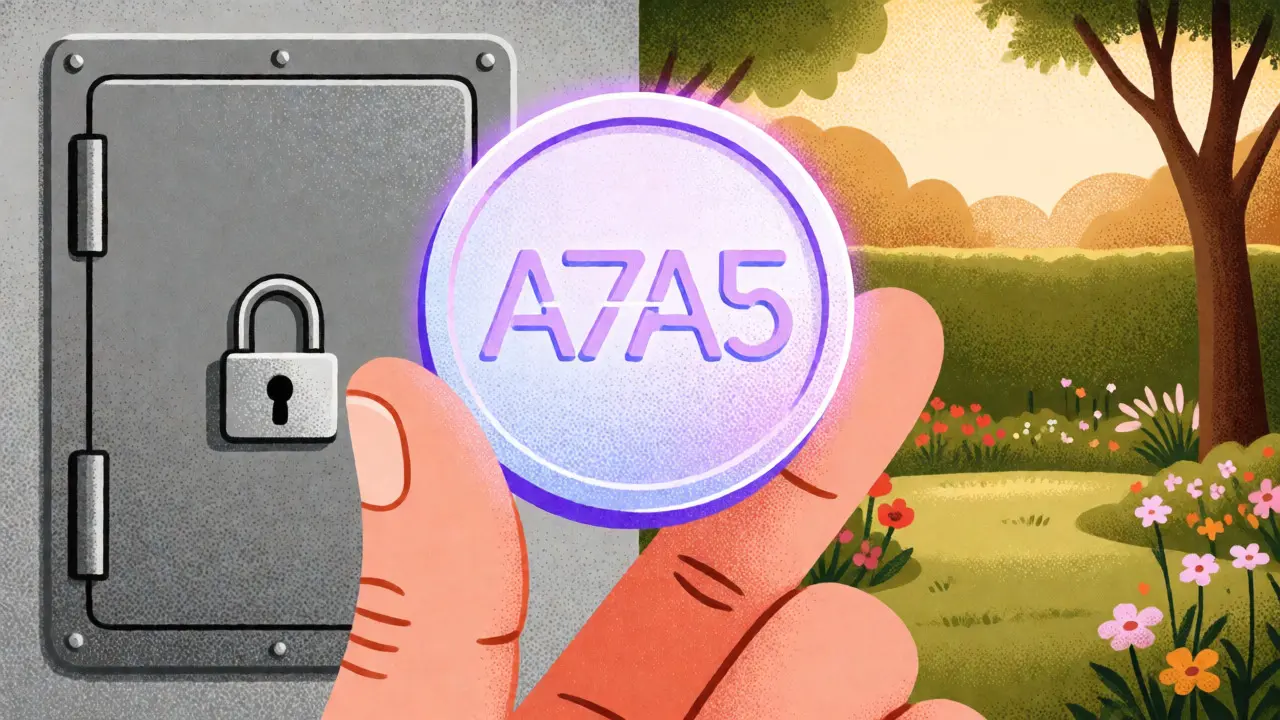
If you’ve been watching Russian crypto Twitter, you’ve seen the ticker A7A5. It’s not just another token; it’s a strategic tool. Developed by A7, this ruble-backed stablecoin solves a massive problem: the risk of having USDT frozen by Western authorities.
Unlike USDT, which is issued by Tether and subject to US sanctions, A7A5 is backed 1:1 by ruble deposits held in accounts at Promsvyazbank (PSB). The issuer, Old Vector LLC, is registered in Kyrgyzstan, creating a layer of separation from direct US jurisdiction. As of 2026, there are 41.6 billion A7A5 tokens in circulation, worth nearly half a billion dollars.
Why does this matter to you? If you are moving large sums between exchanges or businesses, using USDT carries a small but real risk of freezing. A7A5 eliminates that specific geopolitical risk. Data from Chainalysis shows that A7A5 trading peaks on weekdays, suggesting it’s used primarily for business settlements and cross-border transfers rather than weekend retail speculation. If you are running a business or moving significant capital, integrating A7A5 into your portfolio could save you headaches down the road.
Sanctions and Shadow Exchanges: What Happened to Garantex?
You can’t talk about Russian crypto without mentioning the shadow economy. In March 2025, the US Secret Service forced Garantex offline. For many, this was a shock. Garantex had been a go-to hub for sanctioned entities and those wanting anonymity. But nature abhors a vacuum.
Almost immediately, operations shifted to Grinex, a successor registered in Kyrgyzstan. Grinex began accepting transfers from former Garantex customers, effectively acting as a lifeboat. Other platforms like Bitpapa (also OFAC-sanctioned) continue to facilitate peer-to-peer trades, though they carry higher compliance risks for users who care about maintaining clean banking relationships.
Be cautious with these "shadow" exchanges. While they offer privacy, they lack the consumer protections of major global platforms. If your funds get stuck, you don’t have a customer support team in Singapore or Dubai to call. Use them for specific needs, not as your primary wallet.
Practical Tips for Navigating Restrictions
So, how do you actually move money without triggering a bank block? Here are three rules of thumb based on current trends:
- Use P2P Wisely: Direct bank transfers to exchange wallets often fail. Peer-to-Peer (P2P) trading on Bybit or Gate.io is more reliable. Choose merchants with high completion rates and positive reviews. Avoid transferring to personal cards if possible; use business accounts or verified merchant profiles.
- Diversify Your Stablecoins: Don’t hold all your liquidity in USDT. Split it between USDT, USDC, and A7A5. If one gets flagged or frozen, you still have access to cash.
- Keep Records: Russian tax laws require declaration of crypto holdings. Even if you trade offshore, keep detailed logs of your transactions. The CBR is increasing surveillance on digital activities, and being prepared saves you audits later.
The landscape is tough, but it’s not closed off. By choosing the right platform and understanding the tools available-like the A7A5 stablecoin-you can navigate the restrictions effectively. Stay informed, stay diversified, and always test with small amounts before committing large sums.
Is cryptocurrency completely banned in Russia?
No, ownership and trading are legal. However, using cryptocurrency as a means of payment for goods and services within Russia is prohibited. You can buy, sell, and hold crypto, but you cannot pay for groceries with it.
Which crypto exchange is best for Russian citizens in 2026?
Bybit is widely considered the top choice due to its robust RUB deposit options (including Sberbank and Tinkoff), user-friendly interface, and wide selection of assets. Gate.io is also excellent for accessing a larger variety of altcoins.
What is the A7A5 stablecoin?
A7A5 is a ruble-backed stablecoin developed by A7. It is designed to mitigate the risk of Western sanctions freezing assets, as it is backed by ruble deposits in Russian banks rather than USD reserves. It is increasingly used for cross-border business settlements.
Can I use Binance in Russia?
Binance exited the Russian market in 2022 and no longer serves Russian residents directly. You will need to migrate your assets to other supported exchanges like Bybit, KuCoin, or MEXC.
Do I need to be a "qualified investor" to trade crypto?
Only if you want to trade on state-authorized domestic platforms under the Experimental Legal Regime. Most Russians trade on international exchanges (like Bybit or Gate.io) which do not enforce these domestic qualification requirements for basic trading.


liam & the bees
September 1, 2026 AT 02:24Great breakdown of the current landscape! It's really encouraging to see how resilient the community has been despite all the geopolitical headwinds. I've noticed a lot of folks in the EU struggling with similar compliance issues, so it's nice to see such clear guidance on what actually works right now. Keep up the good work!
Edward Ogunfolaju
September 1, 2026 AT 14:46This is exactly the kind of actionable intel we need!! Stop overthinking and start moving your assets NOW!!! Bybit is solid but don't sleep on Gate.io for those low cap gems!!! The market waits for no one so get off your ass and execute!!!
Matthew O'Neill
September 2, 2026 AT 20:51The superficial analysis here completely misses the systemic fragility inherent in relying on offshore entities like Grinex or Bitget. You are essentially treating regulatory arbitrage as a stable business model when in reality it is merely a temporary latency before secondary sanctions catch up. The 'qualified investor' threshold isn't just bureaucratic red tape; it represents a fundamental bifurcation of capital access that these platforms fail to hedge against. Relying on A7A5 introduces counterparty risk from Promsvyazbank which is itself heavily sanctioned, creating a circular dependency that sophisticated actors should recognize immediately.
Liam Grimes
September 4, 2026 AT 09:28totally agree with the bybit rec. i used sberbank via p2p last week and it went thru smooth. gate.io is def better for altcoins tho if you dont mind the clunky ui. also keep records lol, cbr is getting spicy about audits lately.
Nadia Christian
September 6, 2026 AT 01:28It is absolutely vital to remember that our dollar dominance is still the backbone of global finance!!! Even if these Russian exchanges pop up, they are trying to bypass the strength of the US system!!! We must remain vigilant because their attempts at isolationism will ultimately fail against American economic power!!! Don't let them fool you with fake stability!!!
Melanie Armijo
September 6, 2026 AT 21:05There is a profound philosophical irony in seeking digital freedom through centralized intermediaries who themselves are bound by earthly jurisdictions. We chase decentralization yet cling to stablecoins backed by fiat systems we claim to transcend. Perhaps the true value lies not in the token itself, but in the act of choosing where to place one's trust amidst chaos. It is a mirror reflecting our own desire for control in an uncontrollable world.