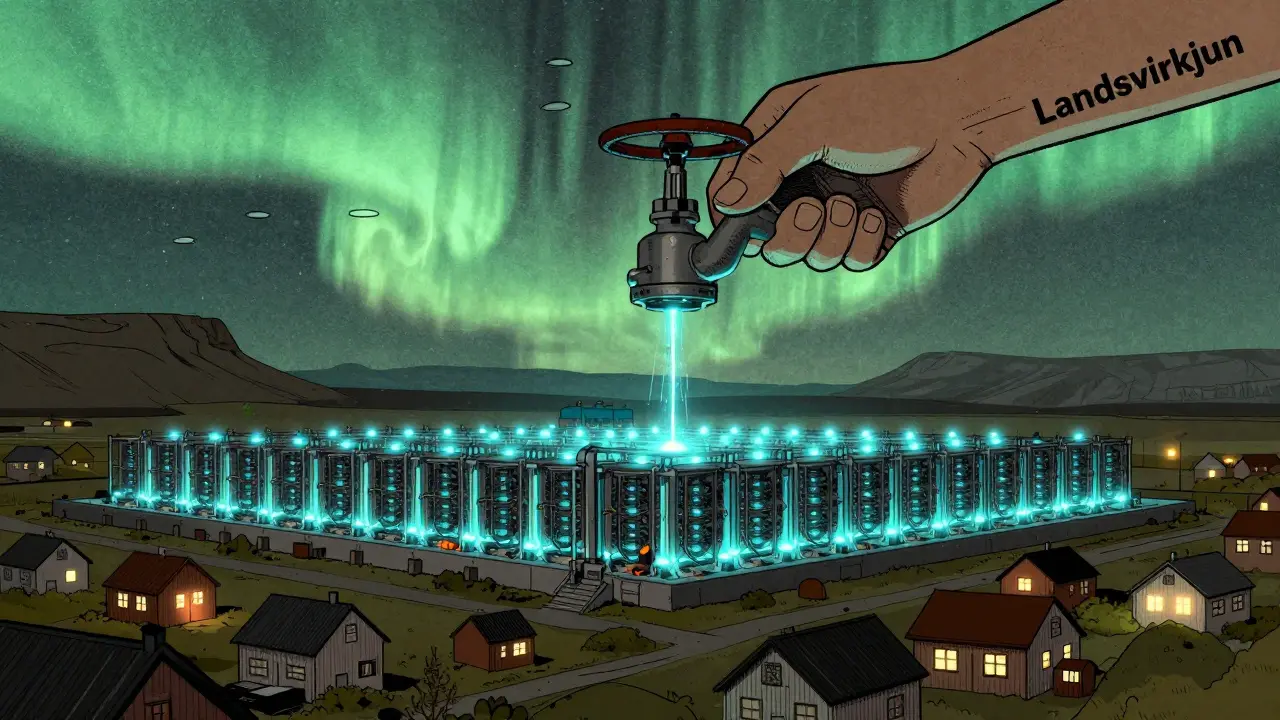
For years, Iceland was the dream destination for cryptocurrency miners. Cheap, clean power from volcanoes and glaciers. Free cooling from subzero air. No need for expensive AC units. Miners flocked there from China, Russia, and the U.S., turning small towns into data center hubs. But now, the lights are starting to dim-literally. The country’s national power company, Landsvirkjun, has quietly begun limiting how much electricity crypto operations can pull from the grid. And it’s not a temporary fix. This is a full-scale reset.
Why Iceland Was the Crypto Mining Paradise
Iceland’s geothermal and hydroelectric power is among the cheapest and greenest on Earth. In 2017, crypto mining sucked up 90% of all electricity used by the country’s data centers. By 2023, mining operations were using more power than the entire Icelandic population. That’s not a typo. A single large mining farm in Reykjanesbær could consume as much electricity as 10,000 homes. And Iceland only has about 370,000 people total.Miners didn’t care. They came for the numbers: $0.02 per kWh, compared to $0.15 in Texas or $0.30 in Germany. Companies like Hive Blockchain, Genesis Mining, and Bitfury built massive facilities with thousands of ASIC rigs. They brought in billions in foreign investment. The economy, still shaky from the 2008 crash, welcomed it. Crypto wasn’t just a tech trend-it was a lifeline.
The Energy Crisis Nobody Wanted to Talk About
But the numbers started to scare people. Not just economists. Ordinary Icelanders. Parents worried their kids wouldn’t have enough heat in winter. Fishermen feared power cuts would freeze their processing plants. Hospitals didn’t want to risk backup generators failing during a storm.In March 2024, Prime Minister Katrín Jakobsdóttir made it clear: “We cannot let crypto mining consume the future of our energy infrastructure.” It wasn’t a threat. It was a statement of fact. Landsvirkjun, the state-owned power utility, began reviewing all new mining permits. Existing operators had to prove their energy use wouldn’t interfere with national needs. Some were told they couldn’t expand. Others got their power capped at 80% of their peak draw.
There’s no official public document listing exact limits. That’s because Landsvirkjun doesn’t issue press releases about power cuts to crypto farms. Instead, they work behind the scenes-adjusting grid allocations, slowing new connections, and requiring miners to install real-time energy monitors. If a facility spikes usage during peak winter hours? They get a call. Then a warning. Then a reduction.
It’s Not a Ban. It’s a Reallocation
This isn’t about banning crypto. Iceland still allows trading, wallets, and exchanges. The Icelandic Financial Supervisory Authority still licenses crypto businesses. The government still talks about blockchain innovation. But mining? That’s the target.Think of it like this: Iceland’s power grid is a fixed-size pie. In 2019, 60% went to homes and businesses. 40% went to mining. By 2025, mining was eating up 70%. The rest had to stretch. Schools closed early in winter. Electric car charging stations went offline. Rural communities got scheduled blackouts.
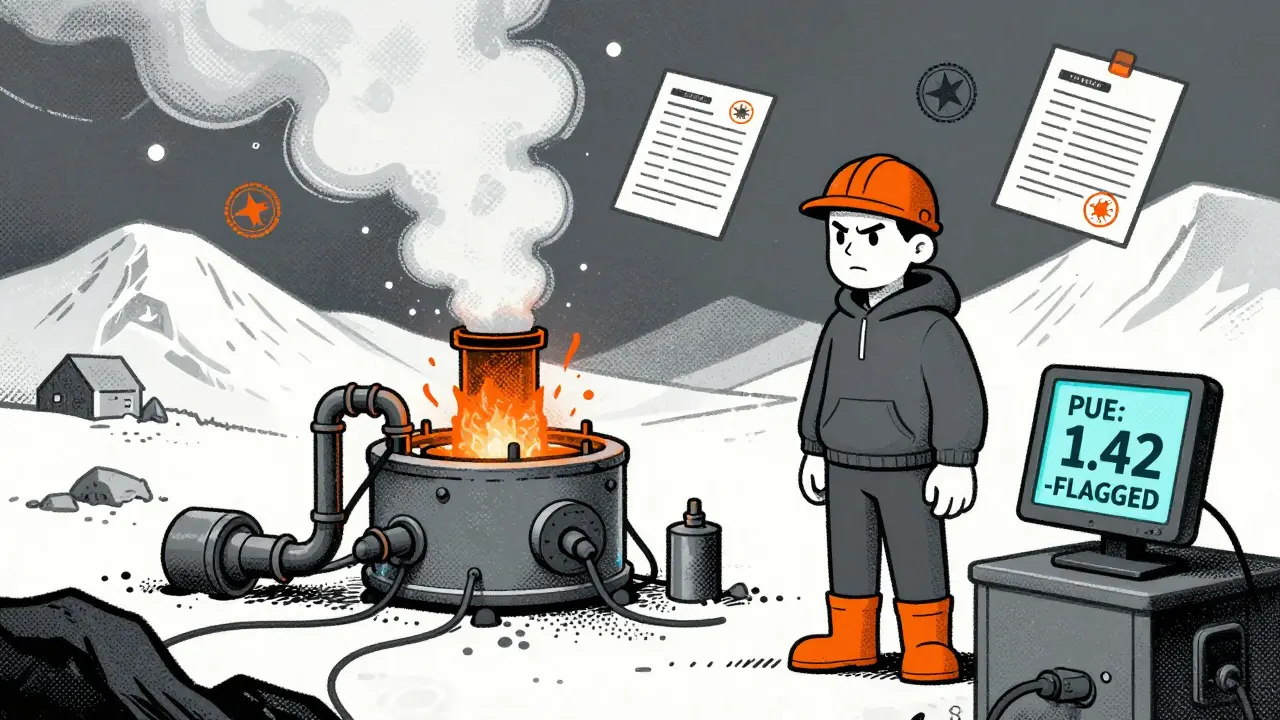
Landsvirkjun’s solution? Prioritize. Residential use first. Critical infrastructure second. Mining last. New mining projects now face a 3-year waiting list just to apply. Existing miners must submit quarterly energy reports. If their PUE (Power Usage Effectiveness) is above 1.4, they’re flagged. If they’re using non-renewable backup generators? They’re out.
Who’s Still Mining? And How?
Some big players are adapting. Hive Blockchain upgraded its facilities to use only excess geothermal steam that would’ve otherwise been vented into the air. Bitfury built a new site near a hydro plant that runs at night when demand is low. These aren’t just greenwashing moves-they’re survival tactics.Smaller miners? Many left. Some moved to Canada. Others to Georgia. A few stayed and switched to blockchain tech that doesn’t need ASICs-like validating transactions for decentralized finance (DeFi) networks. These use far less power. They’re not mining Bitcoin. But they’re still part of the crypto ecosystem.
And here’s the twist: Iceland’s own central bank is now testing a digital currency, a CBDC. It’s not meant to replace cash. It’s meant to replace the need for private crypto mining altogether. If the government can run its own digital payments system, why let foreign companies drain the grid?
What This Means for the Global Crypto Industry
Iceland’s shift is a warning shot for every country that thought cheap energy = free pass for mining. The era of “build it and they will come” is over. Now, governments are asking: What’s the cost? Not just in dollars. In carbon. In public trust. In energy security.Other countries are watching closely. Norway, with its hydropower, is debating similar limits. Sweden is pushing for energy quotas per mining rig. Even Canada, once a top mining hub, is tightening rules in provinces like Quebec, where power demand is rising fast.
The message is clear: Renewable energy isn’t an infinite resource. It’s a shared public good. And when private companies use too much, the public pays the price.
Is There Still a Future for Crypto in Iceland?
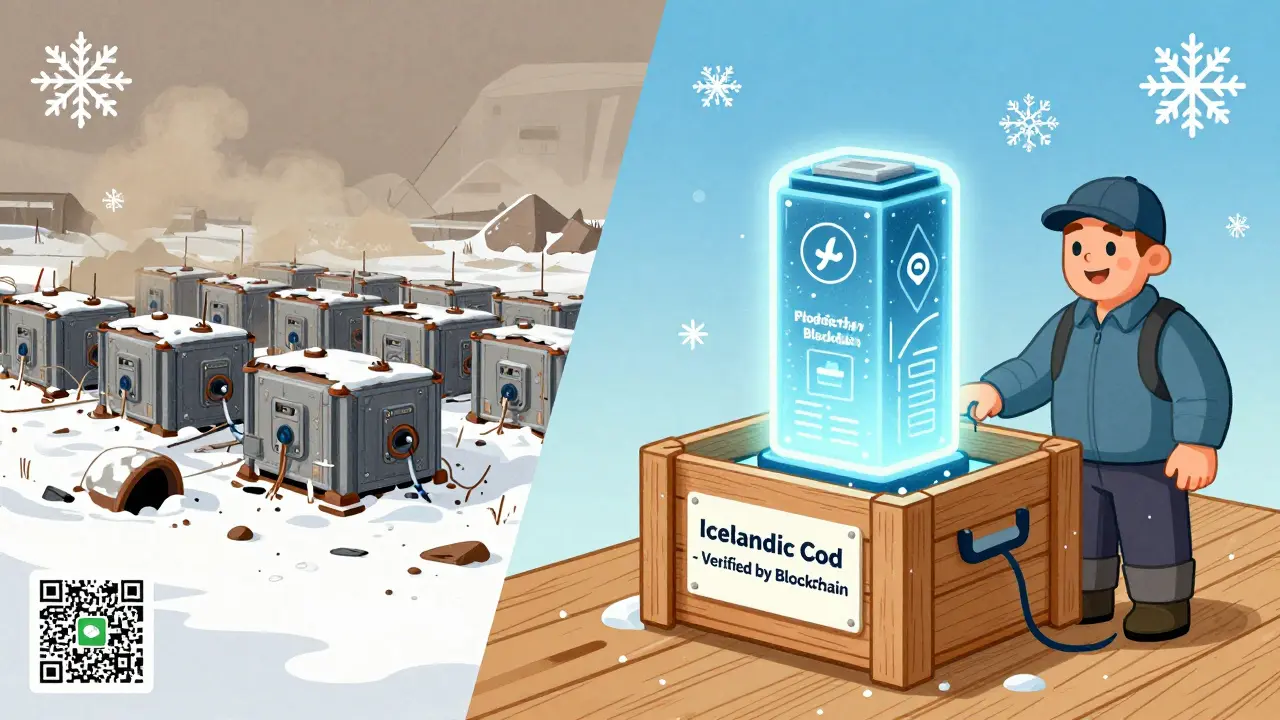
Yes-but not the way it used to be. The future isn’t in giant, noisy farms full of ASICs. It’s in smart, low-power blockchain applications: supply chain tracking for Icelandic fish exports, digital identity for remote communities, or secure voting systems for local councils.Iceland isn’t turning its back on crypto. It’s outgrowing it. The country that once welcomed miners as heroes is now asking them to prove they’re worth the cost. And that’s a smarter, more sustainable path.
What Miners Should Do Now
If you’re running a mining operation in Iceland-or thinking about it-here’s what you need to know:- Don’t assume cheap power means open access. Permits are now tied to energy efficiency, not just money.
- Upgrade to PUE below 1.2. Anything above 1.4 is a red flag. Use direct geothermal heat exchange, not air cooling.
- Apply for off-peak power only. Nighttime mining is still allowed. Daytime? Not so much.
- Consider switching to non-mining blockchain work. Transaction validation, smart contracts, and tokenization use 95% less energy than Bitcoin mining.
- Prepare for audits. Landsvirkjun now requires monthly energy logs. No exceptions.
The golden age of crypto mining in Iceland is over. But the next chapter? It’s quieter. Cleaner. And maybe, just maybe, more lasting.
Is cryptocurrency mining still legal in Iceland?
Yes, cryptocurrency mining is still legal in Iceland. However, it is heavily regulated through energy allocation rules set by Landsvirkjun, the national power company. Miners must prove their operations won’t interfere with public energy needs. New projects face long approval delays, and existing ones must meet strict efficiency standards.
Why did Iceland start restricting crypto mining?
Iceland started restricting crypto mining because mining operations were consuming more electricity than the entire population. In 2023, Bitcoin mining alone used over 5% of the country’s total energy output. With winter heating demands rising and renewable capacity maxed out, the government and power company had to prioritize homes, hospitals, and essential services over mining farms.
Does Iceland’s power company directly ban mining operations?
No, Landsvirkjun doesn’t issue outright bans. Instead, it controls access to the grid. New mining permits are frozen. Existing miners face power caps, mandatory efficiency audits, and restrictions on peak-hour usage. If a mine can’t prove it’s using renewable energy efficiently, it gets reduced power-or shut off entirely.
Can you still mine Bitcoin in Iceland today?
Technically yes, but it’s extremely difficult. Most large-scale Bitcoin mining operations have scaled back or relocated. Those still operating use only excess geothermal power, run during off-peak hours, and have invested in ultra-efficient hardware. The days of building a massive ASIC farm overnight are gone.
What’s the difference between mining and other crypto activities in Iceland?
Mining uses massive amounts of electricity to solve complex math problems and create new coins. Other crypto activities-like running a wallet, trading on an exchange, or validating DeFi transactions-use minimal power. Iceland still supports these lower-energy uses and even encourages them as part of its digital economy strategy.
Are there any alternatives to mining in Iceland’s crypto space?
Yes. Many former miners have shifted to blockchain applications that don’t require energy-intensive proof-of-work. Examples include using blockchain for sustainable fishing supply chains, digital land registries, and secure identity verification for remote communities. These projects are now getting government funding and support.
How has the public in Iceland reacted to crypto mining restrictions?
Public opinion has shifted from curiosity to concern. Early on, many saw mining as a sign of economic progress. Now, with power bills rising and winter blackouts becoming more common, most Icelanders support the restrictions. Local communities have even formed watchdog groups to monitor mining energy use.
Is Iceland’s move part of a global trend?
Absolutely. Countries like Norway, Sweden, Canada, and even parts of the U.S. are starting to limit crypto mining based on energy use. The focus is no longer on whether mining is legal-it’s on whether it’s sustainable. Iceland is leading the way in showing that even renewable energy has limits.


Naman Modi
December 24, 2025 AT 13:38Mmathapelo Ndlovu
December 25, 2025 AT 07:45Sybille Wernheim
December 26, 2025 AT 02:59Cathy Bounchareune
December 28, 2025 AT 02:49Helen Pieracacos
December 29, 2025 AT 12:00Steve B
December 31, 2025 AT 01:21