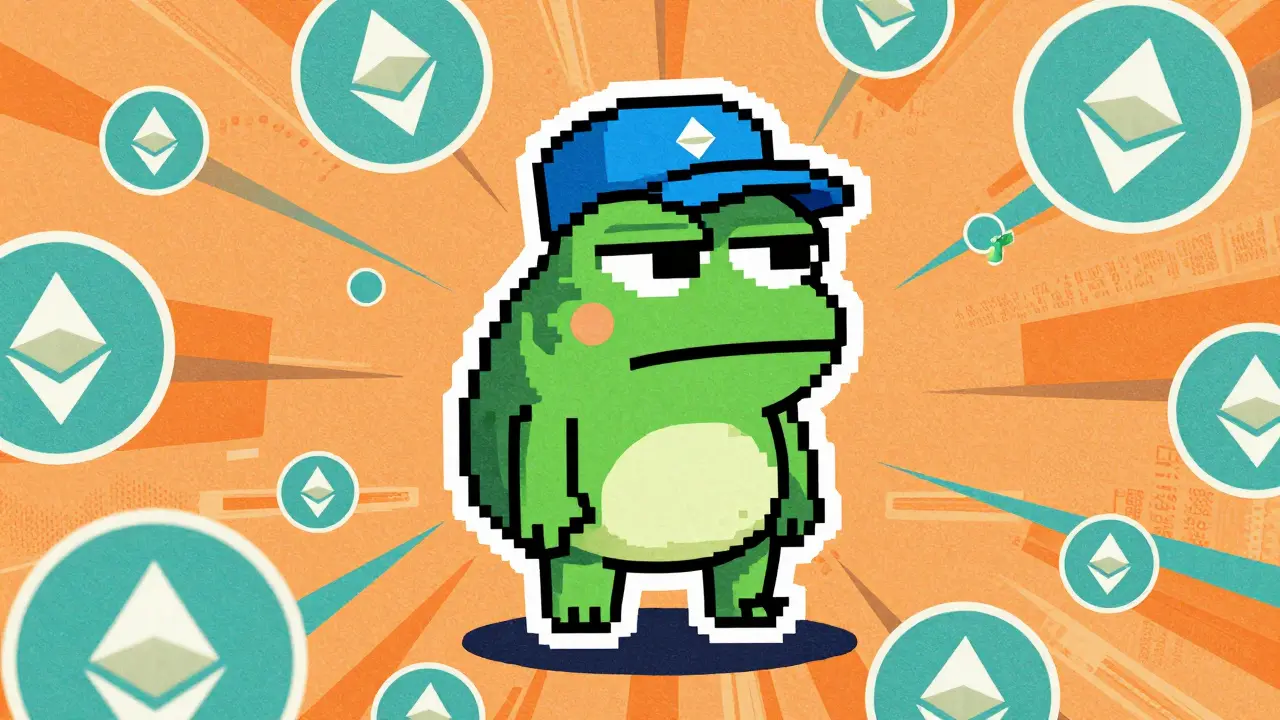
You’ve probably seen the name Based Father Pepe pop up on your social media feed or a crypto chat group. It’s another entry in the crowded world of meme coins, riding the wave of internet humor and the enduring popularity of the Pepe the Frog character. But before you connect your wallet and buy in, it helps to know exactly what you’re dealing with. This isn’t just about buying a funny frog token; it’s about understanding a highly volatile asset class that operates on hype rather than hard utility.
Based Father Pepe, trading under the ticker symbol FPEPE, is an ERC-20 token built on the Ethereum blockchain. That means it relies on Ethereum’s infrastructure for security but requires you to pay gas fees in ETH to move your tokens around. Launched as a tribute to meme culture, it claims to offer "dynamic cryptocurrency project" features, though in practice, it functions primarily as a speculative vehicle. As of late 2024 data, the token had a maximum supply of 1 billion units, with roughly 886 million already in circulation. The price hovered around $0.000026, but that number can swing wildly in minutes.
The Anatomy of a Meme Coin Token
To understand FPEPE, you have to look at how it’s built. Unlike Bitcoin, which has a fixed supply cap of 21 million and a decentralized network of miners securing it, FPEPE is a smart contract on Ethereum. This makes it easier to create but also concentrates risk. The creators of FPEPE hold the ability to modify the contract unless they have burned their admin keys-a step many smaller meme projects skip.
Here is what the technical reality looks like:
- Blockchain: Ethereum (ERC-20 standard).
- Total Supply: 1,000,000,000 FPEPE.
- Circulating Supply: ~886,439,730 FPEPE.
- Gas Fees: You need ETH in your wallet to trade, even if you are buying FPEPE.
- Utility: None documented. No staking rewards, no governance rights, no merchant acceptance.
The lack of utility is the defining feature here. In the crypto world, "utility" means the token does something useful-like paying for cloud storage, voting on protocol changes, or accessing a game. FPEPE doesn’t do any of that. Its value comes entirely from what other people are willing to pay for it right now. This is known as pure speculation.
FPEPE vs. The Big Players: PEPE, DOGE, and SHIB
It’s easy to confuse FPEPE with the original PEPE coin or giants like Dogecoin and Shiba Inu. They share the same DNA-meme origins-but their market realities are vastly different. Let’s break down why FPEPE sits at the bottom of the food chain.
| Feature | Based Father Pepe (FPEPE) | PEPE (Original) | Dogecoin (DOGE) |
|---|---|---|---|
| Market Cap | Minimal / Micro-cap | $1.5 Billion+ | $10+ Billion |
| Exchange Listings | 1 verified exchange (Bitget) | Multiple major exchanges | All major global exchanges |
| Liquidity | Low ($68k daily volume) | High | Very High |
| Community Size | <5,000 active members | 150,000+ active members | Millions globally |
| Risk Level | Extremely High | High | Moderate (for crypto) |
Notice the liquidity difference. Liquidity is how easily you can sell your tokens without crashing the price. With FPEPE, the 24-hour trading volume was around $68,000. If someone tries to sell $10,000 worth of FPEPE quickly, the price could drop 20% instantly because there aren’t enough buyers waiting in the order book. With Dogecoin, you can sell millions of dollars worth without moving the needle much. That’s why experts categorize FPEPE as "Category E" risk-meaning it has minimal survival probability compared to established players.
The Volatility Trap: Why Prices Swing So Hard
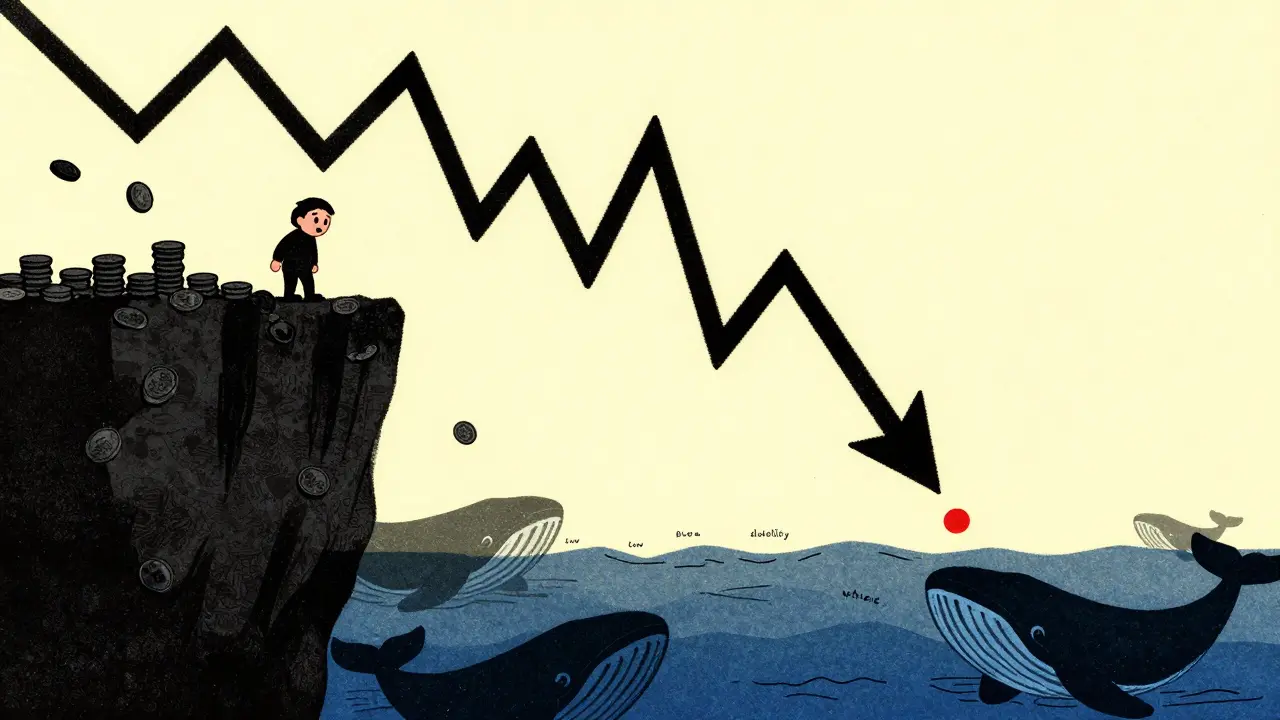
If you’ve looked at charts for small-cap meme coins, you’ve seen vertical lines going up and down. FPEPE is no exception. Data from October 2024 showed a single-day price decline of 62.55%. For context, Bitcoin rarely drops more than 5% in a day unless there is major news. A 62% drop in 24 hours wipes out most retail investors who bought near the top.
This volatility isn’t a bug; it’s a feature of low-market-cap tokens. Here is why it happens:
- Low Float: With only ~88% of tokens circulating, large holders (often called "whales") can manipulate the price by selling their stash.
- Hype Cycles: Meme coins live and die by attention. When a tweet goes viral, prices spike. When the tweet gets buried, prices crash.
- No Fundamental Anchor: Since FPEPE generates no revenue and has no use case, there is no "fair value" to return to. The price is purely psychological.
Analysts from VanEck’s crypto research team flagged this pattern, noting that tokens with "unsustainable volatility patterns" and "lack of differentiation" face near-certain elimination within 12-18 months. Delphi Digital echoed this, suggesting that without a strong community or utility, these tokens become obsolete quickly.
How to Buy FPEPE (And What Could Go Wrong)
If you still want to take the risk, the process is technically straightforward but carries hidden costs. You cannot buy FPEPE directly with USD on Coinbase or Binance. You have to go through a few steps:
- Get an Ethereum Wallet: Download MetaMask or Trust Wallet. These are non-custodial wallets, meaning you control the keys. If you lose them, your money is gone forever.
- Buy ETH: Purchase Ethereum on a centralized exchange like Coinbase or Kraken and send it to your wallet address.
- Add Gas Funds: Keep extra ETH in your wallet. You will need this to pay for transaction fees on the Ethereum network. During high traffic, gas fees can exceed $10-$20 per transaction.
- Use a Decentralized Exchange (DEX): Connect your wallet to a DEX like Uniswap or SushiSwap. Paste the exact contract address for FPEPE. Warning: There are many fake copies of popular meme coins. Always verify the contract address from official sources like CoinGecko or the project’s verified Twitter.
- Swap: Execute the swap. You will see a "slippage" setting. For volatile tokens like FPEPE, you may need to increase slippage to 5-10% to ensure the trade goes through, but this means you might get fewer tokens than expected due to price movement during the transaction.
The biggest risk here isn’t just the price dropping; it’s the "rug pull" potential. While Clipstrust noted claims of "secure smart contracts," there is no independent audit widely cited for FPEPE. In the worst-case scenario, developers can disable trading or drain the liquidity pool, leaving users with worthless tokens. This is rare for listed tokens but common in the broader meme coin ecosystem.
Regulatory Red Flags and Future Outlook
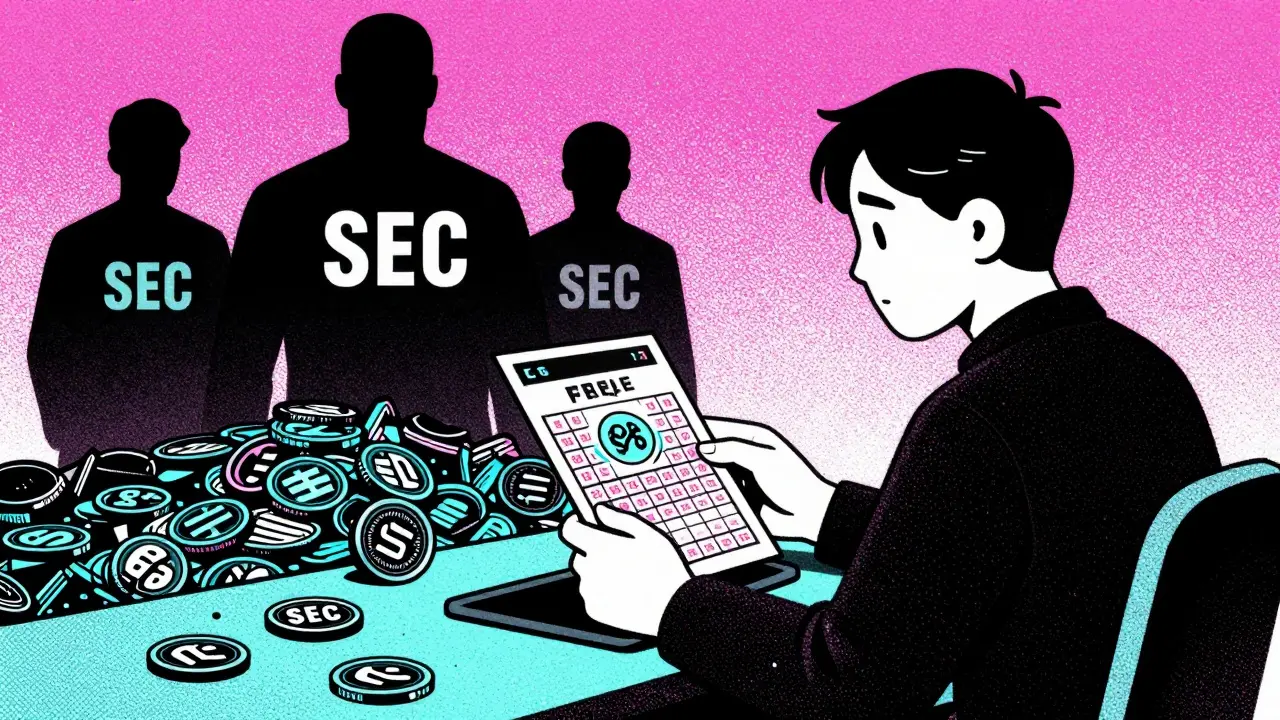
The landscape for meme coins is getting stricter. In September 2024, the SEC took enforcement action against the creators of the original PEPE coin, signaling that meme tokens without clear utility might be classified as unregistered securities. This sets a dangerous precedent for copycats like FPEPE.
Dr. Elena Rodriguez from MIT’s Digital Currency Initiative pointed out that "meme tokens with identical structures to existing projects face near-impossible hurdles in gaining sustainable market traction." Without a unique selling proposition, FPEPE is fighting an uphill battle against thousands of new memes launching every quarter. Messari’s report projected that only 5-7% of current meme tokens would survive long-term into 2025. Given FPEPE’s low liquidity, small community, and lack of development roadmap, it falls squarely into the 93% likely to fail category.
User sentiment reflects this skepticism. On Reddit’s r/CryptoMoonShots, discussions about FPEPE were sparse, with users calling it a "copycat with weaker community" and warning of "artificial pumps." There are no success stories, no merchant integrations, and no enterprise adoption. Gartner’s blockchain survey confirmed zero enterprise implementations of the token.
Is FPEPE Worth Your Money?
Let’s be direct: Based Father Pepe is not an investment. It is a gamble. If you treat it like a lottery ticket where you expect to lose the entire amount, then maybe it’s fun. But if you are looking for growth, stability, or technological innovation, FPEPE offers none of those things.
The crypto market is full of opportunities, but they usually come with substance-projects building real software, solving real problems, or creating new financial primitives. Meme coins are entertainment products wrapped in code. FPEPE is one of the smallest, least liquid, and most volatile options available. Before you spend even $10, ask yourself if you are okay with watching that $10 turn into $0 overnight. For most people, the answer should be no.
What is the main risk of buying Based Father Pepe (FPEPE)?
The primary risk is extreme volatility and low liquidity. FPEPE has experienced single-day drops of over 60%, and its low trading volume means you might not be able to sell your tokens without crashing the price further. Additionally, as a small-cap meme coin, it carries a higher risk of being abandoned by developers or facing regulatory scrutiny.
Does FPEPE have any real-world utility?
No. Based Father Pepe is a speculative meme token with no documented utility. It does not offer staking rewards, governance rights, or payment processing capabilities. Its value is derived solely from market sentiment and hype.
How is FPEPE different from the original PEPE coin?
The original PEPE coin has a significantly larger market capitalization (over $1.5 billion), higher liquidity, and a much larger community. FPEPE is a smaller, less established derivative with lower trading volumes and higher risk. PEPE is listed on multiple major exchanges, while FPEPE has limited exchange availability.
Can I buy FPEPE on Coinbase or Binance?
Currently, no. FPEPE is not listed on major centralized exchanges like Coinbase or Binance. To buy it, you must use a decentralized exchange (DEX) like Uniswap, which requires you to have an Ethereum wallet and hold ETH for gas fees.
Is FPEPE a scam?
While there is no definitive proof of a malicious "rug pull" as of late 2024, it exhibits many characteristics of high-risk speculative assets. The lack of transparency, anonymous development team, and absence of utility make it inherently risky. Always verify contract addresses and never invest more than you can afford to lose.
What is the total supply of FPEPE?
The maximum supply of Based Father Pepe is 1,000,000,000 tokens. Approximately 886,439,730 tokens were in circulation as of October 2024, meaning about 88.6% of the total supply is available in the market.
Why do meme coins like FPEPE crash so hard?
Meme coins lack fundamental value anchors like earnings or user growth. Their prices are driven by hype and social media trends. When interest fades, or when large holders (whales) decide to sell, there are often not enough buyers to support the price, leading to rapid and severe declines.