Imagine trying to solve a puzzle that gets harder every time someone else solves it. That is the reality of Bitcoin mining, where mining difficulty acts as a dynamic barrier ensuring consistent block production regardless of network power. If you have ever looked at a Bitcoin chart, you’ve likely seen the difficulty line climbing steadily upward. But why does it change? What happens when miners leave the network? And what do the numbers from mid-2026 tell us about the health of the blockchain?
Understanding these trends isn't just for tech geeks. It’s crucial for anyone holding Bitcoin or considering mining hardware. The difficulty number directly impacts how much energy and money you need to spend to earn rewards. In this guide, we break down the history, the math, and the current state of play so you can make sense of the noise.
What Is Mining Difficulty Anyway?
At its core, mining difficulty is a measure of how hard it is to find a valid block hash. Think of it as a probabilistic index. It doesn’t mean you need exactly X amount of computing power; it means that statistically, you will need to perform roughly X number of calculations (hashes) to find a solution.
Data providers like Newhedge define this simply: the difficulty number represents the approximate number of hashes required to mine a single block. When the difficulty is 1, it’s easy. When it’s in the trillions, it’s incredibly competitive. This metric is tied directly to the Proof-of-Work mechanism. It ensures that no matter how many computers join or leave the network, the time between blocks stays steady.
| Concept | Definition | Impact on Miners |
|---|---|---|
| Mining Difficulty | A protocol parameter measuring the statistical hardness of finding a block hash. | Determines the probability of earning a reward per unit of work. |
| Hash Rate | The total computational power deployed by all miners worldwide. | Higher hash rate leads to higher difficulty adjustments. |
| Block Time | The target interval between new blocks (10 minutes). | Difficulty adjusts to keep this average constant. |
The 2,016 Block Rule: How Adjustments Work
You might wonder if difficulty changes every second. It doesn’t. The Bitcoin protocol has a strict schedule. Every 2,016 blocks, the network recalculates the difficulty. Since the goal is one block every 10 minutes, 2,016 blocks take roughly two weeks.
Here is the logic:
- If blocks were found faster than 10 minutes on average over the last two weeks, the network assumes too much power was added. It increases difficulty.
- If blocks took longer than 10 minutes, the network assumes power left. It decreases difficulty.
This self-correcting mechanism is brilliant because it decouples security from price volatility. Even if Bitcoin’s price crashes and miners turn off their rigs, the difficulty drops, keeping the remaining miners profitable enough to secure the chain. GraniteShares notes that this automatic adjustment is a core design feature that has kept the network operating predictably despite massive shifts in global hash rate.
Historical Growth: From 1 to Trillions
Let’s look at the big picture. When Bitcoin launched in 2009, the difficulty was literally 1. You could mine blocks with a basic laptop. Today, that’s impossible. According to Hashrate Index, the difficulty has grown from 1 to over 48 trillion in earlier reports, and recent data points show even higher figures. This represents a compound monthly increase of about 20.64% over the life of the network.
Why such explosive growth? Because industrial-scale mining emerged. What started as hobbyists evolved into massive farms using specialized ASIC chips. As more efficient hardware entered the market, the hash rate skyrocketed. To maintain the 10-minute block time, the difficulty had to rise exponentially to match that power.
It’s important to note that this trend isn’t perfectly smooth. While the long-term trajectory is up, there are dips. These dips occur when economic conditions worsen-perhaps electricity costs spike, or regulations tighten, causing miners to exit. The protocol responds by lowering difficulty, making it easier for those who remain to stay in business.

Current Trends: The Mid-2026 Snapshot
Fast forward to July 2026. The landscape looks different than it did five years ago. YCharts reported that as of mid-June 2026, the average Bitcoin difficulty stood at approximately 124.93 trillion. This is slightly down from 125.12 trillion the previous day and about 1.17% lower than a year prior.
Wait, didn’t I say difficulty always goes up? Not necessarily in the short term. A slight decline or flatline indicates that the hash rate has stabilized or dipped slightly. This could be due to miners upgrading equipment (taking old rigs offline temporarily) or reacting to market prices. However, compared to the historical explosion from 1 to trillions, this period shows maturity. The most dramatic exponential growth happened in earlier phases as the industry scaled up.
Newhedge’s estimators around this time showed similar high-level figures, confirming that we are operating in an era of extreme computational competition. For individual miners, this means the barrier to entry is higher than ever. You aren’t competing against your neighbor’s PC; you’re competing against megafarms in Texas or Scandinavia.
Difficulty vs. Hash Rate: The Two Sides of the Coin
To truly understand trends, you must distinguish between difficulty and hash rate. They are related but distinct.
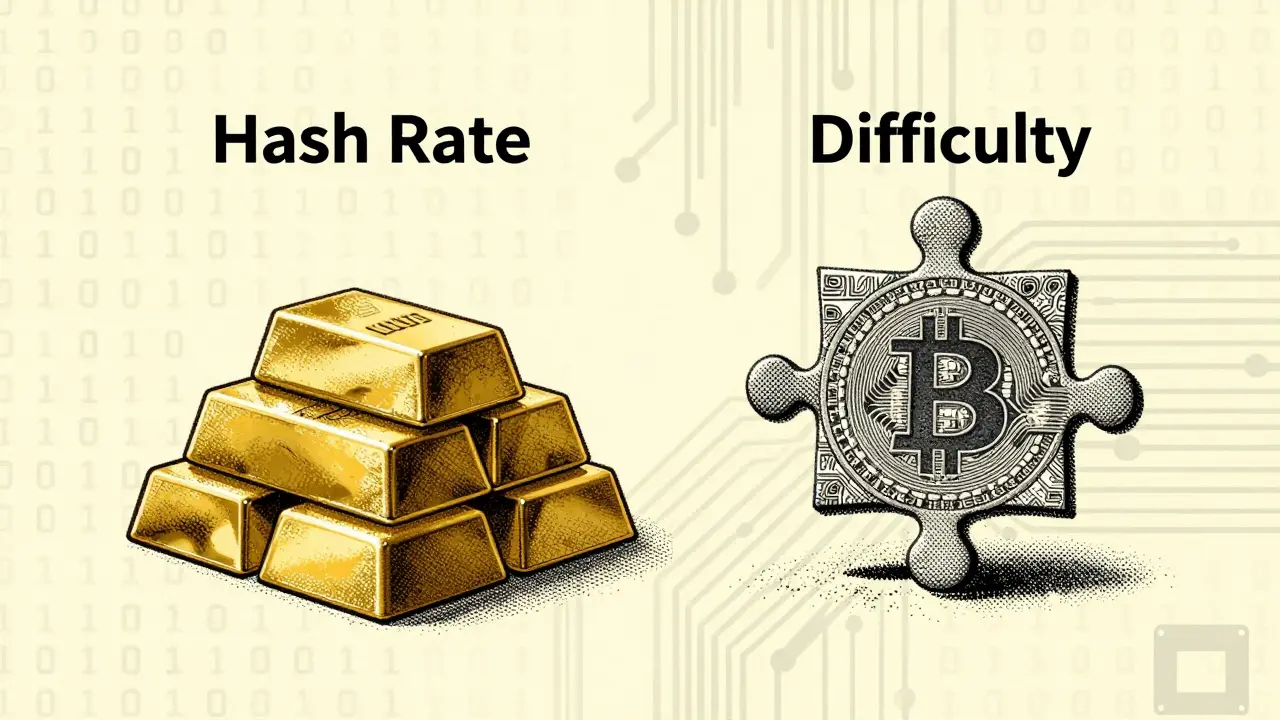
- Hash Rate is the supply side. It’s the actual computing power miners put into the network. It fluctuates daily based on miner behavior, hardware availability, and energy costs.
- Difficulty is the demand side response. It’s the protocol’s way of regulating the hash rate to meet the 10-minute target.
When hash rate rises, difficulty follows after a lag of about two weeks. When hash rate falls, difficulty drops. Investors often watch hash rate as a leading indicator. If hash rate is surging, expect difficulty to jump soon. Conversely, if hash rate is dropping, difficulty will eventually ease, which might signal a bottom in miner capitulation.
GraniteShares emphasizes that both metrics are key for assessing Bitcoin’s security. A high difficulty backed by a high hash rate means the network is extremely secure against attacks. A sudden drop in both would raise red flags about network health.
Why Do Downward Adjustments Matter?
We tend to focus on record highs, but downward adjustments tell a compelling story. Bitbo and other charting services highlight these moments with red shading. Why do they happen?
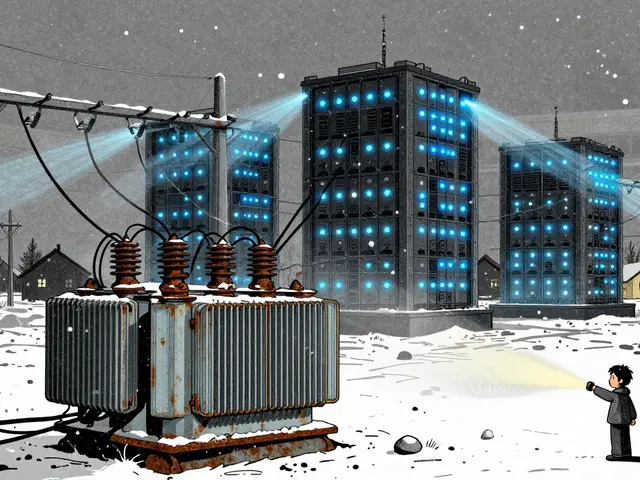
- Hardware Obsolescence: Older miners become unprofitable and shut down.
- Energy Costs: If electricity prices rise globally, marginal miners exit.
- Regulatory Shocks: Bans or restrictions in major mining hubs force capacity offline.
These events create temporary dips in difficulty. For savvy participants, these periods can offer opportunities. Lower difficulty means existing miners see a boost in revenue share until the next adjustment. It also signals consolidation in the industry, where only the most efficient operations survive. This cycle of expansion and contraction is healthy for the ecosystem, weeding out inefficiency.
Monitoring Your Own Mining Prospects
If you are thinking about mining, you can’t ignore these trends. Tools like GoMining and Newhedge provide live estimators that show not just current difficulty, but projected changes for the next epoch. Understanding that difficulty is a ratio-specifically, the Difficulty Target divided by the Current Target-helps you calculate expected returns.
For example, if the difficulty is 125 trillion, and your rig produces 1 terahash per second, you are contributing a tiny fraction of the total network power. Your chance of finding a block alone is near zero. This is why most miners join pools. But even in a pool, rising difficulty eats into your share of the rewards. You must constantly evaluate whether your electricity cost is low enough to justify the energy expenditure given the current difficulty level.
Future Outlook: Stability Amidst Scale
Looking ahead, the fundamental rules aren’t changing. The 2,016-block adjustment and the 10-minute target are hardcoded into Bitcoin’s consensus. There is no plan to alter this. Therefore, future difficulty behavior will continue to mirror hash rate deployment.
As hardware efficiency improves, we may see continued growth in hash rate, pushing difficulty higher. However, the rate of growth may slow as the industry matures. The wild west days of double-digit monthly percentage jumps are largely behind us. Now, we see more nuanced fluctuations driven by energy markets and institutional participation. For investors and miners alike, monitoring these subtle shifts provides better insights than chasing headline numbers.
How often does Bitcoin mining difficulty adjust?
Bitcoin mining difficulty adjusts automatically every 2,016 blocks. Given the target block time of 10 minutes, this occurs approximately every two weeks.
Can mining difficulty go down?
Yes. If the network's hash rate decreases significantly-for example, if many miners turn off their machines due to low prices or high energy costs-the protocol will lower the difficulty to maintain the 10-minute block time.
What was the Bitcoin difficulty in mid-2026?
According to data from YCharts, the average Bitcoin difficulty in mid-June 2026 was approximately 124.93 trillion, showing a slight decrease from the previous year.
Does higher difficulty mean Bitcoin is more secure?
Generally, yes. Higher difficulty usually correlates with a higher hash rate, meaning more computational power is securing the network. This makes it more expensive and difficult for attackers to manipulate the blockchain.
How does difficulty affect my mining profits?
As difficulty rises, each unit of hash rate earns fewer rewards. If your electricity costs remain fixed, rising difficulty reduces your profit margin unless Bitcoin's price increases proportionally.