Supply Chain Transparency Calculator
How Blockchain Improves Your Supply Chain
Based on real-world examples like Walmart's mango traceability that went from 7 days to 2.2 seconds, estimate your potential gains from blockchain implementation.
Supply Chain Assessment
Estimated Improvements
Time Savings
From to
Cost Savings
Potential annual savings:
Based on fewer recall incidents
Implementation Estimate
Based on industry data from:
- Walmart's mango traceability (2.2 seconds vs 7 days)
- Nestle's palm oil tracking
- IBM Food Trust network
Key Insight
As shown in the article, blockchain doesn't just speed up traceability—it transforms trust. When implemented blockchain, they reduced recall investigation times from days to seconds.
When you buy a bag of coffee, a pair of sneakers, or a bottle of medicine, do you really know where it came from? Most supply chains are black boxes-dozens of suppliers, warehouses, and transporters all handling the same product, but no one shares the full story. That’s where blockchain for supply chain transparency changes everything.
What Blockchain Actually Does in Supply Chains
Blockchain isn’t just a fancy word for a database. It’s a shared, unchangeable record that multiple parties can see and verify without trusting each other. In supply chains, that means every step-from the farm that grew the cotton to the store shelf where your shirt is sold-is logged as a permanent, encrypted entry. Once it’s written, no one can delete or alter it without everyone else on the network knowing. Traditional systems rely on spreadsheets, emails, or centralized software like ERP platforms. Those systems are vulnerable. One person with access can change records. One system failure can wipe out data. Blockchain fixes that by spreading the record across dozens or hundreds of computers. If one goes down, the rest still hold the truth. Each entry in the chain includes who did what, when, and where. A farmer logs the harvest date. A shipper adds the container ID and temperature readings. A customs agent stamps the entry with clearance time. All of it ties together in a single, unbreakable chain. That’s the core of transparency: no more guessing. No more blame-shifting. Just facts.Why Companies Are Switching from Old Systems
Before blockchain, traceability was patchy. If a batch of contaminated food showed up in a store, companies had to call every supplier, check paper receipts, and wait days to find the source. With blockchain, it takes seconds. In 2024, Walmart used blockchain to trace the origin of mangoes from farm to shelf in 2.2 seconds. The same process used to take nearly seven days. It’s not just about speed. It’s about trust. Suppliers, retailers, regulators, and even customers want proof. Are the diamonds ethically mined? Is the salmon wild-caught or farmed? Is the pharmaceutical ingredient genuine? Blockchain answers these questions with cryptographic certainty. Smart contracts-self-executing code on the blockchain-automate parts of the process too. If a shipment arrives late, the contract can automatically trigger a penalty. If a certificate of origin is missing, the system blocks payment until it’s uploaded. That cuts down on fraud, delays, and manual paperwork.Real Examples: Who’s Doing It Right
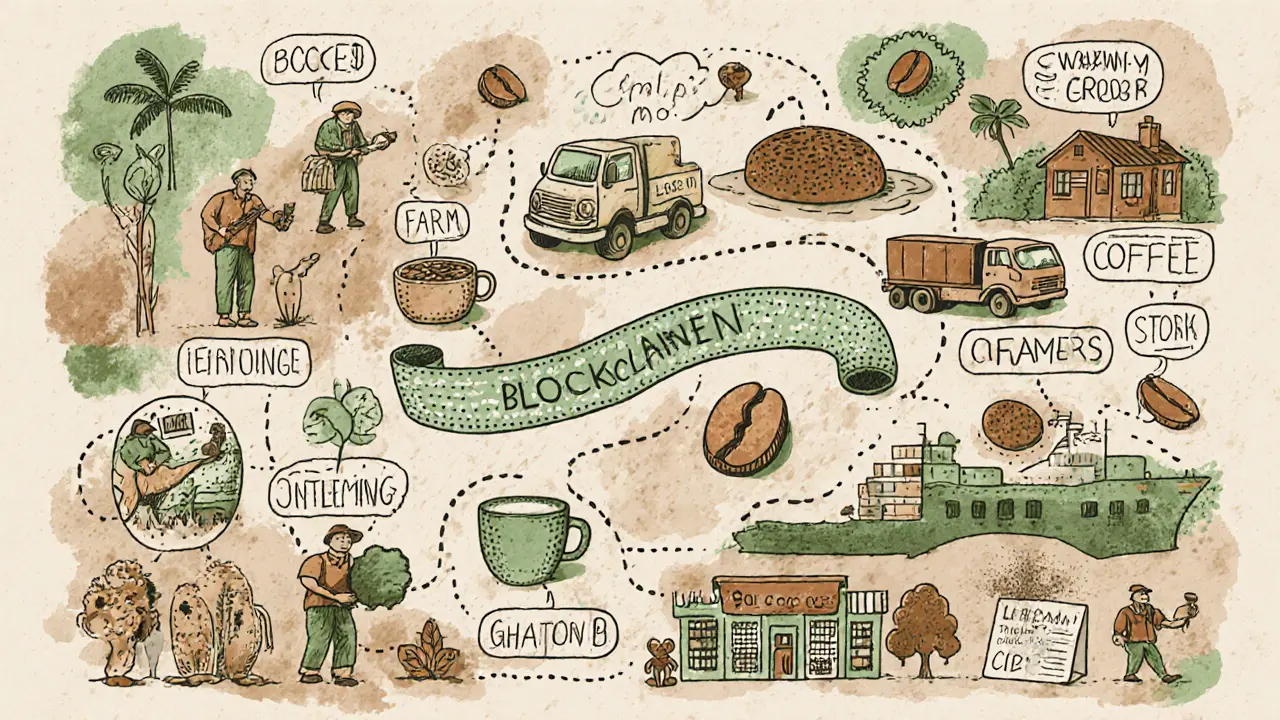
Renault Group moved all its supplier documentation onto a blockchain network and invited other carmakers to join. Now, when a part fails, they don’t have to dig through 20 different systems. They just scan the blockchain and see every supplier, test result, and inspection report tied to that part. In the food industry, companies like Nestlé and Unilever use blockchain to track palm oil back to the plantation. This helps them prove they’re not sourcing from deforested land-a big deal for ESG compliance and consumer trust. IBM’s Food Trust network connects over 400 companies, including Dole and Carrefour. They’ve cut food recall investigation times from days to seconds. That’s not just efficiency-it’s saving lives. In 2023, a tainted spinach outbreak was contained before it reached 12 states because blockchain flagged the exact farm and truck involved. Even small suppliers benefit. A coffee cooperative in Colombia started using a blockchain app to show buyers exactly where their beans were grown, how much rain they got, and what fair-trade premiums were paid. Their prices went up 22% in one year because buyers trusted the data.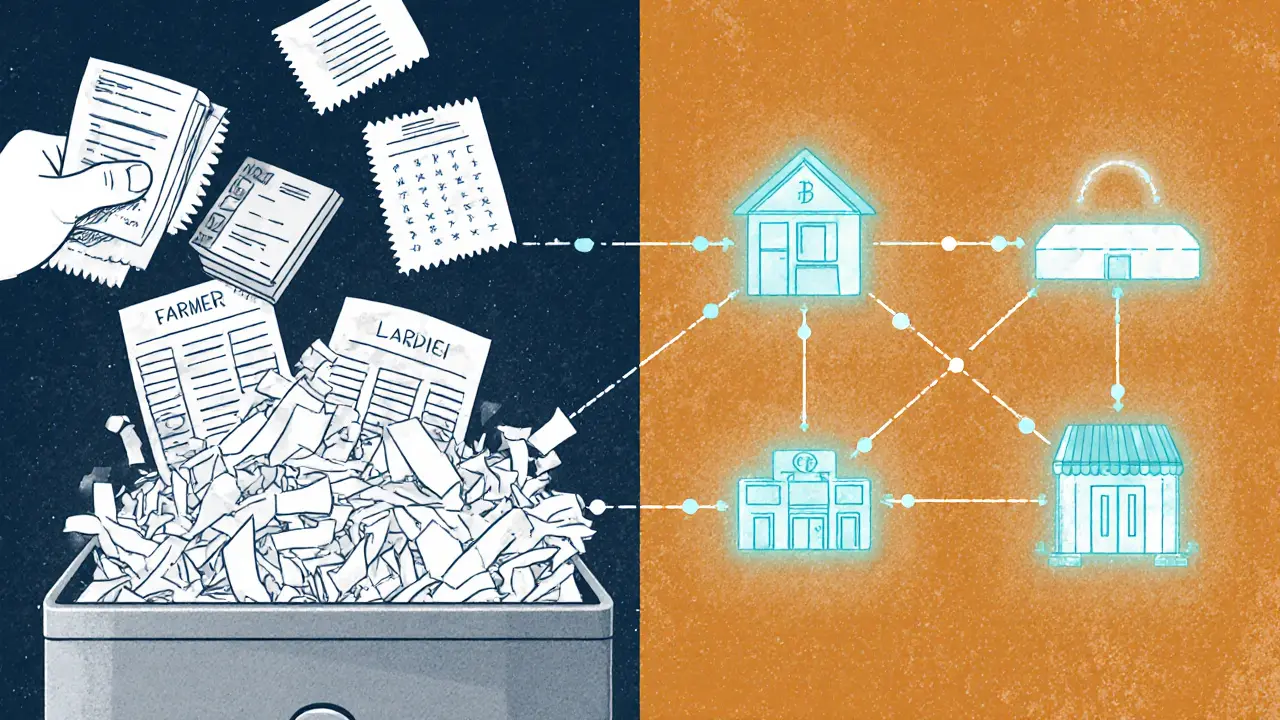
What’s Holding It Back
Despite the wins, blockchain isn’t magic. It has real limits. First, it’s only as good as the data you put in. If a supplier manually types in a fake harvest date, the blockchain will still record it. That’s why many companies now pair blockchain with IoT sensors-temperature loggers on shipping containers, GPS trackers on trucks, and RFID tags on pallets. These devices auto-feed data, cutting out human error. Second, not all blockchains are the same. Public blockchains like Bitcoin are open to anyone. But supply chains need privacy. That’s why enterprise solutions like IBM’s Hyperledger Fabric, Oracle’s Blockchain Platform, and Microsoft Azure Blockchain use permissioned networks. Only approved participants can join and see data. That’s crucial when you’re sharing trade secrets or pricing info. Third, getting everyone on board is hard. A supplier in Vietnam might not have the tech skills or budget to join. So big companies often set the rules: if you want to sell to us, you use our blockchain. That creates pressure, but it also forces change. And then there’s cost. Setting up a blockchain system isn’t cheap. You need software licenses, integration with existing ERP systems, training for staff, and ongoing maintenance. Small businesses can’t afford it alone. That’s why industry alliances like the Blockchain in Supply Chain Alliance are working on shared standards-so one company doesn’t have to rebuild the whole system just to work with a new partner.What’s Next: The Future of Transparent Supply Chains
The next wave of innovation is blending blockchain with other tech. AI analyzes blockchain data to predict delays before they happen. Machine learning spots patterns in supplier behavior-like repeated late deliveries or fake certifications-and flags them automatically. Zero-knowledge proofs are another breakthrough. They let you prove something is true without revealing the details. For example, a supplier can prove they paid fair wages without showing exact payroll records. That’s huge for privacy-sensitive industries like pharmaceuticals or defense. Governments are getting involved too. The EU is testing blockchain for carbon footprint tracking under its new Green Deal rules. The U.S. FDA is piloting blockchain for drug traceability to fight counterfeit medicines. By 2027, Gartner predicts over 50% of large global supply chains will use blockchain for at least one critical process. That’s not because it’s trendy-it’s because the cost of not using it is rising fast. Consumers demand proof. Regulators demand proof. Investors demand proof.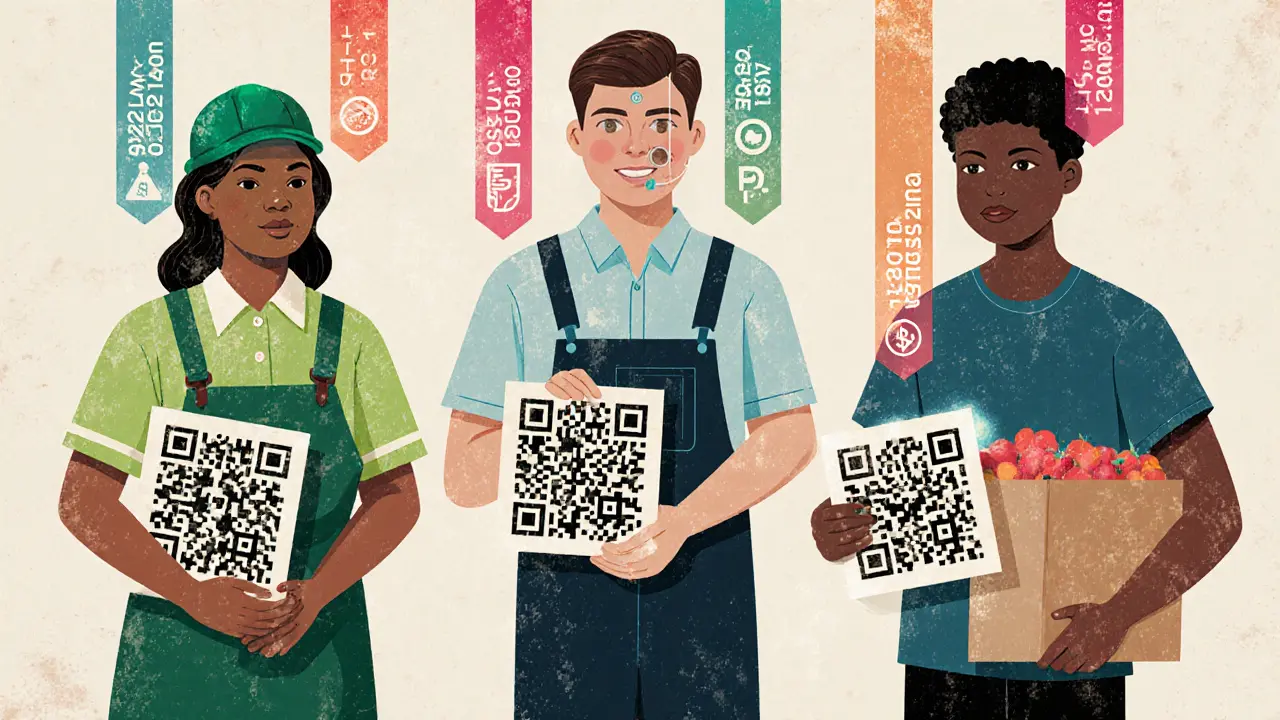
How to Get Started
If you’re considering blockchain for your supply chain, don’t try to boil the ocean. Start small. Pick one high-risk product line-maybe the one with the most recalls, the highest fraud rate, or the most customer complaints. Map out every step in that journey. Identify where data gaps exist. Then choose a platform that fits your needs: IBM for enterprise scale, Oracle for integration with existing ERP, or a startup like Surgere for niche industries. Get your top suppliers on board early. Offer training. Don’t just demand they join-show them how it saves them time and money. A supplier who can prove their compliance faster gets paid quicker. That’s a real incentive. Train your team. Blockchain isn’t just IT’s problem. Buyers, logisticians, and quality teams need to understand what the data means. Most companies take 6 to 12 months to get comfortable with it. And don’t ignore the human side. Technology doesn’t fix broken relationships. Blockchain won’t make a supplier honest if they’ve been cutting corners. But it will make it impossible for them to hide it.Final Thought: It’s Not About the Tech-It’s About the Trust
Blockchain doesn’t create trust. It reveals it. It takes the guesswork out of supply chains and replaces it with verifiable truth. That’s powerful. In a world where 73% of consumers say they’d pay more for a product with transparent sourcing (IBM, 2024), and where regulators are cracking down on greenwashing and counterfeit goods, transparency isn’t optional anymore. It’s the new baseline. The companies that win aren’t the ones with the fanciest blockchain. They’re the ones who use it to build real relationships-with suppliers, customers, and communities. Because in the end, transparency isn’t just about data. It’s about doing the right thing.Can blockchain prevent counterfeit goods in supply chains?
Yes. Blockchain ties each product to a unique digital identity-often linked to a QR code or RFID tag. When a customer scans the code, they see the full history: where it was made, who shipped it, and every inspection along the way. Counterfeiters can’t replicate that chain of proof. Luxury brands like LVMH and pharmaceutical companies like Pfizer already use this to block fake products from entering the market.
Is blockchain only for big companies?
No. While large firms lead adoption, smaller suppliers benefit too. Many blockchain networks now offer low-cost or even free entry for small partners. A farmer in Kenya can use a simple mobile app to log their harvest on a shared blockchain, proving fair trade status to buyers in Europe. The cost isn’t in the tech-it’s in the training. Many industry groups now offer free workshops to help small players join.
How does blockchain help with sustainability claims?
Sustainability claims like "carbon-neutral" or "ethically sourced" are hard to verify. Blockchain links each product to real-time data: energy used in production, emissions from transport, water consumption, and labor conditions. A coffee brand can show exactly how much CO2 was emitted from farm to shelf. That’s not marketing-it’s measurable proof. The EU’s new Corporate Sustainability Reporting Directive now requires this level of detail.
What’s the difference between public and permissioned blockchains in supply chains?
Public blockchains, like Bitcoin, let anyone join and view data. That’s great for cryptocurrencies but risky for supply chains where companies share trade secrets. Permissioned blockchains-like Hyperledger or Oracle’s platform-only allow approved participants. You control who sees what. A supplier might see only their own data, while a retailer sees the full chain. That balance of openness and privacy is why enterprises choose permissioned networks.
Does blockchain replace ERP systems?
No. Blockchain works alongside ERP systems. ERP handles internal operations-inventory, payroll, billing. Blockchain handles trust and traceability across external partners. They feed into each other: ERP sends shipment data to the blockchain; the blockchain sends verified status updates back to ERP. It’s not a replacement-it’s an upgrade to how information flows between companies.
How long does it take to implement blockchain in a supply chain?
A pilot project can run in 3 to 6 months. Full rollout across multiple partners usually takes 12 to 18 months. The timeline depends on how many suppliers are involved, how much data needs to be migrated from old systems, and whether you’re integrating with existing software. Companies that start with one product line and one key partner see results fastest.
Are there any regulations requiring blockchain in supply chains?
Not yet globally, but some regions are moving fast. The U.S. FDA requires blockchain-style traceability for pharmaceuticals by 2026. The EU’s Digital Product Passport regulation, effective in 2027, will require electronics and textiles to carry digital records of materials and carbon impact-blockchain is the most reliable way to meet that. Companies that wait may face compliance penalties or lose access to key markets.
Rod Filoteo
November 29, 2025 AT 23:16lol so now we’re supposed to trust a blockchain when the same people who built this system also run the FDA, the EPA, and your local DMV? they’ll just feed it fake data and call it ‘transparent’. i’ve seen supply chain docs in my cousin’s warehouse-half of ‘em are handwritten on napkins. this is just digital snake oil with a fancy name.
Layla Hu
November 30, 2025 AT 20:37I think the idea has potential, but only if we’re honest about the limitations. Human error and data integrity are still the biggest hurdles. Tech doesn’t fix bad actors-it just makes their lies harder to spot.
Nora Colombie
December 1, 2025 AT 07:52China and the EU are already using this to spy on American businesses. You think Walmart’s ‘food trust’ is for consumers? No-it’s so they can track every single supplier and pressure them into compliance. This isn’t transparency-it’s corporate imperialism wrapped in blockchain glitter.
Christy Whitaker
December 1, 2025 AT 15:25Everyone’s so excited about blockchain like it’s some kind of holy grail. But let’s be real-how many small farms in Vietnam or Ghana can even afford a smartphone, let alone a blockchain node? You’re not solving inequality-you’re just building a new gatekeepers’ club.
Nancy Sunshine
December 1, 2025 AT 17:49While the technological architecture of blockchain offers unprecedented immutability and distributed consensus, its operational efficacy remains contingent upon interoperability with legacy enterprise resource planning systems, the standardization of metadata schemas across heterogeneous supply chain actors, and the institutional adoption of cryptographic accountability frameworks. Without these foundational pillars, the value proposition remains theoretical rather than empirical.
Alan Brandon Rivera León
December 3, 2025 AT 05:03I’ve talked to a few small coffee growers in Colombia who’ve started using blockchain apps. They don’t care about the tech-they care that buyers finally believe them. That’s the real win. It’s not about the chain-it’s about being heard.
Ann Ellsworth
December 4, 2025 AT 07:37Let’s not conflate distributed ledger technology with ontological veracity. The cryptographic hashing mechanisms ensure data integrity, but they do not-nor can they-guarantee the veracity of the input ontology. If a supplier inputs a fraudulent origin certificate, the blockchain merely enshrines the lie with computational gravitas. This is not transparency-it’s algorithmic confirmation bias.
Ankit Varshney
December 4, 2025 AT 14:04In India, we’ve seen similar tech fail because of poor internet and lack of training. Blockchain sounds great on paper, but if the person entering the data doesn’t understand it, what’s the point?
Ziv Kruger
December 6, 2025 AT 03:55What is trust if not the absence of doubt? Blockchain doesn’t create trust-it removes the illusion that we ever had it. We used to believe because we had to. Now we know because we can. That’s not progress. That’s revelation.
Heather Hartman
December 7, 2025 AT 05:11This is so exciting! I love how even small businesses can now prove they’re doing the right thing. Imagine a single mom running a fair-trade soap company in Oregon-she can finally show her customers exactly where the shea butter came from. That’s powerful. Keep going, folks-you’re changing the game!