Order Book Simulator
Analysis & Insights
Ever watched a crypto price jump $500 in seconds and wondered why? It’s not magic. It’s the order book-the real-time heartbeat of every crypto exchange. If you’ve ever bought Bitcoin on Binance or sold Ethereum on Kraken, you’ve interacted with it. But do you know what’s really happening behind the scenes? Most traders don’t. And that’s why they lose money on slippage, bad entries, and surprise price spikes.
An order book is just a live list of buy and sell orders waiting to be matched. It shows exactly how much of a cryptocurrency people want to buy at each price, and how much others are willing to sell. It’s not a prediction. It’s a snapshot of real demand and supply-right now.
What You’re Looking At: The Bid and Ask Sides
Every order book splits into two sides: bids (buyers) and asks (sellers). They’re usually color-coded: green for bids, red for asks. This isn’t just for looks-it’s a visual shortcut to read the market fast.
On the left, bids are listed from highest to lowest. The top bid is the highest price someone is willing to pay right now. If you hit market buy, this is the price you’ll pay. On the right, asks go from lowest to highest. The bottom ask is the cheapest price someone is selling at. If you hit market sell, that’s your price.
Between them? The current market price. That’s the last price a trade actually went through. But here’s the catch: the market price can be totally different from the top bid or ask. Why? Because those are just offers. No trade happened yet.
The Bid-Ask Spread: Your Hidden Cost
The gap between the highest bid and the lowest ask is called the bid-ask spread. Think of it as the exchange’s toll fee-except you’re paying it in price slippage, not cash.
A tight spread-like 0.1% on BTC/USDT-means lots of buyers and sellers are close together. Liquidity is high. You can trade $10,000 without moving the price much. A wide spread-say 2% or more-means thin market. One big order can tank the price. That’s why you see sudden drops after a large sell order: no one’s buying at the current price, so the next best offer is way lower.
Check the spread before you trade. If it’s wider than usual, wait. Or use a limit order. Don’t let the market eat you alive.
Market Depth: How Much Is Really There?
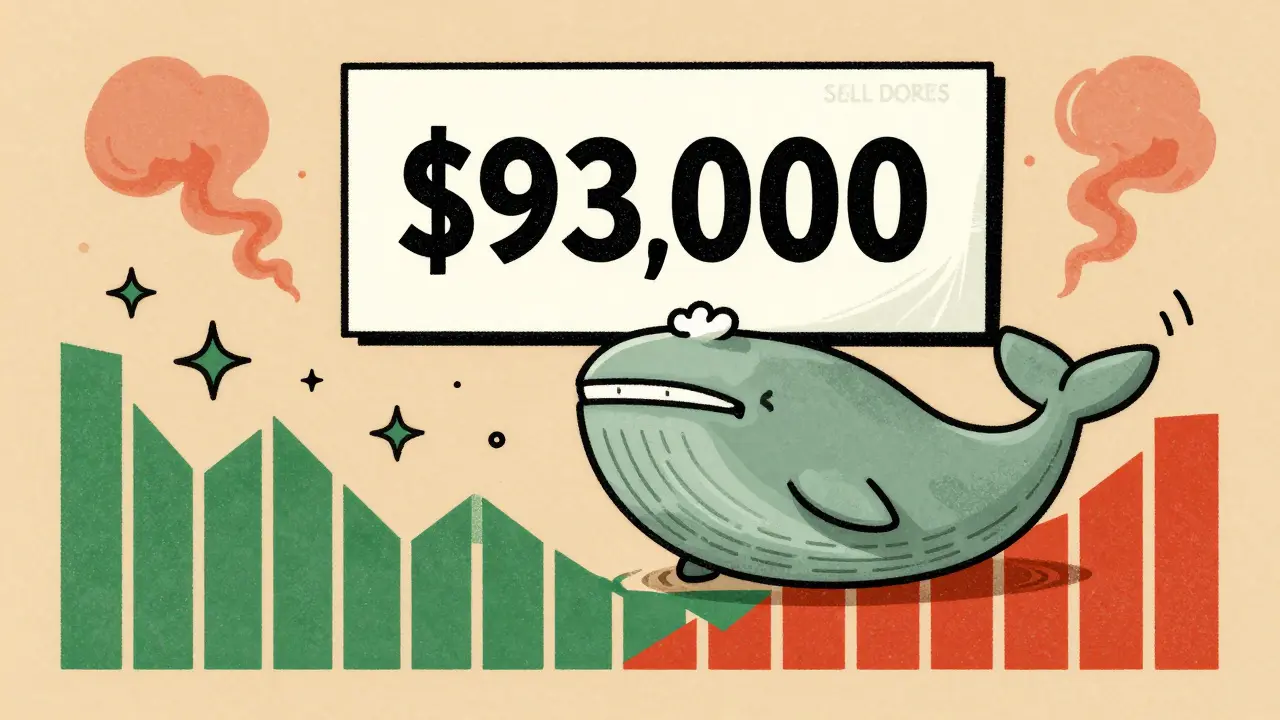
Look past the top few orders. Scroll down. See how many BTC are listed at $93,000? $92,500? $92,000? That’s market depth. It tells you how much liquidity exists below the surface.
Deep markets have thick walls of orders. You can dump $500,000 worth of SOL and barely dent the price. Shallow markets? One order of $100,000 can crash the price 10%. That’s why whales avoid low-volume coins-they can’t exit without crashing the market.
Use depth charts if your exchange offers them. They turn the order book into a bar graph. Tall bars = strong support or resistance. A big green bar at $90,000? That’s a wall of buy orders. Price is likely to bounce there. A red wall at $95,000? Sellers are stacked up. Price might stall.
Order Types: Market vs. Limit
You have two ways to trade: market orders and limit orders. Most beginners use market orders because they’re simple. But they’re dangerous.
A market order says: “Buy/sell now at the best available price.” It fills immediately-but you’re at the mercy of the order book. If the top ask is $94,000 and the next one is $94,500, your $10,000 buy order might get filled at both prices. You end up paying more than you expected.
A limit order says: “Only buy at $93,500 or lower.” It sits in the order book until someone matches you. You control the price. But you might not get filled at all-if the price never drops to your level.
Pro traders use limit orders to place bids just below the top ask or just above the top bid. It’s called “making a market.” You’re not chasing price. You’re waiting for others to come to you.
Reading the Signs: Patterns That Matter
Order books don’t just show prices-they reveal intent. Look for these patterns:
- Large hidden bids: A big green block near the top, but no matching sell orders? That’s a sign someone’s accumulating. Price may rise soon.
- Order spoofing: A huge sell order at $95,000 that vanishes after a few seconds. That’s a fake order meant to scare buyers. Don’t panic. Watch if it reappears.
- Thin spreads with heavy volume: Small spread + thick depth = institutional interest. Big players are watching. This is often a pre-move signal.
- Asks piling up: If you see 100 BTC stacked at $94,200, $94,300, $94,400, that’s resistance. Price struggles to break through. Wait for a breakout.
These aren’t guesses. They’re patterns backed by how real traders behave. You’ll see them repeat across Bitcoin, Ethereum, even Solana and Dogecoin.
Why Order Books Beat Charts Alone
Technical analysis looks at past price action. But the order book shows what’s happening right now. Two traders can look at the same 1-hour chart and see a bullish flag. But one checks the order book and sees a $2 million sell wall at $94,000. They don’t buy. The other doesn’t check-and gets trapped when the price drops 8%.
Order books give you the edge. They show where the real money is. Not where it was.
Tools That Help
Most exchanges show basic order books. But for serious trading, use third-party tools like TradingView (with order book overlay), Coinigy, or Delta Exchange. They let you see depth charts, heatmaps, and real-time order flow.
Some advanced traders even connect to exchange APIs to build their own dashboards. You don’t need to code to use them-just plug in your exchange key and watch the data flow.
Practice Without Risk
You can’t learn to read order books by reading a guide. You have to watch them. Open a demo account on Binance or Bybit. Pick one coin-BTC or ETH. Leave the order book open for 30 minutes. Watch how bids and asks shift. Notice when big orders appear and disappear. Track the spread. See how price reacts.
Do this daily for a week. You’ll start seeing patterns before they become price moves.
Final Tip: Don’t Chase, Wait
The biggest mistake traders make? Trying to catch every move. You don’t need to trade every spike. You just need to catch the right one.
Let the order book tell you when the market is ready. If bids are climbing and asks are shrinking? That’s demand building. Wait for price to break the top ask. Then go in. If the order book is flat, with no clear direction? Stay out. Patience isn’t passive-it’s your biggest advantage.
What does the bid-ask spread tell me about liquidity?
A narrow bid-ask spread-like 0.05% on Bitcoin-means lots of buyers and sellers are active, so you can trade large amounts without moving the price. A wide spread-over 1%-means low liquidity. You’ll pay more in slippage, and big orders can crash the price. Always check the spread before trading.
Why do some orders disappear from the order book?
Orders vanish for three reasons: they got filled (a trade happened), they were canceled by the trader, or they were spoofed-fake orders placed to trick others. Large orders that vanish quickly are often spoofing. Watch for repeats. If an order reappears in the same spot, it’s likely real support or resistance.
Can I trust the order book on all crypto exchanges?
Top exchanges like Binance, Kraken, and Coinbase have transparent, real-time order books. Smaller or shady exchanges may manipulate or delay data. Stick to well-known platforms. If the order book looks too smooth or doesn’t change during big price moves, it’s a red flag. Always verify with multiple sources.
How do I use the order book to find support and resistance?
Look for clusters of buy orders (green) at a specific price-that’s support. If price keeps bouncing off $93,000, that’s a support level. Look for clusters of sell orders (red)-that’s resistance. If price keeps failing to break $95,000, that’s resistance. These levels are set by real traders, not indicators. They’re stronger than moving averages.
Do I need to read the order book for every trade?
Not for every tiny trade. But for anything over $500, or if you’re holding for more than a few hours, you absolutely should. The order book tells you if the market is strong or weak. Without it, you’re trading blind. Even professional traders check it before entering any position.
Abby Daguindal
December 14, 2025 AT 23:31Wow, someone actually wrote a useful post about order books. Most of these crypto guides are just fluff with charts and ‘HODL’ nonsense. This one’s got meat. I’ve been watching BTC’s order book for months now-those big green walls at $93k? They’re not magic. They’re institutions stacking. And when they start eating through it? That’s your cue to get in, not panic.
Also, never trust a spread under 0.02% on altcoins. That’s usually a honeypot. I lost $8k on a ‘tight spread’ SOL trade last month. Lesson learned.
Pro tip: use TradingView’s depth overlay. It turns chaos into clarity.
SeTSUnA Kevin
December 15, 2025 AT 18:18The bid-ask spread is not a ‘toll fee.’ It’s a function of market microstructure. Your anthropomorphization of liquidity is amateurish. Also, ‘whales avoid low-volume coins’ is reductive-capital efficiency dictates liquidity preferences, not fear. And no, limit orders don’t make you ‘pro.’ They make you disciplined. There’s a difference.
Madhavi Shyam
December 16, 2025 AT 12:02Order book reading is just Level 1 TA. Real edge comes from footprint charts + volume delta + order flow imbalance. If you’re not using Jigsaw Trading or Bookmap, you’re trading with both hands tied behind your back. Also, spoofing is 90% of retail losses-watch for iceberg orders hiding behind fake liquidity walls. Your ‘large hidden bids’? Those are often wash trades disguised as accumulation. Always cross-check with on-chain data.
Sue Bumgarner
December 17, 2025 AT 07:28So you’re telling me the only reason Americans lose money in crypto is because they don’t read order books? Bro, we got people here who don’t even know what a wallet is. You think a chart is gonna save them? Nah. This whole ‘pro trader’ crap is just Wall Street’s way of making you feel dumb so you keep giving them your money. I’ve seen order books manipulated by exchanges before-Binance’s ‘real-time’ data is a joke. They delay feeds by 300ms on purpose. That’s not liquidity-that’s theft.
And don’t even get me started on ‘demo accounts.’ You think they’re fair? Try placing a limit order during a flash crash. You’ll see how ‘transparent’ it really is.
Kayla Murphy
December 17, 2025 AT 19:47I used to be the type to chase every pump-until I started just watching the order book for 20 minutes a day. No trades. Just observation. And guess what? I stopped losing money. It’s not about timing the market-it’s about listening to it. The market talks if you’re quiet enough. I started with BTC, left the tab open while I made coffee, and slowly, patterns just… appeared. You don’t need fancy tools. Just patience. And maybe a cup of tea.
You got this. 💪
Florence Maail
December 17, 2025 AT 22:42Order books? LOL. You really think this stuff is real? The whole system is rigged. Exchanges control the data. The ‘top bids’? Mostly bots. The ‘depth’? Fake volume pumped by shills. And ‘limit orders’? They’re just bait to lure retail into getting frontrun by hedge funds with direct exchange feeds.
Remember when BTC crashed $15k in 2 minutes? No order book showed it coming. Why? Because the data was delayed. They let us watch the lie while they dumped.
Don’t trust the book. Trust nothing. Just HODL in cold storage and pray. 🙏
Chevy Guy
December 18, 2025 AT 01:16So you spent 2000 words explaining how to read a spreadsheet and called it ‘pro trading’? Congrats. You just turned a basic feature of every exchange into a cult ritual.
Next you’ll tell us to meditate on the spread before we trade. Maybe light a candle. Say a prayer to Satoshi.
Meanwhile, I just buy when it’s low and sell when it’s high. No charts. No books. Just vibes and a 10% stop loss. I’m up 400% this year. What’s your return again?
Kelsey Stephens
December 18, 2025 AT 12:15Thank you for writing this. I’ve been learning crypto for a year and this is the first time I felt like I actually understand what’s happening behind the scenes. I used to think the price was just random noise. Now I see the structure. I’ve been watching the BTC order book every morning for a week-no trades yet. Just learning. It’s quiet, but I’m listening. And that feels like progress.
You don’t have to be fast to win. Just clear-eyed. Keep going.