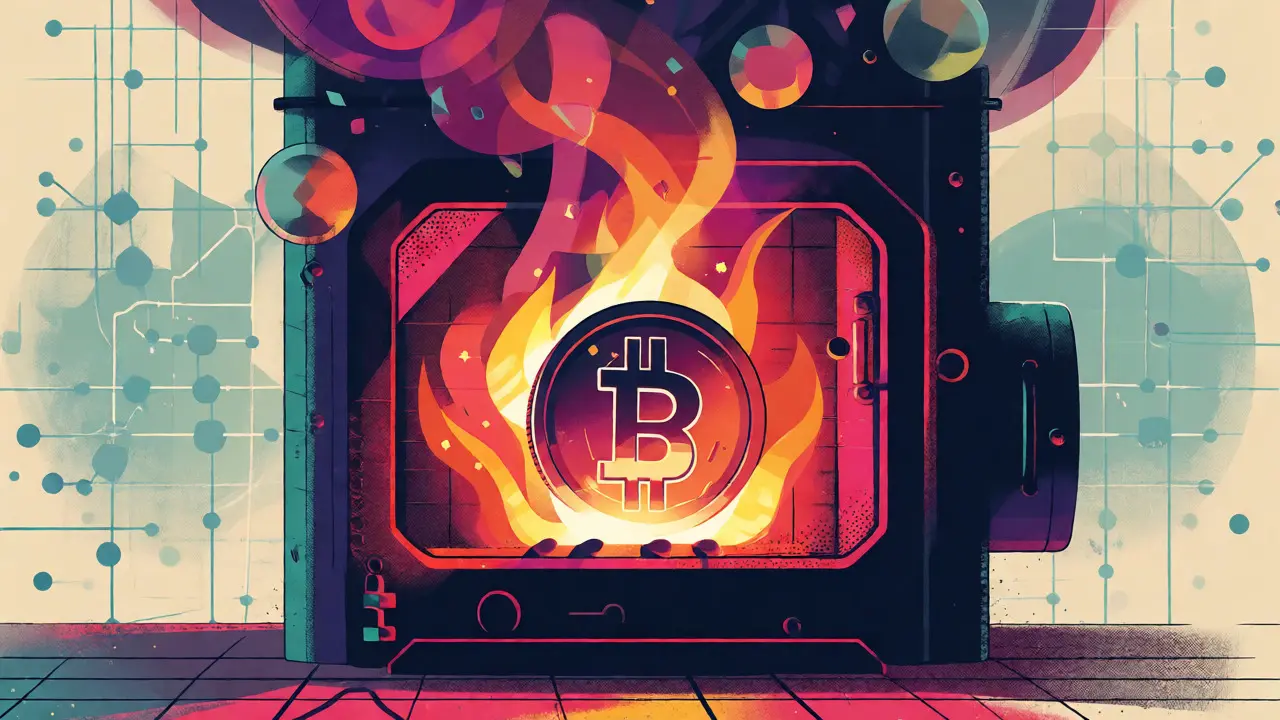
You’ve probably seen the headlines: "Company Burns Billions in Tokens." It sounds dramatic, like a dragon hoarding gold or a phoenix rising from ashes. But what actually happens when a crypto project decides to burn its tokens? Is it just marketing hype, or does it fundamentally change how a network works?
Token burning is the deliberate removal of cryptocurrency tokens from circulation. Think of it as deleting files from your hard drive permanently-once they’re gone, they can’t be retrieved. This process reduces the total supply, which, theoretically, should increase scarcity and potentially drive up value. But here’s the catch: not all burns are created equal. Some are automated by code, others are decided by community votes, and some are just PR stunts that fail to move the needle.
If you’re trying to understand whether a burn will help your portfolio or if you’re a developer looking to implement one, you need to look under the hood. We’ll break down the mechanics, the different types of implementations, and why some burns work while others flop.
What Exactly Is a Token Burn?
Token burning is a process where specific cryptocurrency tokens are permanently removed from circulation. Unlike selling tokens on an exchange, where ownership changes hands, burning destroys the asset entirely. The most common method involves sending tokens to a "burn address," also known as a null address. This is a wallet address with no private key attached, meaning nobody-not even the creator-can ever access those funds again.
Why do projects do this? Primarily to manage inflation. If a protocol mints new tokens faster than users buy them, the price drops. Burning counteracts this by shrinking the supply. It’s a deflationary pressure valve. For example, if you have 100 apples and everyone wants them, each apple is worth more. If you throw away 50 apples, the remaining 50 become scarcer. That’s the basic economic logic, though real-world markets are messier.
The Main Types of Burn Mechanisms
Not every burn looks the same. Developers choose different strategies based on their goals. Here are the five most common approaches you’ll encounter:
- Scheduled Burns: These happen at regular intervals, like clockwork. Binance, for instance, conducts quarterly burns of its BNB token. This predictability helps build trust because investors know exactly when supply will shrink. However, because the market anticipates these events, the price impact is often muted.
- Transaction Fee Burns: Popularized by Ethereum’s EIP-1559, this method burns a portion of every transaction fee. As network usage goes up, more fees are generated, and more tokens are burned. This ties supply reduction directly to demand. If people use the network more, the token becomes scarcer automatically.
- Buyback and Burn: A company uses its profits to buy its own tokens from the open market and then burns them. This is similar to stock buybacks in traditional finance. It supports the price during downturns but requires significant cash reserves. If the company runs out of money, the burns stop.
- Community-Governed Burns: Holders vote on whether to burn tokens and how much. Shiba Inu’s burn portal is a prime example. Users actively participate, which boosts engagement. But participation can be inconsistent, leading to irregular supply shocks.
- Burn-and-Mint Equilibrium (BME): This is a dynamic model where the protocol adjusts both minting and burning rates based on network health. Chainlink has explored this concept to stabilize its token economics. It’s complex to code but offers better long-term stability than static models.
How Implementation Works Under the Hood
For developers, implementing a burn isn’t just about sending coins to an empty wallet. It requires careful smart contract design. On Ethereum-based chains, this usually involves Solidity code. The process typically follows six steps:
- Define Triggers: Decide what causes a burn. Is it time-based? Transaction-based? Or triggered by external data?
- Set Access Controls: Who can execute the burn? Is it automated via code, or does it require a multi-signature approval from founders?
- Deploy Smart Contracts: Write and deploy the contract logic that handles the transfer to the burn address.
- Test Rigorously: Run unit tests to ensure tokens aren’t accidentally sent to a recoverable address. A bug here could destroy user funds or fail to reduce supply.
- Audit Security: Have a third-party firm check the code. Improperly configured burn functions have led to millions in losses due to accidental destruction.
- Integrate with UI: Make sure users can see the burn status clearly in wallets and dashboards.
On Solana, the implementation differs slightly since it uses Rust, but the core logic remains: update the total supply variable and ensure the tokens are irretrievable. Complexity varies wildly-a simple one-time burn might take a junior developer two days, while a protocol-level integration like EIP-1559 took years of research and testing.
Case Studies: What Worked and What Didn’t
Theory is nice, but let’s look at real examples. The success of a burn depends heavily on context.
| Project | Mechanism | Outcome | Key Takeaway |
|---|---|---|---|
| Ethereum (ETH) | EIP-1559 (Fee Burn) | Deflationary periods during high usage; ~2.5M ETH burned by late 2023. | Ties value to network utility. Highly effective during bull markets. |
| Binance Coin (BNB) | Scheduled Quarterly Burn | Supply reduced by over 40% since inception. Price generally followed market trends. | Predictability builds trust, but doesn't guarantee price hikes. |
| Shiba Inu (SHIB) | Community Portal + Team Burns | Over 410 trillion SHIB burned. High community engagement. | Engagement matters, but massive supply still limits price growth. |
| TerraUSD (UST) | Aggressive Mint/Burn Cycle | Collapse despite burns. $40B loss. | Burns cannot fix fundamental algorithmic flaws. |
Ethereum’s EIP-1559 is widely considered the gold standard. By burning base fees, it creates a direct link between network activity and token scarcity. When gas prices spike, more ETH disappears. This aligns incentives perfectly.
Conversely, TerraUSD showed that burns alone don’t save a broken model. UST relied on a complex arbitrage loop involving LUNA. When confidence collapsed, the burn mechanism couldn’t keep up with the sell-off, leading to a death spiral. It proved that without underlying utility and trust, removing supply is futile.
Do Burns Actually Increase Price?
This is the million-dollar question. Many investors assume less supply equals higher price. While true in a vacuum, crypto markets are driven by sentiment, liquidity, and macroeconomics.
A 2021 University of Cambridge study analyzed 127 burn events and found that only 32% resulted in statistically significant price increases within seven days. Why so low? Because markets often anticipate burns. If Binance announces a burn three months in advance, traders buy early, and the price already reflects the news by the time the burn happens.
Moreover, velocity matters. If you burn 1 billion tokens but people trade them 10 times faster, the net effect on price might be negligible. Dr. Garrick Hileman from Blockchain.com noted that market impact depends on "token velocity, utility, and broader conditions." A burn is a tool, not a magic wand. It works best when combined with growing adoption.
Risks and Pitfalls to Watch For
Before you get excited about a burn announcement, check for red flags. Poorly implemented burns can hurt more than help.
- Accidental Destruction: Bugs in smart contracts have burned user funds instead of treasury reserves. Always verify audit reports.
- Manipulation Concerns: The SEC has warned that burns designed solely to manipulate price could be viewed as unregistered securities transactions. Transparency is key.
- Liquidity Drain: Buyback-and-burn programs remove tokens from exchanges, which can sometimes dry up liquidity, causing volatile price swings.
- False Scarcity: Some projects burn tiny amounts relative to total supply. Burning 1,000 tokens out of 1 trillion is symbolic, not substantive. Look for meaningful percentages.
Regulators are watching closely. The European Securities and Markets Authority (ESMA) recently flagged certain burn mechanisms as potential vectors for market manipulation. Future rules may require projects to disclose the exact motivation behind each burn, making vague announcements riskier.
Future Trends: Where Burn Mechanisms Are Heading
We’re moving beyond simple supply cuts. The next generation of burns focuses on utility and access.
Burn-to-Access Models: Projects like STEPN allow users to burn tokens to unlock premium features or gear. This turns burning into a consumption event rather than just a financial maneuver. Demand for the token rises because users need it to play or access services.
Dynamic Equilibriums: Protocols like Chainlink are experimenting with algorithms that adjust burn rates in real-time based on network congestion. If the network is quiet, fewer tokens burn. If it’s busy, more burn. This stabilizes the economy better than fixed schedules.
As blockchain matures, expect burns to become less about hype and more about sustainable tokenomics. The goal isn’t just to make the chart go up-it’s to create a self-reinforcing cycle where usage drives scarcity, which drives value, which attracts more usage.
Does burning tokens always increase the price?
No. While reducing supply creates scarcity, price also depends on demand, market sentiment, and overall crypto trends. A burn might lead to a short-term pump, but if demand falls, the price can still drop. Historical data shows mixed results, with many burns having little to no immediate impact on price.
Can I retrieve tokens after they are burned?
Generally, no. Tokens are sent to a "burn address" (like 0x000...dEaD) which has no private key. This makes the tokens irretrievable. However, if a bug sends tokens to a wrong address that someone owns, they might be recoverable. True burns are permanent.
What is the difference between a burn and a buyback?
A buyback is when a company purchases its own tokens from the market. A burn is the destruction of those tokens. Often, they are combined: a company buys back tokens (supporting the price) and then burns them (reducing supply). Buying back alone keeps the tokens in the company's treasury, where they could be sold later.
Is token burning good for investors?
It can be, if executed well. Regular, transparent burns signal that the team cares about token health. However, investors should look at the size of the burn relative to total supply and whether the project has growing utility. Small, infrequent burns are mostly cosmetic.
How does EIP-1559 affect Ethereum holders?
EIP-1559 burns a portion of every transaction fee. During periods of high network activity, more ETH is burned than minted, making Ethereum deflationary. This benefits holders by gradually reducing the total supply, assuming demand for block space remains strong.