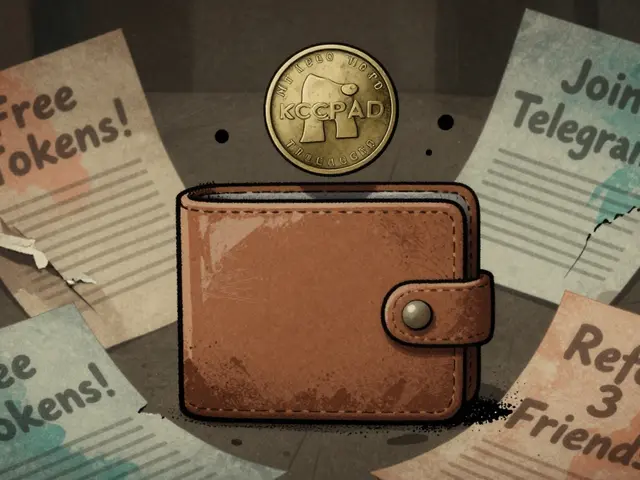
Remember when Cipher (CPR) was everywhere? It launched in 2018 with big promises of transparency and business utility. Then came the CPR CIPHER 2021 airdrop, a campaign that many users participated in but few remember clearly today. If you held onto those tokens or are digging through old wallet histories, you might be wondering what actually happened. Did the airdrop deliver value? Where did the project go? This article cuts through the noise to explain the specifics of that 2021 distribution, the technical shifts behind it, and why the token is now labeled "Cipher [Old]."
The Context Behind the CPR Token
To understand the airdrop, you first need to know what Cipher was trying to be. Founded by teams across India, the UK, and New Zealand, Cipher wasn't just another meme coin. It positioned itself as a utility token representing partial ownership of the company, similar to traditional stocks. The goal was to create a transparent ecosystem for business applications without relying on typical fundraising methods like ICOs.
By 2021, the project had evolved. The team decided to migrate from the Ethereum blockchain to the Polygon PoS network. Why? Ethereum gas fees were skyrocketing, making small transactions impractical for their vision of widespread business app usage. Polygon offered faster processing and significantly lower costs. This migration was crucial, but it also created a split in the community between holders of the original ERC-20 tokens and the new Polygon-based versions.
| Feature | Original Cipher (Ethereum) | Migrated Cipher (Polygon) |
|---|---|---|
| Network | Ethereum Mainnet | Polygon PoS |
| Contract Address | Legacy ERC-20 | 0xaa40...55c6 |
| Transaction Cost | High (Gas dependent) | Very Low |
| Status | Labeled "Cipher [Old]" | Active Version |
How the 2021 Airdrop Worked
The CPR CIPHER 2021 airdrop wasn't a random giveaway. It was conducted specifically through CoinMarketCap (CMC). During this period, CMC was a primary hub for cryptocurrency data and promotional campaigns. Projects used CMC's reach to distribute tokens to active community members and new users who completed simple tasks, such as following social media accounts or joining Telegram groups.
This method served two purposes. First, it increased the circulating supply of CPR, which helps stabilize price action by reducing the concentration of holdings among early investors. Second, it boosted visibility. At the time, the crypto market was booming, and getting listed on CMC's airdrop section provided instant legitimacy. For Cipher, this aligned with their roadmap, which included exchange upgrades on platforms like Cifinex alongside the Polygon contract creation.
However, details on the exact eligibility criteria remain scarce. Unlike some modern airdrops that reward specific on-chain behaviors, the 2021 campaign focused more on community engagement metrics. If you participated, you likely received a fixed amount of CPR tokens directly into your connected wallet. But here’s the catch: because the project was migrating networks, receiving the airdrop didn't automatically mean you held the most liquid version of the token unless you actively swapped or bridged them.

Why Is It Called "Cipher [Old]"?
If you look up CPR on major trackers today, you'll see the tag "Cipher [Old]." This designation isn't an insult; it's a technical marker. When a project migrates its smart contract to a new blockchain, the old contract often remains live but becomes secondary. Tracking platforms label the original asset to prevent confusion. Users holding the pre-migration Ethereum tokens still have valid assets, but they don't benefit from the low fees or updated features of the Polygon version unless they swap.
This split caused friction. Many airdrop recipients received tokens on the Ethereum network initially. As the market shifted toward Layer-2 solutions, liquidity dried up on the old chain. The "Old" label signals to traders that the primary trading pairs and development activity have moved elsewhere. It’s a common pattern in crypto history-projects evolve, and legacy tokens become historical artifacts rather than active currency.
Market Performance and Current Status
Let’s talk numbers. Cipher has seen wild swings. The all-time high hit $0.004065 in February 2024, a massive jump from its near-zero lows in mid-2022. But current trading ranges tell a different story. As of late 2026, CPR trades in fractions of a cent, with 24-hour ranges hovering around $0.00004791 to $0.00006803.
What does this mean for airdrop participants? If you claimed tokens in 2021 and held them through the peak, you might have seen significant paper gains. However, the long-term retention of value has been challenging. The total supply sits at 1.08 billion CPR, with a self-reported circulating supply of roughly 186 million. High supply combined with low demand creates downward pressure on price. The airdrop successfully distributed tokens, but it didn't necessarily drive sustained buying pressure.
Many projects from the 2018-2021 era faced this reality. They used airdrops as marketing tools during bull markets. Once the hype faded, development slowed, and community engagement dropped. Cipher fits this profile. While the technology migrated to Polygon, the broader ecosystem business model struggled to compete with newer, more agile decentralized applications.
Lessons from the CPR Distribution
So, what can we learn from the CPR CIPHER 2021 airdrop? First, always check the network. Receiving a token on Ethereum when the project is moving to Polygon requires extra steps to realize full utility. Second, distinguish between marketing hype and fundamental growth. An airdrop increases circulation, but only real product adoption sustains value.
For those who missed the 2021 drop, it’s worth noting that Cipher’s journey highlights the volatility of altcoins. The project started with ambitious goals for mobile applications and business transparency. Today, it serves as a case study in how technical migrations and market cycles impact token longevity. If you’re exploring older crypto projects, look for clear documentation on contract changes and active development updates. Without those, even a successful airdrop won’t save a token from obscurity.
Frequently Asked Questions
Was the CPR Cipher 2021 airdrop legitimate?
Yes, it was a legitimate campaign conducted via CoinMarketCap. It was part of Cipher's official roadmap to increase token circulation and community engagement during their migration phase.
Why is my CPR token labeled "Cipher [Old]"?
This label indicates you hold the original Ethereum-based version of the token. The project migrated to the Polygon PoS network, creating a new contract address. The "Old" designation distinguishes the legacy asset from the active Polygon version.
Can I still trade Cipher (CPR) today?
Yes, CPR is still traded, primarily on exchanges that support Polygon tokens. However, liquidity is lower compared to its peak periods, and you should verify which network (Ethereum vs. Polygon) your exchange supports before depositing.
Did the 2021 airdrop affect the token price?
Airdrops typically increase circulating supply, which can dilute price if demand doesn't rise simultaneously. In Cipher's case, the airdrop helped visibility, but long-term price action was driven more by broader market trends and the success of their Polygon migration.
What was the main reason for Cipher's migration to Polygon?
The primary drivers were high transaction fees and slow processing times on the Ethereum mainnet. Polygon offered a scalable, low-cost alternative suitable for Cipher's vision of widespread business application usage.