When you hear the word airdrop, you might think of free money just for signing up. But in crypto, airdrops are rarely that simple. And when it comes to KCCPAD - also known as KCCPad The People's Launchpad - the story gets even murkier.
There’s no official website, no active social media, and no public wallet address to claim tokens. That’s not a glitch. It’s a red flag. KCCPAD was never meant to be a long-term project. It was a tiny launchpad that appeared in mid-2021 with a $25,000 market cap, vanished within months, and left behind almost no trace.
What Was KCCPAD Supposed to Be?
KCCPAD was built as a community-driven launchpad, meant to help small crypto projects get off the ground. The idea was simple: investors would join the platform, get early access to new token sales, and support projects that promised innovation. Unlike big launchpads like Binance Launchpad or CoinList, KCCPAD didn’t have venture capital backing or celebrity endorsements. It was supposed to be for the people - hence the name, "The People’s Launchpad."
It operated on the KuCoin Community Chain (KCC), a blockchain designed to be cheaper and faster than Ethereum. That made sense. If you were launching a new token with a $5,000 budget, you didn’t want to pay $200 in gas fees just to list it. KCC offered low-cost transactions, which attracted small teams and solo developers.
But here’s the catch: KCCPAD didn’t vet projects the way bigger platforms do. There were no audits, no team background checks, no whitepapers published publicly. If a project applied, it got listed. That’s not a feature - it’s a risk. And that’s why most of the projects that launched through KCCPAD disappeared within weeks.
The Airdrop That Never Really Happened
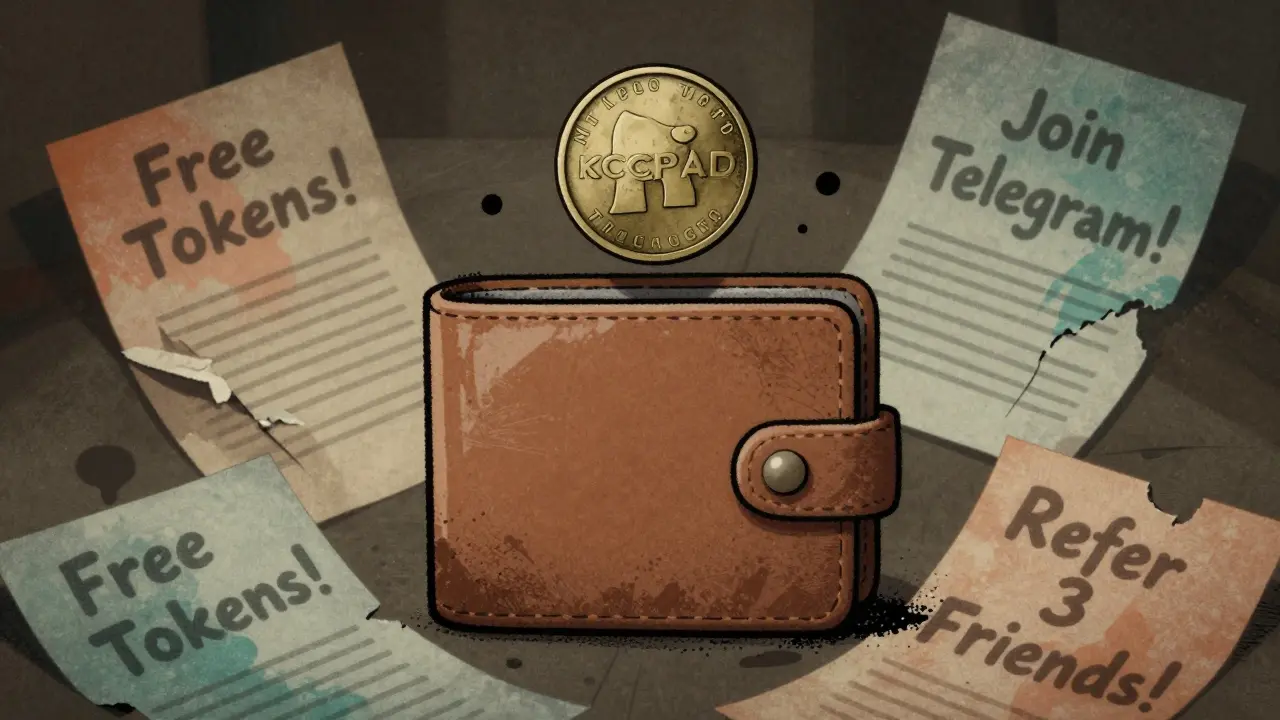
There was an airdrop. But calling it an "airdrop" is generous. According to old forum posts and archived Discord messages, KCCPAD promised 100 KCCPAD tokens to users who completed basic tasks: joining their Telegram group, following their Twitter account, and referring three friends.
But here’s what nobody talks about: the tokens were never minted on-chain. There’s no record of them being sent to any wallet. No blockchain explorer shows any KCCPAD token transfers from 2021 to today. The token contract address, if it ever existed, is gone. No one can verify ownership. No one can claim them.
Some users say they received emails with links to claim tokens. Those links now lead to 404 errors. Others say they saw the tokens appear in their wallets - but only in fake wallet apps that looked like MetaMask. Those weren’t real wallets. They were phishing traps.
There’s no official announcement of the airdrop ending. No update. No explanation. Just silence.
Why Did KCCPAD Disappear?
Most crypto projects that vanish do so for one of three reasons: they were scams, they ran out of money, or they were never serious to begin with.
KCCPAD fits the third category. The team never disclosed their identities. No LinkedIn profiles. No GitHub activity. No interviews. The entire project was built on hype - "fair launch," "anti-bot protection," "community-first." But none of those terms meant anything because there was no code, no infrastructure, no team to back them up.
Compare KCCPAD to a real launchpad like Polkastarter or DAO Maker. They have audits, legal teams, multi-chain support, and years of track records. KCCPAD had a Telegram group and a landing page built with a free website builder. The $25,000 market cap wasn’t a milestone - it was a warning sign.

What Happened to the Tokens?
Even if you somehow got KCCPAD tokens, they’re worthless now. No exchange lists them. No wallet supports them. No one is trading them. The token symbol - KCCPAD - doesn’t appear on CoinGecko, CoinMarketCap, or DeFiLlama. It’s not even in the database of any blockchain explorer.
Some people still search for "KCCPAD airdrop" hoping to claim free tokens. They find old YouTube videos from 2021 showing fake claim pages. They download apps that ask for their seed phrases. Those apps steal wallets. That’s how these projects survive - by preying on hope.
How to Spot a Fake Airdrop
If you’re looking for real airdrops today, here’s how to avoid getting burned:
- Never give your seed phrase. No legitimate airdrop will ever ask for it.
- Check the contract address. If you can’t find it on Etherscan, BscScan, or KCCScan, it’s fake.
- Look for active development. Real projects update their GitHub, post on Twitter, and respond to questions.
- Use trusted sources. Only follow airdrops announced on official project websites or verified Discord servers.
- Don’t trust urgency. "Claim now or lose it!" is a scam tactic.
Real airdrops don’t need to be rushed. They don’t need to trick you. They just give you tokens - and let you decide if you want to hold them.
Is KCCPAD Still Active?
No. Not even close.
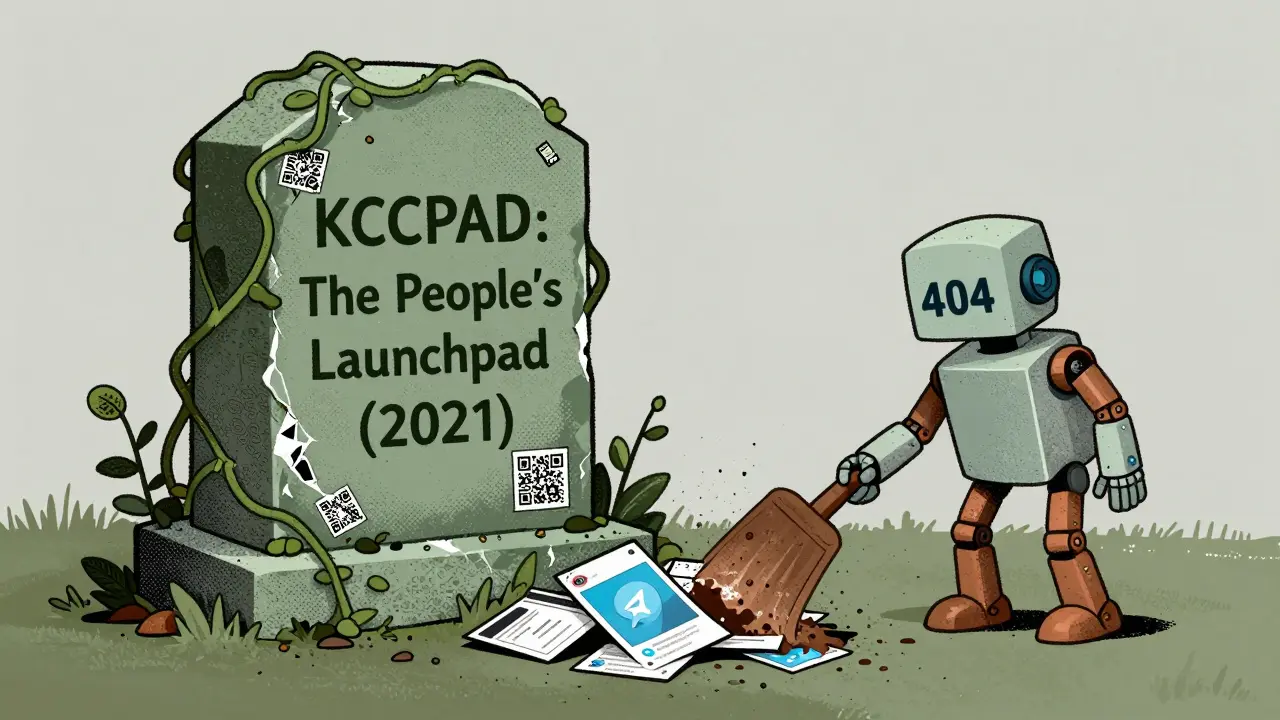
As of January 2026, KCCPAD has no website, no social media presence, no team, and no community. The domain kccpad.com is registered but redirects to a placeholder page. The Telegram group has 12 members - all bots. The last post on their Twitter account was on July 15, 2021: "Thank you for the support!" That’s it.
There’s no revival plan. No new team. No announcement. The project is dead.
What You Should Do Now
If you participated in the KCCPAD airdrop - stop looking for it. It’s gone. The tokens don’t exist. The wallet addresses you were told to connect? They’re likely compromised.
If you’re still holding any wallet that connected to KCCPAD, move your funds immediately. Use a new wallet. Never reuse addresses that interacted with unverified projects.
If you’re looking for real airdrops, focus on established platforms: Arbitrum, Polygon, zkSync, and LayerZero have active token distribution programs. They’re transparent. They have teams. They have audits. They have track records.
KCCPAD was a ghost. Don’t chase ghosts. They don’t pay out. They only take.
Why This Matters
KCCPAD isn’t just a failed project. It’s a lesson. The crypto space is full of people who promise easy money. They use words like "community," "fair launch," and "people’s platform" to make you feel like you’re part of something revolutionary. But if there’s no transparency, no accountability, and no code - it’s not innovation. It’s illusion.
Real crypto doesn’t hide. It builds. It documents. It opens its books. If a project doesn’t, walk away. Even if it promises free tokens. Especially then.
Stephen Gaskell
January 19, 2026 AT 06:06Shaun Beckford
January 20, 2026 AT 09:57Pat G
January 20, 2026 AT 10:42Alexandra Heller
January 21, 2026 AT 23:32Bryan Muñoz
January 22, 2026 AT 04:46Rod Petrik
January 22, 2026 AT 19:56Sarah Baker
January 24, 2026 AT 09:58nathan yeung
January 25, 2026 AT 04:20Christina Shrader
January 26, 2026 AT 17:59