Imagine running a successful crypto exchange in Berlin. You have thousands of happy customers, robust security, and a growing user base. Then, you decide to expand to France. Before 2024, this meant navigating a maze of different national rules, filing separate applications in Paris, dealing with local supervisors who had different interpretations of what constitutes a "crypto service," and paying double the legal fees. It was a regulatory nightmare that kept many European startups small and fragmented.
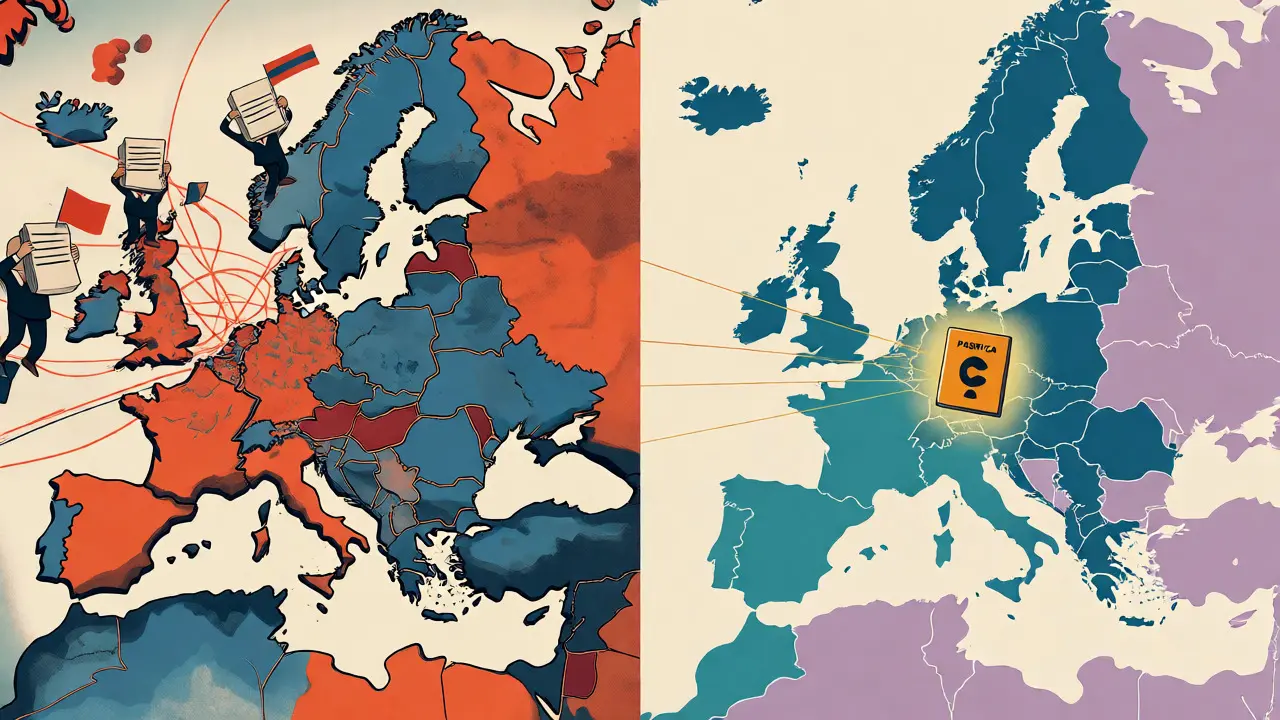
MiCA, or the Markets in Crypto-Assets Regulation, changed all that. Implemented fully by December 30, 2024, it created a single rulebook for crypto across the entire European Union. The game-changer? The EU Passport. This mechanism allows a company authorized in one member state to offer services in all 27 countries without needing new licenses everywhere. But here is the catch: getting that passport isn't just about ticking boxes. It requires deep operational changes, strict capital requirements, and a fundamental shift in how you handle client assets.
The End of Regulatory Fragmentation
For years, Europe was a patchwork of crypto regulations. Malta had its own framework, Estonia another, and Germany yet another. This fragmentation stifled growth. If you were a Crypto-Asset Service Provider (CASP), you couldn't easily scale because every border you crossed added complexity and cost. MiCA solves this by harmonizing the rules. It doesn't just suggest best practices; it mandates them.
The regulation operates in two phases. The first phase, which kicked in on June 30, 2024, focused on stablecoins-specifically Asset-Referenced Tokens (ARTs) and E-Money Tokens (EMTs). The second phase, active since late 2024, covers everything else: exchanges, custodians, trading platforms, and advice providers. For businesses, this means the wild west days are over. If you want to serve EU clients, you play by these rules, or you don't play at all.
How the EU Passport Works
Think of the EU Passport like a driver's license valid across all states in the US, but stricter. To get it, you apply for authorization in your "home" member state-the country where you are legally established. Once your home supervisor approves you, you can notify other EU countries where you want to operate. They can't reject you unless they find serious flaws in your notification file. This saves months of waiting and thousands in legal fees per country.
But there is a nuance. While the passport grants access, it doesn't grant immunity from local oversight. The host country's supervisor still watches your activities within their borders. If you violate local consumer protection laws while operating under your home license, the host supervisor can step in. This dual-layer supervision ensures that while entry is easy, compliance remains rigorous.
Who Needs Authorization?
If you provide any of the following services to EU users, you likely need a CASP license:
- Custody and administration of crypto-assets on behalf of clients (holding private keys).
- Operation of a trading platform for crypto-assets.
- Exchange of crypto-assets for funds or other crypto-assets.
- Execution of orders for crypto-assets on behalf of clients.
- Placement of crypto-assets.
- Reception and transmission of orders.
- Advice on crypto-assets.
- Portfolio management of crypto-assets.
Note that this applies even if crypto is only a side business for you. If a fintech app offers a crypto wallet feature, it falls under MiCA. The regulation is activity-based, not entity-based. So, whether you are a dedicated crypto bank or a traditional bank adding a crypto desk, the rules apply.

Key Compliance Requirements for Cross-Border Providers
Getting the license is just the start. Maintaining it requires ongoing adherence to strict standards. Here’s what you actually need to implement:
1. Capital and Own Funds
You must maintain minimum own funds based on the type of services you provide. For example, a simple exchange might need €50,000, while a large trading platform needs significantly more. These funds act as a buffer against operational risks. You also need professional indemnity insurance or similar coverage to protect clients if things go wrong due to negligence.
2. Client Asset Segregation
This is non-negotiable. Your clients' crypto must be held separately from your company's assets. If you go bankrupt, creditors cannot touch customer funds. You need clear records proving ownership and segregation. Many older models mixed hot wallets with corporate reserves; MiCA forbids this ambiguity.
3. Market Abuse Prevention
You need systems to detect insider dealing and market manipulation. If you run an exchange, you must monitor trading patterns for suspicious activity. This isn't just a checkbox; it requires real-time monitoring tools and trained compliance staff.
4. White Papers for Token Issuers
If you issue tokens, you must publish a detailed white paper. It must disclose risks, rights attached to the token, and technical details. No more vague promises. Investors need concrete data to make informed decisions.
The Challenge for Non-EU Providers
If you are based in the US, UK, or Asia, you can't just target EU customers via the internet anymore. MiCA restricts third-country providers. You generally need to set up a legal entity within the EU and obtain full authorization. There is a narrow exception called "reverse solicitation." This applies only if the EU client initiates contact entirely on their own, without any marketing or promotion from you. However, regulators interpret this strictly. Sending an email campaign to a list of EU prospects breaks reverse solicitation. Most major international exchanges, including Coinbase and Binance, have already established EU entities to comply.
| Feature | Pre-MiCA Era | Post-MiCA Era |
|---|---|---|
| Licensing Process | Separate application per country | Single authorization + passport notification |
| Regulatory Consistency | Highly fragmented; varied definitions | Harmonized definitions and rules across EU |
| Client Protection | Inconsistent; dependent on local law | Standardized EU-wide safeguards |
| Non-EU Access | Easier to serve via website | Requires EU entity or strict reverse solicitation |
| Compliance Cost | Lower upfront, higher operational friction | Higher upfront, lower expansion friction |

Transitional Periods and National Variations
While MiCA is an EU regulation, implementation timelines vary. Member states could choose transitional periods shorter than the standard 18 months. As of early 2025, several countries had already closed their grace periods. This means a provider licensed in one country might face stricter deadlines in another during the transition. Always check the specific status of your host countries. Don't assume everyone is on the same schedule.
Practical Steps to Secure Your Passport
If you are planning to operate cross-border under MiCA, follow this roadmap:
- Determine Your Home State: Choose the member state with the most favorable supervisory approach for your business model. Consider factors like processing time, fee structures, and expertise.
- Prepare the Application File: Gather proof of capital, organizational charts, IT security policies, and anti-money laundering procedures. Be ready for questions about outsourcing.
- Submit to Home Supervisor: File your application with the competent authority in your chosen home state.
- Notify Host States: Once approved, submit a notification file to each EU country where you intend to operate. Include details on how you will meet local requirements.
- Ongoing Reporting: Set up systems to report incidents and financial data to both home and host supervisors as required.
Frequently Asked Questions
Does MiCA apply to decentralized finance (DeFi) protocols?
Currently, MiCA primarily targets centralized intermediaries. Fully decentralized protocols where no single entity controls the smart contracts may fall outside direct scope. However, if a front-end interface or a team behind the protocol exerts significant control, regulators may deem it a CASP. The definition of "decentralized" is still being tested in practice.
Can I use my existing electronic money institution (EMI) license for crypto services?
Not automatically. An EMI license covers payment services and e-money. While some overlaps exist, offering crypto custody or trading usually requires a separate CASP authorization under MiCA. Some jurisdictions allow hybrid approaches, but you typically need to apply for the specific crypto license.
What happens if I fail to comply after getting my passport?
Your home supervisor can suspend or withdraw your authorization. If suspended, you lose the right to operate in all EU countries, not just the home state. Additionally, host country supervisors can impose local restrictions or fines for breaches occurring within their jurisdiction.
Are stablecoins treated differently under MiCA?
Yes. Significant asset-referenced tokens and e-money tokens face stricter requirements. They must maintain high-quality liquid reserves, undergo regular audits, and ensure redemption rights are guaranteed. This is designed to prevent runs like the one seen with TerraUSD.
Do I need a physical office in every EU country I serve?
No. You need a registered office and effective management presence in your home member state. For host countries, you can often operate remotely, provided you can demonstrate effective communication with local supervisors and clients. However, some countries may require a local representative for specific consumer complaints handling.