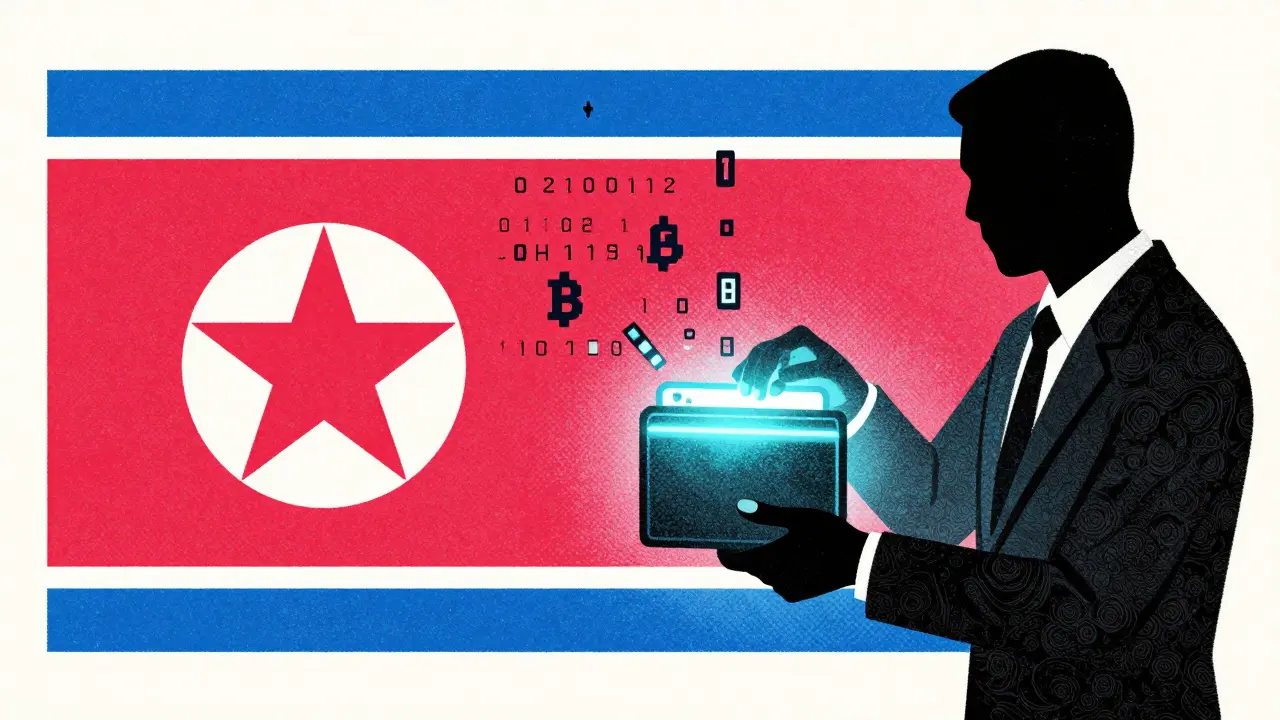
Imagine sending a payment that gets frozen not because of a technical error, but because the recipient’s wallet is linked to a regime banned by the United Nations. In 2025 and into 2026, this isn’t a hypothetical scenario-it’s a daily reality for financial institutions, crypto exchanges, and even savvy individual traders. The Democratic People's Republic of Korea (DPRK) has turned cybercrime into a state-sponsored revenue stream, stealing billions in digital assets to fund its nuclear weapons program.
If you are handling cryptocurrency transactions, understanding North Korean crypto sanctions and how to identify sanctioned wallet addresses is no longer optional. It is a critical part of risk management. The stakes have never been higher. According to data from October 2025, North Korean hacking groups stole over $2.03 billion in cryptocurrency in just nine months of 2025 alone. This brings the total known thefts to more than $6 billion since tracking began. Ignoring these risks can lead to severe legal penalties, frozen assets, and reputational damage.
The Scale of the Threat: Why North Korea Targets Crypto
To understand why these sanctions exist, you need to look at the numbers. North Korea doesn’t just hack for fun; it hacks for survival. International sanctions have choked off traditional revenue sources like textile exports or coal sales. Cryptocurrency offers a way around these restrictions because it is borderless, pseudonymous, and difficult to track without specialized tools.
The Multilateral Sanctions Monitoring Team (MSMT), a coalition of 11 nations including the US, Japan, and South Korea, released a report in October 2025 describing North Korea’s operations as a "full-spectrum" cyber program. They assert that the DPRK’s capabilities now rival those of major powers like China and Russia. The goal is clear: generate foreign currency to purchase weapons components and technology.
Here is what the data tells us about the scope:
- Record Breaking Theft: In 2025, North Korean actors stole $2.03 billion. This is nearly triple the amount stolen in 2024 ($712 million).
- Cumulative Impact: Since tracking began, the regime has stolen over $6 billion in cryptoassets.
- Primary Targets: Major exchanges like Bybit, LND.fi, WOO X, and Seedify have been hit. The February 2025 breach of Bybit alone accounted for $1.46 billion of the 2025 total.
These aren't isolated incidents. They are coordinated efforts by state-linked groups such as Lazarus Group and Kimsuky. For anyone operating in the crypto space, these figures represent a massive concentration of illicit funds flowing through the network.
How Sanctions Work Against Crypto Operations
You might wonder how you can sanction something that lives on a decentralized ledger. The answer lies in targeting the on-ramps and off-ramps, as well as the entities that facilitate the movement of funds. The U.S. Department of the Treasury’s Office of Foreign Assets Control (OFAC) leads this effort.
In July 2025, OFAC took significant action by sanctioning specific individuals and entities involved in fraudulent IT worker schemes. These schemes often serve as cover for cyber operations. Key targets included:
- Vitaliy Sergeyevich Andreyev
- Kim Ung Sun
- Shenyang Geumpungri Network Technology Co., Ltd
- Korea Sinjin Trading Corporation
Under Secretary of the Treasury John K. Hurley stated that the regime uses overseas IT workers to steal data and demand ransom. By sanctioning these facilitators, the US aims to cut off the human infrastructure that supports the cyber attacks. But the real challenge remains: stopping the money once it hits the blockchain.
Identifying Sanctioned Wallet Addresses: The Technical Challenge
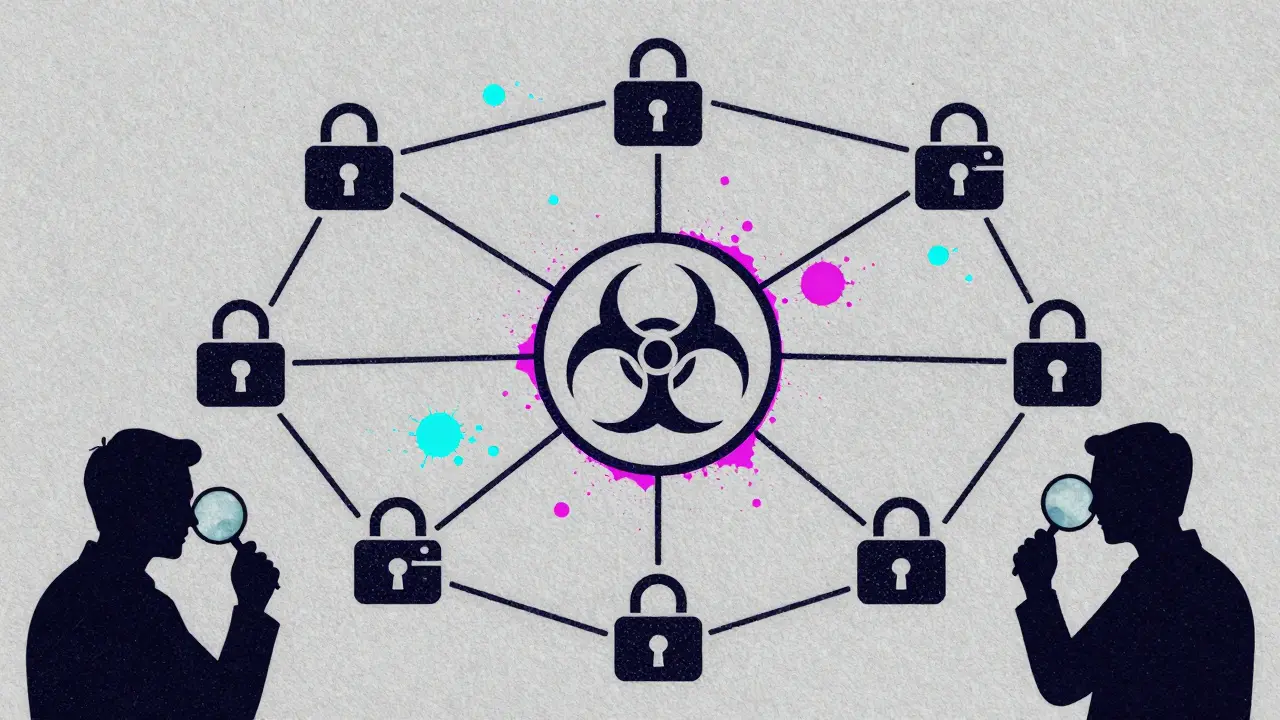
This is where most people get confused. You won’t find a simple public list of "bad" Bitcoin addresses posted on a government website. That would be operationally dangerous and quickly outdated. Instead, identification relies on complex blockchain analytics.
Firms like Elliptic use a combination of transaction pattern recognition, cluster analysis, and intelligence sources to attribute thefts to North Korea. Here is how they do it:
- Pattern Recognition: North Korean actors have distinct habits. They often move funds through specific mixing services or privacy coins before converting them to fiat currency.
- Cluster Analysis: Analysts group addresses that likely belong to the same entity based on timing, amounts, and interaction patterns.
- Intelligence Integration: Data from law enforcement and cybersecurity firms helps label clusters as "DPRK-linked" with high confidence.
The complexity increases because North Korea employs sophisticated laundering techniques. After a theft, funds might undergo multiple cross-chain swaps, pass through several decentralized finance (DeFi) protocols, and be split into smaller amounts to avoid detection. This "cat-and-mouse" game means that static lists of addresses are useless. Dynamic, real-time screening is required.
| Feature | Traditional Banking Sanctions | Crypto Sanctions (DPRK Focus) |
|---|---|---|
| Identification Method | Name-based (SWIFT codes, account holders) | Address-based (Blockchain clustering, heuristics) |
| Speed of Transfer | Days (allows for manual review) | Minutes/Seconds (requires automated screening) |
| Anonymity | Low (KYC required) | High (Pseudonymous, requires advanced analytics) |
| Enforcement Body | Central Banks, OFAC | OFAC, MSMT, Private Analytics Firms (Elliptic, Chainalysis) |
| Primary Risk | Fines for processing blocked funds | Asset freezing, loss of banking partnerships |
The Role of Blockchain Analytics Firms
Since governments cannot monitor every transaction on the blockchain, they rely on private companies. Elliptic, Chainalysis, and CipherTrace are the key players here. These firms provide the tools that exchanges and banks use to screen transactions.
Elliptic’s analysis is particularly influential. In their October 2025 report, they noted that while $2.03 billion was definitively attributed to North Korea, the actual figure is likely higher. Many other thefts share hallmarks of DPRK activity but lack sufficient evidence for definitive attribution. This uncertainty creates a gray area for compliance officers.
For businesses, integrating these analytics tools is mandatory if you want to maintain relationships with traditional banks. If an exchange processes transactions involving a wallet linked to a North Korean hack, that exchange risks being cut off from the US dollar system. This is known as secondary sanctions.
Risks for Individuals and Businesses
You don’t have to be a bank to face risks. If you are a freelancer accepting crypto payments, or a business using DeFi protocols, you could inadvertently interact with sanctioned funds. Here is what you need to watch out for:
- Mixing Services: Using mixers to obscure your own transactions can flag you as suspicious. North Korean actors heavily use these services. If your funds touch a mixer that also handles DPRK funds, you may get flagged.
- DeFi Protocols: Decentralized exchanges (DEXs) often lack built-in KYC (Know Your Customer) checks. If you swap tokens on a DEX that is being used to launder stolen funds, your wallet address could be tainted.
- Stablecoin Transfers: North Korean actors frequently convert stolen crypto into stablecoins like USDT or USDC to stabilize their value. Large, unexplained transfers of stablecoins from unknown wallets should raise red flags.
The University of Hawai'i at West O'ahu’s Cyber Program noted that these activities cause "significant monetary and reputational damage" across the industry. For an individual, this might mean having your funds frozen by an exchange. For a business, it could mean losing customers who fear regulatory scrutiny.
Best Practices for Compliance and Safety
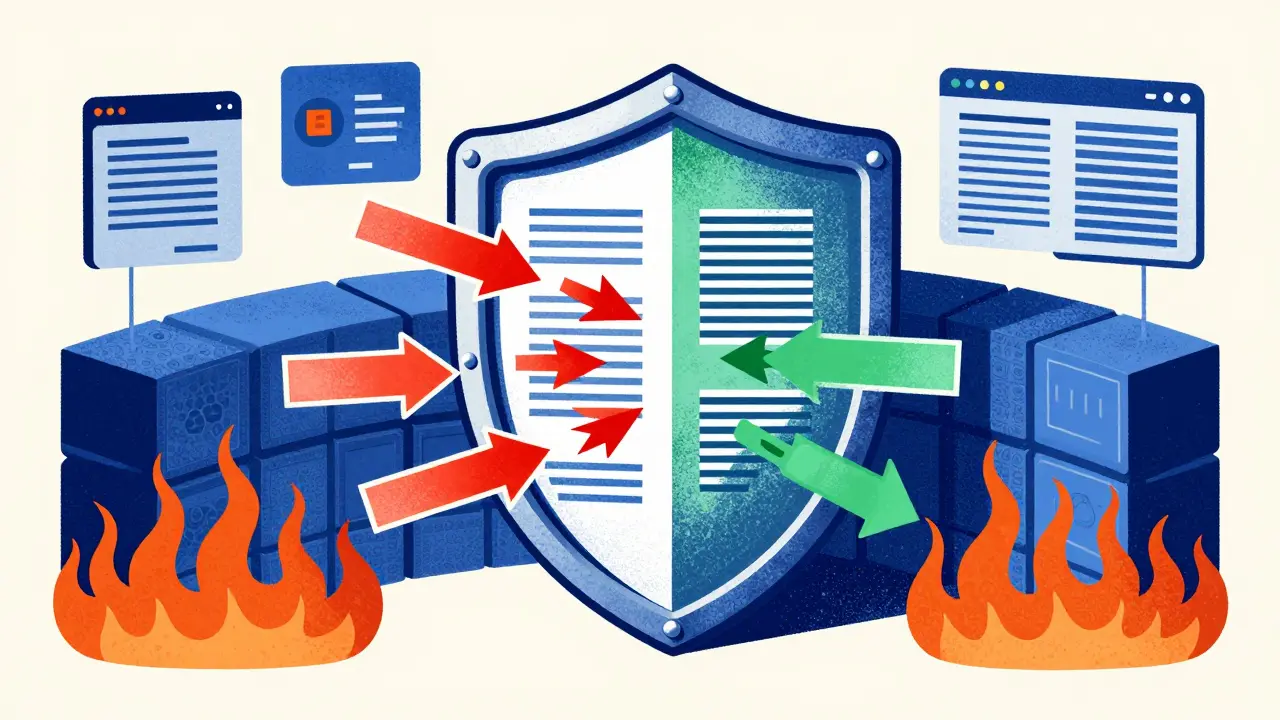
So, how do you protect yourself? There is no silver bullet, but you can significantly reduce your risk by following these steps:
- Use Reputable Exchanges: Stick to centralized exchanges that comply with OFAC regulations. They already screen against known sanctioned wallets. While not perfect, they offer a layer of protection.
- Implement Transaction Screening: If you handle large volumes of crypto, invest in API access to blockchain analytics providers. Tools from Elliptic or similar firms can scan incoming and outgoing transactions in real-time.
- Avoid High-Risk Jurisdictions: Be cautious when interacting with wallets linked to countries known for hosting North Korean IT workers or shell companies. The MSMT report highlights the role of these networks in sanctions evasion.
- Monitor News and Alerts: Stay updated on new OFAC designations. In July 2025, several new entities were added. Ignorance of the law is not a defense in compliance matters.
- Diversify Your Wallets: Don’t keep all your funds in one place. If one wallet gets associated with a suspicious cluster, having others can help mitigate total loss.
The U.S. Department of State has offered rewards of up to $15 million for information leading to the disruption of these operations. This signals that the government is actively hunting these networks. Aligning yourself with compliance standards keeps you on the right side of history-and the law.
Future Outlook: What to Expect in 2026 and Beyond
The threat is not going away. Elliptic predicts that North Korea will increasingly target DeFi protocols and cross-chain bridges. The success of the Bybit hack showed that even well-secured platforms are vulnerable. As blockchain technology evolves, so do the tactics of state-sponsored hackers.
However, the defensive side is also strengthening. International cooperation between the US, Japan, and South Korea is tighter than ever. The MSMT’s second report represents a shift from passive monitoring to active reporting and coordination. Financial institutions are under pressure to adopt "travel rule" compliance, which requires sharing sender and receiver information for crypto transfers.
For the average user, this means less anonymity and more scrutiny. But it also means a safer ecosystem. As sanctioned wallet addresses become easier to identify and block, the cost for North Korea to operate rises. The long-term viability of their crypto theft operations faces growing challenges. Yet, given their adaptability, these attacks will remain a persistent threat through at least 2026.
Can I see a list of sanctioned North Korean wallet addresses?
No, there is no single public list of sanctioned wallet addresses maintained by governments like OFAC. Wallet addresses change constantly, and publishing them would allow bad actors to move funds quickly. Instead, compliance relies on proprietary databases from blockchain analytics firms like Elliptic and Chainalysis, which update their lists in real-time based on investigative work.
What happens if I accidentally send crypto to a sanctioned wallet?
If you send funds to a wallet identified as sanctioned, those funds are likely unrecoverable. Additionally, your own wallet address may be flagged by analytics firms as "tainted." This could lead to your accounts being frozen by exchanges or banks that perform compliance screening. You should immediately consult with a legal expert specializing in international sanctions.
How much has North Korea stolen in cryptocurrency recently?
According to Elliptic's analysis from October 2025, North Korean hacking groups stole over $2.03 billion in cryptocurrency during the first nine months of 2025. This includes a massive $1.46 billion breach of the exchange Bybit in February 2025. The cumulative total of known thefts since tracking began exceeds $6 billion.
Who enforces sanctions on North Korean crypto activities?
The primary enforcer in the United States is the Office of Foreign Assets Control (OFAC) within the Treasury Department. Internationally, the Multilateral Sanctions Monitoring Team (MSMT), comprising 11 nations, monitors and reports violations. Private blockchain analytics firms play a crucial supporting role by providing the data needed for enforcement.
Are DeFi protocols safe from North Korean hackers?
DeFi protocols are actually high-value targets for North Korean hackers because they often lack centralized oversight and security teams. Elliptic predicts that North Korea will increasingly target DeFi and cross-chain bridges in 2026. Users should exercise extreme caution when interacting with smart contracts and ensure they are using audited, reputable platforms.
Bronwen Butler
May 8, 2026 AT 17:29the whole premise is flawed because you assume these 'sanctioned wallets' are actually enforceable in any meaningful way
blockchain is immutable and decentralized so trying to police it with OFAC lists is like trying to stop the tide with a spoon
i mean sure they can freeze your exchange account if you use bybit or coinbase but that just pushes everyone to privacy coins and mixers which makes the problem worse not better
people keep acting like compliance is the answer when really its just a tax on freedom
also who pays for these analytics firms? the banks obviously
so its a self serving industry creating fear to sell their tools
if north korea wants to steal crypto let them
its their sovereign right to hack whoever they want
stop pretending this is about safety its about control
Michelle Bonahoom
May 10, 2026 AT 06:35this is exactly why we need stricter laws
these criminals are stealing from honest americans and using our technology to fund weapons against us
i dont care about your privacy concerns when nukes are involved
every wallet should be KYC verified period
if you cant prove where your money came from you probably stole it
its that simple
why do people always defend the hackers
they are traitors to the global economy
we should ban all anonymous transactions immediately
end of story
Matt Davis
May 11, 2026 AT 15:13Oh, look at Michelle playing detective again
You think banning anonymous transactions will stop North Korea?
Please.
They have state-sponsored hacking teams that write their own code and exploit vulnerabilities before anyone else even knows they exist
Your solution is as effective as putting a band-aid on a bullet wound
The real issue is that centralized exchanges are weak points
If everyone used cold storage and peer-to-peer trading there would be nothing to hack
But no, you want more government oversight
Because clearly the last decade of increased surveillance made us safer
Ridiculous.
Pauline Larocco71
May 12, 2026 AT 02:09i totally get where matt is coming from but i feel like michelle has a point about the victims
its scary to think about regular people losing their savings because some hacker group decided to target an exchange
i mean imagine working hard for years and then boom gone
it must be so stressful for families who rely on those funds
maybe we can find a middle ground though
like maybe better education instead of just bans
people need to understand how to secure their own keys
but also empathy for those who got hurt
its a tough situation for everyone involved
hopefully things get better soon tho
beti macedo
May 13, 2026 AT 14:37It is indeed a very complex matter that requires careful consideration from all parties involved
I believe that while security measures are important we must also respect the technological advancements that allow for financial inclusion
However I agree that the losses suffered by individuals are regrettable and deserve attention
We should perhaps focus on international cooperation rather than unilateral sanctions
This approach might yield more sustainable results in the long run
Thank you for sharing this informative article
It has certainly opened my eyes to new perspectives
I hope we can all work together to create a safer digital environment for everyone
Best regards to the community here