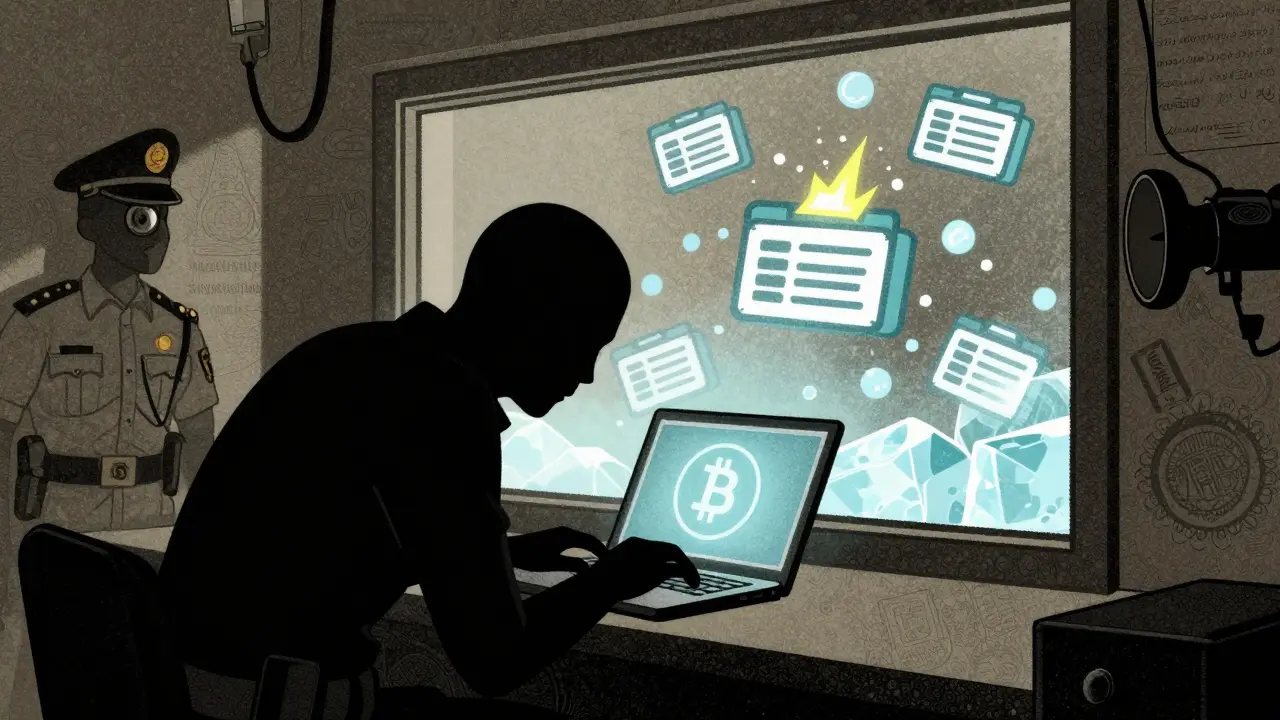
Buying or selling Bitcoin in Bangladesh isn’t just risky-it’s legally dangerous. Even though owning cryptocurrency isn’t explicitly written into law as a crime, the moment you trade it, you step into a legal gray zone where the penalties can include prison time, heavy fines, and frozen bank accounts. The government doesn’t want you to touch crypto. And if you do, they’ve built a system to catch you.
How the Ban Works-Even Without a Law
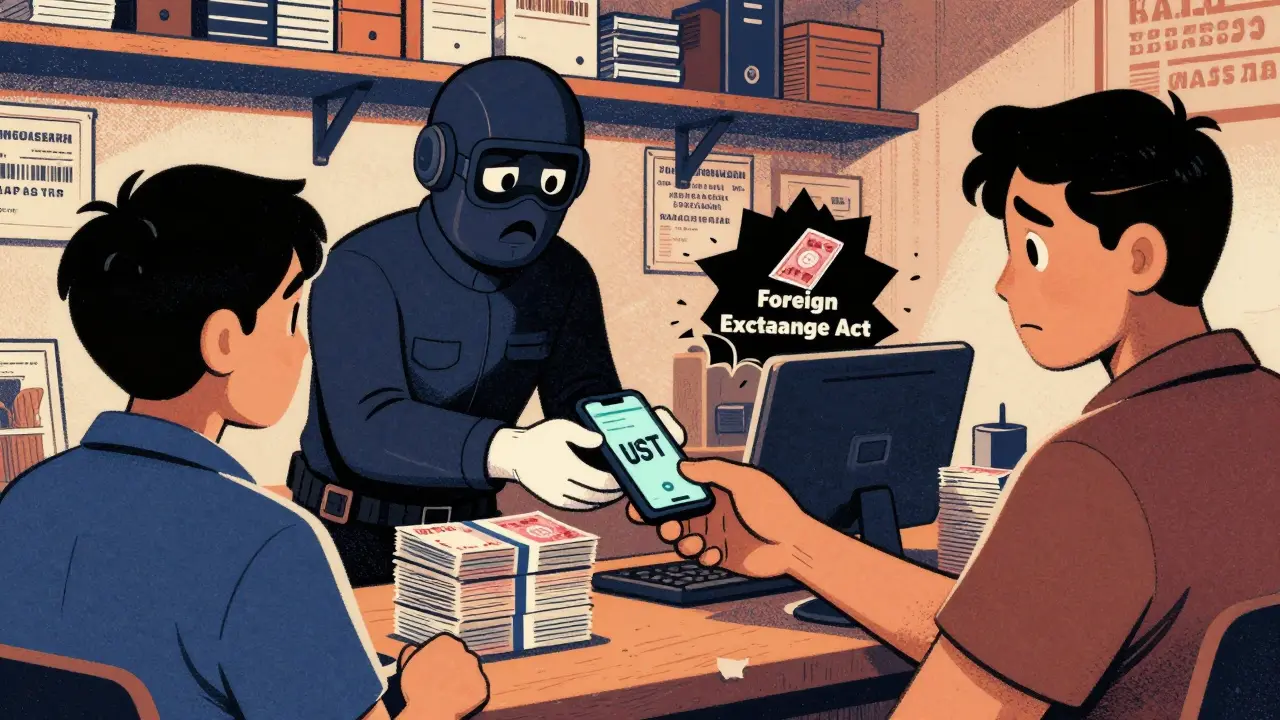
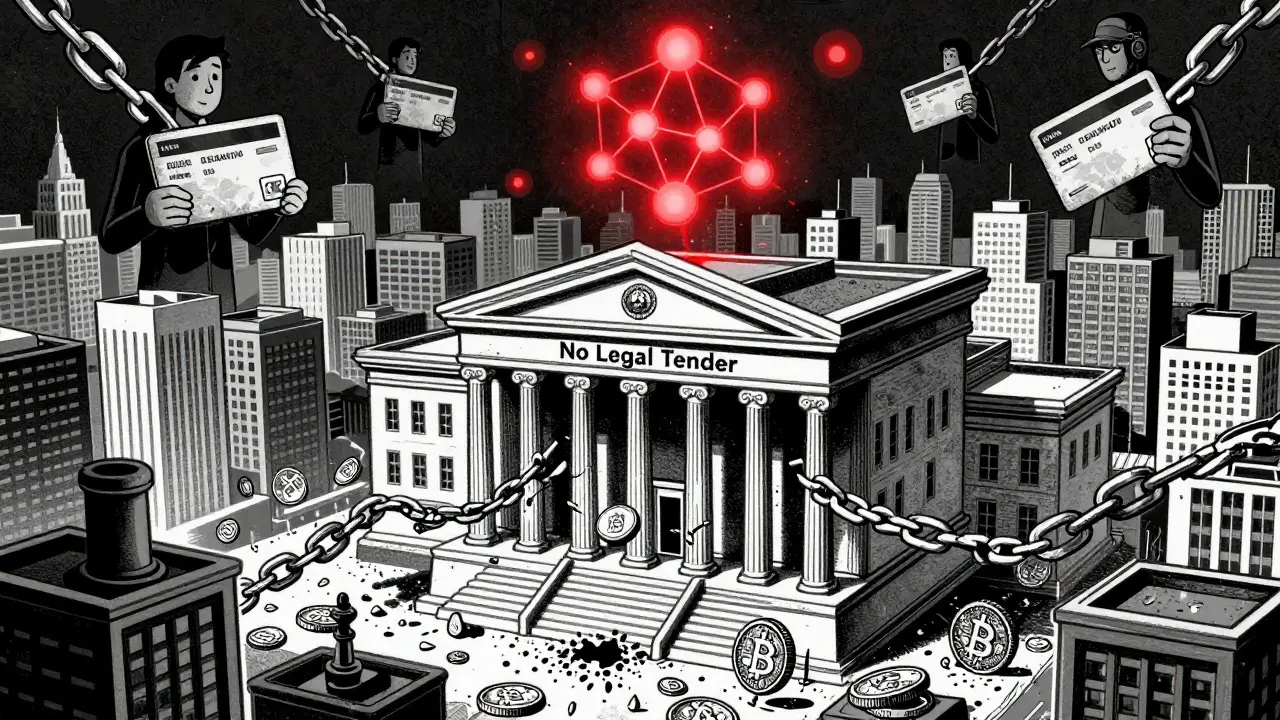
Bangladesh never passed a law that says, "It is illegal to own Bitcoin." But that doesn’t mean you’re safe. The real power lies in two older laws: the Foreign Exchange Regulation Act of 1947 and the Money Laundering Prevention Act of 2012. These weren’t made for crypto. But the central bank, Bangladesh Bank, rewrote how they’re used.In 2014, Bangladesh Bank first warned people not to use Bitcoin. By 2016, they said crypto transactions could break foreign exchange rules. Then, in 2017, they declared digital currencies "not legal tender" and banned them outright. No new law. No parliamentary vote. Just a circular from the central bank. And since then, every official statement has doubled down.
Here’s the catch: you can’t be arrested just for holding Bitcoin in a wallet. But if you buy it, sell it, or transfer it-even once-you’re now under suspicion of violating money laundering or foreign exchange rules. That’s how enforcement works. The law doesn’t say "crypto is illegal." But it says "any money movement tied to illegal activity is punishable." And the government says crypto = illegal activity.
What Happens If You Get Caught
The penalties aren’t theoretical. They’ve been applied.In July 2022, 14 people in Dhaka were arrested for running a crypto exchange. They handled $2.3 million in trades. The police charged them under the Money Laundering Prevention Act. They faced up to 10 years in jail.
In February 2023, authorities seized 127 Bitcoin from a trader named Mohammad Ali. At the time, that was worth over $12 million. He wasn’t charged with owning crypto. He was charged with violating foreign currency rules-because he used Taka to buy Bitcoin and then sold it back for dollars.
In May 2024, seven university students in Chittagong were investigated after the Financial Intelligence Unit (BFIU) noticed $85,000 in monthly crypto transactions through peer-to-peer apps. They weren’t arrested. But their bank accounts were frozen. Their phones were seized. They had to appear in court.
The punishment? Under Section 6 of the Money Laundering Act (as amended in 2015), you can get 1 to 10 years in prison and a fine between 10,000 and 1,000,000 Bangladeshi Taka (roughly $85 to $8,500 USD). That’s not a slap on the wrist. That’s life-changing.
How People Still Trade-And Why It’s Risky
Despite the ban, an estimated 500,000 to 700,000 people in Bangladesh still trade crypto. How? They’ve built underground networks.Most use local agents-people who take your Taka and send you USDT (Tether) on the blockchain. These agents charge 3% to 5% per trade. But they’re not regulated. And they’re not safe. In June 2024, 23 traders lost $350,000 when their agent, "Sohel Rana," vanished after collecting payments. No one was arrested. No one was held accountable.
Others use apps like Binance or KuCoin, downloaded via VPNs. Sensor Tower data from March 2025 shows 150,000 to 200,000 active monthly users in Bangladesh. But these apps don’t block users from Bangladesh. Why? Because they don’t know who you are. And the government can’t force them to.
But here’s what they can do: track your bank account. Every time you deposit Taka to buy crypto, your bank sees a pattern. If you send money to a known crypto agent, or if your transaction matches a flagged pattern, your account gets frozen. In 2024, banks blocked 2,843 accounts linked to crypto activity through mobile payment systems like bKash and Nagad. Over 68% of surveyed traders had at least one account frozen that year.
Why the Government Won’t Change Its Mind
You might wonder: why such a hard line? The answer is control.Bangladesh gets $21.1 billion in remittances every year-6.1% of its entire GDP. That money flows through banks, mobile wallets, and government-monitored channels. If people start using Bitcoin to send money overseas, the central bank loses visibility. They can’t track it. They can’t tax it. They can’t stop illegal transfers.
Dr. Atiur Rahman, former governor of Bangladesh Bank, started the ban in 2014 because he feared crypto would destabilize the currency. His successor, Dr. Abdur Rouf Talukder, has kept the same stance. Every quarter, they issue new warnings. No exceptions.
Even when the government talks about blockchain technology-like in the 2020 National Blockchain Strategy-they make it clear: "We support the tech. Not the currency." In January 2025, Bangladesh Bank launched a blockchain sandbox-for supply chain tracking, land records, and digital IDs. But crypto? Not even a whisper.
The Taxing Gray Zone
You might think: "If I make money trading Bitcoin, do I owe taxes?" The answer is yes-but only if they catch you.The National Board of Revenue (NBR) says crypto profits fall under the Income Tax Ordinance of 1984. That means gains could be taxed at 25% (for businesses) or 30% (for individuals). But here’s the twist: NBR has never issued a single crypto tax form. No guidelines. No reporting system. No audits.
So technically, you owe tax. Practically? No one’s checking. But if you get caught trading, they’ll come for your taxes too. That’s how it works. First, they charge you with money laundering. Then, they add tax evasion. Two crimes. Double the punishment.
What’s Happening in Neighboring Countries
Bangladesh stands alone in South Asia. India taxes crypto at 30% but lets people trade freely. Pakistan is exploring Bitcoin as a reserve asset. Sri Lanka drafted a full regulatory framework in late 2024.Bangladesh? No changes. No talks. No reviews. Finance Minister Abul Hassan Mahmood Ali said in March 2025: "There are no plans to reconsider the cryptocurrency ban."
That’s the reality. While other countries are trying to regulate, Bangladesh is trying to erase. And for the people who still trade? That’s terrifying.
What You Need to Know Right Now
If you’re in Bangladesh and thinking about crypto:- Ownership isn’t illegal-but trading is treated as a crime.
- Using agents? You’re at risk of being scammed or arrested.
- Bank accounts can be frozen without warning.
- Prison time is possible under money laundering laws.
- Taxes are owed, but unenforced-until you get caught.
There’s no safe way to trade Bitcoin in Bangladesh. Not legally. Not reliably. Not without risk.
Is it illegal to own Bitcoin in Bangladesh?
No, owning Bitcoin isn’t explicitly illegal under Bangladeshi law. But the central bank has declared it "not legal tender," and any transaction involving it-buying, selling, trading-is treated as a violation of the Money Laundering Prevention Act or Foreign Exchange Regulation Act. So while you won’t be arrested just for holding it, you’ll be at serious legal risk if you move it.
Can I get arrested for trading Bitcoin in Bangladesh?
Yes. There have been multiple arrests since 2022 for operating crypto exchanges or facilitating trades. The charges are usually under Section 6 of the Money Laundering Prevention Act, which carries 1 to 10 years in prison and fines up to 1,000,000 BDT. You don’t need to be a large operator-just one transaction flagged as suspicious can trigger an investigation.
Can my bank account be frozen for crypto activity?
Yes. Banks in Bangladesh monitor transactions through bKash, Nagad, and international card networks. If your payments match patterns linked to crypto agents or exchanges, your account can be frozen without notice. In 2024 alone, over 2,800 accounts were blocked for suspected crypto activity. Reversing this can take months, if it happens at all.
Do I have to pay taxes on crypto profits in Bangladesh?
Legally, yes. The National Board of Revenue says crypto gains are taxable under the Income Tax Ordinance of 1984-either 25% or 30% depending on your status. But there’s no official reporting system. So while you’re required to pay, no one is actively auditing. However, if you’re caught trading, tax evasion will likely be added as a second charge.
Are there any legal ways to invest in crypto in Bangladesh?
No. There are no licensed exchanges, no legal trading platforms, and no regulatory approval for crypto investments. Any service claiming to offer "legal" crypto trading in Bangladesh is either misleading or operating illegally. The government has not authorized a single crypto-related business.
Final Reality Check
The crypto ban in Bangladesh isn’t about technology. It’s about control. The government doesn’t trust decentralized systems. It doesn’t want money flowing outside its reach. And it’s willing to use old laws to crush what it can’t control.For the people trading Bitcoin? It’s a high-stakes gamble. You might make money. But you might also lose your freedom, your savings, or your access to the banking system. There’s no safety net. No legal shield. No backup plan.
And until the government changes course-and there’s no sign it will-that’s the truth.
Amita Pandey
February 24, 2026 AT 08:10The legal architecture in Bangladesh is not merely restrictive-it is profoundly regressive. By weaponizing 1947 colonial-era statutes to criminalize decentralized finance, the state reveals its fundamental insecurity: it cannot control what it does not understand. This is not economic policy; it is epistemic violence. The central bank’s circulars function as extralegal edicts, bypassing democratic accountability under the guise of financial stability. When a government chooses opacity over transparency, it does not protect its citizens-it infantilizes them. The real danger is not Bitcoin-it is the erosion of rule of law in favor of arbitrary administrative fiat.
Jan Czuchaj
February 25, 2026 AT 01:53It’s interesting how the same institutions that preach fiscal responsibility and monetary sovereignty are the ones that refuse to adapt to technological evolution. The fear isn’t that people are using Bitcoin-it’s that they’re using it without permission. There’s a deeper anxiety here, one that goes beyond economics: the loss of control over personal autonomy. If you can move value without going through the state-sanctioned pipeline, then the entire architecture of surveillance and taxation becomes porous. And that terrifies bureaucrats more than any black market ever could. The ban isn’t about money-it’s about power. And power, when it’s afraid, always becomes cruel.
George Suggs
February 26, 2026 AT 05:36People still trade anyway. That’s the real story here. The ban doesn’t stop crypto-it just makes it dangerous. And dangerous things attract predators. The agents charging 5%? They’re not heroes. They’re sharks. And the system? It’s designed to let them thrive while punishing the users. No one’s getting justice. Just more suffering.
Dianna Bethea
February 27, 2026 AT 07:17What’s striking is how this mirrors so many other attempts to suppress innovation under the banner of protection. We’ve seen this with peer-to-peer lending, with mobile banking, even with early internet commerce. The fear is always the same: loss of control. But the outcome is always the same too-people adapt, find ways, build networks. The real tragedy isn’t the ban-it’s that the government refuses to see the opportunity. Blockchain isn’t just about money. It’s about transparency, efficiency, inclusion. Imagine if Bangladesh used this to empower its millions of unbanked workers instead of criminalizing them. Instead, they’re locking doors and throwing away the keys.
KingDesigners &Co
March 1, 2026 AT 06:22LOL at people thinking they can outsmart a government that freezes bank accounts like it’s a video game. You think you’re cool trading on Binance? Nah. You’re just a target. And when they come for you, no one’s gonna help. 😎💸
Felicia Eriksson
March 1, 2026 AT 14:09I just keep thinking about those university students. Their accounts frozen, phones taken, forced into courtrooms for something that feels more like a technicality than a crime. There’s no justice in that. Just fear. And fear doesn’t build a future-it just breaks people.
Tracy Whetsel
March 3, 2026 AT 07:02It’s so sad how much potential gets crushed under rigid systems. Bangladesh could’ve led the region in blockchain for remittances, for land records, for public services-but instead, they’re doubling down on punishment. The tech isn’t the enemy. The fear of change is. And that fear? It’s costing real people their money, their freedom, their dignity. We don’t need bans. We need bridges. 🌉💛