
The world of digital finance operates on transparency, yet it hides significant secrets in plain sight. When you look at a public ledger like Bitcoin is a decentralized digital currency where transactions are recorded permanently., every payment creates a trail. However, that trail can be erased. This erasure technology has become a critical lifeline for state-sponsored actors who need to hide the source of their funds. In 2026, the intersection of privacy tools and geopolitical conflict is sharper than ever. Specifically, North Korean money laundering operations heavily rely on obscuring the path of stolen or traded cryptocurrency to bypass international sanctions. Understanding this connection is vital for anyone holding digital assets or working in compliance.
Imagine walking into a crowded room with a distinct red coat. Everyone sees your movement. Now, imagine leaving the room, dropping your coat in a pile with hundreds of other identical red coats, and picking up a different one. You still have a coat, but nobody knows which one you wore originally. This simple concept forms the basis of cryptocurrency mixing services designed to break the link between a sender and a receiver. For ordinary users, this privacy might seem like a harmless way to protect personal finances. For regimes under heavy economic pressure, however, it is a weapon against global enforcement.
How Mixing Services Break the Chain
To understand the risk, we first need to look at the mechanics. These tools work by pooling funds together. When a user sends coins to a service, those coins join a large pool with funds from dozens or thousands of others. The service then shuffles these coins around, often waiting a set time period, before distributing them back to new addresses. The result looks like clean money to an outside observer. While centralized mixers involve a company holding custody temporarily, custodial tumblers often require trust because the operator controls the funds.
However, the landscape has shifted significantly over recent years. We now see more decentralized protocols that utilize smart contracts to perform the shuffle without handing over control to a single administrator. One popular method involves coordinating multiple users to sign a single transaction. This technique makes it difficult to trace which input matches which output. Despite the technological differences, the goal remains the same: obfuscate the origin. For illicit actors, the distinction between centralized and decentralized matters less than the effectiveness of the cover-up.
| Feature | Centralized Mixers | Decentralized Mixers |
|---|---|---|
| Custody of Funds | Held by operator (Risk) | Held in Smart Contract |
| Anonymity Level | Moderate to High | High |
| Regulatory Scrutiny | High Target | Growing Focus |
| Fees | Typically 1-3% | Network Gas + Protocol Fees |
The North Korea Connection
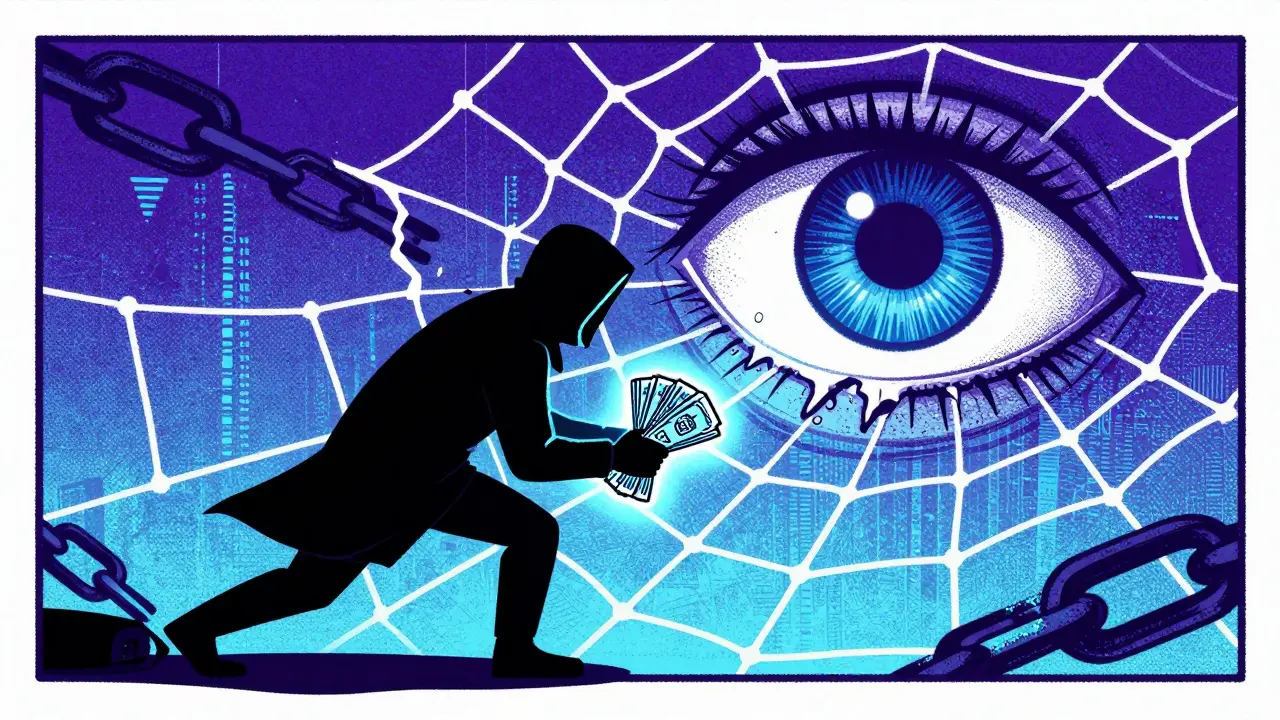
Why does a reclusive dictatorship care about Bitcoin tumblers? The answer lies in sanctions. North Korea faces extensive international sanctions that restrict its ability to trade goods and access foreign currency. To bypass these restrictions, state-sponsored cyber units have turned to digital theft and ransomware campaigns. They steal crypto-assets from exchanges or individual wallets globally. Once stolen, the funds are identifiable on the blockchain. If the wallet address is flagged, any exchange receiving that money will freeze the account.
This is where the privacy layer becomes essential. Intelligence reports indicate that groups linked to the regime use a multi-step process. First, they move stolen assets through various hot wallets. Next, they engage mixing services to scramble the blockchain trail. Finally, they attempt to cash out through unregulated platforms or offshore markets. By breaking the audit trail, they convert "dirty" crypto into spendable value that cannot be easily tracked back to their operational headquarters.
In 2025 and leading into 2026, enforcement agencies noticed a spike in sophisticated laundering techniques. It is not enough to use a mixer once; adversaries run funds through multiple layers of services to ensure total separation from the original crime. This persistence complicates law enforcement efforts significantly. Even when authorities shut down a specific platform, the underlying protocol often survives, allowing operators to rebrand and continue functioning underground.
The Regulatory Response
United States regulators view these tools with intense skepticism. In the eyes of the Financial Crimes Enforcement Network (FinCEN) and the Department of Justice, many mixers operate as unregistered money service businesses. Without proper licensing, they function in a legal gray zone-or sometimes outright illegal territory. We saw landmark indictments against operators of major platforms, signaling a clear message: running a mixer with knowledge of illicit funds is a federal offense.
OFAC sanctions play a crucial role in blocking access to these services. The Office of Foreign Assets Control adds wallet addresses and entities to their list. Once a mixer or an operator is sanctioned, U.S.-based entities cannot interact with them. Exchanges comply by flagging tokens that pass through sanctioned mixers. If you try to deposit funds that recently traveled through a blacklisted tumbler, your exchange account might get frozen. This is not theoretical; thousands of dollars have been seized in 2024 and 2025 due to commingled funds.
Furthermore, the industry is seeing pressure to adopt stricter Know Your Customer (KYC) standards. Privacy coins and mixers are often cited in legislative proposals aimed at curbing illicit finance. While proponents argue for financial privacy, the balance tips heavily toward national security concerns when state actors are involved in funding nuclear programs or missile development.
Risks for Individual Users
You might think this only affects hackers or governments, but there are real consequences for everyday users. Using a mixer doesn't guarantee safety from tracking. Many centralized mixers keep logs of your IP address and transaction details. If that data gets subpoenaed or hacked, your identity is exposed. Worse, if the service disappears with your funds-a common occurrence in this sector-you have no recourse.
More importantly, consider the reputation of your assets. Banks and exchanges screen deposits rigorously. If the software flags a transaction pattern consistent with mixing, they may suspend your account pending investigation. You could find yourself unable to withdraw your life savings simply because someone else sent "cleaned" coins to your wallet. In 2026, several major platforms have automated this detection, creating a scenario where legitimate users accidentally receive tainted funds.
Navigating Compliance Safely
How do you stay safe? The most effective strategy is transparency. Avoid tools that promise total obscurity if you intend to interact with traditional finance. Stick to regulated on-ramps and off-ramps. If you are building software, avoid integrating APIs that facilitate mixing functions. For institutional investors, deep-dive due diligence on counterparty infrastructure is mandatory. It costs little to verify a wallet's history before accepting a large payment, but the cost of non-compliance runs into millions.
The technology itself is neutral, but its application carries weight. As blockchain forensics improve, the ability to de-anonymize mixed transactions increases. Companies are developing graph analysis tools that can detect statistical patterns even within mixed flows. The era of absolute secrecy on public ledgers is shrinking rapidly, replaced by surveillance-grade analysis.
Are cryptocurrency mixers illegal?
It depends on jurisdiction and usage. In the United States, operating a mixer without registering as a money service business is illegal. Using one for personal privacy is a gray area, but using it to hide proceeds of crime is federally punishable.
How do authorities track North Korean crypto theft?
Investigators use blockchain analytics firms to map clusters of addresses. Even after mixing, behavioral patterns often link back to known criminal wallets. OFAC also works with exchanges to freeze identified funds.
Can I lose my money in a mixer?
Yes. Centralized mixers hold your coins temporarily. If the operator flees or is hacked, there is no insurance to recover the loss. Decentralized protocols carry less custody risk but still face technical failure points.
Do all mixers help with money laundering?
Not necessarily. The tool provides capability. Whether it facilitates laundering depends on the user. However, regulators often treat the entire category with suspicion due to high rates of misuse by bad actors.
What happens if I receive mixed crypto?
Receiving funds routed through a sanctioned mixer can trigger compliance flags. Your exchange may freeze the deposit and report the incident to authorities, potentially halting all withdrawals until the issue is resolved.


Liam Robertson
March 30, 2026 AT 21:44Keeping up with these developments requires patience and clear communication. We must all respect the boundaries set by international laws for protection. Hope remains strong that technology solves these privacy issues responsibly. Trusting verified sources helps us avoid many potential traps on the road ahead. Everyone deserves peace of mind while holding digital assets securely.
Callis MacEwan
March 31, 2026 AT 20:42Most analysis ignores the fundamental flaw in centralized custodial designs inherently. Zero knowledge proofs provide better security guarantees than simple coin join mechanics offer today. Network topology data leaks significant metadata regardless of fee structures applied. Users prioritize convenience over cryptographic integrity which leads to inevitable tracking failures. Sophisticated adversaries exploit these weak points in standard consumer grade tools easily.
Sean Carr
April 2, 2026 AT 03:13Understanding the custody model really changes how I view self-hosted nodes today.
Joy Crawford
April 3, 2026 AT 15:08it is so hard trying to sleep knowing the rules change constantly :/ i feel overwhelmed by all the warnings everywhere. people act like safety is guaranteed but nothing stays stable for long here :(
Jay Starr
April 4, 2026 AT 03:37The threat landscape shifts faster than anyone predicts in this sector today. Regulatory bodies are tightening nooses around every known mixing protocol slowly. You might keep your keys but the network itself reveals patterns eventually. Graph analysis tools link clusters even when you swap through intermediaries multiple times. Banks refuse deposits from addresses that show any contact with flagged entities. This means your wealth becomes inaccessible liquid capital overnight sometimes. Financial institutions prioritize compliance over helping individual customers survive. They flag accounts instantly to avoid massive fines from government regulators. Once a freeze happens you spend years arguing paperwork instead of living. Friends tell stories of lost inheritances because someone sent tainted coins accidentally. These mistakes destroy trust within communities building the next generation systems. Paranoia grows until nobody wants to send value anywhere without proof. Transparency costs too much when your financial history becomes public record. We stand at a crossroads where privacy might disappear completely soon. Preparing for total surveillance is the only rational choice remaining here. Ignoring the signs will cost everyone who thought they were safe previously.