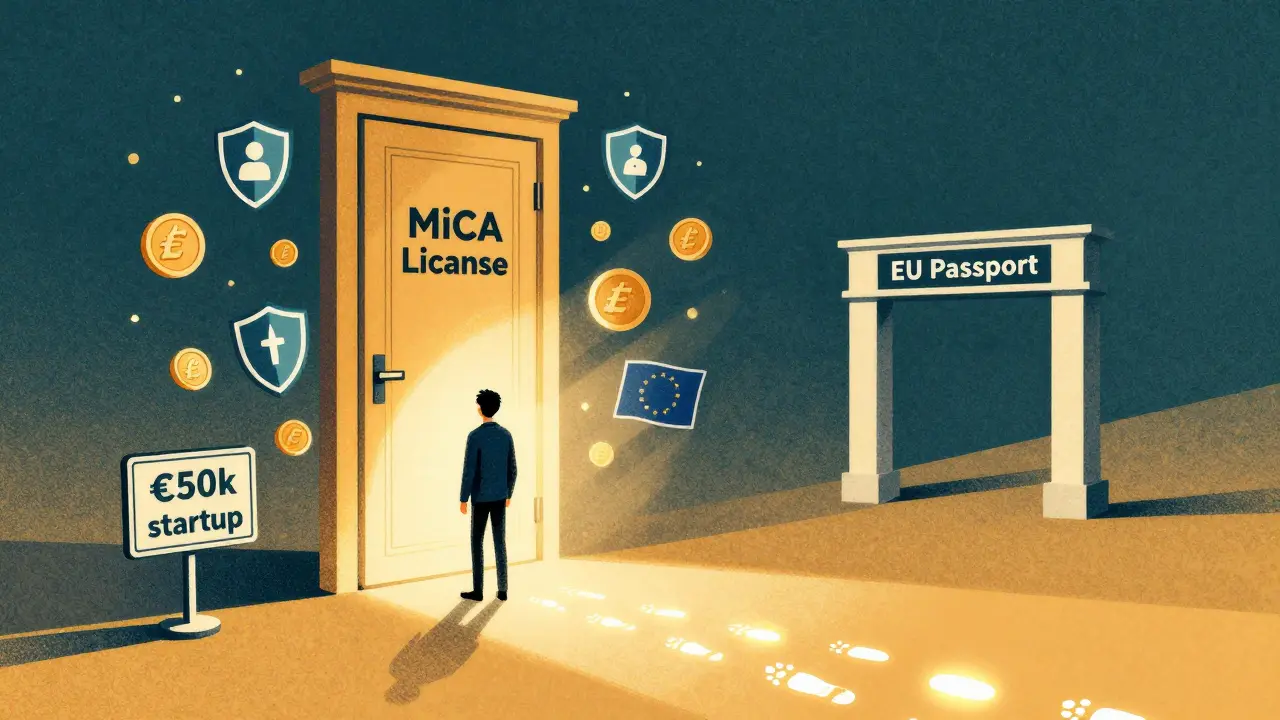
Setting up a crypto exchange business in Malta isn’t just about registering a company. It’s about passing one of the toughest, most detailed regulatory reviews in the world - and getting rewarded with access to the entire European Union market. Since December 30, 2024, every crypto exchange operating in the EU must hold a license under the MiCA regulation. Malta is one of the few places where this isn’t just possible - it’s proven.
Why Malta? It’s Not Just a Tax Haven
People often think Malta is attractive because of low taxes. That’s part of it, but not the main reason. The real value is EU passporting. Once you get licensed by the Malta Financial Services Authority (MFSA) under MiCA, you can offer exchange and custody services across all 27 EU countries without needing separate licenses in each one. That’s a game-changer. No other jurisdiction offers this combination: strict rules + full EU access. Compare that to places like the U.S., where you’d need separate state-by-state licenses, or Switzerland, where you get strong reputation but no automatic EU-wide rights. Malta gives you the best of both: a clear regulatory path and a massive market.What MiCA Actually Requires
MiCA doesn’t just ask for paperwork. It demands operational proof. To get licensed, you need to show:- A detailed business plan covering your services, target customers, and growth strategy
- A governance structure with clear roles - no vague "team" descriptions
- Proof of financial resources: minimum capital requirements vary by service type, but most exchanges need at least €150,000 in equity
- Robust cybersecurity measures: penetration tests, cold storage protocols, and incident response plans
- A risk management framework that maps out every possible failure point - from hacking to liquidity crunches
The Licensing Process: Real Timeline and Costs
There’s no official timeline, but based on recent cases, expect 8 to 14 months from submission to approval. The average cost? Between €250,000 and €500,000. That includes legal fees, compliance consultants, cybersecurity audits, and internal staff time. You’re not paying for a lawyer to fill out forms. You’re paying for experts who’ve done this before. The good news? The MFSA publishes application guidelines. They’re detailed. You can download them. The bad news? They’re 180 pages long. And they expect you to understand every line.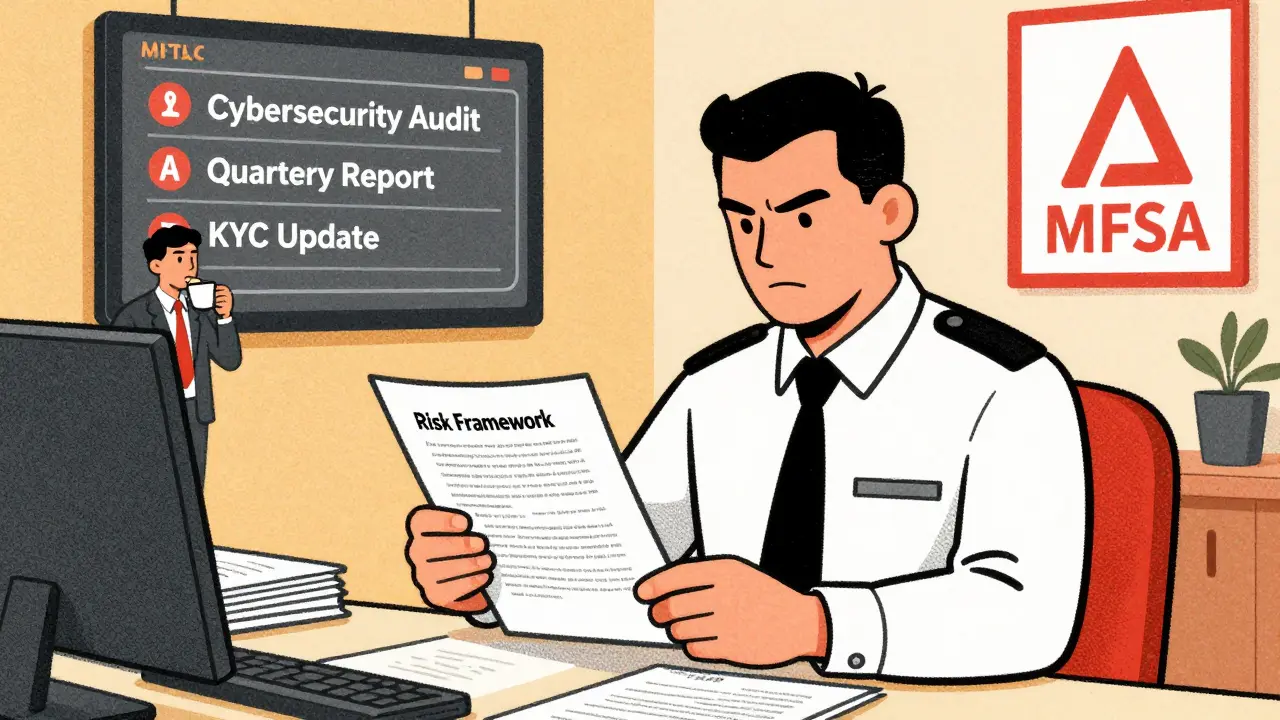
Who’s Already Done It? Gate Technology’s Case
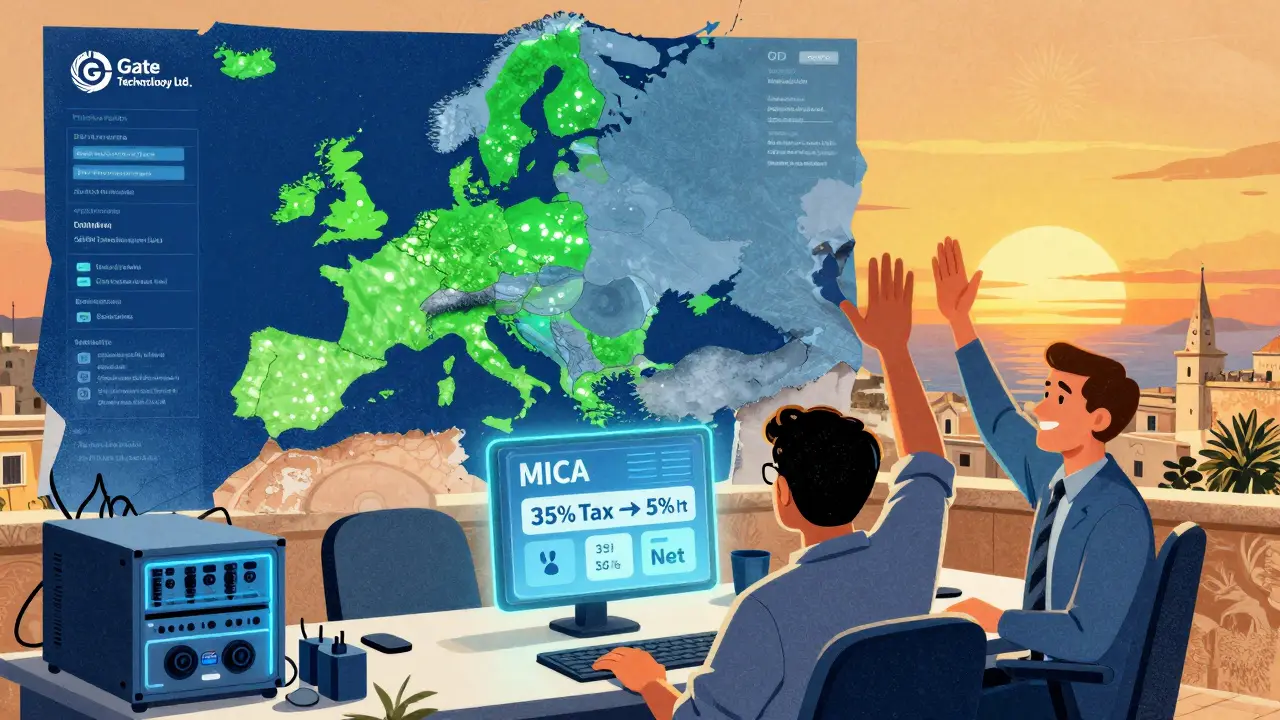
On September 1, 2025, Gate Technology Ltd became one of the first crypto exchanges to receive a full MiCA license from the MFSA. They offer spot trading and custody services. Why does this matter? Because they didn’t just get approved - they got passported. They now operate legally in Germany, France, Spain, and all other EU countries. Gate’s CEO, Giovanni Cunti, said their success came from treating compliance as a core business function, not a box to check. "We built our tech stack around regulation from day one," he said. That’s the mindset you need.Taxes: 35% Isn’t as Bad as It Sounds
Malta taxes corporate profits at 35%. That sounds high - until you factor in the refund system. If you’re a non-resident shareholder, you can get back up to 6/7 of the tax paid. That effectively lowers your rate to around 5%. It’s complex, but it’s legal and widely used by crypto firms. Cryptocurrency trading is treated as capital gains. Mining profits? Also taxable. But if you hold assets for over a year, you might qualify for partial exemptions. Talk to a Malta-based tax advisor. Don’t rely on generic advice.What You Can’t Ignore: Ongoing Compliance
Getting licensed isn’t the finish line. It’s the starting line. You must:- Submit quarterly reports to the MFSA
- Update your cybersecurity plan every six months
- Report all suspicious transactions within 24 hours
- Keep all client communication logs for at least five years
Who Should Avoid Malta?
If you’re a small team with $50,000 and a dream, Malta isn’t for you. The setup cost, ongoing compliance, and legal overhead are too high. You’ll burn through your budget before you even launch. Same if you want to move fast. If you’re looking for a "get licensed in 30 days" solution, look elsewhere. Malta’s process is slow by design - it’s meant to filter out risky operators.What’s Next? The Future of Crypto in Malta
The MFSA is already working on new rules for AI-driven trading algorithms and decentralized finance (DeFi) protocols. They’re also testing a sandbox for startups. If you’re building something new - like a tokenized asset platform - Malta is one of the few places where regulators will actually talk to you. Major exchanges like Coinbase, Kraken, and Bitpanda have all applied for MiCA licenses through Malta. That’s not a coincidence. They’re betting on its stability.Final Reality Check
Malta isn’t easy. It’s not cheap. It’s not quick. But if you’re serious about building a crypto exchange that lasts - one that can scale across Europe without legal nightmares - it’s the only place that makes sense. You’re not just setting up a business. You’re building a regulated financial institution. And in 2026, that’s what the market demands.Can I set up a crypto exchange in Malta without a physical office?
No. MiCA requires that all crypto-asset service providers have a physical presence in Malta. You need a registered office, local directors, and a qualified compliance officer based in the country. Remote management from another EU country is not allowed. The MFSA will verify your physical location during the application process.
How long does the MiCA license application take?
The average processing time is between 8 and 14 months. This includes document review, technical audits, interviews with key personnel, and potential back-and-forth with the MFSA. There’s no fast-track option. Applications submitted in early 2025 are still being reviewed as of early 2026. Plan accordingly.
Do I need to be based in the EU to apply?
No, you don’t need to be an EU citizen or resident. But you must establish a legal entity in Malta - typically a private limited company - and hire at least two local directors. Non-EU founders can own 100% of the company, but the operational control must be based in Malta.
Can I use my existing crypto exchange license from another country?
No. MiCA requires a new, standalone license issued by an EU member state’s authority. Licenses from the U.S., Singapore, or the Cayman Islands are not recognized. Even if you’re already licensed elsewhere, you must go through the full Malta application process. There’s no shortcut.
What happens if my MiCA license is denied?
You can appeal the decision, but you must fix the specific issues the MFSA raised. Common reasons for denial include incomplete risk assessments, lack of cybersecurity documentation, or failure to prove sufficient capital. You’ll need to resubmit a revised application. There’s no refund of application fees. Many firms hire specialized consultants to help with appeals.
Is Malta’s MiCA license valid outside the EU?
The MiCA license only grants automatic rights within the European Union. You cannot use it to operate legally in the U.S., Canada, or Asia. However, having a MiCA license improves your credibility globally. Some non-EU countries may offer faster licensing if you already have EU approval - but you still need to apply locally.


jennifer jean
February 18, 2026 AT 04:20george chehwane
February 18, 2026 AT 16:16Scott McCrossan
February 18, 2026 AT 18:38Beth Erickson
February 19, 2026 AT 09:41Ruby Ababio-Fernandez
February 19, 2026 AT 20:13Jeremy Fisher
February 20, 2026 AT 21:29Anandaraj Br
February 22, 2026 AT 13:47