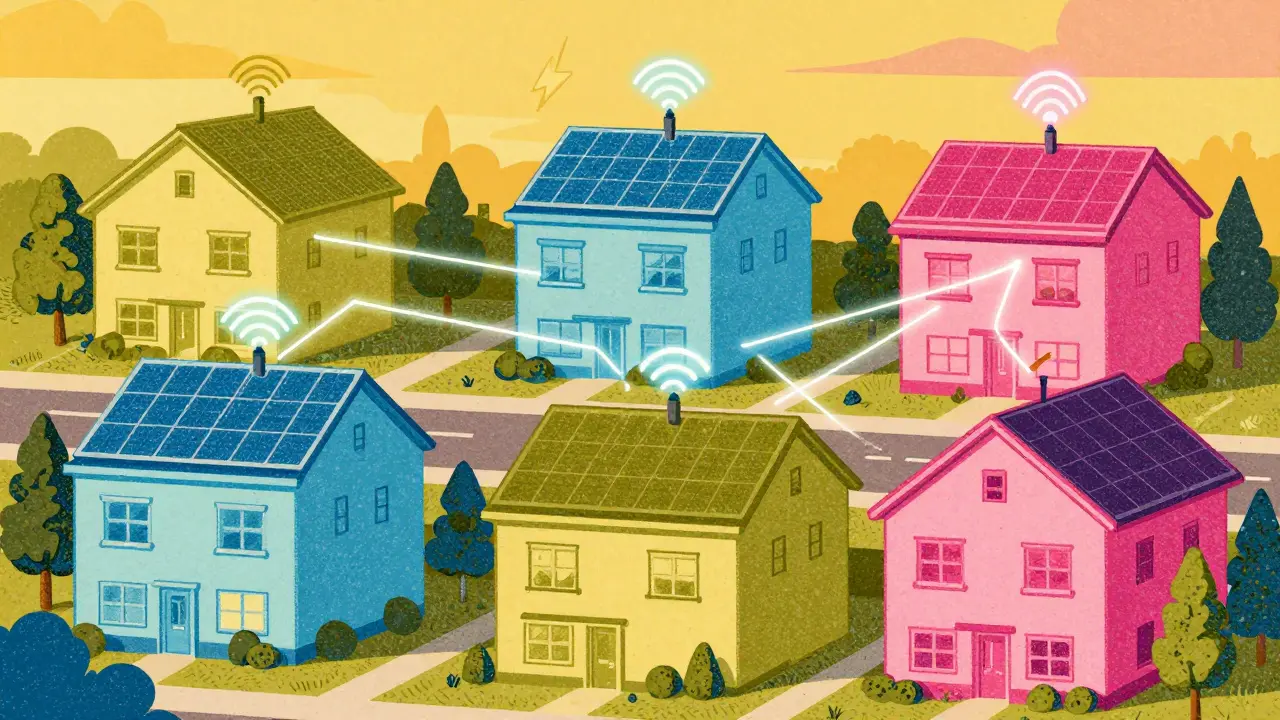
Imagine walking into a house where your electricity bill is calculated automatically, verified by neighbors instead of a utility giant, and you get paid instantly for the solar power your roof generates. That’s not science fiction anymore. It is becoming the standard for how we handle power. For decades, energy companies operated behind closed doors. They kept data silos that were hard to audit and even harder to trust. But now, we have a tool that changes everything.
Blockchain Technology is a decentralized digital ledger that records transactions across many computers so they cannot be changed retroactively. In the world of power, this means every kilowatt-hour produced, moved, or used is logged permanently. It solves the age-old problem of opaque energy markets where manipulation and errors often go unnoticed. When governments like Chile started using this tech in 2018, they proved that transparency isn’t just possible-it’s scalable.
The Core Problem with Traditional Energy Systems
Most energy grids today run on a centralized model. A few massive players control the flow of data. They decide pricing, track usage, and manage compliance. This setup creates bottlenecks. If you want to see exactly who consumed energy or when, you often hit a wall. Data gets stuck in proprietary systems. Sometimes, reports get misfiled. In other cases, bad actors manipulate numbers for profit. These inaccuracies cost billions.
You might wonder why this matters to your monthly bill. It matters because inefficiency costs money. When data isn't shared freely, renewable resources aren't optimized. Solar panels sit idle while the grid burns fossil fuels nearby. The traditional method lacks the agility to handle modern needs. We need a system that treats energy data like currency-secure, traceable, and accessible.
How Blockchain Transforms Energy Records
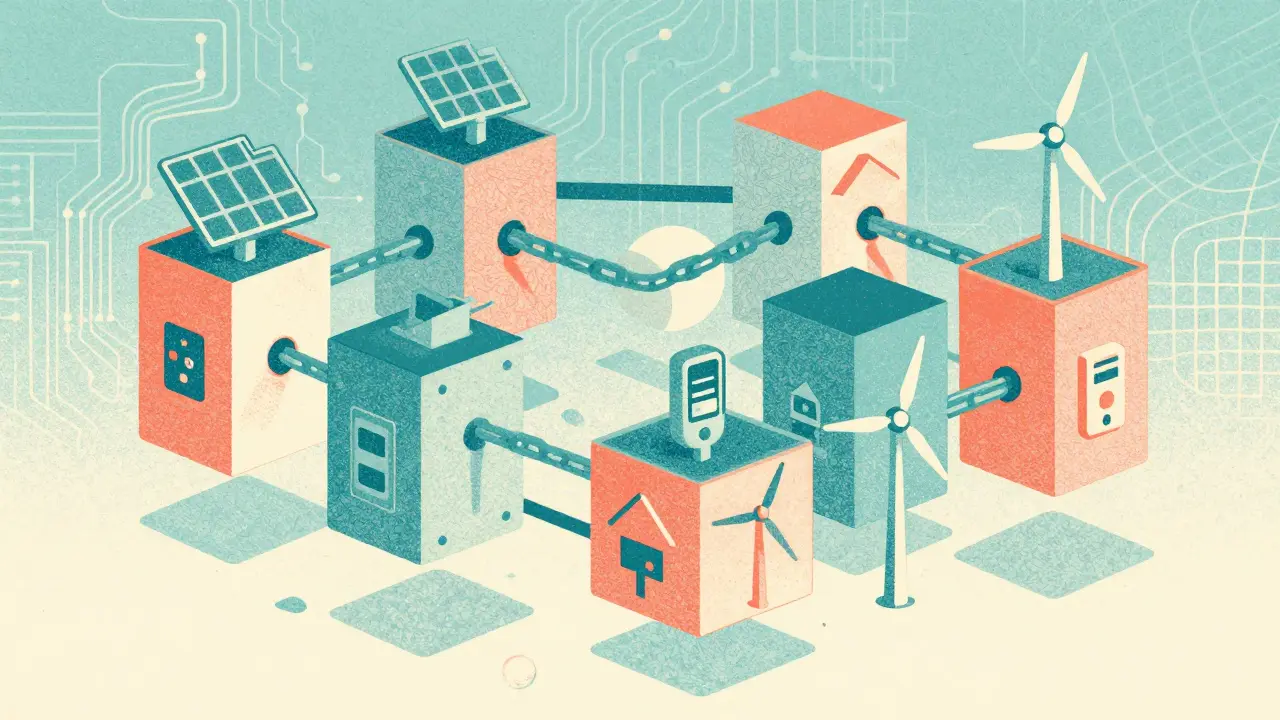
Energy Data Management becomes infinitely more secure when you apply Blockchain. Instead of one server holding the master copy, the network holds the truth. Each block of data contains a timestamp. This timestamp locks the record forever. Once a transaction is recorded, changing it requires altering every subsequent block on every computer in the network. That is practically impossible.
This security comes from cryptography. Every block connects to the next via a unique hash. Think of it like a chain where each link depends on the previous one. If someone tries to hack the middle of the chain, the links don't fit anymore. The network rejects the change immediately. This ensures integrity in environments where trust is usually low.
Consensus algorithms drive this process. You have two main types here: Proof of Work and PoS. Proof of Work uses heavy computing power to validate entries. It's secure but consumes lots of electricity. Proof of Stake, on the other hand, relies on validators who stake tokens to prove they have skin in the game. It's much more energy-efficient. For green energy projects, this distinction is crucial.
Smart Contracts Automate the Grid
The real magic happens when you introduce logic into these ledgers. Smart Contract refers to code that executes automatically when conditions are met. Imagine a contract that says: "If Solar Panel A produces more than 50 kWh today, send 10% to Neighbor B and log the rest in the ledger." No middleman needed. No paperwork. The code runs itself.
In 2024, researchers from Berkeley noted that this automation allows users to trade excess energy directly. This creates a peer-to-peer marketplace. Your rooftop solar panels become a revenue stream. Neighbors buy your surplus cheaper than the grid rate. The smart contract handles the billing, the transfer, and the compliance check simultaneously. It turns static infrastructure into a dynamic economy.
Real-World Success Stories
You don't need to wait for theories. Governments have already built working models. The Chilean National Energy Commission stands out as a prime example. Back in 2018, they implemented a system using the Ethereum Blockchain. Their goal was public oversight. They tracked fuel prices, energy laws, and generation logs.
What made this different? Public access. Before this, energy data was locked behind agency gates. Now, anyone can view the records. This reduced the risk of fraud significantly. Another notable project is the EDGE system. It connects distributed resources into a flexible grid. Individuals can sell power directly without a utility broker taking a cut. These pilots show that the technology works outside of theory labs.
IoT Integration and Hybrid Models
Sensors play a huge role in this ecosystem. Internet of Things devices monitor meters, inverters, and weather stations. However, connecting these sensors to a public blockchain poses challenges. Sensors have limited battery life and bandwidth. Running a full node on a small sensor isn't feasible.
To solve this, developers use hybrid blockchain models. These mix public transparency with private efficiency. Critical data goes on the public ledger for verification, while high-frequency sensor data stays on a lighter layer. This balance optimizes performance. It allows for real-time monitoring without draining device batteries or clogging the network. It is the sweet spot for industrial adoption.
Comparing Blockchain vs. Traditional Systems
| Feature | Traditional Centralized System | Blockchain-Based System |
|---|---|---|
| Data Ownership | Held by Utility Companies | Distributed Across Network |
| Transaction Cost | High (Intermediaries Required) | Low (Direct Peer-to-Peer) |
| Transparency | Limited Access | Open and Auditable |
| Security Model | Central Point of Failure | Immutable Cryptographic Hashes |
| Energetic Efficiency | Variable | Optimized via Smart Contracts |
Market Growth and Financial Outlook
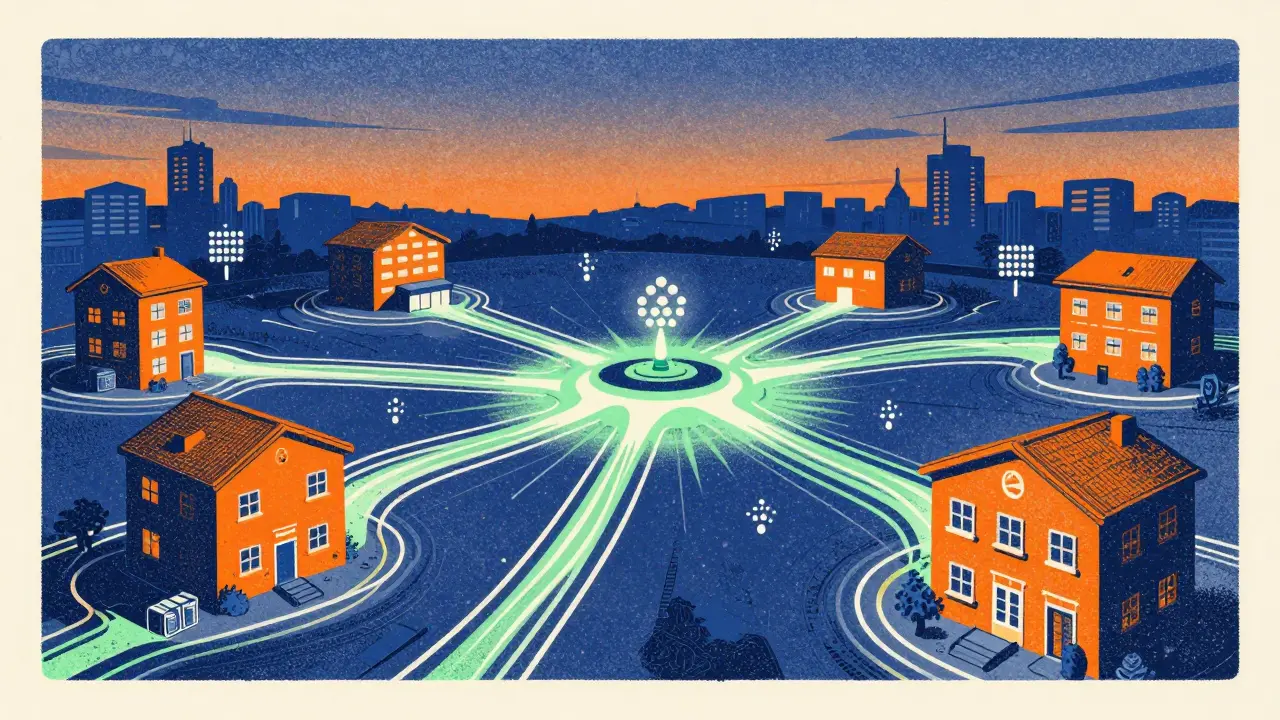
The industry is moving fast. By 2024, the global market for blockchain in energy was valued around $1.2 billion. Analysts project this number to jump to $18.6 billion by 2030. That represents a massive compound annual growth rate of roughly 45%. Why such rapid expansion?
Utilities realize they need modern tools to handle renewable volatility. Wind and solar generate power sporadically. Balancing that requires better data handling than spreadsheets offer. Additionally, regulations are catching up. The European Union’s Energy Efficiency Directive now encourages transparent reporting mechanisms. Governments want proof that carbon credits are real and not double-counted.
Companies like Olas and Combinder are stepping in to bridge the gap. They provide APIs that feed real-time data into these ledgers. Others, like Nevermined, focus on secure payments between AI agents managing energy decisions. The software stack is maturing, making deployment easier for non-tech firms.
Challenges You Should Know About
It isn't all smooth sailing yet. One major concern is the environmental irony. Some consensus methods consume a lot of electricity. While Proof of Stake solves much of this, older networks still burn power to validate blocks. This contradicts the goal of saving energy.
Complexity is another hurdle. Implementing a distributed ledger takes months. Teams need specialized skills in coding and system architecture. Salaries for blockchain energy specialists range from $80,000 to $150,000 annually. Small organizations might struggle with these costs. There is also the issue of interoperability. Different networks don't always speak the same language seamlessly.
Despite these hurdles, the momentum is undeniable. Users in Reddit communities frequently praise the ability to monetize excess energy. Professionals value the reduced risk of data tampering. The consensus is shifting toward long-term viability despite current friction.
Future Trajectory and Trends
Looking ahead to late 2026, the focus is shifting to user experience. Earlier versions required deep technical knowledge to interact with the system. Future interfaces will hide the complexity behind familiar mobile apps. You won't see the hash; you'll see your balance update in real-time.
We also expect tighter integration with Artificial Intelligence. AI agents will make buying and selling decisions automatically based on price spikes or weather forecasts. The peaq blockchain is leading this charge with dedicated tokens for agent transactions. As these layers mature, energy management becomes less like administration and more like automated finance.
The end goal is a fully resilient grid. One that heals itself during failures and optimizes usage without human intervention. We are building the foundation for that future right now. The transition from centralized control to decentralized ownership is inevitable.
How does blockchain improve energy data accuracy?
Blockchain improves accuracy by creating an immutable ledger. Once data is recorded, it cannot be altered without changing every subsequent block. This prevents intentional manipulation or accidental errors that are common in traditional centralized databases.
Can individuals participate in peer-to-peer energy trading?
Yes, individuals with generation sources like rooftop solar can trade excess energy directly. Smart contracts facilitate these transactions automatically, allowing homeowners to sell power to neighbors without utility intermediaries.
Is blockchain energy-efficient?
It depends on the consensus mechanism. Proof of Work consumes significant electricity, but Proof of Stake and hybrid models are designed to be much more energy-efficient, making them suitable for green energy initiatives.
Which countries are leading in energy blockchain adoption?
Chile was a pioneer with its National Energy Commission project in 2018. Currently, various regions in Europe and North America are implementing pilot programs, particularly for carbon credit tracking and renewable certificates.
What are the main costs associated with implementation?
Costs vary, but specialized talent is expensive, with salaries ranging from $80,000 to $150,000. Initial development and integration typically take 12 to 24 months for large-scale deployments alongside infrastructure investment.



Sean Carr
April 1, 2026 AT 05:28Honestly the potential for peer-to-peer trading is massive right now.
Matt Bridger
April 1, 2026 AT 19:13The proposed solution ignores systemic inefficiencies prevalent in public ledger adoption strategies currently lacking theoretical depth and ignores regulatory hurdles faced by utilities worldwide
Lisa Miller
April 3, 2026 AT 02:36I think you might be overlooking the positive strides being made in Chile actually.
People are already trading power without middlemen taking their huge cut.
It is exciting to watch technology empower regular folks like us.
You mentioned scalability but we see solutions emerging daily.
Smart contracts are solving so many manual paperwork headaches.
Imagine not waiting weeks for a bill verification anymore.
The security aspect alone changes everything for small businesses.
We need more voices talking about success stories not just failures.
Innovation requires taking risks sometimes despite the noise.
Grid stability becomes much easier with transparent data sharing.
Neighbors helping neighbors saves everyone money in the long run.
Environmental goals align perfectly with these new tools too.
Companies are investing billions because they see the value clearly.
We should focus on fixing the future now rather than dwelling on old problems.
I truly believe this is the path forward for sustainable living everywhere.
Joy Crawford
April 3, 2026 AT 20:10honestly reading this makes me feel like the world is broken but also so full of hope now :D we need change yesterday
Beverly Menezes
April 4, 2026 AT 14:23Yes it is nice to have better control over our home power choices and costs going forward