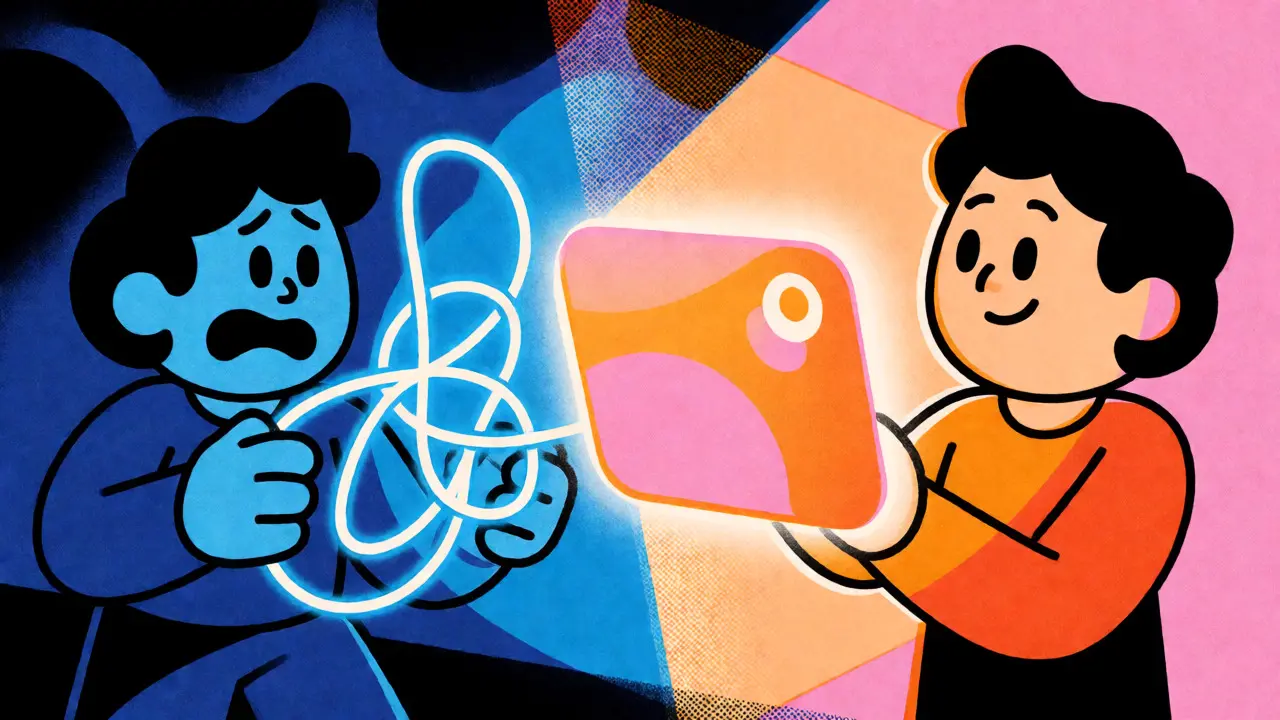
You know that sinking feeling when you lose your seed phrase? Or the frustration of trying to explain gas fees to someone who just wants to send a dollar’s worth of ETH? For years, these friction points have kept mainstream users away from Ethereum. Enter ERC-4337, the standard designed to fix this by turning every user into a smart contract wallet without changing Ethereum’s core code.
Deployed on mainnet in March 2023, ERC-4337 isn’t just another technical update; it’s a shift in how we interact with blockchain. It allows for social recovery, batched transactions, and paying fees in any token. But what actually happens under the hood? And more importantly, does it solve the problems it claims to?
What Is ERC-4337 Really Doing?
At its core, ERC-4337 is an Ethereum Improvement Proposal (EIP) titled "Account Abstraction Using Alt Mempool." Unlike previous attempts like EIP-86 or EIP-2938, which required hard forks and consensus changes, ERC-4337 works at the application layer. It enables smart contract wallets containing arbitrary verification logic to replace Externally Owned Accounts (EOAs).
This distinction matters. Traditional EOAs are simple cryptographic key pairs controlled by a private key. Smart contract wallets, however, are programmable. They can implement custom rules: requiring two signatures for large transfers, limiting daily spending, or allowing a trusted friend to recover access if you lose your device. ERC-4337 makes this possible without waiting for Ethereum developers to agree on protocol-level changes.
The Architecture: How It Works Under the Hood
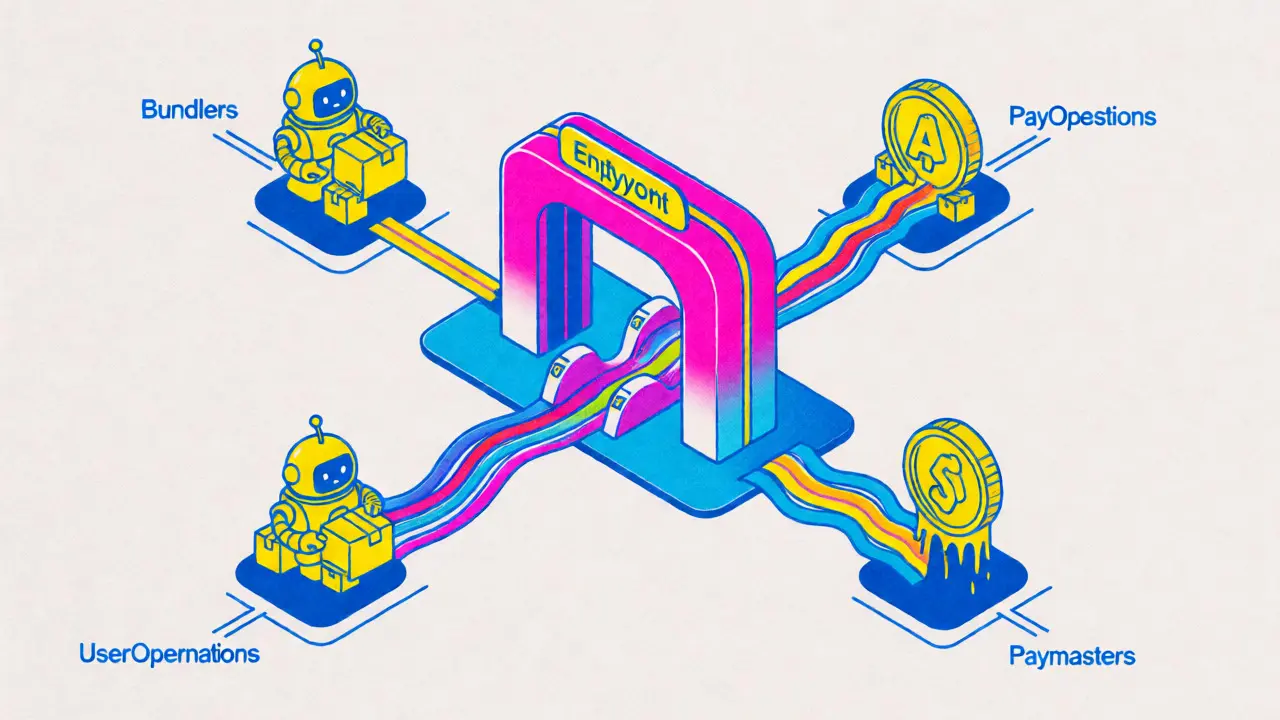
To understand why this works, you need to look at three specific components that replace the traditional transaction flow. First, there’s the UserOperation. Instead of sending a standard transaction signed by a private key, smart contract wallets send a UserOperation object. This object contains details about the call, the signature, and the gas parameters.
Second, we have the Bundler. Since UserOperations don’t fit the standard mempool structure, they go to a separate, decentralized network called the alt-mempool. Bundlers are nodes that monitor this mempool, collect valid UserOperations, and bundle them together.
Finally, everything hits the EntryPoint contract. This is the single, canonical address on-chain (0x5FF137D4b0FDCD49DcA30c7CF57E578a026d2789 on Ethereum mainnet) that validates and executes these bundles. The EntryPoint ensures that the smart contract wallet has enough funds and that the signature is valid before executing the action. If validation fails, the bundler pays the gas, not the user, protecting the network from spam.
Key Features That Change the Game
Once you move from an EOA to an ERC-4337 smart account, several features unlock instantly. These aren’t theoretical; they are live on networks like Ethereum, Optimism, Arbitrum, and Polygon.
- Social Recovery: You can designate guardians-friends, family, or hardware devices-who can help reset your password if you lose access. No more panic over lost seed phrases.
- Gasless Transactions: Through entities called Paymasters, third parties can sponsor your gas fees. This is huge for onboarding new users who don’t hold ETH yet. A dApp can pay for the first few transactions to get users hooked.
- Batching: Want to approve a token and then swap it? With ERC-4337, you do both in one transaction. This saves time and reduces the total gas cost compared to two separate clicks.
- Custom Signatures: You’re not stuck with ECDSA signatures. You can use passkeys (FaceID/TouchID), multisig setups, or even biometric data, making security feel like Web2 apps.
ERC-4337 vs. Traditional EOAs: A Comparison
Is ERC-4337 always better? Not necessarily. For power users doing simple swaps, the overhead might not be worth it. Here is how they stack up against each other.
| Feature | Traditional EOA | ERC-4337 Smart Account |
|---|---|---|
| Recovery Method | Seed Phrase only (lose it, lose funds) | Social Recovery, Guardians, Multisig |
| Gas Payment | Must hold native ETH | Can pay in any token via Paymaster |
| Transaction Logic | Fixed (signature check) | Programmable (custom validation) |
| Onboarding Cost | High (need ETH for gas) | Low (can be sponsored/gasless) |
| Complexity | Low | Moderate (requires infrastructure) |
The trade-off is complexity and cost. Stackup.fi analysis suggests that ERC-4337 operations can consume approximately 10-15% more gas than equivalent EOA transactions due to the extra validation steps in the EntryPoint contract. However, this cost is often offset by batching multiple actions into one transaction.
The Role of Paymasters and Bundlers
Two entities make the magic happen: Paymasters and Bundlers. Think of Paymasters as sponsors. They are contracts that can pay for the gas of a UserOperation. This could be a game studio wanting to let players start playing for free, or a DAO covering costs for members.
Bundlers, on the other hand, are the logistics providers. They run off-chain services that watch the alt-mempool. When they see a batch of UserOperations, they submit them to the EntryPoint. If a bundler goes offline, your transaction sits in the queue until another bundler picks it up. This creates a competitive market where bundlers compete on speed and reliability.
Adoption and Real-World Impact
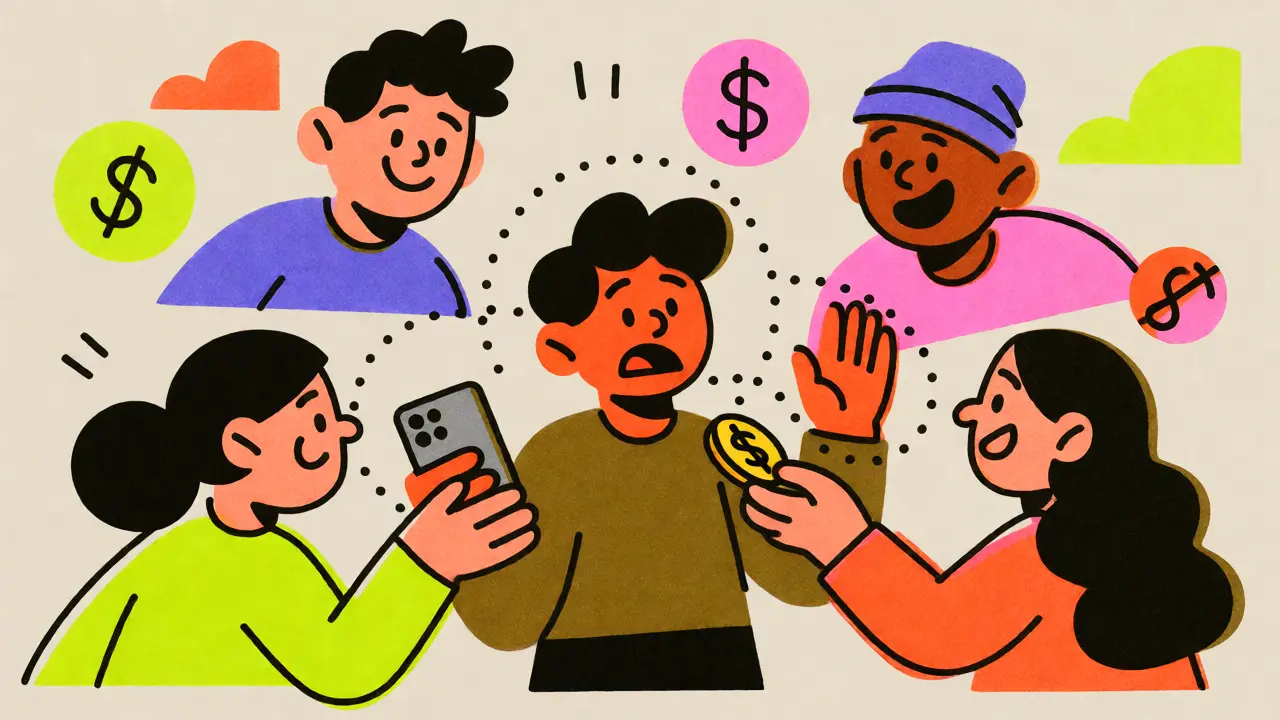
Since its deployment, adoption has been steady but accelerating. By late 2023, over 1.2 million smart contract wallets had been deployed across major networks. Companies like Shopify have integrated ERC-4337 to allow merchants to accept crypto payments without managing complex private keys themselves.
User feedback highlights the win in user experience. One Reddit user noted recovering their wallet in 20 minutes using designated guardians after losing their phone. Conversely, some developers report latency issues during network congestion, where UserOperations take longer to confirm than standard transactions. This is largely due to the additional step of bundling.
Infrastructure providers like Alchemy, Stackup, and Biconomy dominate the market. Stackup holds roughly 45% of the bundler market share, while Alchemy offers SDKs that reduce integration time to just a few days for experienced teams. The ecosystem is maturing, with standardized interfaces emerging to prevent fragmentation.
Challenges and Limitations
ERC-4337 isn’t perfect. It relies heavily on off-chain infrastructure (bundlers), which introduces centralization risks. If most bundlers are operated by a few companies, Ethereum’s decentralization takes a hit. There’s also the issue of gas estimation. Because the EntryPoint contract does more work than a simple transfer, estimating gas accurately requires specialized libraries, adding a hurdle for developers.
Furthermore, regulatory clarity remains murky. While legal experts suggest these wallets will be treated similarly to existing smart contract systems, the SEC has not issued specific guidance. For enterprises, this uncertainty can slow down full-scale implementation.
The Road Ahead: Protocol-Level Abstraction
Vitalik Buterin views ERC-4337 as a bridge, not the destination. The long-term goal is native account abstraction at the consensus layer, potentially replacing the alt-mempool entirely. Until then, ERC-4337 serves as a practical, deployable solution that delivers immediate benefits. It proves that you can improve UX without breaking Ethereum’s base layer.
If you are building a wallet or a dApp, ignoring ERC-4337 means missing out on the next wave of user acquisition. The tech is here, the standards are set, and the tools are ready. The question isn’t whether to adopt it, but how quickly you can integrate it to stay competitive.
Do I need to change my current wallet to use ERC-4337?
Not immediately. Your current EOA still works fine. However, to benefit from features like social recovery or gasless transactions, you would need to migrate to or create a new smart contract wallet supported by an ERC-4337 compatible provider like Argent or Safe.
Is ERC-4337 secure?
Yes, but it shifts the security model. Instead of relying solely on keeping a private key secret, security depends on the logic written into your smart contract wallet. Well-audited implementations from reputable providers are generally considered very secure, though poorly coded custom accounts can introduce vulnerabilities.
Can I pay gas fees in USDC or other tokens?
Yes, this is one of the main features enabled by Paymasters. As long as a Paymaster supports the token you want to use, you can pay for your Ethereum transactions in USDC, DAI, or other supported assets, rather than needing to hold ETH specifically for gas.
What happens if the bundler network goes down?
If all bundlers fail simultaneously, your UserOperations won't be submitted to the chain. In practice, this is rare because there are many independent bundlers. Most wallets connect to multiple bundlers to ensure redundancy, so if one fails, another picks up the slack.
Is ERC-4337 available on Layer 2 networks?
Yes, ERC-4337 is deployed on major Layer 2 solutions including Optimism, Arbitrum, Base, and Polygon. This makes it highly relevant for users looking for lower fees while retaining the advanced features of account abstraction.


Jess Emmerson
September 3, 2026 AT 22:19Look, I've been watching this space for years, and honestly? This is the first time account abstraction feels actually usable instead of just a whitepaper dream. The alt-mempool architecture is clever because it bypasses the need for a hard fork, which means we get these features now rather than waiting five years for consensus changes.
The part about Paymasters changing onboarding is huge though. I tried to onboard my cousin last month who didn't have any ETH, and explaining why he needed 'gas' before he could even send money was a nightmare. With ERC-4337, a dApp can just sponsor that first transaction. It removes that massive psychological barrier. Also, don't sleep on social recovery. Losing your seed phrase used to mean losing everything. Now you can set up guardians-maybe your spouse, maybe a hardware wallet, maybe a trusted friend-and if you lose access, they can help you reset. It makes crypto feel less like high-stakes gambling and more like actual banking.
One thing people gloss over is the bundler market. Yeah, Stackup has like 45% share right now, but that's still pretty decentralized compared to what we had with centralized exchanges. If one bundler goes down, others pick it up. It’s not perfect, but it’s way better than relying on a single point of failure. For devs reading this: stop ignoring this standard. Your users are going to expect passkey login and gasless transactions soon. If you’re building a wallet without AA support, you’re already behind.
Harish Ramaiah
September 4, 2026 AT 13:09Ugh... 😩 another tech article trying to explain something simple in 10 different ways... 🙄👎
Maegan Rust
September 5, 2026 AT 11:56I love how this breaks down the emotional side of blockchain too! 💖 The idea that you can have 'guardians' instead of just a cold, dead seed phrase feels so much more human and warm. It’s like having a safety net made of friends rather than just math. And the color of possibility here is bright! ✨ We’re moving from 'hold onto this paper or die' to 'your community helps keep you safe.' That shift in mindset is just as important as the code itself. Plus, paying fees in USDC? Yes please! No more hunting for tiny bits of ETH just to move stablecoins. It feels like the ecosystem is finally growing up and caring about the actual humans using it. 🌈
Paige Ray
September 7, 2026 AT 17:45I appreciate the nuance here. It’s comforting to know that existing wallets still work, so there’s no immediate pressure to migrate everything at once. It allows people to dip their toes in when they feel ready.
Sophie Fitzgerald
September 9, 2026 AT 15:07Social recovery seems useful. Gasless transactions are nice for new users. Seems like a good step forward.
Mary Burnett
September 10, 2026 AT 06:50Thank you for clarifying the distinction between EOA and Smart Accounts. It is reassuring to understand that security depends on audited logic rather than just key secrecy. This provides a clearer framework for enterprise adoption.