
You’ve probably heard the term decentralized thrown around in crypto circles as if it’s the ultimate goal. But when you’re actually trying to buy or sell an NFT, does that label matter? Or do you just want a platform that works without crashing your browser?
The truth is, most people trade on platforms that are only partially decentralized. The big players like OpenSea dominate because they feel familiar, even if they contradict the core ethos of blockchain technology. Understanding the difference between these two models isn’t just academic-it affects your fees, your privacy, and whether your digital asset can be deleted tomorrow.
The Illusion of Choice in Centralized Platforms
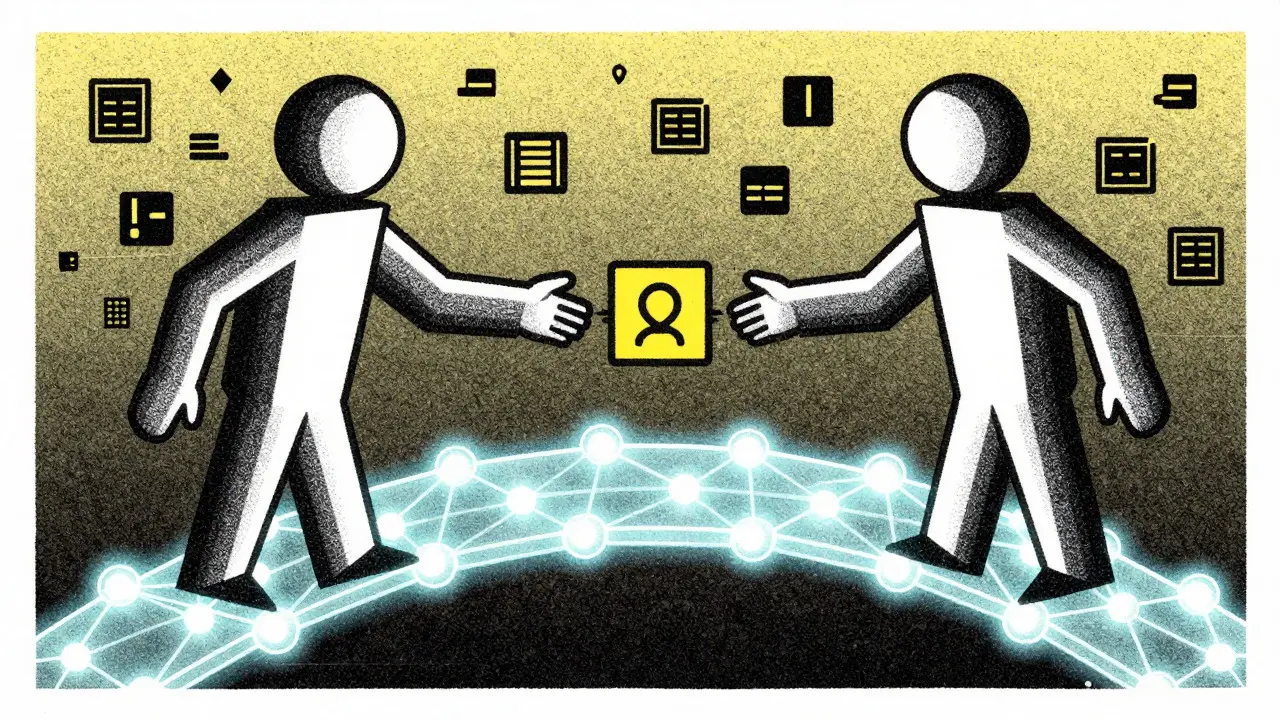
When you sign up for a major NFT marketplace today, you’re likely entering a Centralized NFT Marketplace, which operates under the control of a single entity managing transactions, user data, and platform operations through traditional server infrastructure.
Think of giants like OpenSea, Coinbase NFT, or Binance NFT. They look like eBay or Amazon. You create an account, connect a wallet, and click "Buy." It’s smooth. It’s fast. And it’s convenient.
But convenience has a price. In a centralized model, one company holds the keys to the kingdom. They decide who gets listed. They decide what content stays up. If they change their terms of service, they can ban users or freeze assets with a click. This creates a single point of failure. If their servers go down, the market stops. If regulators pressure them, they might delist entire categories of NFTs overnight.
Consider the fee structure. Centralized platforms charge significant cuts-often 2.5% per transaction-to cover their operational costs, customer support, and profit margins. While this funds better interfaces and faster load times, it means you’re paying a premium for someone else’s control over your trade.
How Decentralized Marketplaces Actually Work
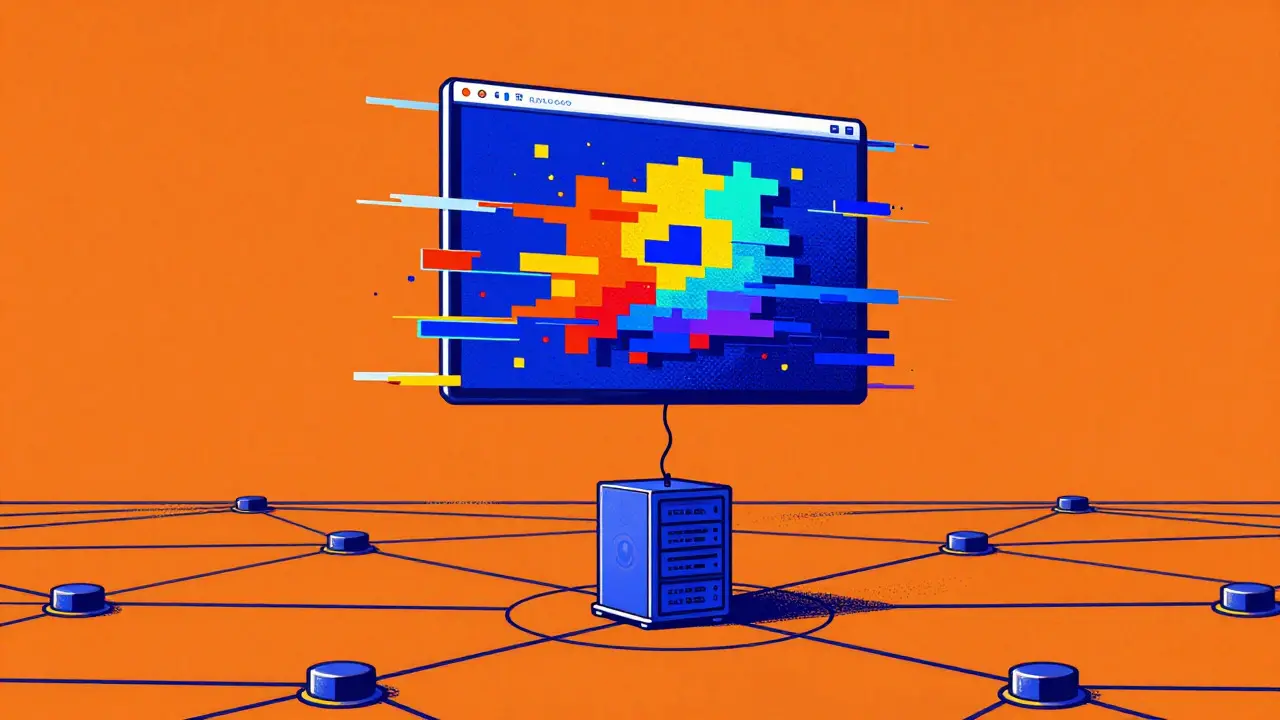
On the other side of the spectrum sits the Decentralized NFT Marketplace, which leverages blockchain technology and operates across distributed networks of nodes without single-point control.
In a truly decentralized system, there is no CEO to call and no headquarters to raid. Transactions happen directly between peers via smart contracts. Platforms like Uniswap (for tokens) or specialized NFT protocols like Blur’s underlying architecture attempt to minimize intermediary control.
The benefits here are structural:
- Censorship Resistance: No central authority can remove your listing unless the code itself allows it.
- Lower Fees: Without a middleman taking a cut for rent and salaries, fees can drop significantly. Some decentralized exchanges charge as little as 0.05%, though gas fees on Ethereum can still add up.
- Privacy: You often don’t need to provide ID (KYC). Your wallet address is your identity.
However, "decentralized" is a slippery word. Many platforms claim to be decentralized but rely on centralized components for indexing data or displaying images. True decentralization requires every part of the stack-from the database to the image hosting-to be distributed.
The Hidden Risk: Metadata Centralization
Here’s the catch that catches most traders off guard: where is the actual NFT stored?
An NFT is just a receipt on the blockchain pointing to a file. That file-the image, video, or audio-is usually stored elsewhere. Research has shown that a massive portion of NFT metadata relies on centralized servers like AWS or IPFS gateways controlled by single entities.
If you buy an NFT on a "decentralized" marketplace, but the image is hosted on a centralized server owned by the project creator, that creator can delete the image. Your token remains, but it points to nothing. This is known as a "broken link."
This contradiction undermines the value proposition of decentralization. Even if the trade happens peer-to-peer, the asset itself depends on trusted third parties. Until we see widespread adoption of fully decentralized storage solutions like Arweave or permanent IPFS pinning, this risk remains high for both centralized and decentralized marketplaces.
User Experience: Convenience vs. Control
Let’s talk about friction. Why does OpenSea have 1.3 million buyers while true decentralized alternatives struggle to gain traction? Because humans hate complexity.
Centralized platforms abstract away the messy parts of blockchain. They handle gas fee estimation, offer credit card on-ramps, and provide 24/7 customer support. For a beginner buying their first Bored Ape Yacht Club clone, this is invaluable.
Decentralized platforms demand technical literacy. You need to understand:
- Wallet Management: Keeping private keys safe is your job. Lose them, lose everything.
- Gas Fees: You pay network validators, not just the platform. On busy days, a simple trade can cost $50+ in gas.
- Slippage: Prices can change between the time you click "buy" and when the transaction confirms.
There is no "Forgot Password" button in Web3. If you make a mistake, the transaction is irreversible. This high barrier to entry keeps many mainstream users away from fully decentralized options.
Comparing the Models: A Quick Reference
| Feature | Centralized (e.g., OpenSea) | Decentralized (e.g., Protocol-based) |
|---|---|---|
| Control | Single entity | Distributed network / Smart Contracts |
| Fees | High (2.5%+) | Low (0.05% - 1%) + Gas |
| Privacy | Low (KYC required) | High (Anonymous wallets) |
| Censorship | Risk of delisting/banning | Minimal (Code is law) |
| Security | Hackable servers | Smart contract vulnerabilities |
| Learning Curve | Low (Like e-commerce) | High (Requires tech knowledge) |
Which One Should You Choose?
Your choice depends on your goals and risk tolerance.
If you are a casual collector buying blue-chip art and want ease of use, a centralized platform like OpenSea is currently the practical choice. The liquidity is higher, meaning you can sell faster. The interface is polished. You accept the risk of centralization for the benefit of accessibility.
If you are a power user, a developer, or someone deeply concerned about censorship and long-term ownership, lean toward decentralized protocols. Look for platforms that use non-custodial wallets and store metadata on decentralized storage like IPFS or Arweave. Be prepared to pay higher gas fees and spend time learning how to verify smart contracts.
The future likely lies in hybrid models. We are seeing projects build white-labeled marketplaces that sit on top of decentralized protocols but offer a centralized frontend for ease of use. As Layer 2 scaling solutions reduce gas fees, the economic advantage of decentralized platforms will grow, potentially forcing centralized giants to adopt more open standards.
Final Thoughts on Ownership
Remember, buying an NFT is not just about owning a jpeg. It’s about trusting the infrastructure behind it. Whether you choose a centralized giant or a decentralized protocol, always check where the metadata lives. Ask yourself: If this website disappears tomorrow, does my asset still exist?
In a world moving toward digital scarcity, true decentralization offers the only guarantee of permanence. But until the user experience catches up, most of us will continue to trade in the gray area between convenience and control.
Is OpenSea a decentralized marketplace?
OpenSea is a hybrid. While it facilitates trades on public blockchains like Ethereum, it operates as a centralized entity. It controls the frontend, indexes data on its own servers, and can ban users or delist collections. Therefore, it is not fully decentralized in the strictest sense.
Are decentralized NFT marketplaces safer?
They offer different types of safety. Centralized platforms risk server hacks and corporate censorship. Decentralized platforms risk smart contract bugs and user error (like sending funds to the wrong address). Neither is perfectly safe, but decentralized systems eliminate the risk of a single company freezing your assets.
Why are fees lower on decentralized platforms?
Decentralized platforms often use automated market makers or direct peer-to-peer smart contracts, removing the need for a middleman to take a large percentage cut. However, you must still pay "gas fees" to the blockchain network, which can sometimes exceed the platform fee during periods of high congestion.
What is metadata centralization risk?
This occurs when the image or file linked to an NFT is stored on a centralized server (like AWS) rather than a decentralized network (like IPFS). If the server goes offline or the owner deletes the file, the NFT becomes a "broken link," losing its visual value despite remaining on the blockchain.
Do I need KYC to use a decentralized NFT marketplace?
Generally, no. Purely decentralized platforms allow you to trade using only a cryptocurrency wallet address. However, if you need to convert fiat currency (USD/EUR) into crypto to buy NFTs, the exchange you use for that conversion may require KYC verification.
amy miranda
August 5, 2026 AT 05:00The audacity of these tech giants to call themselves "decentralized" while hoarding our data like dragons on a pile of gold is simply nauseating. It is a moral failing of the highest order, really. We are told we own these digital trinkets, yet we are entirely at the mercy of some CEO in Silicon Valley who can wipe them from existence with a keystroke.
It is not just about convenience; it is about complicity. Every time you use OpenSea, you are voting for a system that treats your privacy as an afterthought and your assets as liabilities. The article glosses over the sheer arrogance required to build a walled garden and then pretend it is a public square. We need to demand better, or we deserve what we get.
Ed Wallace
August 6, 2026 AT 07:25I find myself pondering the nature of ownership in this digital ether. Is an NFT truly yours if the image it points to can vanish into the void? It feels like buying a deed to a house that exists only in a dream.
The tension between the ease of use provided by centralized platforms and the philosophical purity of decentralization is fascinating. We crave the simplicity of Amazon but yearn for the freedom of the blockchain. Perhaps the real question isn't which platform is right, but whether we are ready to accept the burden of true sovereignty. It requires a shift in mindset, a willingness to be the custodian of one's own destiny rather than a passive consumer.
Subhash Kashyap Dm
August 8, 2026 AT 04:02you think its about fees? nah its about control they want you dependent on their servers because once you realize ipfs and arweave exist you become dangerous to the narrative. metadata centralization is just the tip of the iceberg the whole web3 stack is compromised by vc backed entities pretending to be rebels. wake up sheeple
Pernelia Wahkan
August 9, 2026 AT 11:55Let’s unpack the metadata issue a bit more, shall we? It’s the Achilles’ heel of the entire NFT movement. You can have the most robust smart contract in history, but if your JPEG is sitting on an AWS bucket owned by a project founder who goes bankrupt, you’re holding a digital IOU for nothing.
I’ve seen collections where 90% of the links were broken within six months. It’s a stark reminder that the blockchain is merely a pointer, not a storage solution. Until we see widespread adoption of permanent decentralized storage, the term "ownership" is largely marketing fluff. It’s crucial for buyers to verify the IPFS hashes before dropping any ETH, otherwise, they’re just paying for a fancy URL that might lead to a 404 error tomorrow.
Joy Kwant
August 11, 2026 AT 01:27You people are so obsessed with the technicalities that you miss the human cost. Who cares if it’s decentralized if the experience is so frustrating that normal people give up? It’s elitist garbage. I just want to buy art without needing a degree in computer science.
And don’t get me started on the gas fees. It’s predatory. They make it impossible for anyone but the wealthy to participate. It’s not innovation; it’s exclusion wrapped in crypto-bro jargon. The article sounds so balanced, but it ignores the fact that the "freedom" they talk about is only freedom for those who can afford to pay $50 to send a transaction. It’s hollow.
Billy Cunningham
August 11, 2026 AT 23:06Gas fees are brutal 😩
Joshua Hofford
August 12, 2026 AT 22:11Look, I’m optimistic about where this is heading! The hybrid models mentioned at the end are the sweet spot. We don’t need to choose between usability and security forever. Layer 2 solutions are going to crush those gas fees, making decentralized trading actually accessible to everyone.
Imagine a world where you have the censorship resistance of a protocol but the smooth interface of your favorite app. That’s the future. We’re just in the messy growing pains phase right now. It’s exciting to watch the infrastructure mature. Let’s keep pushing for open standards and better UX, because the potential for true digital ownership is too big to ignore. Stay positive, folks! 🚀