Imagine owning a tiny piece of your favorite YouTuber’s success. Not just liking their video or buying a t-shirt, but holding an asset that grows in value as they do. This isn't sci-fi; it's the emerging reality of creator social tokens, also known as creator coins. These digital assets are quietly rewriting the rules of how influencers, musicians, and artists make money, bypassing the middlemen who have historically taken massive cuts from their earnings.
If you've been watching the crypto space, you might remember the hype around NFTs. But while NFTs were about unique ownership-like buying a one-of-a-kind digital cat picture-social tokens are different. They are fungible, meaning every token is identical to the next, and their value is tied directly to the community and engagement surrounding a specific person. As we move through 2026, these tokens are shifting from experimental novelties to serious financial instruments for creators. But what does this actually mean for you? Whether you're a creator looking to monetize your brand or a fan wanting to support someone early, understanding this shift is crucial.
The Core Concept: What Are Social Tokens?
At its simplest, a social token is a cryptocurrency issued by a content creator or influencer that represents access to their personal brand and community. Think of it like a digital stock market where the "company" is a person. When you buy a creator's token, you aren't necessarily getting equity in a legal sense (though some advanced models explore this), but you are buying into a system of perks, governance rights, and potential appreciation.
The technology behind this relies on blockchain infrastructure. Unlike traditional platforms where Instagram or YouTube controls the relationship between you and the creator, social tokens enable direct interaction. The value of these tokens is determined by supply and demand dynamics driven by community participation. If a creator releases exclusive content that requires holding their token to view, demand rises, and so does the price. Conversely, if engagement drops, the token value may decline. It creates a direct feedback loop between effort and reward that didn't exist before.
Why Creators Are Making the Switch
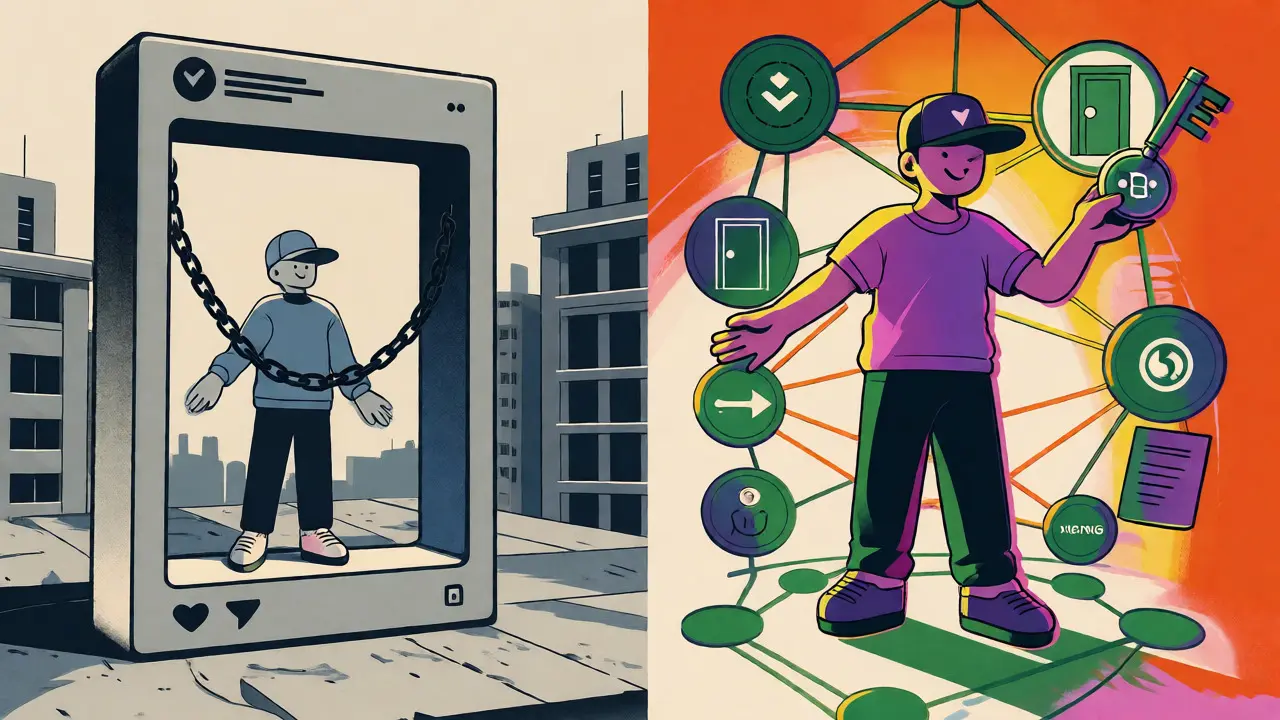
For years, creators have complained about platform dependency. You build an audience on TikTok, but if the algorithm changes or your account gets banned, you lose everything overnight. Social tokens offer a hedge against this risk. By moving their core community onto a blockchain-based model, creators retain ownership of their audience relationships.
Venture capital firm Andreessen Horowitz (a16z) has highlighted this shift, noting that social tokens allow creators to monetize without third parties taking substantial cuts. Instead of giving 30-50% of revenue to app stores or streaming services, creators keep more control. They can issue tokens to fund new projects, similar to crowdfunding, but with the added layer of tradability. Fans who bought in early can sell their tokens later if the creator becomes mainstream, creating a virtuous cycle where supporters are financially incentivized to promote the creator they believe in.
Real-World Applications and Use Cases
You might be wondering, "What do I actually get for my money?" The utility of social tokens varies widely depending on the creator's strategy. Here are the most common applications seen in the current market:
- Exclusive Access: Token holders often get VIP access to Discord servers, private podcasts, or behind-the-scenes footage. For musicians, this might mean pre-sale tickets or unreleased demos.
- Governance Rights: Some projects allow token holders to vote on creative decisions, such as which song to release next or what topic to cover in a newsletter.
- Loyalty Perks: Brands use social tokens for loyalty programs. Holding a certain amount might unlock discounts on merchandise or special meet-and-greet opportunities.
- Airdrops: Creators frequently distribute free tokens to active community members, rewarding engagement and encouraging continued participation.
One notable example involves the rise of decentralized social networks like Zora Network. These platforms blend features of Instagram and X (formerly Twitter) with native crypto capabilities. Users can create and trade social tokens directly within the feed, making the experience seamless rather than requiring complex wallet management. This integration is key to mass adoption; if users have to leave the app to manage their assets, friction kills engagement.
Social Tokens vs. NFTs: Clearing Up the Confusion
It's easy to mix up social tokens and Non-Fungible Tokens (NFTs), but they serve fundamentally different purposes. Understanding this distinction helps clarify where each fits in the digital economy.
| Feature | Social Tokens | NFTs |
|---|---|---|
| Fungibility | Fungible (interchangeable) | Non-fungible (unique) |
| Value Driver | Community engagement and brand growth | Rarity and artistic merit |
| Primary Use | Access, governance, speculation | Ownership, collection, status |
| Supply Model | Dynamic (can be minted/burned) | Fixed (usually limited edition) |
| Creator Control | High (can adjust economics) | Moderate (royalties only) |
While an NFT is like buying a signed vinyl record-a unique item you own outright-a social token is more like buying shares in the band itself. The NFT doesn't care if the band breaks up; it remains a collectible. The social token, however, reflects the ongoing health and popularity of the creator's career.
The Role of Institutional Capital
A significant development in 2026 is the entry of institutional investors into the creator economy. Historically, creators relied on ad revenue and sponsorships, which are volatile. Now, firms like Capital Trust Group Limited are stepping in with structured financial products. They have introduced initiatives involving digital bond licenses specifically designed to fund YouTube creators and other digital influencers.
This infusion of institutional money brings stability. It allows creators to take out loans against their future earnings or token value without selling their soul to a management agency. For fans, this signals maturity. When big finance backs a sector, it usually means the regulatory and technical hurdles are being cleared enough for long-term viability. However, it also introduces risks. Institutional involvement can sometimes lead to higher expectations for consistent returns, potentially pressuring creators to prioritize commercial viability over artistic experimentation.
Challenges and Risks to Watch
Despite the excitement, the path forward isn't smooth. Regulatory uncertainty remains the biggest elephant in the room. In many jurisdictions, including the United States, it is still unclear whether certain social tokens should be classified as securities. If the SEC decides that a creator coin is a security, creators could face heavy compliance burdens, including registration requirements that small influencers cannot afford.
Market volatility is another concern. Crypto markets are notoriously unstable. A creator's token price might crash not because the creator lost talent, but because the broader Bitcoin market dipped. This disconnect can frustrate fans who feel misled when their investment loses value despite the creator's continued success. Furthermore, there is the risk of "burnout." Creators under pressure to maintain token prices might overproduce content or engage in unsustainable practices, leading to quality declines.
Technical accessibility is improving but still poses barriers. While wallets like MetaMask are becoming more user-friendly, the average non-crypto-native fan still finds setting up a wallet, buying ETH, and swapping for a social token intimidating. Until the user experience matches that of Venmo or PayPal, widespread adoption will remain limited to tech-savvy enthusiasts.
The Future Outlook: 2027 and Beyond
Looking ahead, we anticipate the emergence of "Social Token 2.0." This evolution moves beyond simple access passes toward sophisticated financial instruments. Imagine using your social tokens as collateral for loans, or combining them in decentralized finance (DeFi) pools to earn yield. Personal brands could become tradeable assets in a way that mirrors real-world celebrity endorsements, but with transparent, on-chain verification of influence metrics.
We also expect deeper integration with Decentralized Social Media (DeSoc). Platforms are beginning to address transparency issues inherent in Web2 algorithms. By leveraging blockchain, these new networks promise fairer value distribution, ensuring that the people creating the content-not just the platform owners-capture the economic value. This aligns with the broader trend toward decentralization in digital economies, empowering individuals rather than concentrating power in centralized corporations.
Ultimately, the future of creator social tokens lies in their ability to foster genuine community. The most successful projects won't just be those with the highest token price, but those with the strongest, most engaged communities. Technology is the enabler, but human connection remains the product.
Are creator social tokens considered securities?
This is currently a gray area. In the US, the Securities and Exchange Commission (SEC) applies the Howey Test to determine if an asset is a security. If investors expect profits primarily from the efforts of others, it might be classified as a security. Many creators structure their tokens as utility tokens to avoid this classification, but regulatory clarity is still evolving globally.
How do I buy a creator social token?
You typically need a cryptocurrency wallet like MetaMask or Phantom. First, you purchase a base currency like Ethereum (ETH) or Solana (SOL). Then, you connect your wallet to a decentralized exchange (DEX) or a specialized platform like Zora or Roll. From there, you can swap your base currency for the specific creator's token.
Can I lose money investing in social tokens?
Yes, absolutely. Like any cryptocurrency, social tokens are highly volatile. Their value depends on community sentiment, market conditions, and the creator's ongoing relevance. If a creator stops posting, gets involved in a scandal, or simply loses popularity, the token price can drop significantly. Never invest more than you can afford to lose.
What is the difference between a social token and a fan club membership?
A traditional fan club membership is a service subscription-you pay for access, but you don't own anything transferable. A social token is a tradable asset. You can sell your token to someone else at any time, potentially making a profit if the creator's value increases. It turns passive fandom into active economic participation.
Do creators have to give up ownership of their content?
No, creators generally retain full ownership of their intellectual property. Issuing a social token is a way to monetize their brand and community, not a sale of their copyright. They control the tokenomics, deciding how many tokens exist, how they are distributed, and what utilities they provide.