
You just woke up to news that a competitor lost $50 million because their private keys leaked. The panic is real, but the solution-implementing a Hardware Security Module (HSM) a tamper-resistant physical device that securely manages digital keys-comes with a price tag that makes CFOs sweat. Is it worth $100,000 upfront? Or can you get away with a subscription model? The truth isn't in the sticker price; it's in the hidden integration costs and the catastrophic risk of doing nothing.
| Cost Factor | Typical Range | Impact on Budget |
|---|---|---|
| On-Premise Hardware | $25,000 - $100,000+ | High CapEx, low long-term OpEx if maintained well |
| Cloud HSM Services | $500 - $5,000/month | Predictable OpEx, scales with transaction volume |
| Integration & Dev Time | $10,000 - $50,000 | Often underestimated; adds 20-40% to total project cost |
| Maintenance Contracts | 15-20% of hardware cost/year | Recurring annual expense for support and updates |
The Real Price Tag: Hardware vs. Cloud
Let’s cut through the marketing fluff. If you buy an on-premise unit like the Entrust nShield 5c, which is FIPS 140-3 Level 3 certified, you’re looking at roughly $25,000 to $54,000 per box. That sounds manageable until you realize most enterprises need redundancy. You don’t buy one; you buy two or three for high availability. Suddenly, your hardware budget hits $100,000 before you’ve even plugged it in.
Compare this to Cloud HSM-as-a-Service (HSMaaS). Providers like AWS CloudHSM or Azure Dedicated HSM charge monthly fees based on usage. For a startup processing 10,000 transactions a day, this might cost $1,000 a month. It feels cheaper, right? But here’s the catch: as your trading volume spikes during bull runs, those API call costs skyrocket. A mid-sized exchange reported seeing their cloud bill triple during peak volatility months. On-premise gives you fixed capacity costs; cloud gives you variable exposure.
Then there’s the budget-friendly option: Yubico YubiHSM 2. It’s positioned for smaller orgs, costing significantly less than enterprise gear. But do not confuse "cheap" with "inexpensive." One CTO noted that while the device cost was low, the lack of native blockchain SDKs forced his team to spend 37 extra development hours building custom wrappers. That’s $4,600 in developer time saved by buying a more expensive, better-documented product upfront.
Hidden Integration Costs Nobody Talks About
The hardware is just the tip of the iceberg. Integrating an HSM into your existing crypto stack is where budgets go to die. Most exchanges run on complex microservices architectures involving Ethereum, Solana, or Bitcoin nodes. Connecting these to an HSM requires deep knowledge of PKCS#11 standards or specific vendor APIs.
If you choose proprietary solutions like Thales Luna Network HSM, you might find yourself paying for professional services at $120-$180 per hour. Why? Because their documentation assumes you’re integrating with banking software, not a DeFi protocol. Users report that unexpected integration costs with blockchain platforms added 25-40% to their initial projections. If you’re using open-source friendly vendors like Yubico, you save on service fees but pay in engineering time. Which is more expensive depends entirely on your team’s expertise.
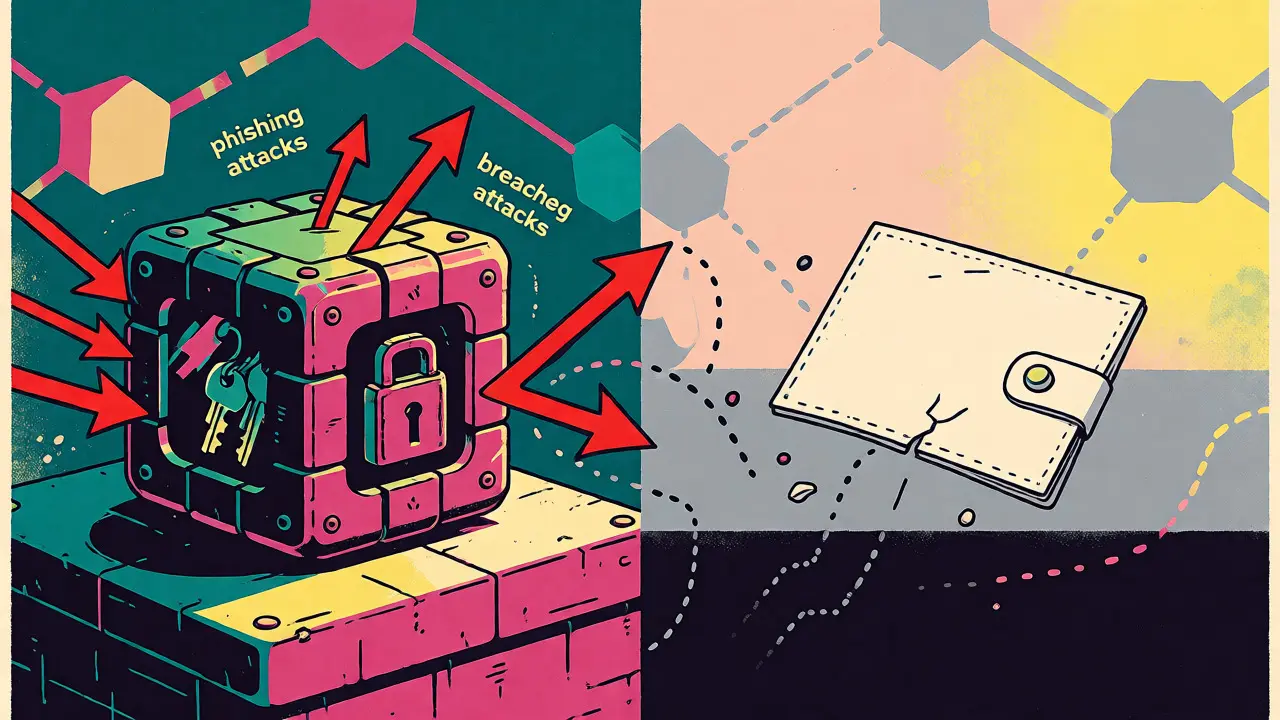
Consider the case of a senior security engineer at a mid-sized exchange. They spent $42,000 on Entrust hardware and another $18,000 on integration labor. Total hit: $60,000. Sounds steep? That same quarter, a sophisticated phishing attack tried to drain wallets. Because keys never left the HSM, the attack failed. The estimated loss prevented was $8.7 million. The ROI wasn't just positive; it was existential.
Regulatory Pressure and Compliance Certifications
Why are we talking about FIPS 140-3 Level 3 certification? Because regulators care. The SEC’s custody rules demand "segregated and secure storage" for digital assets. If you’re holding over $1 million in client funds, skipping an HSM isn’t just risky; it’s potentially non-compliant. As regulation tightens globally, HSM implementation is shifting from "best practice" to "mandatory requirement." Analysts predict this will force any entity with significant digital assets to adopt HSMs within 3-5 years.
Certification levels drive cost. A basic FIPS 140-2 Level 2 device is cheaper but offers less protection against physical tampering. Level 3 devices, like the Entrust nShield, have active tamper-response mechanisms that zeroize keys if the casing is breached. This hardware complexity drives up the price. If you’re operating in jurisdictions with strict data sovereignty laws, you might also face additional costs for local compliance audits and specialized reporting features.
Ongoing Maintenance and Vendor Lock-In Risks
Buying the box is only half the battle. Keeping it running securely costs money. Annual maintenance contracts typically add 15-20% of the initial hardware cost. For a $50,000 system, that’s $7,500-$10,000 every year just for support and firmware updates. These aren’t optional; outdated firmware leaves you vulnerable to new exploits.
Vendor lock-in is another silent killer. Migrating between HSM providers is notoriously difficult due to proprietary key formats. Forrester Research notes that migration costs can exceed 30% of the initial implementation cost. If you start with a cheap solution and outgrow it, moving to an enterprise-grade Thales or Entrust system later could cost you nearly as much as starting fresh. Plan your architecture for scale now to avoid painful migrations later.

Performance Bottlenecks and Latency
Does an HSM slow down your trading engine? Yes, if you don’t tune it. Signature operations usually take under 5 milliseconds, which sounds fast. But in high-frequency crypto trading, latency matters. During peak volumes, if your HSM can’t handle >5,000 transactions per second, you’ll see bottlenecks. Thales reports that 32% of crypto clients require performance tuning after deployment.
This tuning isn’t free. It often involves optimizing how your application batches requests or caching public keys locally to reduce calls to the HSM. Poorly optimized systems result in user complaints about slow withdrawals-a direct hit to customer satisfaction and retention. Factor in potential performance consulting fees when calculating your true cost.
Is It Worth the Investment?
Look at the data. In 2022 alone, $1.9 billion in cryptocurrency was stolen. Cybersecurity expert Troy Hunt points out that 92% of major breaches involved compromised private keys-failures that proper HSM implementation would likely have prevented. The cost of an HSM is finite. The cost of losing your entire liquidity pool is infinite.
For startups, the math is different. If you’re managing under $1 million in assets, a cloud-based solution or a lower-end device like YubiHSM might suffice. But once you cross the threshold where a single breach threatens solvency, the premium for robust, on-premise hardware becomes negligible compared to the risk. Don’t let the upfront price scare you away from securing the asset that defines your business.
How much does an HSM cost for a small crypto startup?
Small startups can enter the market with devices like the YubiHSM 2, which costs significantly less than enterprise units, often under $1,000 for the hardware. However, expect to spend $5,000-$15,000 on integration and development time to connect it properly to your wallet infrastructure. Alternatively, cloud HSM services offer a pay-as-you-go model starting around $500-$1,000 per month, which avoids large upfront capital expenditure.
What are the ongoing maintenance costs for an HSM?
Annual maintenance contracts typically cost 15-20% of the initial hardware purchase price. For example, if you bought a $40,000 Entrust nShield, expect to pay $6,000-$8,000 annually for support, security patches, and warranty coverage. Cloud HSM subscriptions include maintenance in the monthly fee, but costs scale with transaction volume.
Can I switch HSM vendors later without huge costs?
Switching is expensive and complex. Proprietary key formats and unique API integrations mean migration costs can reach 30% of your original implementation budget. It often requires re-keying assets and extensive testing. Choose a vendor with strong blockchain-native support initially to minimize future migration pain.
Do cloud HSMs provide the same security as on-premise?
Yes, reputable cloud HSMs (like AWS CloudHSM) use dedicated hardware modules that meet FIPS 140-2 Level 3 standards. The main difference is control and latency. On-premise offers physical control and potentially lower latency for local applications, while cloud offers scalability and reduced hardware management overhead. Both protect keys from being extracted by administrators.
What happens if my HSM fails?
If an HSM fails without a backup, you lose access to your private keys permanently. This is why redundancy is critical. Most implementations use multiple HSMs in a cluster or maintain offline backups of wrapped keys. Proper disaster recovery planning is part of the implementation cost and must be tested regularly to ensure you can restore access quickly.