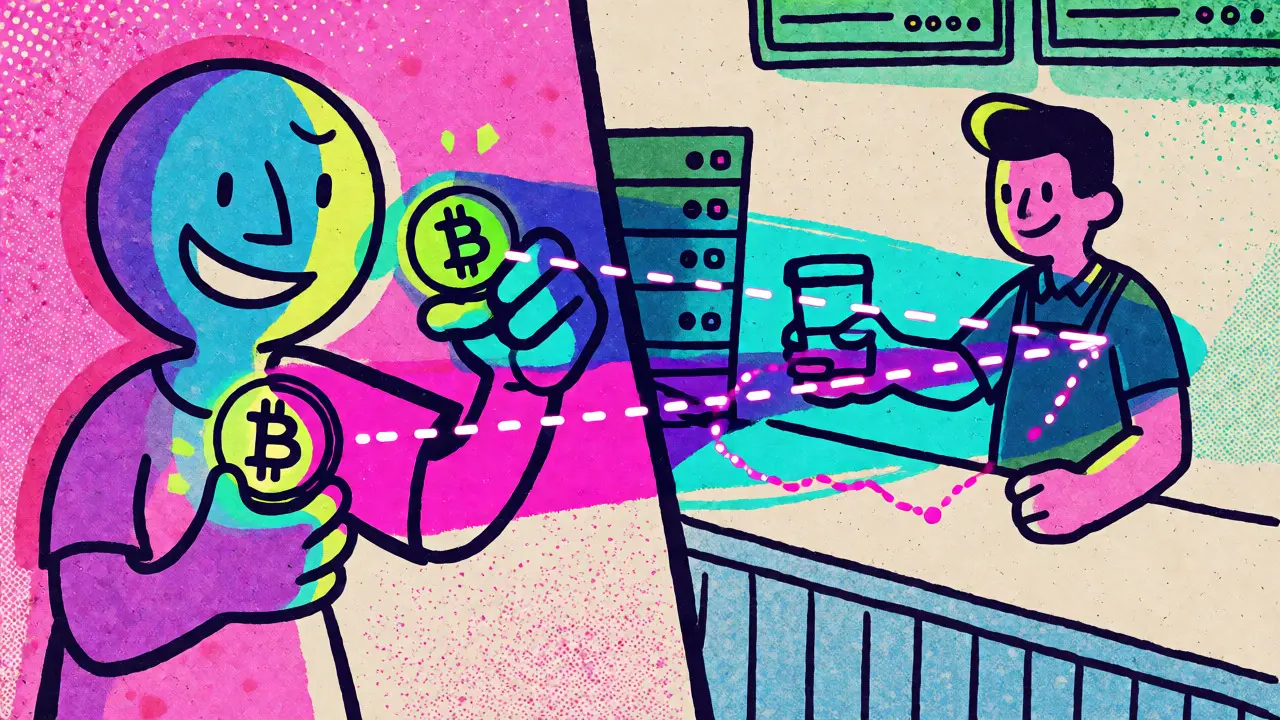
Imagine you buy a coffee with Bitcoin. The barista sees the payment hit their screen, hands you the cup, and turns away to make the next order. You walk out, but ten seconds later, that same Bitcoin reappears in your wallet. The coffee is gone, but so is the money. This isn't magic; it's a Race Attack or a Finney Attack, two sneaky ways to trick merchants who accept crypto too quickly.
If you run a business accepting cryptocurrency, or if you're just curious about how digital money actually moves, understanding these attacks is non-negotiable. They exploit the gap between when a transaction looks done and when it's truly safe. Let's break down exactly how they work, why they happen, and what you can do to stop them.
The Core Problem: Why Zero-Confirmation Transactions Are Risky
Bitcoin doesn't finalize transactions instantly. When you send coins, the network needs time to agree on that transaction. This agreement happens through blocks, which are mined roughly every 10 minutes. Until a block containing your transaction is added to the chain-and confirmed by subsequent blocks-the status is "unconfirmed."
Many merchants, wanting to provide fast service, accept payments at "zero confirmations" (0-conf). They see the transaction broadcast to the network and assume it's valid. That assumption is the vulnerability. Both Race and Finney attacks target this specific window of uncertainty where the merchant thinks they've been paid, but the network hasn't locked it in yet.
| Feature | Race Attack | Finney Attack |
|---|---|---|
| Attacker Role | Regular User | Miner |
| Resource Cost | Low (Standard node) | High (Hashing power) |
| Success Rate | 30-85% (Network dependent) | Near 100% (If executed perfectly) |
| Complexity | Simple | Complex |
| Target | Merchant Node Propagation | Private Block Mining |
How the Race Attack Works
A Race Attack is a race against time and network latency. It relies on the fact that data doesn't reach every computer on the internet at the exact same second.
Here’s the step-by-step scenario:
- Setup: An attacker has one unspent coin (UTXO) worth $100.
- Transaction A: The attacker sends this coin to a merchant for goods.
- Transaction B: Simultaneously, the attacker creates a conflicting transaction sending the same coin back to themselves.
- The Broadcast: The attacker broadcasts Transaction A directly to the merchant's node (perhaps via a direct connection or low-latency API) and broadcasts Transaction B to the wider Bitcoin network.
- The Win Condition: If the merchant's node accepts Transaction A first, they deliver the goods. Meanwhile, the rest of the network mines Transaction B into a block. Once that block is confirmed, Transaction A becomes invalid because the coins were already spent in Transaction B.
Why does this work? Because nodes prioritize the first version of a transaction they see. If the attacker controls the connection to the merchant, they can ensure the merchant sees the "payment" before seeing the "double-spend." Research from Cornell University showed that attackers controlling the merchant's node connection achieved success rates exceeding 85%.

Decoding the Finney Attack
The Finney Attack is more sophisticated and requires muscle-specifically, mining power. Named after Hal Finney, an early Bitcoin contributor, this attack exploits the ability of miners to build blocks privately.
This attack unfolds differently:
- Preparation: A miner creates a transaction spending their own coins to a new address they control.
- Private Mining: Instead of broadcasting this transaction to the public pool, the miner includes it in a private block they are currently mining. They keep this block secret.
- The Purchase: While still working on this private block, the miner uses the *same* coins to buy something from a merchant who accepts 0-conf payments.
- Delivery: The merchant sees the transaction, verifies it looks good, and delivers the goods.
- The Reveal: The miner finishes mining their private block. They broadcast this block to the network. Since this block contains the transaction paying the miner themselves (not the merchant), and it comes earlier in the chain than any block containing the merchant's transaction, the merchant's payment is orphaned.
The key here is timing. The miner must finish their private block *after* the merchant accepts the payment but *before* the network finds a public block containing the merchant's transaction. This window is narrow, often just seconds, making it tricky but highly effective if pulled off.
Real-World Impact and Merchant Risks
You might think these are rare edge cases, but they have real financial consequences. In March 2025, a New York café lost $450 in espresso machines to a Race Attack during a period of high network congestion. Their point-of-sale system accepted the zero-confirmation transaction blindly.
The risk scales with value. For small purchases like a coffee, the potential loss is minimal, so many merchants take the risk. But for high-value items, the stakes change dramatically. According to Ledger Academy analysis, the expected loss from Race Attacks escalates to $84.30 per $1,000 processed for transactions over $10,000. That's a significant margin error for any retailer.
Interestingly, while Race Attacks are common among fraudsters, successful Finney Attacks are rare. Most miners avoid them due to ethical considerations and the technical difficulty of coordinating the private block release perfectly. However, the threat remains theoretical and potent for those willing to try.
Defending Against Double-Spending
So, how do you protect yourself? The solution isn't complicated, but it requires discipline.
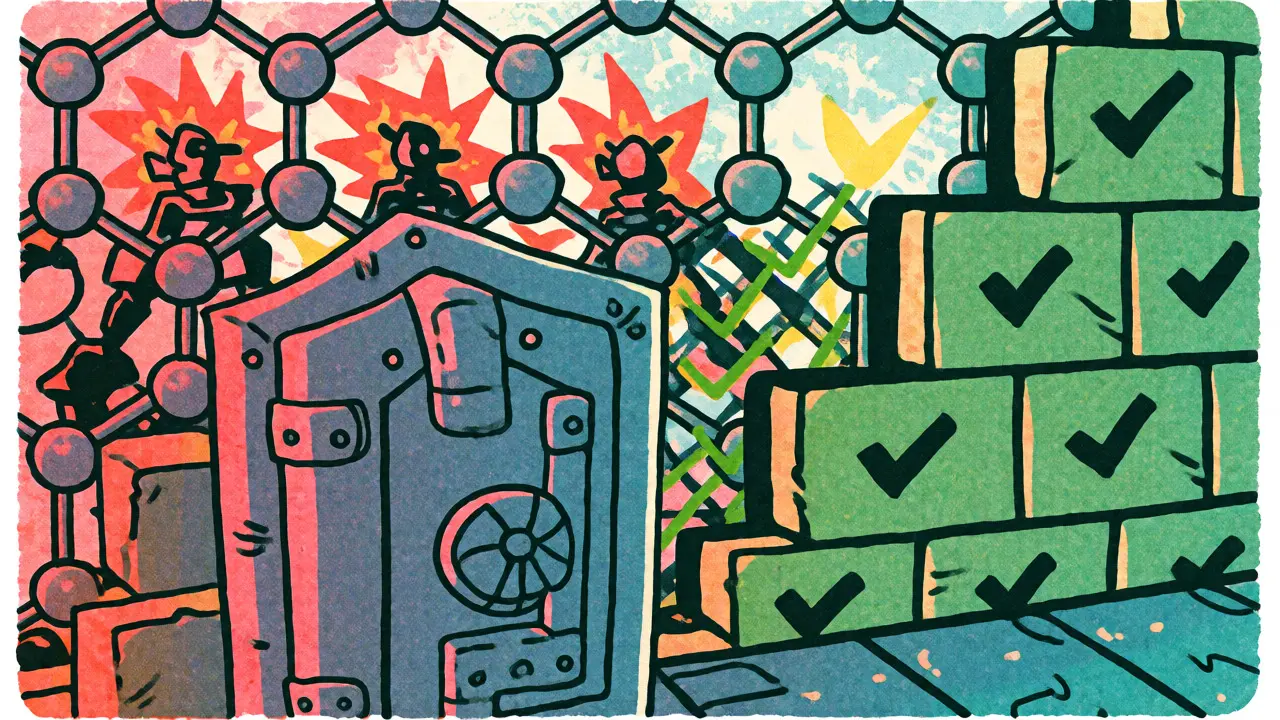
- Wait for Confirmations: The golden rule. For small amounts, wait for 1 confirmation. For large amounts, wait for 6. This eliminates both Race and Finney attacks because once a block is buried under others, reversing it requires redoing all that work.
- Use Reliable Nodes: Don't rely on a single node. Use services like Blocknative's Notify API, which monitors multiple nodes to detect double-spends faster than a local node might.
- Implement Risk Scoring: Tools like BTCPay Server offer "0-conf risk scoring." They analyze transaction patterns, such as whether the inputs look suspicious or if the fee is unusually low, to estimate the probability of fraud.
- Control Your Network: Enterprise merchants should disable incoming peer connections and manually connect to 8-12 well-connected outbound nodes. This reduces the chance of an attacker dominating your view of the network.
The Future of Instant Settlement
Are we stuck waiting 10 minutes forever? Not necessarily. The industry is moving toward solutions that eliminate these vulnerabilities entirely.
The Lightning Network now processes 18% of Bitcoin merchant transactions. By moving transactions off-chain, it provides instant finality without the need for traditional block confirmations for each swap. Additionally, recent upgrades like BIP321 introduce "transaction pinning," making Race Attacks virtually impossible by requiring propagation verification.
Regulators are also stepping in. The EU's MiCA regulations now require at least one blockchain confirmation for transactions over €100. This legal backing forces merchants to adopt safer practices, reducing the prevalence of risky zero-confirmation deals.
While the fundamental mechanics of Race and Finney attacks remain relevant for newer, smaller altcoins with less robust networks, Bitcoin's maturity has made these threats manageable. The gun is still loaded, as Andreas Antonopoulos noted, but most chambers are empty if you follow basic best practices.
What is the main difference between a Race Attack and a Finney Attack?
The primary difference lies in the attacker's role and method. A Race Attack is performed by a regular user exploiting network latency to get a conflicting transaction seen by the merchant first. A Finney Attack requires the attacker to be a miner who privately mines a block containing a self-payment, then reveals it after the merchant accepts a separate transaction for the same coins.
Can I lose money in a Bitcoin Race Attack?
Yes, if you are a merchant accepting zero-confirmation transactions. If the attacker successfully races their double-spend transaction to the network ahead of yours, the block containing your payment may become orphaned, meaning you delivered goods but didn't receive valid payment. Customers rarely lose money in these scenarios unless they are involved in complex multi-party trades.
How many confirmations are safe for high-value transactions?
For high-value transactions (typically over $10,000), the standard recommendation is 6 confirmations. This ensures the transaction is deeply embedded in the blockchain, making it computationally infeasible for an attacker to reverse it using Race or Finney techniques. For lower values, 1 to 3 confirmations are often considered sufficient depending on the merchant's risk tolerance.
Does the Lightning Network prevent these attacks?
Yes, largely. The Lightning Network uses state channels and cryptographic proofs rather than relying solely on immediate on-chain broadcast acceptance. Transactions are settled instantly within the channel with mutual signatures, eliminating the window of opportunity for Race and Finney attacks associated with zero-confirmation on-chain transactions.
Are altcoins vulnerable to these attacks?
Absolutely. Smaller cryptocurrencies with fewer nodes and lower hash rates are significantly more vulnerable. With only 73% of small-cap altcoins having robust node implementations, Race Attacks are easier to execute due to higher network latency variability, and Finney Attacks require less hashing power to succeed compared to Bitcoin.