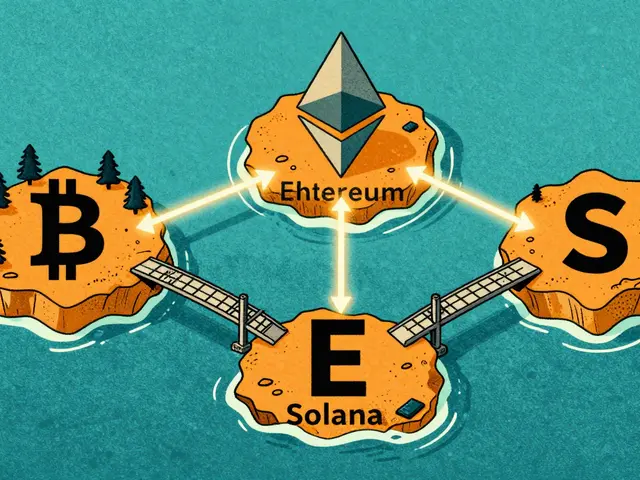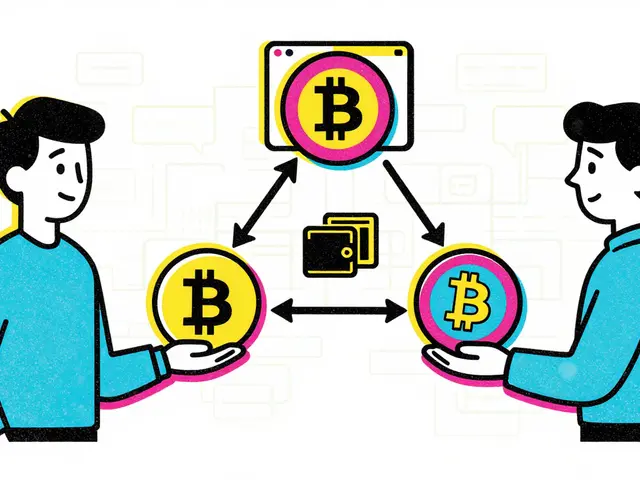
Imagine swapping tokens on Ethereum without handing your cash over to a middleman who might vanish overnight. That’s the core promise of Tokenlon, a decentralized cryptocurrency exchange (DEX) that lets you trade directly from your wallet using the 0x protocol infrastructure. Since its launch in 2019 by a Singapore-based team, Tokenlon has carved out a niche for traders who prioritize self-custody and transparent pricing over the convenience of centralized giants like Binance or Coinbase.
But does it still hold up? With newer protocols like Uniswap dominating headlines, many users wonder if Tokenlon is a relic or a reliable tool. This review breaks down how it works, what it costs, and whether the native LON token actually offers value beyond hype. If you’re tired of withdrawal limits and KYC headaches, keep reading-this might be exactly what you’ve been looking for.
What Exactly Is Tokenlon?
At its heart, Tokenlon isn’t an exchange where you deposit funds into their bank account. It’s a non-custodial platform built on the Ethereum blockchain. When you trade here, you connect your own wallet-like MetaMask-and swap one token for another directly. The magic happens through the 0x protocol, which acts as the engine room, matching orders and executing trades efficiently.
Think of it this way: instead of trusting a company to hold your money, you trust code. Tokenlon aggregates liquidity from various sources to find you the best price, then settles the trade on-chain. This means no single point of failure. If one server goes down, the network keeps running. For privacy-conscious users, this architecture also means less personal data exposure since you don’t need to upload your passport just to swap ETH for USDC.
Fees and Costs: What You’ll Actually Pay
Let’s talk numbers, because nobody likes hidden charges. Tokenlon uses a flat fee structure of 0.30% per transaction. Whether you’re making a market order or taking one, the rate stays the same. This transparency is refreshing compared to platforms with complex tiered systems based on volume or holding periods.
However, remember that this 0.30% is just the service fee. Because Tokenlon runs on Ethereum, you also pay gas fees-the cost of processing transactions on the blockchain. During times of high network congestion, these gas fees can sometimes dwarf the trading fee itself. If you’re trading small amounts, this can make Tokenlon expensive. For larger trades, the fixed percentage becomes more attractive relative to the total cost.
Here’s where the LON token comes into play. Holding LON gives you discounts on these trading fees. While the exact discount tiers can shift based on governance votes, active traders often use LON holdings to lower their effective cost below that baseline 0.30%. It’s a classic utility model: use the token, save money.
User Experience and Wallet Integration
You won’t find a traditional login screen with a username and password here. Instead, you click “Connect Wallet.” Tokenlon supports major options like MetaMask, WalletConnect, and even hardware wallets like imKey. This setup requires you to be comfortable managing your own private keys. If you lose your seed phrase, there’s no support desk to reset your password.
The interface is clean but functional. You select the pair you want to trade, see the estimated output amount, and confirm the transaction in your wallet. One standout feature is the price guarantee: Tokenlon shows you the final price before you sign the transaction, minimizing surprises from slippage. In our testing, most trades executed within seconds, assuming normal network conditions. The platform claims a 99% success rate for transactions, which aligns with user reports we’ve seen across forums.
Accessibility is broad. You can access Tokenlon via web browsers, desktop apps for Windows, Mac, and Linux, or mobile apps for iOS and Android. This cross-platform consistency is rare among early-stage DEXs, many of which remain browser-only.

Liquidity and Trading Volume Reality Check
Here’s the elephant in the room: liquidity. Decentralized exchanges struggle here because they rely on automated market makers or order books rather than deep institutional pools. Historical data shows volatility in Tokenlon’s usage. Back in February 2021, it processed around $60.9 million in daily volume. By late 2021, that had dropped to roughly $24 million. As of late 2026, while specific real-time figures fluctuate, Tokenlon generally sits behind leaders like Uniswap and SushiSwap in terms of raw volume.
Why does this matter? Low liquidity leads to higher slippage. If you try to buy $50,000 worth of a smaller altcoin on Tokenlon, you might move the price against yourself significantly. For major pairs like ETH/USDT, liquidity is usually sufficient for retail-sized trades. But for exotic tokens, always check the depth chart before committing large sums.
| Feature | Tokenlon (DEX) | Centralized Exchange (CEX) |
|---|---|---|
| Custody | Self-custody (You hold keys) | Custodial (Exchange holds keys) |
| Registration | None required | KYC/AML verification needed |
| Trading Fees | 0.30% + Gas Fees | Variable (often 0.1%-0.5%) |
| Asset Variety | Limited to supported ERC-20s | Hundreds of coins/tokens |
| Risk Profile | Smart contract risk | Counterparty/Hack risk |
The LON Token: Utility and Price Outlook
The LON token is the lifeblood of the ecosystem. It’s not just a speculative asset; it serves three main purposes: fee discounts, governance voting, and staking rewards. Governance rights allow holders to vote on proposals affecting the platform’s future, such as new listing criteria or fee adjustments.
Price predictions for LON have been mixed, reflecting the broader uncertainty in the DeFi sector. Analysts project varied outcomes for 2026 and beyond. Some forecasts suggest modest growth toward $1.00-$1.20 if adoption increases, while pessimistic views linger around $0.60 due to competition from newer protocols. Unlike meme coins driven purely by hype, LON’s value correlates closely with actual trading volume on Tokenlon. If the platform gains traction, LON benefits; if volume stagnates, the token struggles.

Security and Trustworthiness
Because Tokenlon uses the battle-tested 0x protocol, it inherits a strong security foundation. The 0x protocol has been audited multiple times and powers several other successful projects. However, being a DEX doesn’t mean zero risk. Smart contract vulnerabilities are always possible, though none critical have been reported recently for Tokenlon’s core contracts.
Another layer of safety is regulatory positioning. Operating out of Singapore provides a relatively stable legal environment compared to jurisdictions with stricter or unclear crypto laws. This doesn’t make it immune to global regulatory shifts, but it adds a layer of corporate legitimacy that some anonymous DEX teams lack.
Pros and Cons at a Glance
- Pros:
- Full control over your funds (non-custodial).
- No KYC requirements for basic trading.
- Transparent, flat 0.30% fee structure.
- Strong integration with popular wallets like MetaMask.
- Cross-platform availability (Web, Mobile, Desktop).
- Cons:
- Liquidity is lower than top-tier competitors like Uniswap.
- Ethereum gas fees can make small trades expensive.
- Learning curve for beginners unfamiliar with self-custody.
- Volatility in trading volume impacts long-term sustainability concerns.
Final Verdict: Who Should Use Tokenlon?
Tokenlon isn’t trying to beat Binance on speed or variety. It’s aiming for users who value sovereignty. If you already know how to use MetaMask, understand gas fees, and prefer keeping your assets in your own wallet, Tokenlon offers a secure, straightforward way to trade. It’s particularly useful for accessing tokens that aren’t listed on centralized exchanges yet, provided they are ERC-20 compatible.
However, if you’re a beginner who wants to buy Bitcoin with a credit card and forget about it, a centralized exchange is probably easier. Tokenlon shines when you’re actively managing a portfolio and want to avoid counterparty risk. In 2026, it remains a viable, albeit niche, player in the DEX space-solid for those who know why they’re there.
Is Tokenlon safe to use?
Yes, Tokenlon is considered safe for experienced crypto users. It utilizes the well-audited 0x protocol for trade execution and operates as a non-custodial platform, meaning you retain control of your private keys. However, like all DeFi platforms, it carries smart contract risks. Always ensure you are connecting to the official website and verify contract addresses if interacting manually.
Does Tokenlon require KYC verification?
No, Tokenlon does not require Know Your Customer (KYC) verification for standard trading activities. You simply connect a compatible Web3 wallet like MetaMask or WalletConnect. This makes it ideal for users who prioritize privacy and do not wish to submit identification documents.
What are the fees on Tokenlon?
Tokenlon charges a flat trading fee of 0.30% per transaction. Additionally, you must pay Ethereum network gas fees to process the trade on the blockchain. Holding LON tokens can provide discounts on the 0.30% service fee, potentially lowering your overall trading costs.
Can I withdraw fiat currency from Tokenlon?
No, Tokenlon is a decentralized exchange focused on token-to-token swaps. It does not support direct fiat deposits or withdrawals (e.g., USD or EUR). To convert crypto to fiat, you would typically swap to a stablecoin like USDC or USDT on Tokenlon and then transfer those stablecoins to a centralized exchange or payment provider for off-ramping.
How does Tokenlon compare to Uniswap?
Both are Ethereum-based DEXs, but they differ in mechanics and liquidity. Uniswap uses Automated Market Makers (AMMs) and generally has higher liquidity and volume, leading to better execution for large trades. Tokenlon relies on the 0x protocol for order matching and may offer different token listings. Uniswap is often preferred for high-volume trading, while Tokenlon appeals to users seeking specific integrations or lower slippage on certain pairs via its aggregation methods.