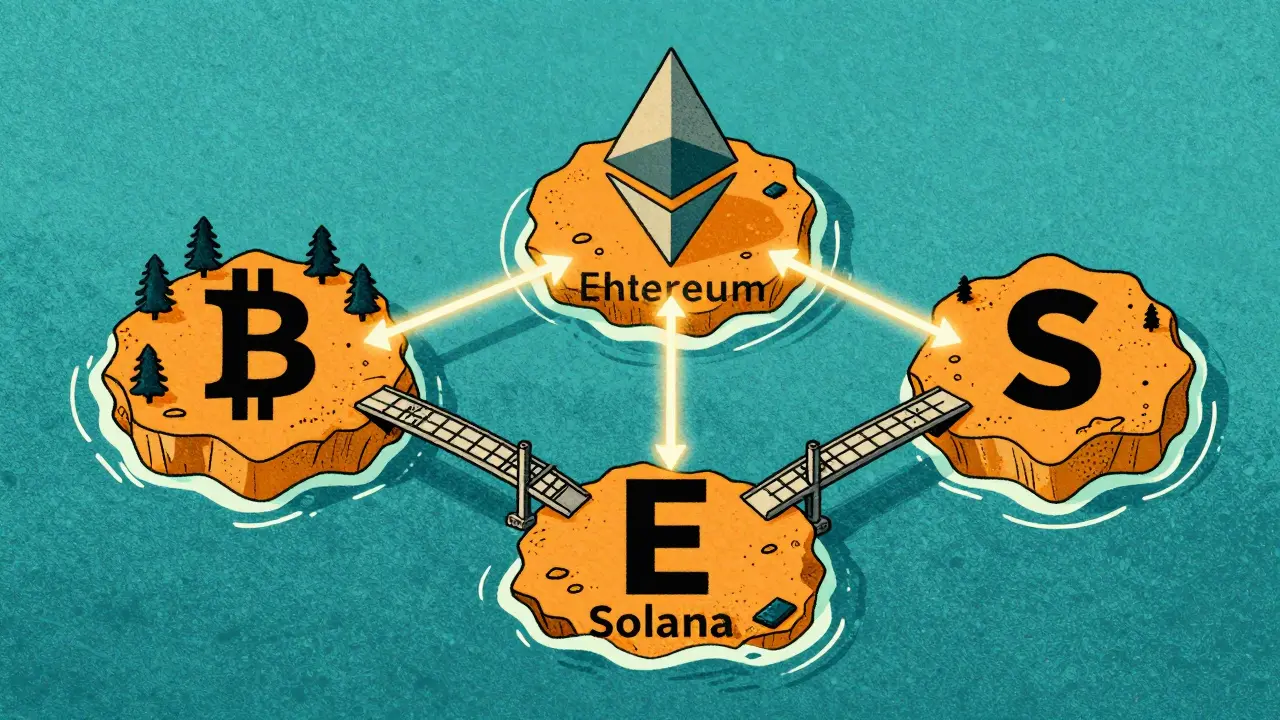
Before cross-protocol integration, blockchain networks operated like isolated islands. Assets couldn’t move between them, and smart contracts couldn’t communicate. Today, over $25.7 billion in cross-chain transactions were processed in Q2 2024. This isn’t magic-it’s real-world blockchain interoperability solving concrete problems. Let’s break down how it works using actual examples.
Why Cross-Chain Integration Matters
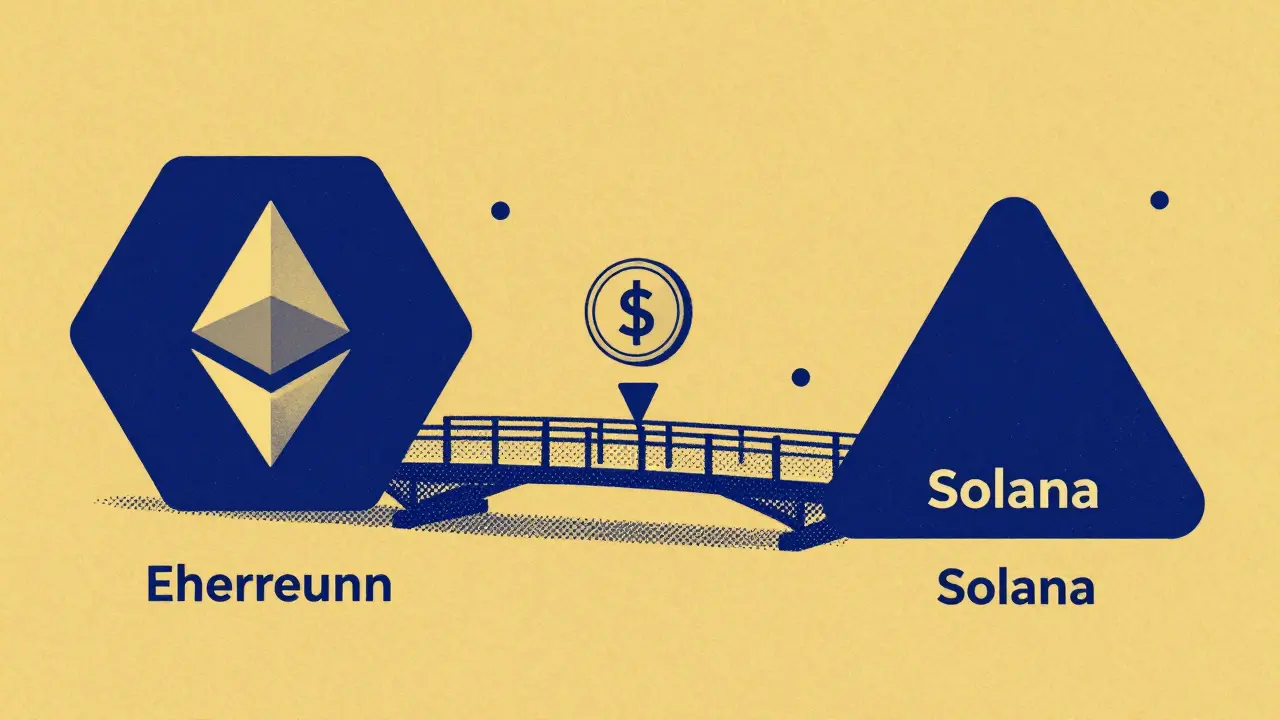
Imagine trying to send Bitcoin to an Ethereum-based DeFi app. Without interoperability, you’d need a centralized exchange to wrap Bitcoin into an Ethereum token. This creates single points of failure, delays, and extra fees. Cross-protocol integration eliminates these bottlenecks. It lets blockchains talk directly, moving assets and data securely. For developers, this means building apps that work across multiple chains without complex workarounds. For users, it means seamless experiences-like using USDC on Solana or transferring NFTs between Ethereum and Polygon.
IBC Protocol: The Cosmos Standard
The IBC Protocol is the backbone of the Cosmos ecosystem. Launched in March 2021, it connects 78 zones as of August 2024. IBC requires both chains to implement the protocol natively, ensuring top-tier security. Validators on both chains must confirm messages before finalization, which takes 5-15 minutes. This makes it ideal for high-value transfers where security matters most. For example, the Cosmos Hub uses IBC to move ATOM tokens to Osmosis, a decentralized exchange. No wrapped assets. No custodians. Just direct transfers between chains. Security-wise, IBC scores 91/100 in Trail of Bits’ February 2024 analysis-the highest among major protocols.
Chainlink CCIP: Enterprise-Grade Security
Chainlink CCIP launched in September 2023 as the first enterprise-ready cross-chain solution. It uses 50+ independent oracle nodes to verify transactions and a Risk Management Network that monitors 12+ security parameters in real-time. CCIP is designed for institutions needing compliance features. For instance, Circle uses CCIP for USDC transfers between Ethereum and Solana. The protocol includes circuit breakers to pause transactions during attacks and rate limits to prevent abuse. However, CCIP’s centralized risk management layer has drawn criticism from decentralization purists. Transaction costs range from $0.02 for basic use to $2.85 for enterprise configurations. Chainlink reports 67% market share in institutional cross-chain transactions as of June 2024.
LayerZero: Speed for Developers
LayerZero uses an ultra-light node (ULN) architecture where oracle and relayer entities work independently. This setup achieves sub-30-second finality for supported chains with 99.987% success rate in Q2 2024. Developers love LayerZero for its simplicity. The "Omnichain" SDK lets you build apps that work across multiple chains without separate deployments. For example, NFT marketplaces like Immutable X use LayerZero to transfer NFTs between Ethereum and BNB Chain. It powers 83% of cross-chain NFT projects according to DappRadar’s May 2024 analysis. However, the dual-oracle model creates potential single points of failure if oracle and relayer collude-a risk noted in CoinDesk’s May 2024 report.
Axelar Network: Smart Contract Execution
Axelar Network stands out for cross-chain smart contract execution. Its proof-of-stake consensus processes messages across 55+ chains with 98.7% success rate. Axelar supports 85% of EVM chains plus Cosmos zones, making it highly versatile. In June 2024, Axelar launched "GMP+" (General Message Passing Plus), slashing gas costs by 95% for contract calls. A DeFi platform like Aave uses Axelar to move liquidity between Ethereum and Avalanche. However, Axelar’s average latency is 2.7 minutes-slower than LayerZero. Discord communities report frequent issues with Cosmos SDK version compatibility, with 47 GitHub issues logged since Q1 2024.
Wormhole: The OG Bridge
Wormhole was one of the first major cross-chain bridges, launched in 2021. It uses a 19-guardian multisig committee (including Jump Crypto and Circle) that requires 33-of-50 signatures for transaction validation. Since its launch, Wormhole has transferred $12.4 billion in value. It supports 30+ blockchain networks and powers 450+ cross-chain applications (xDapps). However, Wormhole suffered a $325 million hack in February 2022, reducing its market share from 38% to 22% in Q1 2022. Despite this, enterprise users praise its USDC integration. Circle’s January 2024 case study highlights Wormhole as critical for stablecoin transfers between Solana and Ethereum.

Protocol Comparison: Speed vs. Security
| Protocol | Security Score | Finality Time | Avg. Cost per Tx | Best Use Case |
|---|---|---|---|---|
| IBC Protocol | 91/100 | 5-15 minutes | $0.02 | High-security asset transfers within Cosmos ecosystem |
| Chainlink CCIP | 85/100 | 45-90 minutes | $0.05-$2.85 | Regulated financial institutions |
| LayerZero | 82/100 | <30 seconds | $0.10-$1.50 | NFT marketplaces and developer-friendly apps |
| Axelar Network | 80/100 | 2.7 minutes | $0.15-$2.10 | Smart contract execution across EVM and Cosmos chains |
| Wormhole | 52/100 | 1-3 minutes | $0.08-$1.20 | Stablecoin transfers and legacy bridge integrations |
Common Challenges and Fixes
Even with these protocols, challenges exist. Message ordering issues affect 31% of cross-chain projects (Gitcoin survey, May 2024). Liquidity management is tricky-Across Protocol requires 68% less capital than competitors but has complex refund mechanics. Gas costs spike during network congestion; LayerZero users report unpredictable fees in 63% of negative Trustpilot reviews. Solutions are emerging: IBC v3.0.0 introduced "IBC Hooks" for programmable interactions, while Axelar’s GMP+ slashes gas costs by 95%. For developers, Chainlink CCIP offers dedicated 24/7 enterprise support, and LayerZero’s SDK enables basic integration in under 2 hours.
What’s Next for Cross-Chain Tech
The cross-chain market will grow from $1.87 billion in 2023 to $14.32 billion by 2028 (MarketsandMarkets). Ethereum remains the dominant hub, with 87% of protocols connecting to it. New developments include Chainlink’s CCIP 1.2 (July 2024), adding account abstraction support. The Inter-Blockchain Foundation’s Cosmos SDK v0.51.0 (August 2024) introduces "IBC Hooks" for more flexible interactions. However, risks remain. The SEC’s July 2024 guidance classifies some cross-chain tokens as securities, affecting 42% of current implementations. Security researcher Samczsun warns that "all cross-chain bridges represent concentrated attack surfaces," a view echoed by Ethereum core developer Danny Ryan. The future likely involves fewer standalone bridges and more native interoperability built into layer-1 blockchains.
What’s the safest cross-chain protocol?
IBC Protocol has the highest security score at 91/100 according to Trail of Bits’ February 2024 analysis. It requires all validators to participate in message finality, eliminating single points of failure. However, this strict security comes at the cost of slower transaction speeds. For enterprise use cases requiring maximum security, IBC is often the top choice.
Can I use cross-chain protocols for NFTs?
Yes. LayerZero powers 83% of cross-chain NFT projects, according to DappRadar’s May 2024 analysis. Platforms like Immutable X use it to transfer NFTs between Ethereum and BNB Chain. Wormhole also handles NFTs, but its security history makes it less ideal for high-value assets. Always check protocol-specific NFT support before transferring.
Why do gas costs vary so much?
Gas costs depend on the protocol’s architecture and network congestion. LayerZero uses a relayer model that adjusts fees dynamically, causing spikes during high traffic. IBC has fixed low costs ($0.02) because it relies on validator fees rather than user-paid gas. CCIP charges more for enterprise features like circuit breakers. For predictable costs, IBC is best; for flexibility, LayerZero is better despite occasional volatility.
Which protocol should I use for DeFi apps?
Axelar is ideal for DeFi due to its cross-chain smart contract execution. Platforms like Aave use it to move liquidity between Ethereum and Avalanche. CCIP is also strong for regulated DeFi (e.g., institutional staking), but its higher costs make it less suitable for retail users. LayerZero works well for simple token swaps but lacks deep DeFi integration compared to Axelar.
Are cross-chain bridges safe?
Safety varies. IBC has the strongest security model but is limited to Cosmos-based chains. Wormhole’s $325 million hack in 2022 shows risks, though it’s since improved. For maximum safety, use protocols with multi-signature or validator-based finality like IBC or CCIP. Avoid bridges with single-point failures, like early Wormhole versions. Always research a protocol’s security track record before using it for high-value transfers.

Deeksha Sharma
February 4, 2026 AT 10:45It's incredible how cross-chain tech is connecting blockchains. IBC's security score of 91 is impressive, though it's slower. LayerZero is super fast for NFTs. But the real win is eliminating centralized exchanges for asset transfers. This is the future of web3. No more wrapped tokens - just seamless movement. The ecosystem is growing fast!
Taybah Jacobs
February 6, 2026 AT 09:35Thank you for sharing these insights. The table comparing protocols is particularly useful. Chainlink CCIP's enterprise readiness is a significant advantage for regulated institutions. However, the security score of 52 for Wormhole is concerning given its history. It's important to consider both security and compliance when choosing a solution. This post provides excellent context for developers and businesses.
Udit Pandey
February 8, 2026 AT 05:23While these protocols are useful, India must develop its own sovereign cross-chain solution. Relying on foreign infrastructure is risky for national security. We need indigenous technology that aligns with our values and regulations. The IBC protocol is good, but it's still tied to Cosmos. India should create a chain that integrates with others but under strict oversight. Our government must prioritize this to protect our digital sovereignty. Otherwise, we'll be dependent on foreign systems.
James Harris
February 9, 2026 AT 06:21Yes! The security vs. compliance balance is key. Chainlink CCIP is perfect for banks. But for everyday users, LayerZero's speed is better. IBC's high security is great for big transfers. Wormhole's hack was bad, but they fixed it. Let's keep building! 🌍
Brendan Conway
February 9, 2026 AT 13:12So, thinking about cross-chain integration, it's like the interent of blockchains. Before, each chain was a seperate network, like isolated islands. Now, with protocols like IBC and LayerZero, they're connecting. It's not just about moving assets; it's about creating a cohesive ecosystem. For example, using USDC across Ethereum and Solana without wrapped tokens. That's huge for DeFi users. But there are trade-offs. IBC has high security but slower speed. LayerZero is super fast but has a dual-oracle model that could be a single point of failure. Chainlink CCIP is built for institutions with compliance features, but it's more centralized. Axelar's GMP+ is great for smart contracts but has latency issues. Wormhole's history is rocky but they're improving. The key is choosing the right tool for the job. If you're moving high-value assets, maybe IBC. For NFTs, LayerZero. For enterprise, CCIP. It's all about context. The future will likely see more native interoperability built into layer-1s. Right now, we're in the bridge phase, but eventually, chains will talk natively. This tech is evolving fast, and it's exciting to see how it shapes the future of decentralized finance and web3. The challenges are real, but the solutions are getting better every day. We need to keep pushing innovation while staying mindful of security. It's a balance between speed, security, and usability. But overall, this progress is a big step forward for blockchain adoption. Imagine a world where you can seamlessly use Bitcoin on Ethereum apps without central exchanges. That's the promise of cross-chain tech. It's not magic, it's engineering. And we're getting closer every day.
Shruti Sharma
February 9, 2026 AT 16:01LayerZero for NFTs is lit 😎