Blockchain Supply Chain: How Decentralized Ledgers Are Transforming Logistics
When you buy a coffee, a shirt, or a laptop, you rarely think about where it came from — or if it was made ethically. That’s where blockchain supply chain, a tamper-proof digital record of every step a product takes from factory to customer. Also known as decentralized ledger tracking, it removes guesswork from logistics by giving everyone — brands, shippers, and you — access to the same real-time data. No more lost shipments, no more fake goods, and no more silent suppliers hiding behind paper trails.
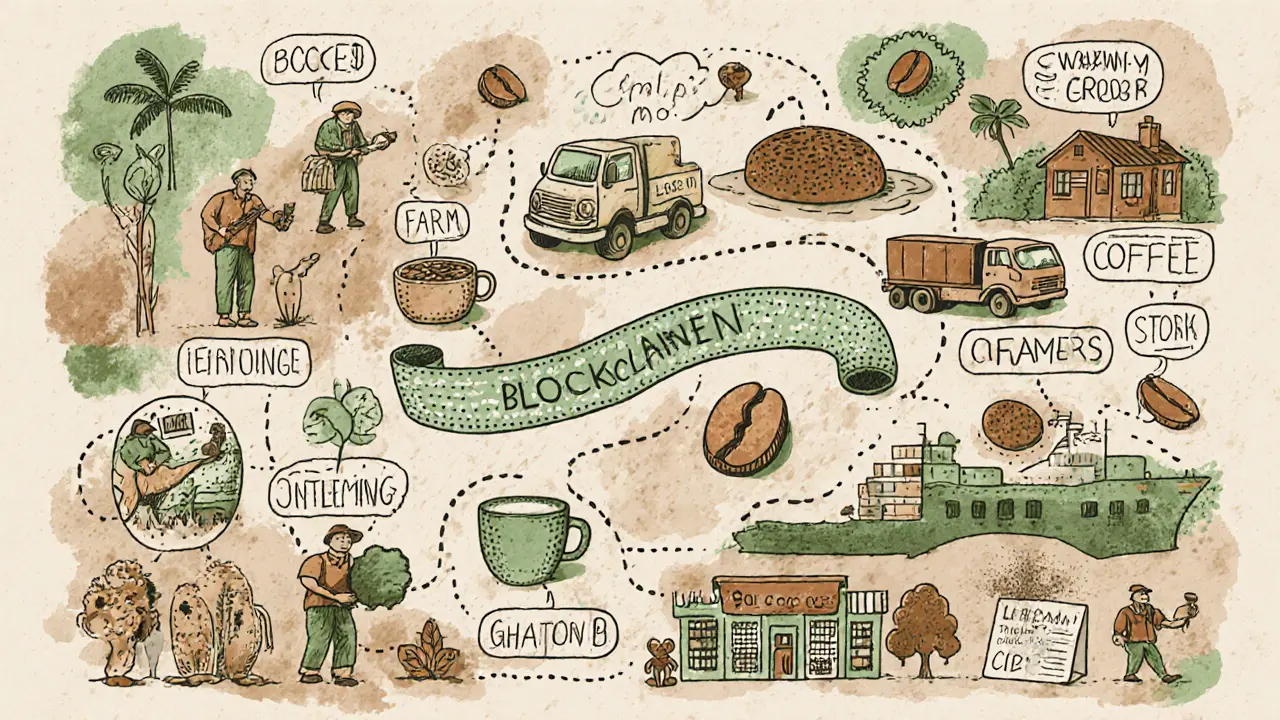
It’s not just theory. Companies are already using this to track everything from Colombian coffee beans to vaccine vials. A supply chain transparency, the ability to verify the origin, journey, and condition of goods at every stage is now possible because each scan, signature, or temperature reading gets locked into a shared ledger. That means if your salmon was caught in Alaska, shipped through Singapore, and frozen in a warehouse in Chicago — you can see all of it, without trusting a single company’s word.
This isn’t about replacing trucks or planes. It’s about replacing paperwork. The decentralized ledger, a distributed database that updates simultaneously across multiple computers, ensuring no single party can alter the record cuts out the middlemen who used to control access to shipment data. Smart contracts automate payments when a truck arrives on time. Sensors trigger alerts if a refrigerated container warms up. And if something goes wrong, you don’t need to dig through emails — you just check the blockchain.
And it’s not just big corporations. Small farmers, local manufacturers, and even indie brands are using lightweight blockchain tools to prove their products are real. No more paying for expensive audits. No more losing customers because someone doubted your claims. The proof is on the chain.
What you’ll find below are real examples of how this works — from tracking carbon credits in energy trading to tracing crypto tokens used in global payments. Some posts show how companies are fixing broken systems. Others warn about hype and scams pretending to be blockchain solutions. You’ll see what’s working, what’s not, and what’s coming next — all based on actual use cases, not sales pitches.
Blockchain for Supply Chain Transparency: How It Works and Why It Matters
Blockchain for supply chain transparency creates tamper-proof records of every product step, from raw materials to store shelves. It cuts fraud, speeds up recalls, and builds trust with consumers and regulators.
View More