Remember when you could just open any global crypto app and trade freely from Bangkok? Those days are gone. If you are trying to access platforms like Bybit or OKX from Thailand in 2026, you will likely hit a wall. The Thailand Securities and Exchange Commission (SEC) is the regulatory body responsible for overseeing capital markets and enforcing strict rules on cryptocurrency exchanges operating within or targeting users in Thailand has tightened its grip significantly since the major crackdowns of 2025. This isn't just about bureaucracy; it's about protecting your money from scams that have plagued the region.
The landscape changed dramatically with the Emergency Decree on Digital Asset Businesses enacted in April 2025. For traders, businesses, and investors, understanding these rules is no longer optional-it’s essential for staying compliant and keeping your assets safe. Whether you are a local trader frustrated by limited coin options or an international exchange looking to enter the Thai market, this guide breaks down exactly what the regulations mean for you today.
Why Thailand Cracked Down Hard in 2025
To understand the current rules, you need to look at why they exist. In early 2025, Thailand saw a massive spike in crypto-related fraud. Scammers were using unregulated foreign platforms to steal millions from unsuspecting citizens. The Royal Thai Police Cybercrime Investigation Division reported that fraud cases were skyrocketing, prompting urgent action from the government.
Pornanong Budsaratragoon, the Secretary-General of the SEC, made her stance clear: the goal wasn't to kill innovation but to plug the loopholes scammers were exploiting. The result was the Emergency Decree on Digital Asset Businesses (No. 2) B.E. 2568. This legislation gave the Ministry of Digital Economy and Society (MDES) the power to block unlicensed platforms instantly, without needing a court order. It was a swift, heavy-handed approach designed to stop the bleeding of investor funds.
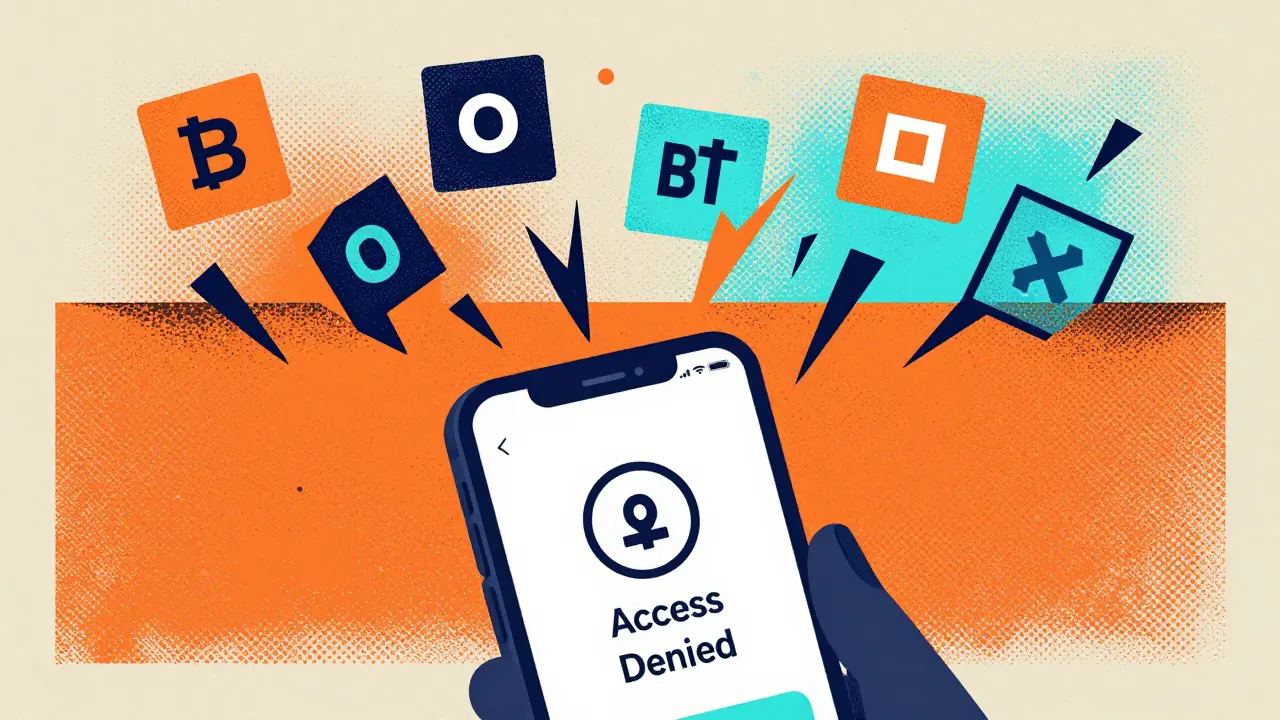
The impact was immediate. Major foreign peer-to-peer platforms like Bybit and OKX were forced to shut down their services for Thai users. While this caused frustration among experienced traders who preferred those interfaces, the data supports the move. Q2 2025 saw a 37% decrease in crypto-related fraud reports compared to the previous quarter. The trade-off is clear: less convenience and fewer coins, but significantly higher security.
The Seven-Point Test: Are You Serving Thai Users?
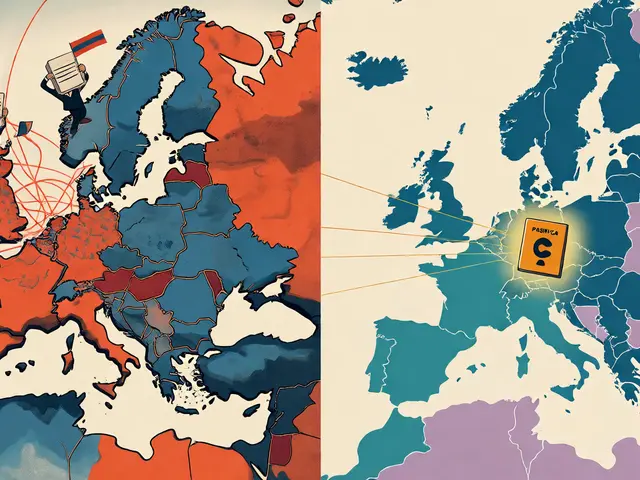
One of the most unique aspects of the Thai regulatory framework is how it defines "serving Thai users." You don't need to have an office in Bangkok to be regulated. The SEC uses a seven-point test to determine if a foreign platform is effectively operating in Thailand. If your platform meets even one of these criteria, you must obtain a license.
- Language: Does your platform display content in Thai, even partially?
- Domain Name: Do you use a ".th" or ".ไทย" domain extension?
- Currency: Do you accept payments in Thai Baht (THB) or through Thai bank accounts?
- Governing Law: Is Thai law specified as the governing law for disputes?
- Marketing: Do you pay search engines to appear in results for Thai users?
- Support: Do you have staff or offices supporting Thai customers?
- Other Characteristics: Any other traits defined by SEC notifications.
This extraterritorial reach means you can't simply hide behind a server in Singapore. If you are marketing to Thais, taking their Baht, or speaking their language, the SEC considers you a Thai operator. This aligns Thailand more closely with Japan's Financial Services Agency model than with the looser frameworks seen in some offshore jurisdictions.

Licensing Requirements for Exchanges
If you fall under the seven-point test, you need a license. As of mid-2026, only nine entities hold licensed digital asset portal status in Thailand. Getting one is expensive and time-consuming. Here is what the process looks like:
- Application Fee: ฿1,000,000 (approx. $27,400 USD).
- Annual License Fee: ฿500,000 (approx. $13,700 USD).
- Minimum Capital: You must prove operational capital of at least ฿50 million ($1.37 million).
- Compliance Systems: Your Anti-Money Laundering (AML) and Counter-Financing of Terrorism (CFT) systems must meet FATF standards.
- Audits: Source code audits from SEC-approved firms are mandatory.
The approval timeline typically takes between 90 to 120 days. Bitkub, Thailand's largest licensed exchange, spent six months implementing full compliance measures after the new rules took effect. This high barrier to entry ensures that only serious, well-capitalized players operate in the market, reducing the risk of rug pulls and insolvencies.
| Feature | Thailand (SEC) | Singapore (MAS) | EU (MiCA) |
|---|---|---|---|
| Foreign Platform Access | Banned unless licensed locally | Allowed with registration | Passporting allowed across EU |
| Blocking Mechanism | Instant MDES blocking | Court order required | National authority enforcement |
| Stablecoin Clarity | Limited specific guidance | High clarity | Comprehensive rules |
| Consumer Protection Focus | Very High (Fraud prevention) | High | High |
Operational Restrictions for Licensed Exchanges
Even if you get a license, you can't do everything. The Thai SEC imposes strict operational limits on what licensed exchanges can offer. These restrictions are designed to prevent systemic risk and protect retail investors from complex financial products they may not understand.
First, privacy coins are completely off-limits. Exchanges cannot list or facilitate trades for cryptocurrencies that obscure transaction details, as this conflicts with AML requirements. Second, promoting digital assets as a payment method for goods and services is prohibited. The SEC wants crypto to remain an investment asset, not a currency replacement that complicates tax reporting.
Third, lending and deposit-taking services with promised returns are banned. This prevents exchanges from engaging in risky leverage trading or issuing stablecoins without proper banking licenses. Finally, advertising is heavily restricted. Licensed operators cannot run promotional campaigns that promise high returns or target inexperienced users. Wallet services for non-trading purposes are also limited, forcing users to rely on dedicated wallet providers rather than exchange-hosted wallets for long-term storage.
Impact on Traders: Liquidity vs. Security
For the average Thai trader, the shift has been painful but stabilizing. Before 2025, foreign platforms held 85% of the market share. Today, domestic licensed platforms control 78%. This shift has brought two main changes: reduced liquidity and wider spreads.
On forums like Pantip.com, users express mixed feelings. Many praise the security, noting a significant drop in scam attempts. However, complaints about limited coin selection are frequent. As of June 2025, only 35 tokens were approved for trading on local exchanges, compared to over 350 on former foreign platforms. Meme tokens, fan tokens, and NFTs are explicitly prohibited on local exchanges.
Transaction fees are another pain point. Local exchanges average 0.25% per trade, while international giants often charged around 0.1%. Withdrawal limits are also stricter, with daily caps often set around ฿500,000 ($13,700). For serious traders, these limits can be frustrating. Some estimate that 35% of Thai crypto activity has migrated offshore via VPNs, creating a gray market that regulators are still trying to curb.
Future Outlook: ETFs and DeFi
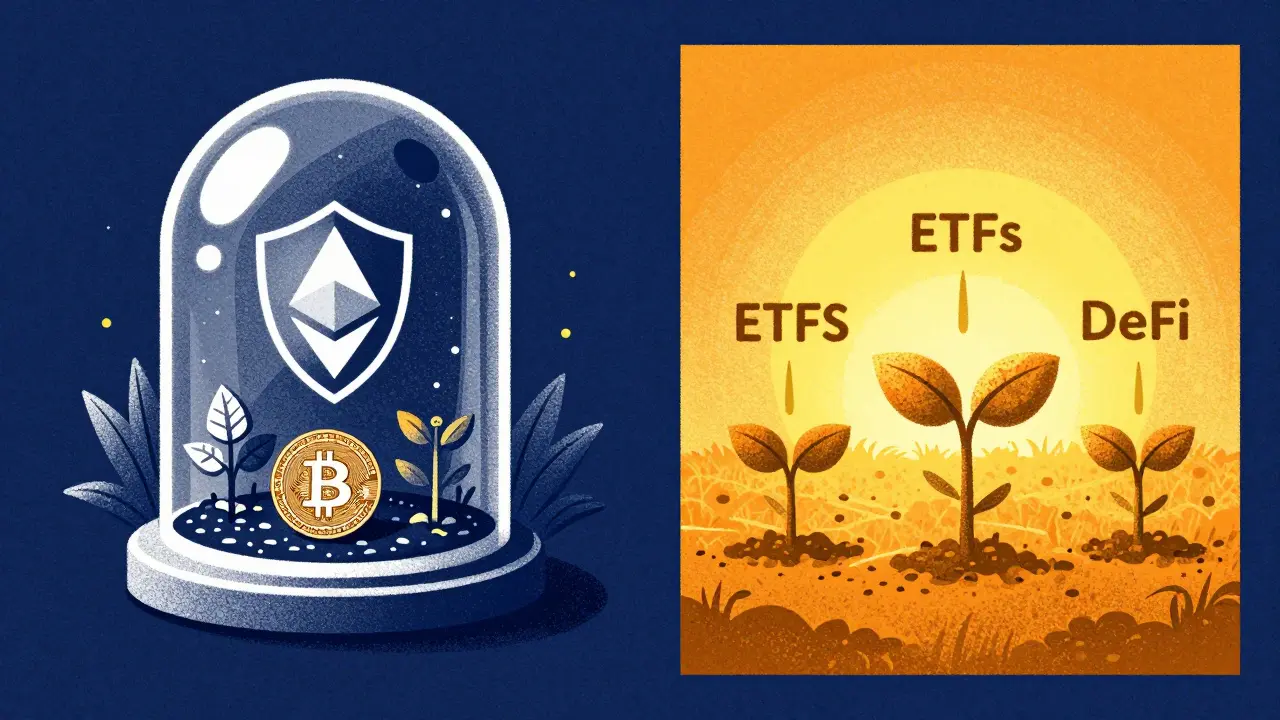
Despite the restrictions, the Thai crypto market is growing. Valued at $1.2 billion in Q1 2025, it continues to expand with 4.7 million active users. The future looks promising for institutional adoption. The SEC is preparing to expand beyond Bitcoin and Ethereum ETFs, with altcoin ETF products planned for 2026. This could unlock billions in new investment from conservative funds that previously stayed away due to regulatory uncertainty.
Looking ahead, the regulatory roadmap includes amendments to address Decentralized Finance (DeFi) platforms in late 2025. There is also a pilot project for Central Bank Digital Currency (CBDC) integration with licensed exchanges expected in Q2 2026. The National Blockchain Policy Office has allocated ฿2.1 billion for blockchain development projects through 2027, signaling long-term government support for the technology, even if the rules are tight.
For now, the message is clear: if you want to trade crypto in Thailand, you do it through licensed, regulated channels. The era of wild west trading is over, replaced by a structured, secure, albeit more expensive, environment.
Can I still use Bybit or OKX in Thailand?
No. Following the April 2025 regulatory changes, foreign platforms like Bybit and OKX were blocked from serving Thai users because they lacked proper licensing. Accessing them via VPN is technically possible but violates local regulations and carries legal risks.
Which exchanges are legal in Thailand?
Only exchanges licensed by the Thai SEC are legal. As of mid-2026, there are nine licensed digital asset portals. You can verify their status on the official SEC database at market.sec.or.th. Major licensed players include Bitkub and Zipmex (under restructuring supervision).
What coins can I trade on Thai exchanges?
Licensed exchanges can only trade approved tokens. Currently, this list includes major assets like Bitcoin and Ethereum, plus a few others, totaling around 35 tokens. Privacy coins, meme tokens, fan tokens, and NFTs are prohibited.
How much does it cost to get a crypto license in Thailand?
The application fee is ฿1,000,000, and the annual license fee is ฿500,000. Additionally, you must maintain minimum operational capital of ฿50 million and cover costs for audits and compliance system implementation.
Will Thailand allow more coins in the future?
Yes. The SEC plans to expand the list of approved tokens and introduce altcoin ETFs in 2026. However, strict criteria regarding utility and security will continue to apply, so speculative assets may remain excluded.