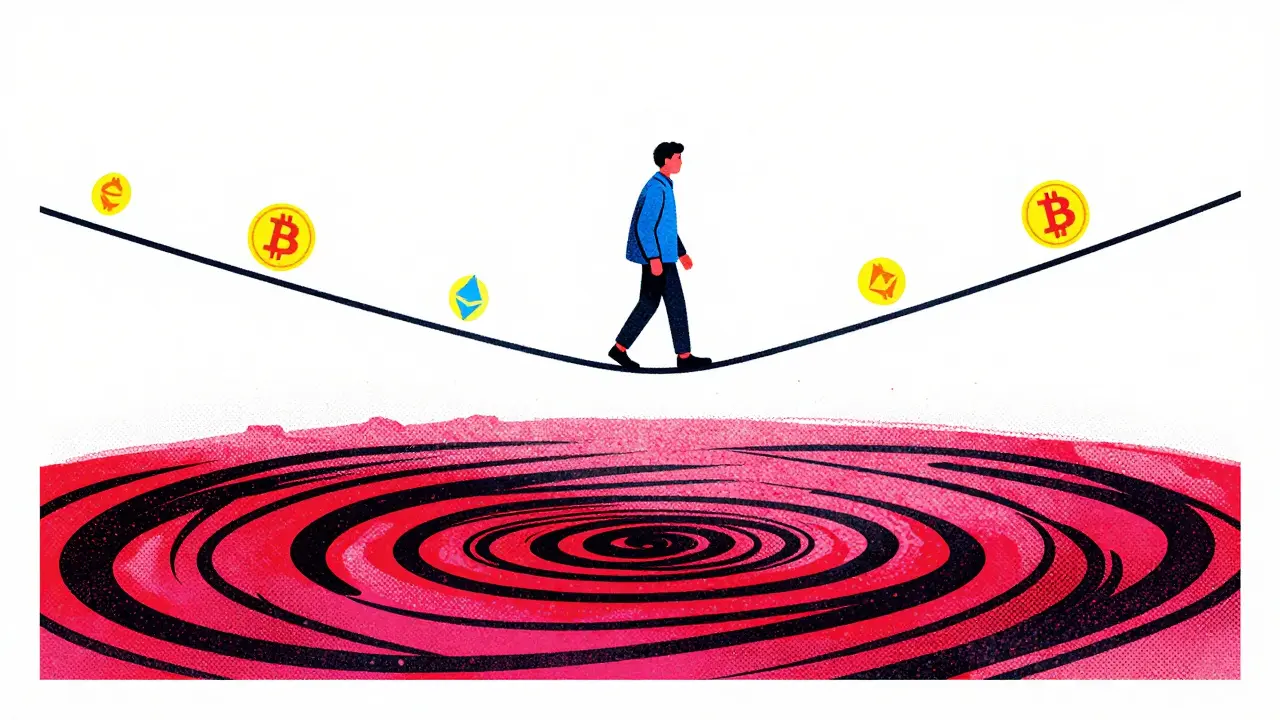
Trading with borrowed money feels like walking a tightrope. One wrong step, and you fall off the edge. In crypto, that edge is called liquidation. If you are looking to amplify your gains by using leverage, you need more than just luck; you need a platform that won’t crash when volatility spikes. The landscape of Crypto Margin Trading has shifted dramatically since 2023. With regulations tightening and technology evolving, choosing the right exchange in 2026 isn't just about who offers the highest leverage-it's about who keeps your funds safe while you trade.
We have analyzed the top contenders based on fee structures, security protocols, user interface quality, and regulatory compliance. Whether you are a high-frequency trader chasing zero-maker fees or a cautious investor preferring decentralized custody, there is a specific platform built for your workflow. Here is the breakdown of the best options available today.
Understanding the Risks Before You Start
Before we look at the platforms, let’s get one thing straight: margin trading is not for beginners who haven’t practiced with paper money. When you use leverage, you borrow capital from the exchange. This amplifies both profits and losses. If the market moves against you, the exchange will automatically close your position-this is liquidation-to recover their loaned funds. You can lose your entire initial deposit in minutes if you do not set stop-losses correctly.
There are two main types of margin modes you will encounter:
- Isolated Margin: Risk is limited to the specific amount allocated to that single trade. If it gets liquidated, you only lose what you put into that position.
- Cross Margin: Your entire account balance acts as collateral. This reduces the chance of immediate liquidation but puts all your funds at risk if the market crashes hard.
Most modern platforms offer perpetual futures contracts rather than traditional margin loans. These contracts track the spot price via funding rates, allowing you to hold positions indefinitely without an expiration date, provided you pay or receive the periodic funding fee.
Top Centralized Exchanges (CEX) for Leverage
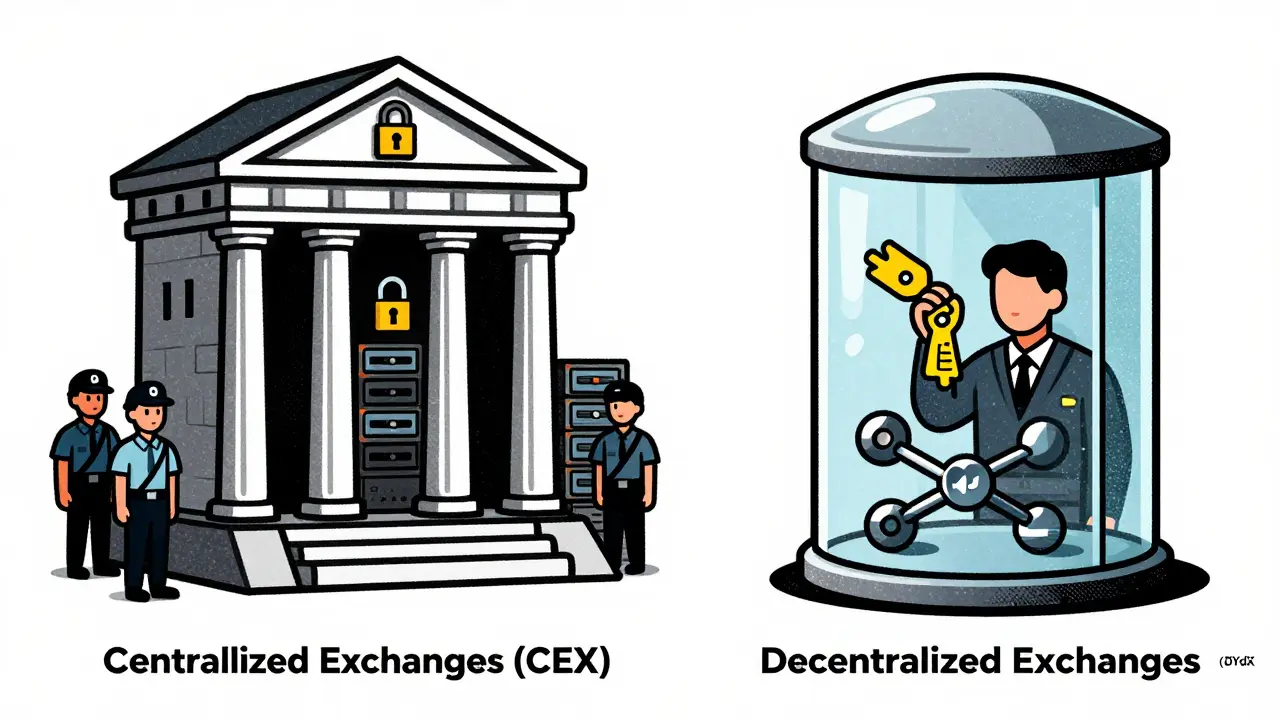
Centralized exchanges remain the most popular choice due to high liquidity and ease of use. They act as intermediaries, holding your funds and matching orders internally or through external liquidity providers.
MEXC: The King of Asset Variety and Low Fees
If your strategy relies on trading obscure altcoins or low-cap tokens, MEXC is currently the standout option. Established in 2018, this platform has aggressively expanded its listings. As of early 2025, MEXC supports over 2,700 spot markets and 1,400+ futures pairs. That is significantly more than any other major competitor.
The financial incentives here are hard to ignore. MEXC charges 0.00% maker fees for spot trading and extremely competitive rates for futures (0.01% maker / 0.04% taker for BTC/USDT). For high-volume traders, these savings compound quickly. They also offer maximum leverage up to 200x, though using that much leverage is generally considered reckless unless you are hedging.
Pros: Massive asset selection, zero maker fees on spot, no KYC required for basic usage in many regions.
Cons: Customer support can be slow during peak volatility, and the interface can feel cluttered for newcomers.
Bybit: User Experience and Stability
Bybit has carved out a niche as the go-to platform for traders who want professional tools without the headache. Serving over 75 million users globally, Bybit focuses heavily on uptime and execution speed. Their infrastructure handles massive spikes in volume without the lag that plagues smaller exchanges.
Bybit offers up to 200x leverage on major pairs like Bitcoin and Ethereum. What sets them apart is their educational ecosystem. They provide comprehensive tutorials, demo trading environments, and clear visualizations of liquidation prices. This makes them ideal for intermediate traders moving from spot to derivatives.
Security-wise, Bybit maintains a robust proof-of-reserves system and uses cold storage for the majority of user funds. However, note that Bybit does not serve US residents due to regulatory constraints.
Binance: The Market Leader
You cannot discuss crypto trading without mentioning Binance. It remains the largest exchange by volume, which means deep liquidity. Deep liquidity ensures that large orders do not slip significantly in price-a critical factor for institutional-sized trades.
Binance offers up to 125x leverage on futures. Their fee structure is standard industry fare: 0.02% maker and 0.04% taker for futures. While not the cheapest, the reliability is unmatched. They support over 600 cryptocurrencies and offer a wide range of products including options, leveraged tokens, and P2P trading.
Warning: Binance faces significant regulatory hurdles in the United States and several European countries. Users in restricted jurisdictions must use Binance.US, which offers far fewer features and lower leverage limits.
OKX: Advanced Tools for Pro Traders
OKX appeals to the technical crowd. Launched in 2017, it now serves over 50 million users. OKX distinguishes itself with a highly customizable dashboard and advanced order types. If you like to tweak every pixel of your trading screen, this is your home.
They offer up to 100x leverage and support both cross-margin and isolated margin modes seamlessly. OKX also provides a Web3 wallet integrated directly into the app, allowing you to bridge between centralized trading and decentralized finance (DeFi) easily. Their security model includes multi-signature wallets and regular third-party audits.
The Decentralized Alternative: dYdX
For those who distrust centralized entities with their private keys, dYdX offers a compelling alternative. It is a non-custodial decentralized exchange (DEX) built primarily on the Starknet layer-2 solution for Ethereum.
Unlike Binance or Bybit, dYdX never holds your funds. You connect your own wallet (like MetaMask), deposit assets, and trade. If the platform were to go bankrupt tomorrow, your funds would still be in your wallet. This eliminates counterparty risk entirely.
dYdX offers up to 20x leverage on perpetual contracts. While 20x seems low compared to MEXC’s 200x, it is sufficient for most serious strategies. The fees are slightly higher (0.02% maker / 0.05% taker), reflecting the cost of blockchain transactions. However, they boast 99.9% uptime, which is exceptional for a DEX.
Trade-off: You need to manage gas fees (though minimal on Starknet) and handle your own seed phrases. There is no customer support chat to call if you make a mistake. You are your own bank.
Regulated Options: Coinbase and BingX
If you prioritize legal compliance over maximum leverage, regulated platforms are essential. Coinbase, licensed in Gibraltar and operating under strict US regulations, caps leverage at 2.5x. This sounds restrictive, but it protects retail investors from catastrophic losses. Coinbase is ideal for long-term holders who want to hedge slightly without taking on extreme risk.
BingX sits in the middle ground. It offers up to 20x leverage, a user-friendly interface similar to social media apps, and strong copy-trading features. This allows beginners to mimic the trades of successful experts, reducing the learning curve.
Comparison Table: Key Metrics at a Glance
| Platform | Max Leverage | Futures Maker Fee | Futures Taker Fee | Type | US Access |
|---|---|---|---|---|---|
| MEXC | 200x | 0.01% | 0.04% | Centralized | Limited |
| Bybit | 200x | 0.02% | 0.055% | Centralized | No |
| Binance | 125x | 0.02% | 0.04% | Centralized | Binance.US Only |
| OKX | 100x | 0.02% | 0.05% | Centralized | Limited |
| dYdX | 20x | 0.02% | 0.05% | Decentralized | Yes (Non-Custodial) |
| Coinbase | 2.5x | Varies | Varies | Centralized | Yes |
How to Choose the Right Platform for You
Your choice depends on three factors: your location, your experience level, and your trading style.
- Check Regulatory Availability: If you live in the US, your options are severely limited. Coinbase and Kraken are the safest bets, though leverage is low. Offshore platforms like Binance and Bybit may block your IP address. Using VPNs violates terms of service and risks permanent fund confiscation.
- Assess Liquidity Needs: If you trade Bitcoin or Ethereum, almost any major exchange works. If you trade small-cap altcoins, check the order book depth. MEXC and KuCoin often have better liquidity for lesser-known tokens.
- Consider Security Preferences: Do you trust a company with your millions? If yes, go with Binance or Bybit. If no, learn how to use dYdX or another DEX. Remember, in DeFi, you are responsible for your own security hygiene.
- Evaluate Fee Sensitivity: High-frequency scalpers should prioritize low maker fees. MEXC is currently the winner here. Swing traders who hold positions for days care less about fees and more about funding rate stability.
Common Pitfalls to Avoid
New margin traders often fall into the same traps. First, they chase high leverage. Starting with 20x or 100x leverage is a fast way to zero out your account. Start with 2x or 3x until you understand how liquidation prices work.
Second, they ignore funding rates. In perpetual futures, you pay or receive interest every 8 hours depending on whether longs or shorts dominate the market. If you hold a position against the trend for weeks, funding fees can eat all your profits.
Third, they neglect withdrawal policies. Always test withdrawing a small amount before depositing large sums. Some platforms delay withdrawals during extreme market volatility to prevent bank runs. Knowing this beforehand saves panic later.
Future Trends in Margin Trading
As we move through 2026, the line between centralized and decentralized exchanges is blurring. Hybrid models are emerging, offering the speed of CEXs with the transparency of DEXs. Expect to see more integration of AI-driven risk management tools that automatically adjust stop-losses based on real-time volatility data.
Regulatory clarity is also improving. Governments are establishing clearer frameworks for derivatives trading, which may force some offshore platforms to localize operations or exit certain markets entirely. Staying compliant is becoming as important as picking the right entry price.
What is the safest platform for crypto margin trading?
Safety depends on your definition. For custodial safety, Binance and OKX have strong track records and proof-of-reserves. For non-custodial safety, dYdX is safer because you retain control of your private keys, eliminating the risk of exchange bankruptcy.
Can I use margin trading platforms in the USA?
Yes, but options are limited. Coinbase and Kraken offer regulated margin and futures trading for US residents. Most international giants like Binance and Bybit restrict access to US IPs due to SEC regulations.
Which platform has the lowest fees for margin trading?
MEXC currently offers the lowest fees, with 0.00% maker fees on spot and very competitive futures rates. Bybit and Binance follow closely with standard industry rates around 0.02% for makers.
What is the difference between cross margin and isolated margin?
In isolated margin, only the funds allocated to a specific trade are at risk. In cross margin, your entire account balance serves as collateral, which can prevent liquidation but risks losing everything if the market moves sharply against you.
Is dYdX better than Binance for beginners?
No. Binance and Bybit are better for beginners due to fiat on-ramps, customer support, and intuitive interfaces. dYdX requires knowledge of web3 wallets and gas fees, making it more suitable for experienced users comfortable with decentralized finance.

Ashley Rodriguez
May 22, 2026 AT 14:56i really appreciate this breakdown because it helps me understand why my previous trades failed so hard i always thought i just had bad luck but now i see that the platform fees and liquidation settings matter so much more than i realized
it is kind of scary to think about how easy it is to lose everything if you do not set your stop losses correctly but reading through the pros and cons for each exchange makes me feel a little bit more confident about trying again with smaller amounts
i am leaning towards bybit because the educational resources sound helpful for someone who is still learning the ropes and i want to make sure i do not get wiped out immediately
Tobias Gjerlufsen
May 23, 2026 AT 16:45you people are trading on these platforms like they are safe havens when in reality they are all just ponzi schemes waiting to collapse
mexc is a joke binance is under investigation every other month and bybit is just a reskin of older tech
the only real safety is holding your own keys and even then you are vulnerable to smart contract exploits or losing your seed phrase which happens to idiots constantly
stop listening to these corporate shills telling you to use their leverage features because they want to harvest your liquidity during volatility spikes
if you cannot afford to lose it do not trade period simple as that
Ellie Riddell
May 24, 2026 AT 02:36oh look another article pretending to be objective while pushing specific exchanges
i suppose we should all ignore the fact that centralized exchanges have a history of freezing accounts during market crashes just to save themselves
but sure let us pretend dYdX is some utopian paradise where nothing goes wrong
real talk though most people here will blow up their accounts within a week regardless of which platform they choose
leverage is for gamblers not investors
Bijan Das
May 24, 2026 AT 14:33this is useless garbage
who cares about maker fees when the whole system is rigged against you anyway
just buy bitcoin and hold it like a normal person instead of gambling your life savings on futures contracts
these articles are written by bots to drive traffic to affiliate links
waste of time
Bridget Coogle
May 25, 2026 AT 18:46i totally agree with ashley that education is key here
starting small is definitely the way to go
it feels overwhelming at first but taking it one step at a time helps
bybit sounds like a good place to start practicing without risking too much capital
we should all support each other in learning rather than being toxic about it
everyone starts somewhere after all
Destiny Kilby
May 26, 2026 AT 19:28the distinction between isolated and cross margin is crucial yet often misunderstood by retail traders
many individuals fail to grasp that cross margin exposes their entire portfolio to risk which can lead to catastrophic losses beyond the initial position
it is imperative to conduct thorough due diligence before engaging in leveraged trading activities
security protocols must also be evaluated carefully as custodial risks remain significant despite proof of reserves initiatives
one should never deposit funds into an exchange without testing withdrawal mechanisms first
this practice ensures that access to capital is maintained during periods of high volatility
Shelby Cantu
May 28, 2026 AT 10:43great info thanks for sharing
i am going to try mexc for the low fees
hope it works out well for me
stay safe everyone
Ruben Michel
May 30, 2026 AT 08:46the author presents a superficial analysis that fails to account for the nuanced regulatory landscape evolving in 2026
while MEXC offers attractive fee structures its lack of robust compliance measures renders it unsuitable for serious institutional participants
Bybit’s user experience is commendable however its exclusion from the US market severely limits its global relevance
Binance remains the dominant player not merely due to volume but because of its sophisticated liquidity provision algorithms
One must consider that decentralized options like dYdX suffer from inherent scalability issues despite their non-custodial advantages
The comparison table provided is adequate but lacks depth regarding funding rate differentials across various pairs
Jerry CUNNINGHAM SR
May 30, 2026 AT 23:56I appreciate the detailed overview provided in this article
It is important for traders to understand the risks associated with leverage before committing funds
The explanation of isolated versus cross margin is particularly useful for those new to derivatives trading
I would encourage readers to verify the regulatory status of any platform they choose to use based on their jurisdiction
Safety should always be the primary concern when dealing with financial assets
Thank you for compiling this information in such a clear and organized manner