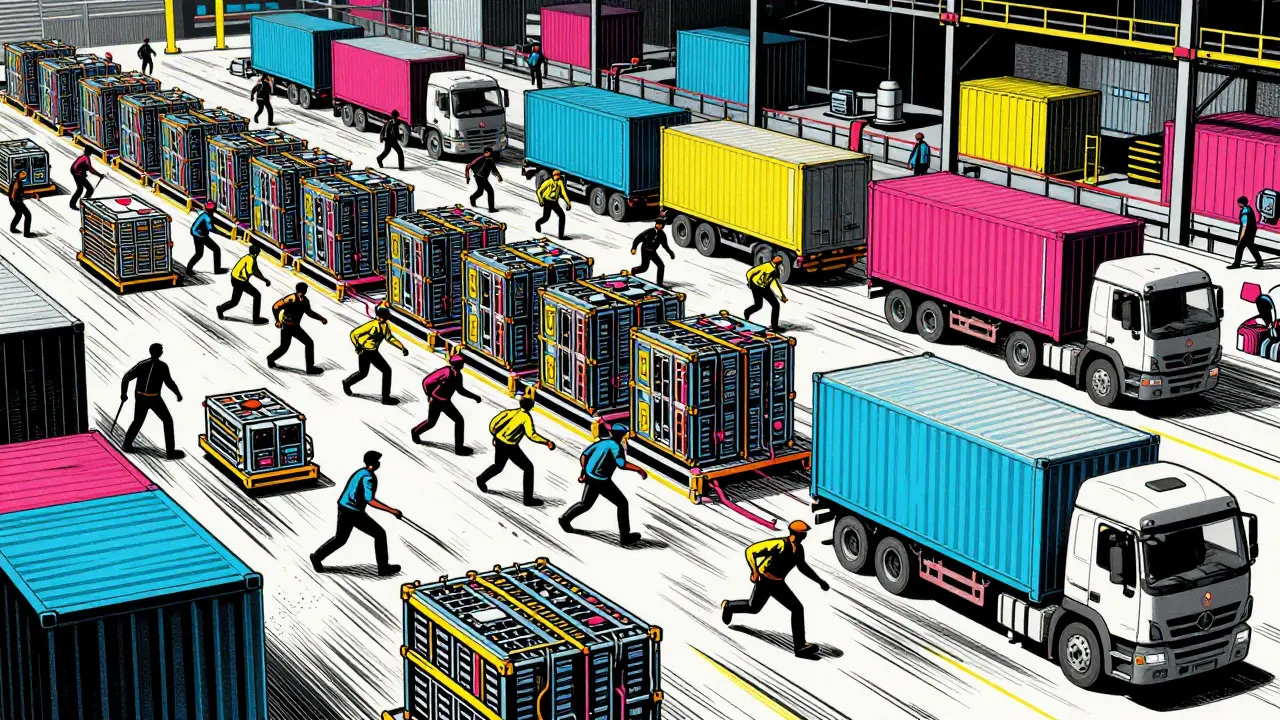
Imagine packing up an entire industrial factory-thousands of humming machines, miles of cabling, and massive cooling systems-and moving it across an ocean in a matter of weeks. That is exactly what happened to Bitcoin mining operations after China slammed the door shut on cryptocurrency in 2021. It wasn't just a small shift; it was the largest geographical migration of industrial infrastructure in history.
If you have been following the news, you know that China used to control more than 75 percent of the global Bitcoin network's computing power. By mid-2021, that number had plummeted. But where did all those miners go? The answer reshaped the global energy map and created new crypto hubs in places you might not expect. Let’s look at who won this relocation game and why they chose their destinations.
The Speed of the Exodus
To understand where the miners went, we first need to grasp how fast they left. In September 2020, data from the Cambridge Centre for Alternative Finance (CCAF) showed China holding a commanding 75.5 percent share of global mining power. By April 2021, that figure dropped to 46 percent. This wasn't a slow decline; it was a panic-driven sprint.
The trigger was a comprehensive regulatory crackdown by the Chinese government. Unlike previous warnings aimed at traders, this ban targeted the miners directly. Announcements came from top-ranking government committees, leaving local officials with no choice but to enforce strict restrictions. The message was clear: get out, or lose your power supply.
What made this move possible was the unique nature of ASIC (Application-Specific Integrated Circuit) hardware. These machines are modular. You can unplug them, put them in shipping containers, fly them overseas, plug them into a different socket, and start hashing again. There is no heavy construction required, just electricity and internet. This portability turned a potential disaster into a logistical challenge that miners were surprisingly well-equipped to handle.
Kazakhstan: The Coal-Powered Haven
When the dust settled, one country stood out as the biggest winner: Kazakhstan. If you are looking for the primary beneficiary of the Chinese exodus, it is here. Between September 2019 and April 2021, Kazakhstan’s share of global mining power surged almost six-fold, jumping from a mere 1.4 percent to 8.2 percent.
By October 2021, reports indicated that Kazakhstan had surpassed China to become the second-largest cryptocurrency mining nation globally. Why Kazakhstan? The answer lies in its energy infrastructure. The country sits atop abundant coal mines and has a grid capable of handling massive industrial loads. For miners fleeing expensive or unstable environments, Kazakhstan offered cheap, reliable, and plentiful electricity.
| Country | Share in Sept 2019 | Share in April 2021 | Primary Energy Source |
|---|---|---|---|
| China | ~67% | 46% | Coal/Hydro |
| United States | ~7% | ~35%* | Mixed/Renewable |
| Kazakhstan | 1.4% | 8.2% | Coal/Natural Gas |
| Russia | ~10% | 6.8% | Natural Gas/Hydro |
*Note: US share estimates vary by source due to decentralized reporting, but it became the dominant leader post-migration.
However, this boom came with caveats. The reliance on coal raised environmental concerns about the carbon intensity of Bitcoin mining. Additionally, the sudden influx of power-hungry machines strained the local grid, leading to occasional blackouts in rural areas. Yet, for the miners, the trade-off was worth it: stability and low costs.
Texas: The American Powerhouse
While Central Asia absorbed a significant portion of the migration, the other major destination was right under our noses in North America: Texas. The United States emerged as the new global leader in Bitcoin mining, and Texas accounted for roughly half of the 5.2 gigawatts of capacity being installed across the country.
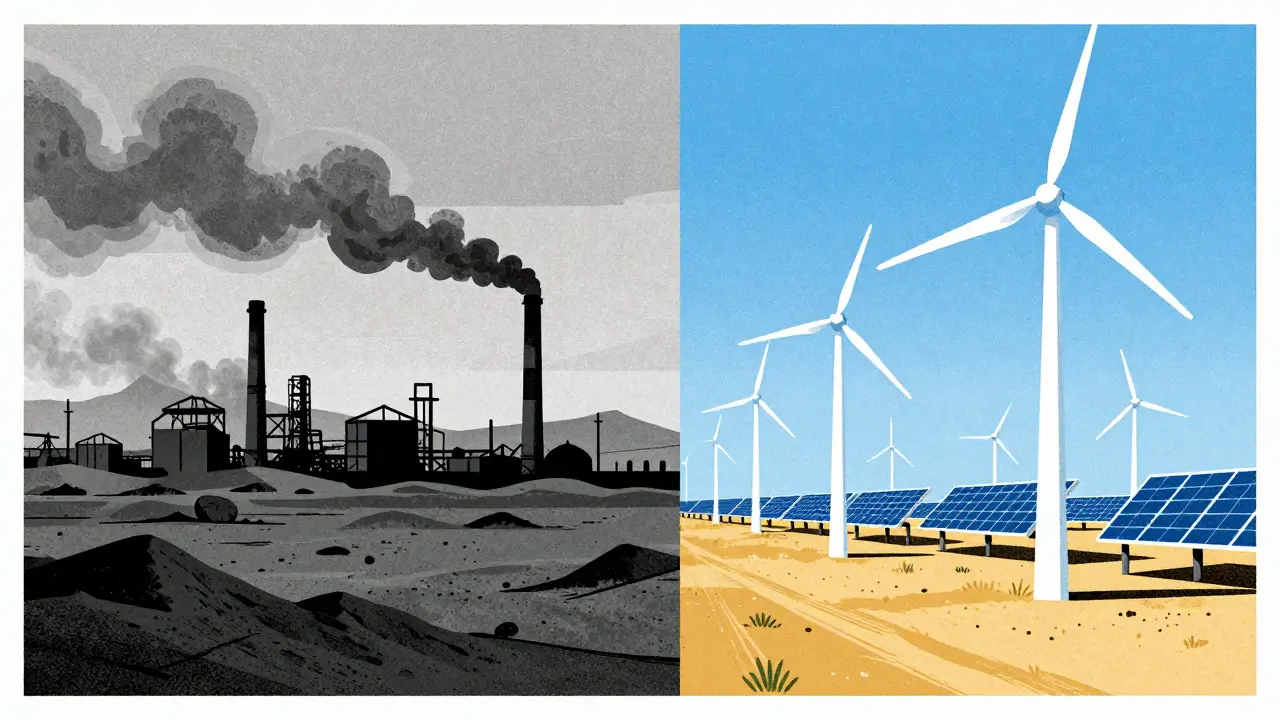
Why Texas? It comes down to three factors: deregulation, energy mix, and political support. Texas has a deregulated energy market, which means miners can negotiate direct contracts with power plants. More importantly, the state produces some of the cheapest electricity in the world, especially when factoring in wind and solar energy. About 22.5 percent of Texas’ energy mix comes from renewables, allowing miners to market their operations as "green" compared to their coal-heavy counterparts in Kazakhstan.
There is also a strategic benefit for the grid. During peak demand times, such as extreme heatwaves, mining farms can voluntarily reduce their power consumption. This flexibility helps stabilize the grid, preventing outages. In return, miners often receive favorable rates. It is a symbiotic relationship that has attracted major mining companies to set up permanent bases in the Lone Star State.
Other Notable Destinations
Kazakhstan and Texas were the headlines, but they weren’t the only options. The migration was diverse, driven by miners seeking any combination of low cost, legal clarity, and available power.
- Russia: With its vast natural gas reserves and hydroelectric dams in Siberia, Russia remained a steady player. Its share hovered around 6.8 percent in 2021. However, geopolitical tensions and subsequent sanctions have since complicated its role in the global mining landscape.
- Iran: Iran saw a brief surge, reaching 4.6 percent of global hash rate. The government initially encouraged mining to utilize stranded natural gas. However, frequent internet shutdowns and policy reversals made it a risky long-term home for many operators.
- Canada: Known for its cold climate (which reduces cooling costs) and abundant hydroelectric power, Canada has long been a friendly jurisdiction for crypto. While it didn't see the same explosive growth as Kazakhstan, it remains a stable hub for institutional miners.
- Pakistan: Some smaller operations moved to Pakistan due to very low electricity tariffs, though regulatory uncertainty there has kept large-scale commercial farms at bay.

Impact on Decentralization
One of the biggest fears before the ban was that Bitcoin would become too centralized if one country controlled everything. Ironically, the ban achieved the opposite. By forcing miners to scatter across multiple continents, the network became more resilient.
Before 2021, if China decided to cut off the internet for miners, the Bitcoin network could have stalled. Now, with significant portions of the hash rate located in the US, Kazakhstan, Russia, and Canada, no single government can easily shut down the network. This geographic distribution is a core tenet of Bitcoin’s design, and the Chinese exodus inadvertently strengthened it.
However, decentralization isn't perfect. We still see clusters of power. If Kazakhstan faces a grid crisis, or if Texas passes unfavorable legislation, the network feels the impact. The lesson here is that while the map has changed, the search for cheap, stable energy remains the driving force behind every miner’s decision.
The Future of Mining Geography
As we look toward 2026, the initial shock of the migration has worn off. The industry is now focused on sustainability and efficiency. Miners are increasingly looking for stranded energy sources-power that is generated but goes to waste because it’s too far from cities. This includes flared natural gas in oil fields or excess hydroelectricity during rainy seasons.
We are also seeing a rise in "stranded asset" mining, where facilities are built near renewable energy projects that cannot connect to the main grid. This trend suggests that future migrations won't just be about escaping bans, but about optimizing for green credentials and long-term energy security.
The Chinese crypto mining exodus was a pivotal moment. It proved that Bitcoin mining is not tied to any single location. It is a global, mobile industry that follows the path of least resistance-and lowest electricity bills. Whether that leads to a greener future or just moves the carbon footprint elsewhere remains the key question for regulators and investors alike.
Did Bitcoin mining completely leave China?
Officially, yes. The Chinese government banned all cryptocurrency mining activities. While some small-scale, underground operations may still exist, China's share of the global hash rate dropped from over 75% to less than 5% in most recent estimates. The vast majority of industrial-scale mining has relocated abroad.
Why did so many miners choose Kazakhstan?
Kazakhstan offered a combination of cheap electricity, primarily from coal, and a relatively easy entry process for foreign businesses. Its proximity to China also made logistics easier for miners moving equipment across borders. However, this led to grid instability in some regions due to the sudden spike in power demand.
Is Bitcoin mining in Texas environmentally friendly?
It depends on the specific mine. Texas has a high percentage of renewable energy, including wind and solar. Many miners in Texas contract directly with renewable energy providers, making their operations cleaner than those relying on coal. However, the overall grid still uses fossil fuels, so it is not entirely carbon-neutral.
How does the relocation affect Bitcoin's price?
In the short term, the migration caused volatility as the network hash rate dipped temporarily while machines were being moved. Long-term, the increased decentralization and resilience of the network are viewed positively by investors. It reduced the risk of a single country controlling the majority of the network.
Can miners move again if regulations change?
Yes. The 2021 exodus proved that mining infrastructure is highly portable. ASIC machines can be shipped and reconnected quickly. This mobility allows miners to chase the best economic conditions, but it also makes them vulnerable to sudden regulatory changes in their host countries.



Erica Johnson
August 9, 2026 AT 11:45Actually, the article misses a crucial detail about the logistics. It wasn't just 'shipping containers' for everyone. Many miners had to dismantle their setups piece by piece because customs in Kazakhstan were incredibly strict about importing electronic components without proper declarations. I read several reports from operators who lost entire fleets of S19s at the border because they couldn't prove the hardware wasn't stolen or sanctioned goods. The 'modular' nature is true, but the bureaucratic nightmare was real. :/
Ken G
August 10, 2026 AT 07:44they moved it all to kazakhstan which runs on coal basically so we are just moving pollution not solving it and now texas is using wind power which never works when you need it most during a heat wave like baylor 2021 remember that the grid failed and people froze while bitcoin kept mining because the miners have priority contracts it is rigged system designed by elites to keep their wealth safe while regular people suffer
Alex Di Mango
August 11, 2026 AT 17:04I think there's value in looking at this from a purely technical standpoint. The portability of ASICs is genuinely fascinating engineering. To think that an industry could physically relocate across oceans in weeks is unprecedented. It shows how adaptable these operations are. While the environmental concerns are valid, the decentralization aspect is a huge win for the network's resilience. It’s interesting to see how global energy markets are adapting to this new demand.
Amor Jordan
August 13, 2026 AT 07:51It feels so overwhelming to think about the sheer scale of this migration. Thousands of machines, humming away, consuming enough power to light up small cities. And yet, here we are, debating the ethics of it. I worry about the communities in Kazakhstan that faced blackouts while these farms ran hot. Their daily lives were disrupted for a digital asset many of them don't even understand. It’s a stark reminder of how globalized our problems have become.
Nick Darring
August 14, 2026 AT 20:36You guys are really giving too much credit to the 'decentralization' narrative here. Let's be real, it didn't go to fifty different countries. It went to two or three specific jurisdictions that happened to have cheap power and lax regulations. That isn't decentralization; that's just consolidation into new hubs. If Texas passes a law tomorrow banning crypto, half the hash rate moves again. It's not resilient, it's just nomadic. And honestly, I think the US government is quietly encouraging this to gain geopolitical leverage over China, which is kind of creepy if you think about it. They want control of the ledger, not freedom.
Eden Tadesse
August 16, 2026 AT 09:37i mean its pretty crazy how fast they moved everything. i always thought mining rigs were like big heavy servers that needed special cooling rooms but apparently u can just pack em in boxes and fly em out. wild times we live in lol
Eric Zehr
August 17, 2026 AT 18:21The point about stranded energy is the most important takeaway here. We often hear criticism about Bitcoin's energy consumption, but what gets overlooked is that a significant portion of this mining activity utilizes energy that would otherwise be flared or wasted. By providing a market for this excess power, miners are actually adding economic value to remote renewable projects that couldn't justify the cost of building transmission lines to urban centers. It’s a symbiotic relationship that helps stabilize grids and monetize inefficiencies.