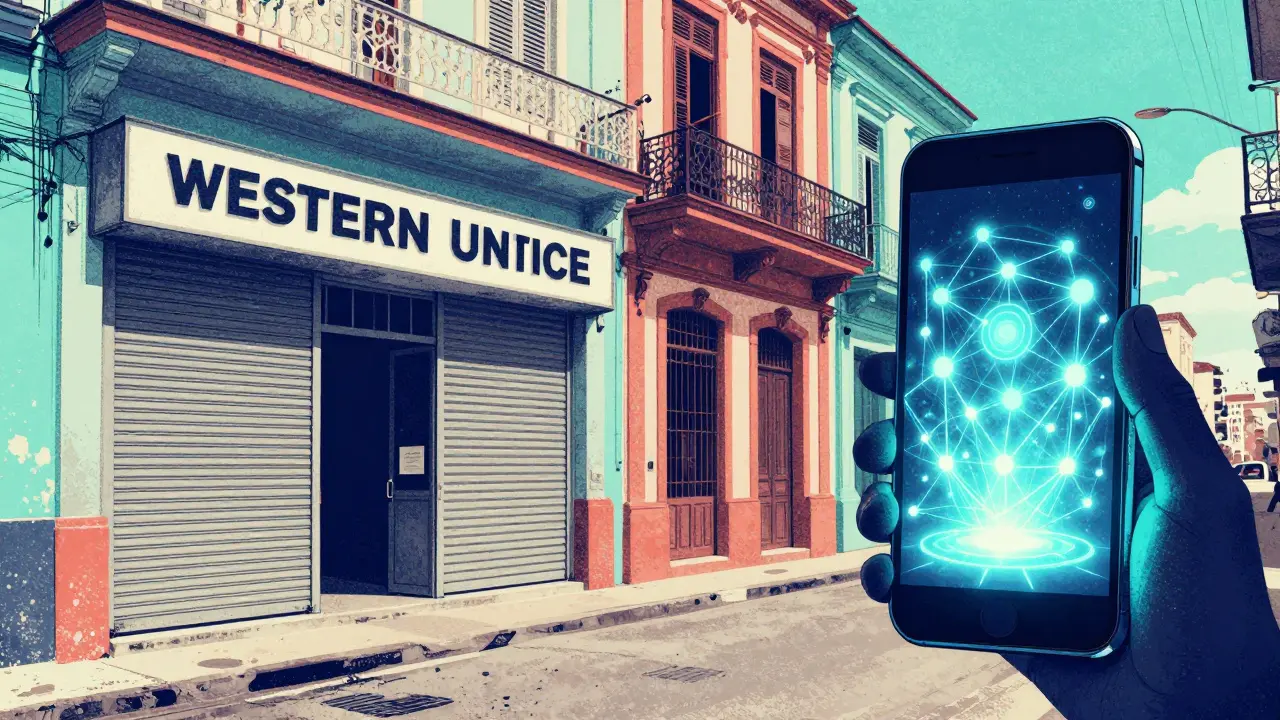
Imagine living in a country where your credit card doesn't work, you can't use PayPal to buy something online, and the local Western Union office just shut its doors. For millions of people in Cuba, this isn't a hypothetical scenario-it's daily life. For decades, U.S. economic sanctions have essentially walled off the island from the global financial system. But while traditional banks said no, blockchain technology provided a way around the fence. Cuban crypto adoption is a strategic shift where a sanctioned nation embraces digital assets to maintain economic survival and financial connectivity. Surprisingly, the Cuban government didn't fight this wave; they rode it.
The Pivot from Restriction to Legalization
Most people expect a state-controlled economy to ban anything that decentralizes power, but Cuba did the opposite. In August 2021, the government officially recognized cryptocurrencies as legal payment methods. This wasn't out of a sudden love for decentralization, but out of sheer necessity. The Central Bank of Cuba (BCC) issued Resolution 215, which gave the bank the power to regulate digital currencies and license service providers.
Why the sudden change? Because the old ways of moving money were dying. When Western Union closed over 400 locations across the island in 2020, the primary artery for family remittances was severed. The government realized that if the people couldn't get money from relatives abroad, the economy would collapse further. By legalizing crypto, they created a legal bridge for funds to enter the country without needing a U.S.-based clearinghouse.
How the Regulatory Framework Actually Works
Cuba isn't just letting the wild west run loose. They've built a surprisingly structured system. To operate a crypto business legally, you can't just start a website; you need a license from the BCC. The bank evaluates whether a proposal serves the "socio-economic interest" of the nation and checks the applicant's background.
By 2024, these rules became even more detailed. Companies must now follow strict anti-money laundering (AML) protocols. It's a bit of a paradox: a country trying to bypass sanctions is using the same high-level compliance standards that the U.S. and EU demand. This is a calculated move to make their crypto ecosystem look legitimate to international partners and avoid being labeled as a haven for illicit finance.
| Feature | Traditional Finance (USD/EUR) | Cuban Crypto Ecosystem |
|---|---|---|
| Accessibility | Blocked by OFAC sanctions | Accessible via private wallets |
| Remittance Speed | Slow, expensive, or unavailable | Near-instant, peer-to-peer |
| Government Stance | Strict state control | Regulated but legal (since 2021) |
| Primary Utility | Official trade (limited) | Family support and online shopping |
From Wallets to Mining Farms
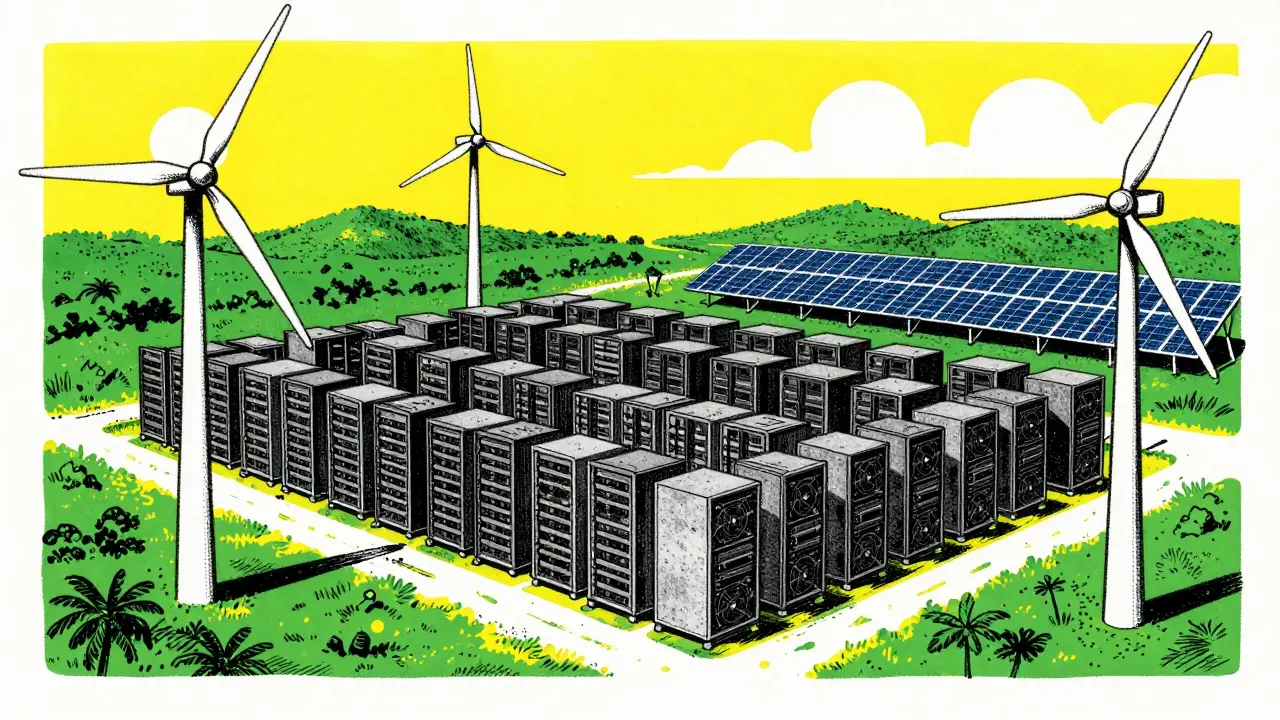
The adoption didn't stop at just sending money. By 2025, Cuba took a leap into the industrial side of blockchain. Cryptocurrency mining is the process of using hardware to secure a blockchain network in exchange for new coins. Instead of banning miners, the government legalized the practice and set energy consumption caps.
They didn't just let individuals plug in rigs at home; they established large-scale mining farms in 2023. The smart part? They placed these farms in regions with high wind and solar potential. This aligns their mining operations with sustainable energy goals and reduces the strain on the aging national power grid. By partnering with international tech firms, Cuba is effectively trading its renewable energy and land for technical infrastructure and workforce training.
Who is Actually Using Crypto in Cuba?
Current data shows that between 100,000 and 200,000 Cubans are active users. While that's only about 1-2% of the population, it's a huge number considering the limited access to high-speed internet and the high cost of smartphones. Most of these users aren't "trading the dip" or speculating on meme coins; they are using Bitcoin, the first decentralized digital currency , Ethereum, and Avalanche to survive.
For a young professional in Havana, crypto is the only way to pay for a software subscription or buy a piece of equipment from an overseas vendor. For a grandmother in Santiago, a stablecoin transfer from a son in Miami is faster and safer than trying to find a middleman to smuggle cash across the border. It's an essential tool for financial autonomy in a place where the traditional system is broken.
The Risks: Sanctions and State Control
It's not all smooth sailing. The U.S. Treasury's OFAC (Office of Foreign Assets Control) still maintains a blacklist of sanctioned entities. This creates a massive headache for international exchanges. Many Cuban companies are indirectly controlled by sanctioned groups like GAESA, meaning a crypto exchange might accidentally process a transaction for a prohibited entity.
This "gray area" is why many Cubans still rely on peer-to-peer (P2P) markets rather than centralized exchanges. If you use a big global exchange, you risk your account being frozen the moment you mention "Havana" in your KYC (Know Your Customer) documents. The result is a dual system: a regulated, state-sanctioned layer for big business and mining, and a shadow P2P layer for the average citizen.

A Blueprint for Other Sanctioned Nations
Cuba has essentially turned itself into a laboratory for sanctions circumvention. By moving from a policy of "ignore it" to "regulate it," they've provided a roadmap for other nations facing economic isolation. They've proven that digital assets can decouple a country's basic financial functionality from the whims of foreign geopolitical disputes.
The lesson here is that blockchain isn't just for tech enthusiasts in Silicon Valley; it's a lifeline for people in restricted economies. As the infrastructure improves and more people get online, the percentage of crypto users in Cuba will likely climb. They aren't innovating for the sake of technology; they are innovating because they have no other choice.
Is it legal to own Bitcoin in Cuba?
Yes, it is legal. In August 2021, the Central Bank of Cuba recognized cryptocurrencies as legal payment methods, making it one of the few countries to officially embrace digital assets in this way.
Why did Cuba legalize cryptocurrency?
The primary reason was the collapse of traditional remittance channels, such as Western Union, and the ongoing impact of U.S. economic sanctions. Crypto allows Cubans to receive money from family abroad and make online purchases that are otherwise blocked.
Can anyone start a crypto mining business in Cuba?
Mining is legal, but it is highly regulated. Operators must follow government guidelines, including licensing requirements and energy consumption caps, to ensure they don't crash the local power grid.
Do Cubans use centralized exchanges?
Some do, but many avoid them because of U.S. sanctions. Since many global exchanges comply with OFAC rules, they may freeze accounts associated with Cuba. This has led to a strong preference for peer-to-peer (P2P) trading.
Which cryptocurrencies are most popular in Cuba?
Bitcoin and Ethereum are the most widely used, though there is growing interest in Avalanche and various stablecoins that allow users to avoid the volatility of the crypto market.
What's Next?
If you're tracking this trend, keep an eye on how the BCC handles the next wave of licenses. For the average user, the biggest hurdle remains internet stability. As 5G and better broadband reach more provinces, the shift from cash to digital assets will likely accelerate. If you're an investor or developer, the real story isn't the coins themselves, but the infrastructure partnerships Cuba is forming to power its mining farms.

Prachi Bhadarge
April 20, 2026 AT 05:58Oh sure, because nothing says "financial freedom" like a government-licensed crypto ecosystem where you need a permit from the central bank to breathe. Real decentralized magic right there.
Shantal Sanjur
April 20, 2026 AT 06:49Give me a break. You really think they're doing this for the "people"? Please.
This is just a fancy way for the regime to track every single cent moving across the border while pretending to be tech-forward. It's probably all part of a larger play to integrate with some shadowy digital currency network that'll eventually make everyone's wallet accessible to the state. I've seen this pattern a million times. The "regulatory framework" is just a euphemism for a digital leash. Plus, look at the timing. They wait until the sanctions actually bite, then suddenly "discover" blockchain? Yeah, totally organic. It's a trap to get people to move their assets into a system the government can monitor and freeze whenever someone speaks up. Wake up people, the blockchain is just another tool for the panopticon in this case. Absolute joke.
Joshua Salwen
April 21, 2026 AT 16:01LITERALLY INSANE that people think this is a good ideaaa!!! Like, you're telling me they're actually mining with wind power while the rest of the country is in the dark?? THE AUDACITY!! It's so dramatice that we're acting like this is a blueprint for other nations when it's basically just a desperate gamble!! I can't even deal with how lopsided this whole thing is!
Gillian Kent
April 22, 2026 AT 05:46Its lawly interesting to see how different culturs handle these things. I think its heartening that families can at least send money to there grandparents without some middle man taking a huge cut. People just want to help their kin regardless of the poltics.
Kevin Lư
April 23, 2026 AT 19:35It's kind of wild but honestly, who can blame them? If you're just trying to buy a software sub or feed your family, you're gonna use whatever works. I mean, the ethics of the govt controlling it are messy, but a grandma getting money from her son is a win in my book.
Chintu Parikh
April 25, 2026 AT 16:45I find this development to be truly remarkable. It is highly commendable that the integration of renewable energy with mining infrastructure is being prioritized to protect the national power grid. Such a synergy between environmental sustainability and financial innovation could indeed serve as a pioneering example for other developing nations. I am genuinely optimistic that this approach will foster a more resilient economic environment for the Cuban citizenry, and I believe that further international cooperation in technical training will yield exceptional results for the local workforce. It is a testament to human ingenuity that technology can bridge such profound gaps.
Mike Kempenich
April 27, 2026 AT 16:40Exactly. It's a practical solution to a desperate problem. If the old systems are broken, you build new ones. Glad to see people finding a way to survive and stay connected despite the restrictions.