You’ve probably heard the buzz. You see headlines about Bitcoin, Ethereum, and smart contracts. But there is a quiet revolution happening behind the scenes that doesn’t always get the spotlight. It’s called Distributed Ledger Technology (DLT). Most people think DLT and blockchain are the same thing. They aren’t. Thinking they are is like thinking all cars are Ferraris. Sure, a Ferrari is a car, but not every car needs to be built for racing.
DLT is the broader umbrella. Blockchain is just one specific type of DLT. If you’re trying to solve real-world business problems-like tracking supply chains, verifying identities, or settling trades-you might find that standard blockchain is actually too slow, too expensive, or too rigid. That’s where understanding the wider world of DLT comes in. Let’s break down what DLT really is, why it matters, and how it differs from the blockchain hype you see everywhere.
What Exactly Is Distributed Ledger Technology?
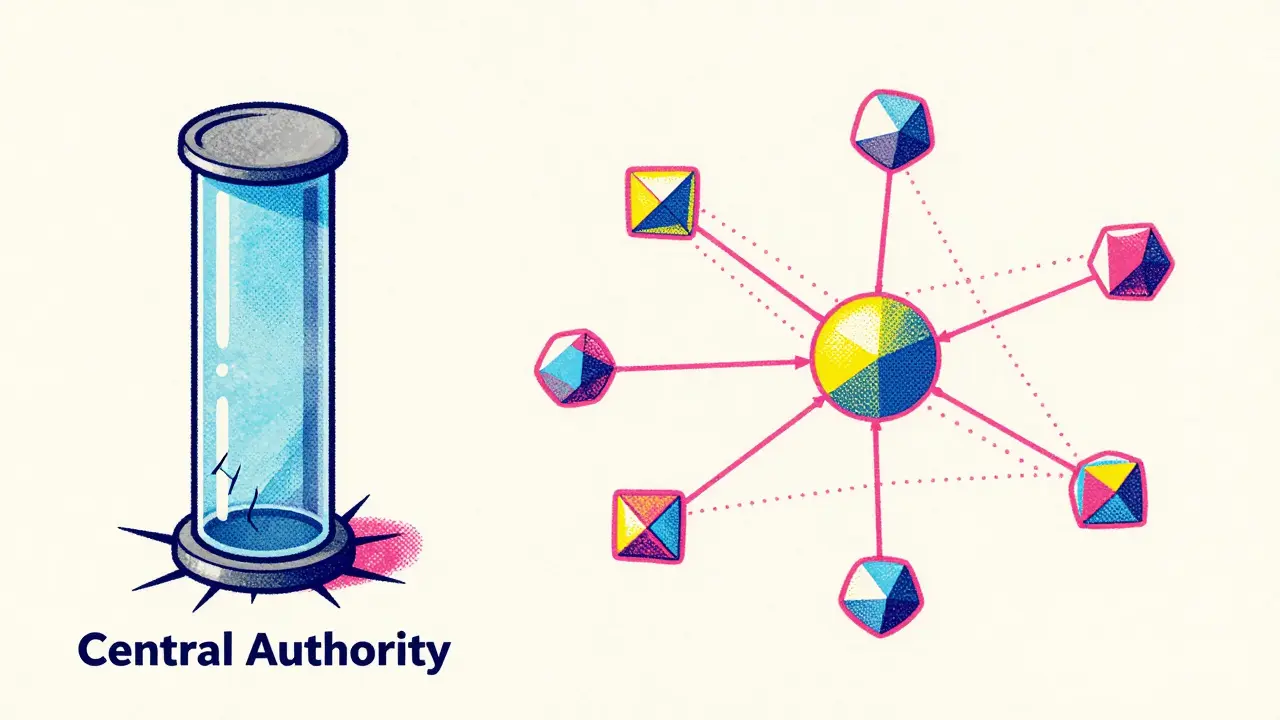
At its core, DLT is a database. But it’s not your typical database. In a traditional setup, one central authority-like a bank or a government agency-holds the master copy of the data. If their server goes down, everything stops. If they make a mistake, everyone suffers. DLT changes this dynamic completely.
Imagine a shared digital spreadsheet. Instead of one person controlling it, copies of that spreadsheet exist on multiple computers across different locations. When someone adds new information, the network agrees on whether it’s valid, and then every single copy updates simultaneously. This happens without needing a middleman to say, "Yes, this is correct."
This decentralized approach offers three major benefits:
- Resilience: Since the data lives on many nodes, there is no single point of failure. If one computer crashes, the network keeps running.
- Tamper Resistance: Once a record is added, it’s incredibly hard to change it secretly. Cryptography locks the data in place, making fraud much harder.
- Transparency: Depending on how it’s set up, participants can see exactly what’s happening in real-time. Trust isn’t assumed; it’s verified by the system itself.
The key takeaway here is that DLT removes the need for a central arbitrator. It shifts trust from institutions to code and consensus.
DLT vs. Blockchain: The Critical Distinction
This is where most people get confused. Blockchain is a *type* of DLT, but it has specific rules that don’t apply to all distributed ledgers. To understand why this matters, we need to look at the architecture.
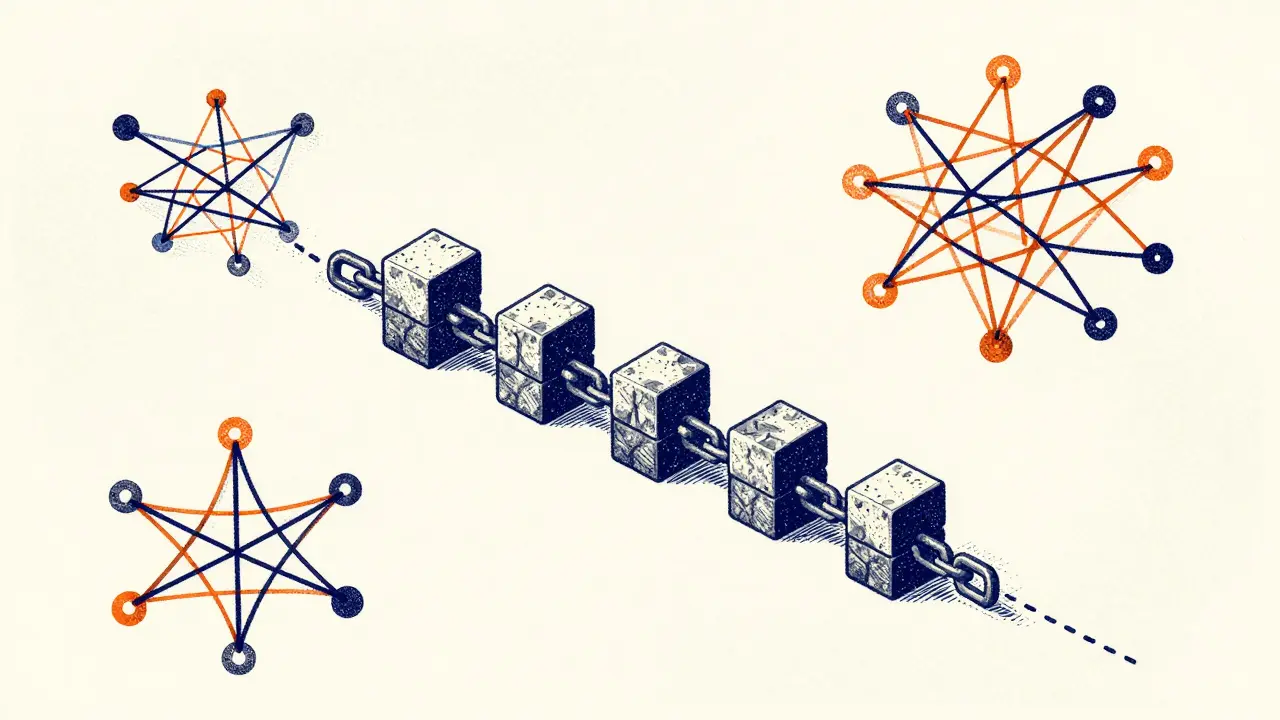
Blockchain, as the name suggests, links blocks of data together in a linear chain. Each block must contain a reference to the previous one. This structure is great for public cryptocurrencies like Bitcoin because it ensures immutability through energy-intensive processes like Proof-of-Work. But for enterprise use cases, this rigidity can be a bottleneck.
DLT systems are more flexible. They don’t have to arrange data in a strict linear sequence. They can organize data in graphs, trees, or other structures that suit the specific application better. Here is a quick comparison to clear up the confusion:
| Feature | Blockchain | General DLT |
|---|---|---|
| Data Structure | Linear chain of blocks | Flexible (graphs, trees, etc.) |
| Consensus Mechanism | Often requires heavy computation (e.g., PoW) | Can use lighter, faster methods |
| Token Requirement | Usually requires native tokens | No tokens required |
| Scalability | Limited by block size and time | Generally higher throughput |
| Trust Model | Trustless (strangers verify) | Can be permissioned (known parties) |
Notice the token requirement? Many enterprises don’t want to issue their own cryptocurrency to run their internal systems. DLT allows them to build secure, distributed systems without dealing with the regulatory headaches of tokenization. This flexibility is why major banks and tech companies are looking beyond pure blockchain solutions.
How DLT Works Under the Hood
To appreciate why DLT is powerful, you need to understand the mechanics. It relies on peer-to-peer (P2P) architecture. Every node in the network acts as both a client and a server. There is no central server hosting the data.
When a transaction occurs, it is broadcast to the network. Nodes validate this transaction based on pre-agreed rules. Once validated, the transaction is added to the ledger. Crucially, this update propagates to all nodes almost instantly. This synchronization ensures consistency. Everyone sees the same truth.
The security comes from cryptography. Hash functions create unique digital fingerprints for each piece of data. If someone tries to alter a past record, the hash changes, and the rest of the network immediately flags it as invalid. This makes historical data practically immutable.
Unlike blockchain, which often prioritizes security over speed, DLT systems can be tuned for performance. For example, a private DLT network used by a consortium of banks might prioritize fast settlement times over absolute anonymity. This configurability is a huge advantage for businesses.
Real-World Applications Beyond Crypto
If you think DLT is only for Bitcoin, you’re missing the bigger picture. The technology is being deployed in sectors where trust and efficiency are critical. Here are some concrete examples:
Supply Chain Management
Companies like Walmart and Maersk use DLT to track goods from origin to shelf. Because every step is recorded on an immutable ledger, counterfeit products become nearly impossible to hide. Consumers can scan a QR code and see the entire history of their food or clothing. This transparency reduces waste and builds consumer trust.
Financial Services
Banks are using DLT to streamline cross-border payments. Traditional international transfers can take days due to intermediaries. DLT enables near-instant settlement between financial institutions. BBVA, for instance, has piloted DLT systems to automate trade finance documents, reducing paperwork and errors significantly.
Digital Identity
Identity theft is a massive problem. DLT offers a solution by giving individuals control over their digital identities. Instead of storing passwords on vulnerable corporate servers, users can store encrypted identity credentials on a distributed ledger. They grant access to services without revealing their full personal data. This enhances privacy while maintaining security.
Voting Systems
Electoral integrity is crucial for democracy. DLT-based voting systems allow for transparent, tamper-proof elections. Voters can verify their vote was counted without compromising ballot secrecy. While still in early stages, pilots in countries like Estonia show promising results.
Why Enterprises Are Choosing DLT Over Blockchain
So, why would a company choose a general DLT platform over a well-known blockchain like Ethereum? The answer usually comes down to scalability and control.
Public blockchains are open to anyone. This is great for decentralization but bad for privacy. A company doesn’t want its competitors seeing its proprietary data on a public ledger. Private DLT networks solve this by restricting access to authorized participants only. These permissioned networks are faster, cheaper, and more compliant with regulations like GDPR.
Also, consider energy consumption. Proof-of-Work blockchains consume massive amounts of electricity. Many DLT alternatives use consensus mechanisms like Practical Byzantine Fault Tolerance (PBFT) or Raft, which are far more energy-efficient. For environmentally conscious organizations, this is a dealbreaker.
Finally, interoperability. Modern businesses use dozens of software systems. DLT platforms are often designed to integrate seamlessly with existing enterprise resource planning (ERP) systems. Blockchain solutions sometimes require significant re-engineering to fit into legacy infrastructure.
The Future of Distributed Ledgers
We are still in the early innings of DLT adoption. As standards mature, we will see more hybrid models emerging. Imagine a system that uses a public blockchain for final settlement but a private DLT for daily transactions. This combines the best of both worlds: security and efficiency.
Regulatory frameworks are also evolving. Governments are starting to recognize DLT as a distinct technology category, separate from cryptocurrency speculation. This clarity will encourage more investment and innovation. We can expect to see DLT embedded in everything from healthcare records to property deeds.
The shift is subtle but profound. We are moving away from trusting centralized authorities to trusting distributed systems. DLT provides the technical foundation for this shift. It’s not just about money anymore; it’s about rebuilding trust in a digital world.
Is DLT the same as blockchain?
No, DLT is the broader category. Blockchain is a specific type of DLT that arranges data in a linear chain of blocks. DLT includes other structures like directed acyclic graphs (DAGs) and does not necessarily require the rigid block structure or token incentives found in many blockchains.
Do I need cryptocurrency to use DLT?
Not necessarily. While many public blockchains use tokens to incentivize miners or validators, private DLT networks often do not require any form of cryptocurrency. They rely on pre-established agreements among known participants to validate transactions.
Is DLT secure?
Yes, DLT is highly secure. It uses cryptographic hashing to ensure data integrity and distributes copies across multiple nodes, eliminating single points of failure. However, security depends on proper implementation and the robustness of the consensus mechanism chosen.
What are the main advantages of DLT over traditional databases?
DLT offers greater resilience against attacks and failures, enhanced transparency, and reduced reliance on central authorities. It also provides tamper-evident records, meaning any attempt to alter data is immediately detectable by the network.
Which industries are adopting DLT?
Major industries include finance (for settlements and trade finance), supply chain (for tracking goods), healthcare (for patient records), and government (for voting and land registries). Any sector requiring high levels of trust and data integrity is a candidate for DLT.