
When ZUBR launched in 2020, it didn’t look like another crypto exchange. It didn’t promise 100x leverage or flashy referral bonuses. Instead, it promised something rarer in crypto: fairness. Built by a team with deep finance and tech backgrounds, ZUBR was designed to give every trader - whether they had $100 or $10 million - the same microsecond-speed execution, the same institutional-grade tools, and the same transparent data as the biggest hedge funds. For a brief moment, it felt like crypto was finally growing up.
What Made ZUBR Different?
Most crypto derivatives exchanges back then were either chaotic, unregulated platforms with hidden fees and slow order fills, or they catered only to elite traders who could afford multi-million-dollar co-location deals. ZUBR broke that mold. It claimed the lowest fees on the market and made high-frequency trading infrastructure available to everyone. No pay-to-play. No preferential treatment. If you could sign up, you got the same engine as the pros. Its trading engine was tested by Exactpro, a UK-based firm that audits financial systems for the London Stock Exchange and other major institutions. Exactpro didn’t just run basic tests - they simulated real-world market chaos: sudden price spikes, millions of orders per second, network delays. ZUBR passed. It became the first live digital derivatives exchange to earn that certification. That’s not marketing fluff. That’s the kind of validation banks demand before trusting a platform with billions. Then there was the data transparency. ZUBR was one of the first exchanges to be certified as an A+ Verified Exchange by Nomics. That meant it fed real-time, granular order book data and historical trade records directly into Nomics’ system. Other exchanges at that level? Deribit, IDEX. Not the kind of names you’d expect to see alongside a startup. This wasn’t just about trust - it was about accuracy. If you were building a trading bot or analyzing market trends, you could rely on ZUBR’s data.Blockchain Analytics Built In
ZUBR didn’t just let you trade - it helped you understand why prices moved. It gave every user free access to real-time blockchain analytics, something most platforms charge hundreds or thousands for. Their research team published deep dives on their blog, showing how Bitcoin price swings often followed spikes in exchange balances. If Bitcoin was piling up on exchanges, that meant people were preparing to sell. If Tether (USDT) was flowing into Bitcoin wallets, that signaled buying pressure. This wasn’t guesswork. It was data-driven insight, pulled straight from the blockchain. They showed that 70% of major Bitcoin price moves between 2019 and 2021 were preceded by clear supply/demand signals visible on-chain. For retail traders, this was like getting a free institutional research team. No subscription. No paywall. Just open the dashboard and see what the market was really doing.Compliance That Actually Mattered
While many crypto exchanges were dodging regulators, ZUBR was chasing them. By March 2020, Crystal, a leading blockchain analytics firm, labeled ZUBR’s wallets as a “Trusted Exchange”. That meant ZUBR was doing full KYC and AML checks on every user, following the EU’s 5th Anti-Money Laundering Directive. That’s not common. Even today, many derivatives platforms skip proper identity verification. ZUBR didn’t just comply - it set a benchmark. It also pursued a DLT Provider License in Gibraltar - a jurisdiction known for clear, tech-friendly crypto rules. This wasn’t a shell company trying to hide. This was a company building for the long term.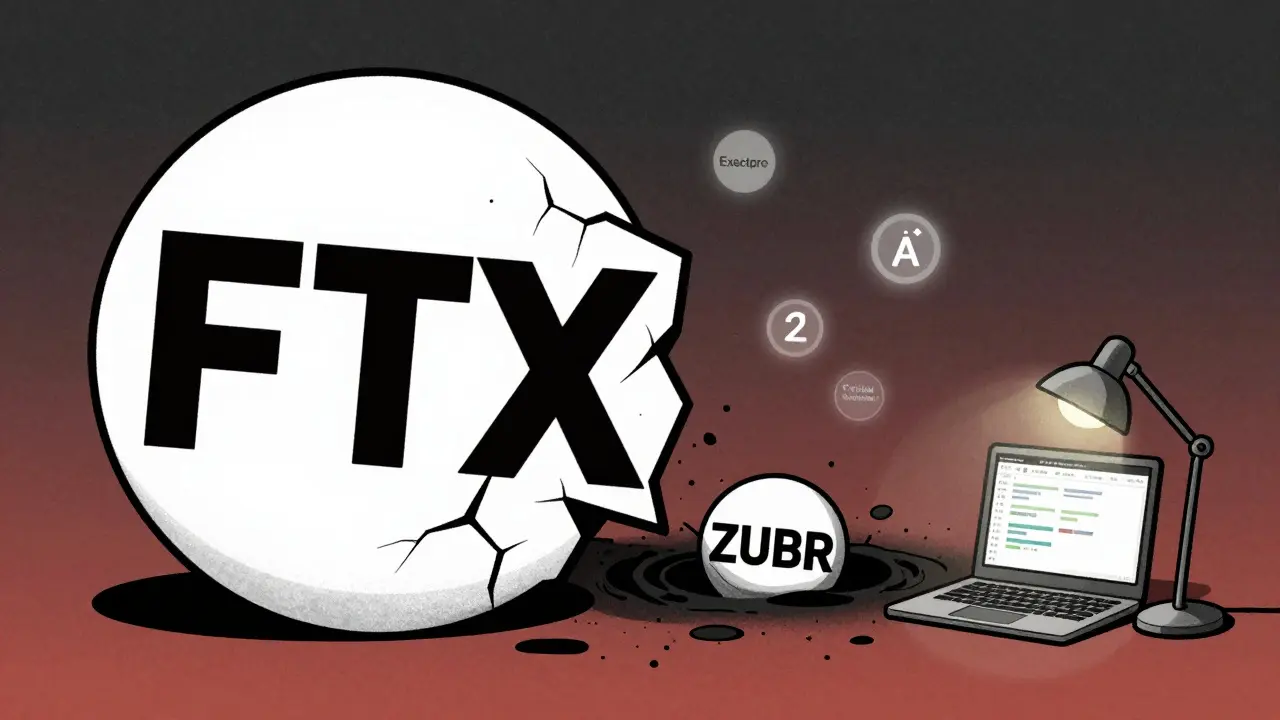
The FTX Acquisition - And What Went Wrong
In early 2021, ZUBR was thriving. It had a solid user base, institutional credibility, and a clean compliance record. Then came FTX. FTX, at the time, was the flashy, fast-growing giant of crypto. It bought ZUBR and rebranded it as ZUBR an FTX Company. On paper, it made sense. FTX wanted institutional-grade infrastructure. ZUBR had it. But FTX was built on hype, not hard infrastructure. Its own systems were opaque. Its finances were a black box. By November 2022, FTX collapsed. Billions vanished. Executives were arrested. The entire crypto world shook. And ZUBR? Vanished with it. There’s no official update. No shutdown notice. No customer communication. The website went dark. The blog stopped updating. The API stopped responding. The Gibraltar license? Likely revoked. The A+ certification? Now meaningless. The exactpro testing? A relic of a better time. ZUBR didn’t fail because its tech was bad. It failed because it got swallowed by a company that didn’t care about integrity - only growth.Why ZUBR Still Matters
Today, most crypto exchanges are either bloated, overpriced giants or sketchy platforms with no accountability. ZUBR proved that wasn’t the only way. It showed that:- Transparency isn’t optional - it’s the foundation of trust.
- Performance can be tested and verified by third parties - not just claimed.
- Retail traders deserve the same tools as institutions - and they’ll use them.
- Compliance isn’t a burden - it’s a competitive advantage.
What Happened to ZUBR’s Users?
No one knows. There are no public reports of user compensation. No class-action lawsuits mention ZUBR specifically. No Reddit threads from former users. No Trustpilot reviews. That silence speaks louder than any review could. If you had funds on ZUBR, you were likely caught in the FTX collapse. Your assets probably went into the same black hole as everyone else’s. There’s no recovery path. No portal. No contact. Just a ghost site.Alternatives That Actually Deliver
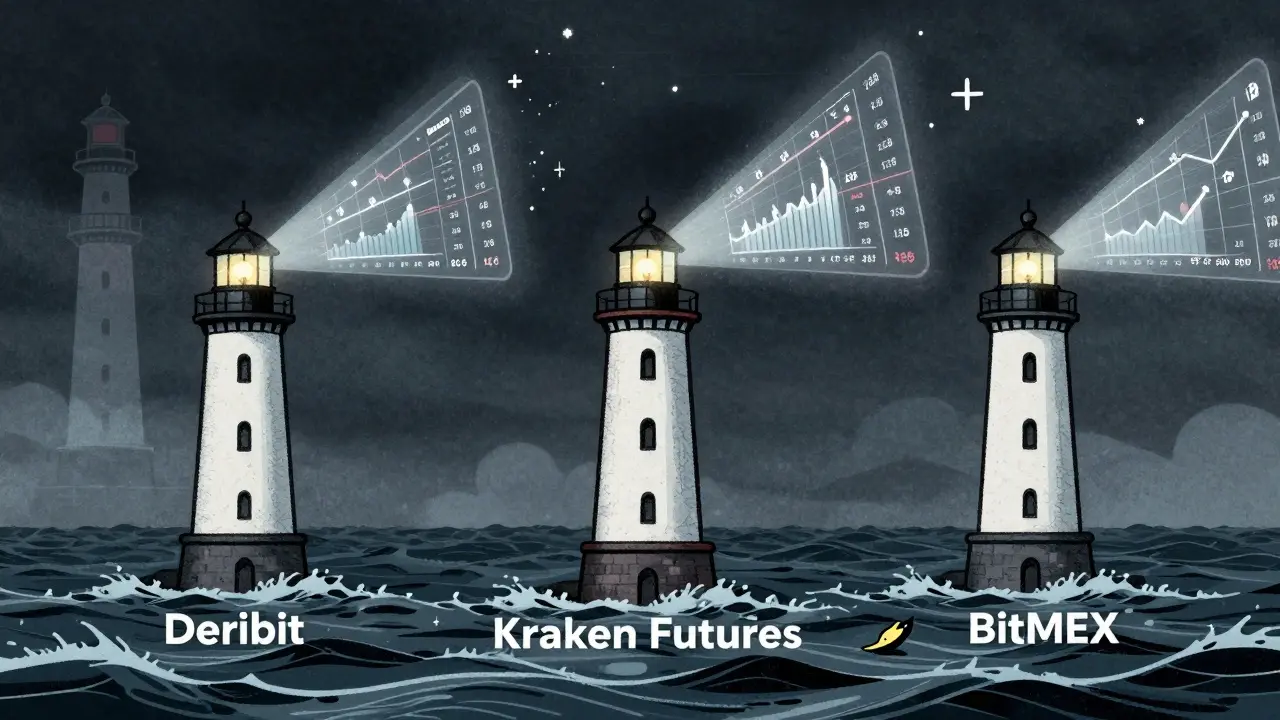
If you’re looking for what ZUBR promised - fairness, speed, transparency - here are a few current options that come close:- Deribit: Still A+ Verified by Nomics. Deep order books. Low fees. No insider trading. The closest living successor to ZUBR’s ethos.
- BitMEX: Older, but still reliable for derivatives. Hasn’t been fully regulated, but has a long track record of execution stability.
- Kraken Futures: Fully regulated in the U.S. and EU. Transparent fee structure. Solid performance. Good for traders who want compliance without sacrificing speed.
Final Thoughts
ZUBR wasn’t just another crypto exchange. It was a proof of concept - that you could build a derivatives platform that was fast, fair, and honest. It had the tech. It had the compliance. It had the data. It had the vision. And then it got absorbed by a company that didn’t believe in any of that. ZUBR’s story isn’t just about a failed exchange. It’s a warning. In crypto, technology alone isn’t enough. If you’re not aligned with integrity, even the best platform can vanish overnight. If you’re trading today, don’t just look at leverage or fees. Look at who’s behind the platform. Look at what they’ve proven - not what they promise. ZUBR proved it. Then it disappeared. Don’t let history repeat itself.Is ZUBR still operational in 2025?
No, ZUBR is not operational in 2025. After being acquired by FTX in 2021, it ceased operations following FTX’s collapse in November 2022. The website is offline, APIs are inactive, and there has been no official communication from the company since then. Users who held funds on ZUBR likely lost access to their assets during the FTX bankruptcy.
Was ZUBR regulated?
Yes, ZUBR obtained a Distributed Ledger Technology (DLT) Provider License in Gibraltar after being acquired by FTX. Before that, it followed strict AML and KYC standards aligned with the EU’s 5th Anti-Money Laundering Directive (AMLD5). Crystal, a blockchain compliance firm, labeled ZUBR’s wallets as a "Trusted Exchange" in March 2020 - a rare distinction at the time. This made it one of the most compliant crypto derivatives platforms in its early years.
Did ZUBR have low fees like it claimed?
Yes, ZUBR advertised the lowest fee structure in the derivatives market at launch. While exact fee percentages weren’t published publicly, its pricing model was designed to be transparent and accessible to all traders, regardless of account size. This contrasted sharply with competitors who charged higher fees or offered preferential rates only to large clients. Its fee structure was one of the key reasons it attracted serious traders.
What made ZUBR’s trading engine special?
ZUBR’s trading engine was the first live digital derivatives platform to be fully tested and certified by Exactpro, a leading financial systems auditor. Exactpro simulated extreme market conditions - millions of trades per second, network latency, and system overload - to verify performance and stability. This level of independent testing was unheard of in crypto at the time and gave ZUBR credibility far beyond typical exchanges.
Can I still access ZUBR’s historical data or research?
No. ZUBR’s blog (blog.zubr.io) and public research reports are no longer accessible. The domain is offline, and there is no known archive of its blockchain analytics research or market reports. While some of its findings were cited in external crypto publications, the original data sources and tools are no longer available to the public.
Was ZUBR ever hacked or compromised?
There is no public evidence that ZUBR was hacked or compromised before its acquisition by FTX. Its systems passed rigorous independent testing and maintained a clean compliance record. The loss of user funds was tied to FTX’s collapse, not a security breach on ZUBR’s platform. ZUBR itself was not accused of any wrongdoing - it was a victim of its parent company’s failure.
Are there any current exchanges that follow ZUBR’s model?
Deribit is the closest current equivalent. It’s A+ Verified by Nomics, offers transparent fees, provides deep order book data, and has maintained strong execution speeds without favoring large traders. Kraken Futures and BitMEX also offer institutional-grade tools with better transparency than most competitors. None have matched ZUBR’s combination of independent testing, blockchain analytics integration, and strict compliance - but Deribit comes closest.


Janet Combs
December 20, 2025 AT 06:10ZUBR was the one exchange I actually trusted. Not because of the branding, but because I could see the data flowing in real-time and it made sense. I used their on-chain analytics to time my BTC buys - no guesswork. When FTX swallowed it, I just... stopped trading for months. Didn’t trust anyone after that.
roxanne nott
December 20, 2025 AT 08:57Let’s be real - ZUBR was never gonna survive. FTX bought it for the tech, not the ethics. And honestly? Most traders didn’t care about transparency - they just wanted leverage and memes. ZUBR was a unicorn in a pig farm.
Dan Dellechiaie
December 21, 2025 AT 18:06Y’all keep acting like ZUBR was some saint. It had institutional-grade tech, sure - but it was still a derivatives exchange. You think the average trader understood the Exactpro certification? Nah. They just saw ‘low fees’ and went all in. The real failure wasn’t FTX - it was the ecosystem that rewarded hype over rigor. We built a cathedral and then let the wolves in because they promised free bread.
Shubham Singh
December 21, 2025 AT 20:17Deribit? Kraken? Please. Deribit still has wash trading baked into its order book. Kraken’s ‘transparency’ is just PR spin. ZUBR was the only one that didn’t just *say* it was fair - it proved it. And now? We’re back to the Wild West. And you all are still clicking ‘Buy’ without reading the fine print.
Radha Reddy
December 22, 2025 AT 16:38I remember when ZUBR launched - I was in Bangalore, working late, and I stumbled upon their blog post about Bitcoin wallet inflows. It was the first time I felt like a retail trader actually had a fighting chance. I printed out their analytics dashboard and showed it to my cousin, who’d lost everything on Binance Futures. He cried. We both did. That’s what ZUBR gave us - not profits, but dignity.
Sheila Ayu
December 22, 2025 AT 18:02Wait - so you’re telling me… the platform that had third-party audits, blockchain analytics, and real compliance… got destroyed by a company that didn’t even know how to count its own money? And now we’re supposed to trust ‘Deribit’? LOL. I’m not trading crypto anymore. I’m buying gold. And I’m hiding it under my mattress. With a lock. And a dog.
Sarah Glaser
December 24, 2025 AT 13:42ZUBR didn’t die because it was weak. It died because integrity is the most dangerous thing in crypto. It threatened the entire business model of ‘move fast and break things.’ The fact that no one talks about it now? That’s the real tragedy. We didn’t lose a platform - we lost the idea that crypto could be different. And now, we’re all just waiting for the next ghost to rise.