
CLT Utility Calculator
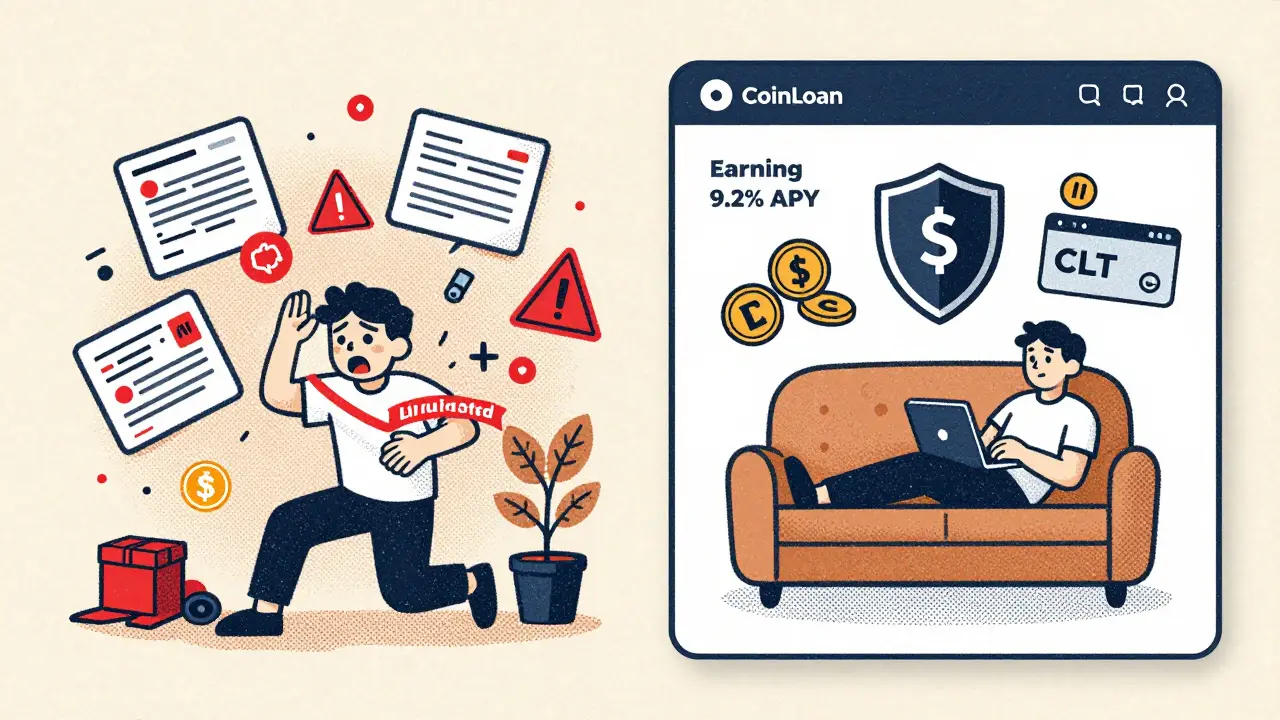
CLT tokens are CoinLoan's utility token that provide real financial benefits. The more you hold, the more you save on borrowing fees and earn on deposits.
When you hear about crypto lending platforms, most people think of DeFi protocols like Aave or Compound. But there’s another kind of crypto lending platform that’s been around since 2017 - one that doesn’t rely on smart contracts alone, but on real people, real regulations, and a token called CLT. CoinLoan isn’t just another altcoin. It’s a working financial service built for everyday crypto users who want to earn interest, borrow against their holdings, and avoid the chaos of decentralized finance - all while staying within European law.
What Exactly Is CoinLoan?
CoinLoan is a centralized finance (CeFi) platform based in Estonia. It launched in August 2017, making it one of the oldest crypto lending services still operating today. Unlike DeFi platforms where you interact with code, CoinLoan lets you talk to customer support, deposit funds via bank transfer, and get loans without a credit check. It’s like a bank, but for crypto.
The platform lets you:
- Earn interest on over 25 cryptocurrencies
- Borrow cash or stablecoins using crypto as collateral
- Trade between different digital assets
- Use CLT tokens to cut your fees and boost your earnings
It’s not a speculative experiment. It’s a regulated financial service that complies with EU anti-money laundering rules and holds $250 million in insurance coverage for user assets. That’s not something you get with most DeFi apps.
What Is CLT, and Why Does It Matter?
CLT is the native token of CoinLoan. It runs on the Ethereum blockchain as an ERC-20 token. That means it’s compatible with most wallets and exchanges that support Ethereum-based assets.
But CLT isn’t meant to be traded like Bitcoin or Ethereum. Its job is utility. If you hold CLT on the CoinLoan platform, you unlock real benefits:
- Lower borrowing fees - down to 5.5% APR instead of higher rates
- Better interest rates on deposits - up to 9.2% APY on Fixed Accounts
- Higher loan-to-value ratios - up to 80% when using CLT as collateral
- No fees for lending or withdrawing funds
Think of CLT like a membership card. The more you hold, the more you save. You don’t need to stake it in a liquidity pool or lock it for years. Just keep it in your CoinLoan wallet, and the benefits activate automatically.
How Many CLT Tokens Are There?
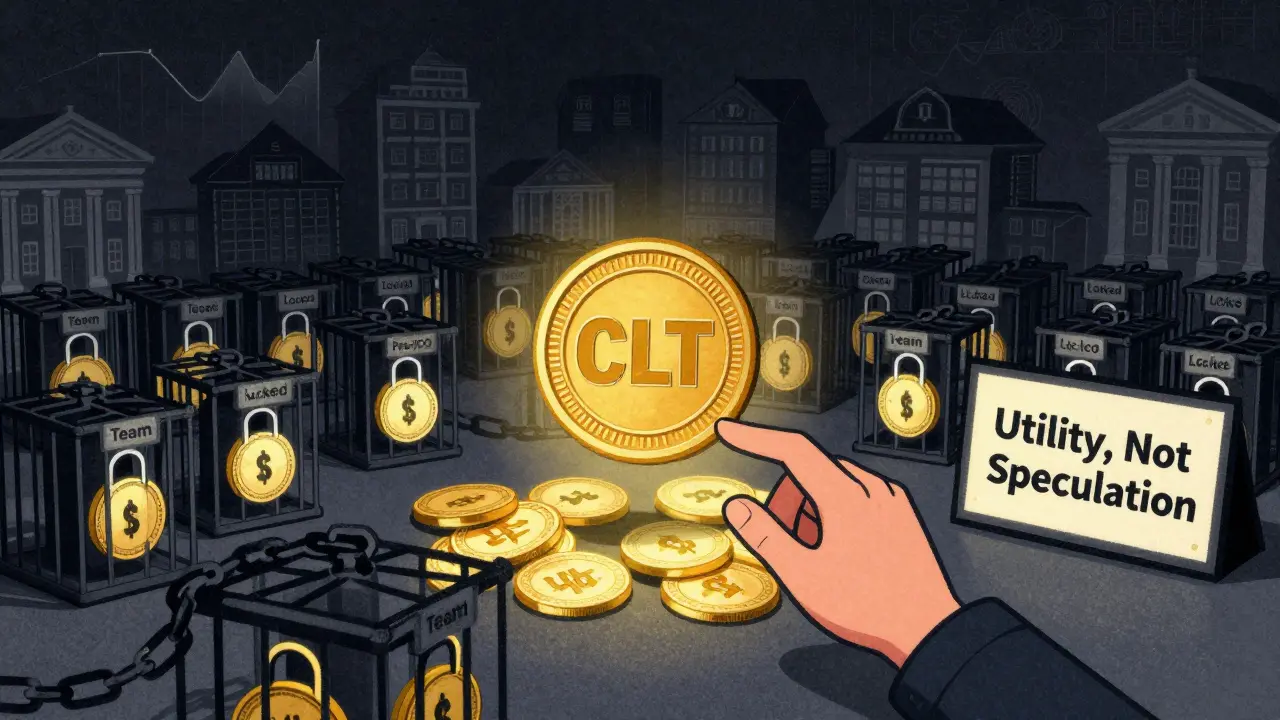
There are only 22 million CLT tokens ever created. That’s a fixed supply - no inflation, no surprises.
Here’s how they were distributed:
- 15 million (68%) - sold to the public during the 2017 ICO
- 5 million (23%) - sold in the pre-ICO phase
- 2 million (9%) - reserved for the team and advisors
But here’s the twist: as of October 2025, only about 1.95 million CLT tokens are actually in circulation. That means over 90% of the total supply is still locked up - either held by the company, team members, or locked in long-term agreements.
This low circulating supply explains why CLT’s price has been so volatile. It hit an all-time high of $192.18 in December 2020. Today, it trades around $0.329. That’s a drop of over 99% from its peak. But don’t let the price fool you. For users who hold CLT on the platform, its value isn’t in speculation - it’s in savings.
How Does CoinLoan Compare to Other Lending Platforms?
Let’s break it down.
| Feature | CoinLoan (CeFi) | DeFi (e.g., Aave) | Traditional Bank |
|---|---|---|---|
| Interest Rates (Crypto Deposits) | Up to 9.2% APY | Up to 12% APY (variable) | 0.01%-0.5% |
| Borrowing APR | 5.5%-8.5% | 3%-10% (variable) | 5%-20% (credit check required) |
| Loan-to-Value Ratio | Up to 70% (80% with CLT) | Up to 75% | N/A |
| Credit Check? | No | No | Yes |
| Insurance Coverage | $250 million | None | FDIC up to $250k |
| Customer Support | Real people, 24/7 | Discord bots, forums | Call centers |
| Regulation | EU-compliant | Unregulated | Highly regulated |
DeFi gives you more control but also more risk. If a smart contract fails, your money is gone - no recourse. CoinLoan takes custody of your assets, but if something goes wrong, you’re covered by insurance and have a team you can reach.
Traditional banks? They don’t offer crypto interest accounts at all. And if you want a loan backed by Bitcoin, forget it - they’ll ask for your pay stubs and credit score.
Who Uses CoinLoan? Real User Experiences
Reddit threads and review sites show a clear pattern: users who’ve been burned by DeFi hacks or lost sleep over volatile interest rates are turning to CoinLoan.
One user from Germany wrote: “I borrowed €10,000 against my Bitcoin in 2022 when prices crashed. My loan didn’t get liquidated because CoinLoan didn’t use a rigid 65% LTV like DeFi. They gave me time to top up. That saved me.”
Another user from Poland said: “I earn 7.8% on my Ethereum without locking it. I can withdraw anytime. My bank pays me 0.1%. This isn’t crypto magic - it’s just better finance.”
But there are complaints too. Some users point out that CLT has almost no trading volume. CoinMarketCap shows $0 in 24-hour trades. That means if you want to sell CLT, you’re stuck on smaller exchanges. It’s not easy to cash out.
Also, KYC is required. You need to upload ID and proof of address. If you want to stay anonymous, CoinLoan isn’t for you. But if you want safety and reliability, this is a fair trade.
Is CoinLoan Safe?
Safety here isn’t about blockchain tech - it’s about operations.
CoinLoan uses:
- Multi-signature cold wallets
- Offline key storage
- Wallet segregation (separate funds for different users)
- Transaction monitoring and fraud detection
- $250 million insurance through a third-party provider
It’s not perfect. No centralized platform is. But since 2017, it’s survived:
- The 2018 crypto winter
- The 2020 pandemic market crash
- The 2022 FTX collapse
- Multiple regulatory crackdowns on crypto lenders
Most competitors vanished. CoinLoan didn’t. That’s not luck. It’s discipline.
Should You Use CoinLoan?
Here’s who should consider it:
- You own Bitcoin, Ethereum, or other crypto and want to earn interest without locking it up
- You need a loan fast and don’t want to deal with banks
- You’re in Europe and want a regulated service
- You’ve had a bad experience with DeFi hacks or liquidations
- You’re tired of crypto apps that feel like video games
Here’s who should avoid it:
- You want to trade CLT for quick profits - the market is too thin
- You refuse to do KYC
- You live in a country where CoinLoan is blocked (like the U.S.)
- You believe all finance should be decentralized
If you’re in the first group, start small. Deposit $100 worth of crypto. Earn interest. Try borrowing $50 against it. See how the system works. Then, if you like it, buy a few hundred CLT tokens and unlock the full benefits.
What’s Next for CoinLoan?
There’s no big roadmap full of flashy promises. CoinLoan doesn’t need to chase hype. It’s already doing what it set out to do: make crypto lending safe, simple, and accessible.
Its future depends on two things:
- Expanding beyond Europe - right now, it’s mostly used by EU residents
- Increasing CLT adoption - if more users hold CLT to save on fees, demand could rise
Right now, only 1,110 wallets hold CLT. That’s tiny compared to Bitcoin’s millions. But for a platform that doesn’t market itself with influencers or memes, that’s actually a sign of stability.
It’s not a get-rich-quick token. It’s a quiet tool for people who want to use crypto like money - not a casino.
Is CLT a good investment?
CLT isn’t designed as an investment. Its value comes from the savings you get by using it on CoinLoan - lower fees, higher interest rates. If you’re buying CLT hoping it will go up 10x, you’re likely to be disappointed. The token has extremely low trading volume, and most of the supply is locked. Its strength is utility, not speculation.
Can I buy CLT on Coinbase or Binance?
No, CLT is not listed on major exchanges like Coinbase, Binance, or Kraken. You can buy it on smaller platforms like KuCoin, BitMart, or CoinLoan’s own exchange. This limits liquidity and makes it harder to trade. If you want CLT, you’ll need to use one of these niche exchanges.
Does CoinLoan work in the United States?
No, CoinLoan does not serve U.S. residents. Due to strict U.S. crypto regulations, the platform blocks access from American IP addresses. If you’re in the U.S., you’ll need to use other CeFi platforms like BlockFi (now defunct) or Celsius (also defunct), or switch to DeFi services - but those come with higher risk.
How do I earn interest with CoinLoan?
You can choose between two account types: Flexible Accounts (up to 6.2% APY, no lock-up) or Fixed Accounts (up to 9.2% APY, with terms from 7 days to 3 years). Deposit your crypto, select the account, and interest is calculated daily and paid monthly. You can withdraw anytime without penalty - even from Fixed Accounts.
What happens if crypto prices crash while I have a loan?
If your collateral’s value drops too low, CoinLoan will send you a margin call - a warning to deposit more crypto or repay part of the loan. Unlike DeFi platforms that auto-liquidate you at 65% LTV, CoinLoan gives you time to respond. They won’t sell your assets without notice. This makes it safer for users who aren’t constantly monitoring markets.
Do I pay taxes on interest earned from CoinLoan?
Yes. In most countries, including those in the EU, interest earned from crypto lending is considered taxable income. CoinLoan doesn’t send tax forms, so you’ll need to track your earnings manually. Use crypto tax software like Koinly or CoinTracker to calculate your liability based on your local laws.
Final Thoughts
CoinLoan doesn’t try to be the flashiest crypto project. It doesn’t have a metaverse or NFT collection. It doesn’t promise moonshots. It just lets you earn interest, borrow money, and save on fees - all with real-world reliability. The CLT token isn’t a gamble. It’s a discount card for better financial terms.
If you’re tired of DeFi’s complexity and traditional banks’ refusal to touch crypto, CoinLoan offers a middle ground. It’s not perfect, but it’s honest. And in crypto, that’s rare.


Tom Van bergen
December 5, 2025 AT 00:31Nicole Parker
December 7, 2025 AT 00:31People keep saying 'it's not decentralized' like that's a bad thing. Maybe we've forgotten that finance used to be about trust, not code. If your money's safe and you can actually talk to someone when things go sideways, that's not weakness. That's wisdom.
Ben VanDyk
December 8, 2025 AT 12:41Sandra Lee Beagan
December 9, 2025 AT 12:09Also, the fact that they survived FTX? That says more than any whitepaper ever could.
Stanley Wong
December 11, 2025 AT 10:27Richard T
December 11, 2025 AT 13:46jonathan dunlow
December 12, 2025 AT 07:27rita linda
December 13, 2025 AT 13:03Martin Hansen
December 14, 2025 AT 20:52Frank Cronin
December 16, 2025 AT 15:40Stanley Wong
December 18, 2025 AT 12:24