
If you’ve seen a post saying you can get free VDV tokens just by shopping on VIRVIA ONLINE SHOPPING, stop. Right now. This isn’t a chance to get rich-it’s a trap designed to steal your crypto and your personal data.
There is no legitimate VDV token. There is no real VIRVIA ONLINE SHOPPING. And there is no airdrop. What you’re seeing is a well-oiled scam that’s already taken hundreds of thousands of dollars from unsuspecting people in 2025.
How the VIRVIA Scam Works
The scam starts with a flashy ad or a DM on social media. It promises: ‘Get 500 VDV tokens for free-just make one purchase on VIRVIA ONLINE SHOPPING!’ The offer sounds too good to ignore. Who wouldn’t want free crypto for doing something they were already planning to do?
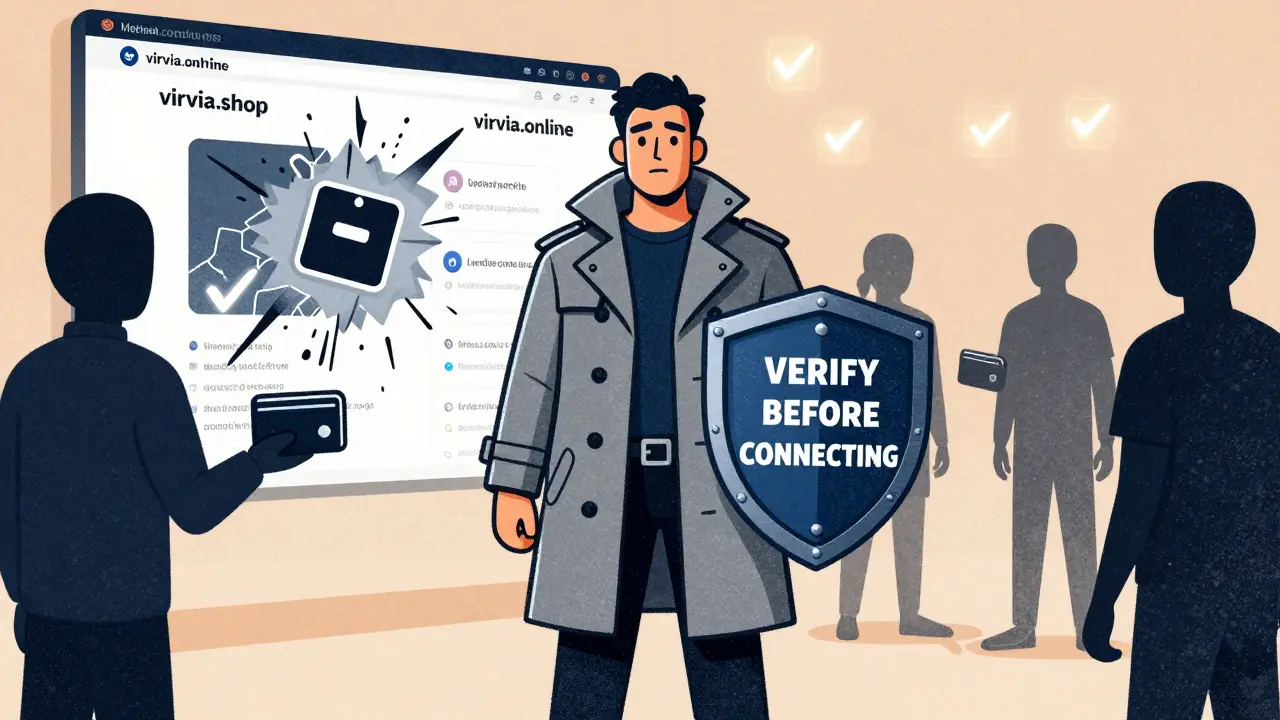
But here’s the catch: VIRVIA ONLINE SHOPPING doesn’t exist as a real business. The website (usually virvia.online or virvia.shop) is a cloned Shopify store with fake product listings-sneakers, smartwatches, phone cases-all priced suspiciously low. The checkout page looks real. The logo is polished. The testimonials are AI-generated. But behind the scenes, it’s a phishing site.
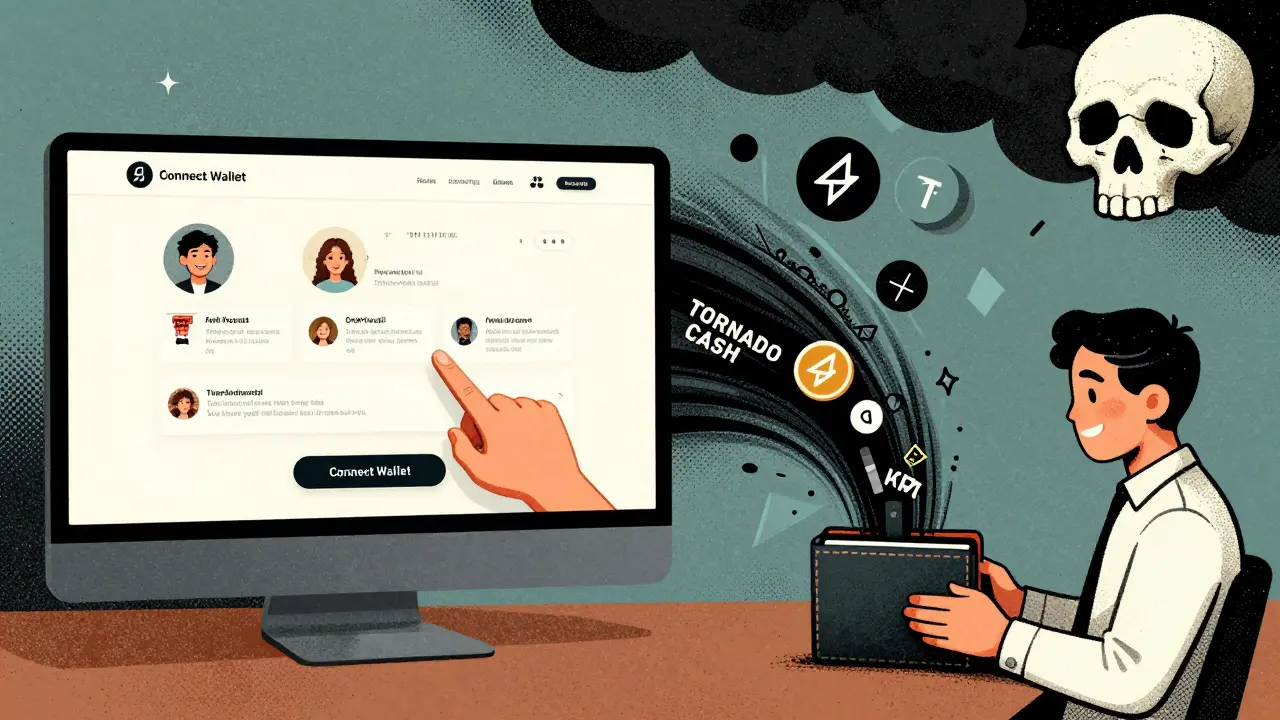
When you click ‘Connect Wallet’ to complete your ‘purchase,’ you’re not paying with crypto-you’re giving scammers access to your wallet. They don’t need your password. They don’t need your email. They just need you to sign a transaction that grants them full control. Once you do, they drain your entire balance-ETH, SOL, USDC, NFTs-all in under 10 seconds.
Why This Scam Is So Dangerous Right Now
2025 has seen a massive spike in fake shopping-based crypto airdrops. According to Chainalysis, 31% of all crypto fraud in the first half of 2025 came from these kinds of scams. And VIRVIA is one of the most aggressive examples.
Scammers target people who are new to crypto. They know most users don’t understand wallet permissions. They exploit the fact that people trust brands they recognize-even fake ones. The VIRVIA site uses real-looking logos, copy from legitimate retailers, and even fake customer service chatbots to build trust.
And here’s what makes it worse: the scammers move fast. The VIRVIA domain was registered on September 28, 2025. By October 5, it had already collected over 18.7 ETH ($62,000+). Within days, they laundered the funds through Tornado Cash and shut down the original site. They’ve since moved to two new domains. Each time, they reuse the same template, the same fake products, the same script to steal wallets.
Red Flags You Can’t Ignore
If you’re ever unsure whether an airdrop is real, look for these signs:
- No official website or whitepaper - Legitimate projects publish detailed technical docs. VIRVIA has none.
- Requests to connect your wallet before any real activity - No real airdrop asks you to connect your wallet just to ‘claim’ tokens. You earn rewards through testnet use, staking, or holding tokens-not shopping.
- Guaranteed rewards for minimal effort - ‘Get 500 tokens for $10 spent’? That’s not a reward. That’s a lie. Real airdrops are earned over time, not bought.
- Domain registered recently with privacy protection - virvia.online was registered in late September 2025 through a privacy service. No business registration. No contact info. No history.
- No presence on CoinGecko, CoinMarketCap, or airdrops.io - If it were real, it would be listed. It’s not.
Reddit’s r/CryptoAirdrops has over 140 reports of VIRVIA scams in Q3 2025 alone. Users who connected their wallets lost an average of $850. One victim lost a $12,000 NFT collection in under 30 seconds.
What Real Crypto Airdrops Look Like
Legitimate airdrops don’t come from online stores. They come from projects that have built real technology-blockchains, apps, protocols-that people actually use.
Take Monad, for example. In late 2024, they launched a testnet. Thousands of users ran nodes, interacted with smart contracts, and completed tasks over months. Then, in May 2025, they distributed tokens to those who participated. No shopping. No wallet connection until after verification. No promises of instant riches.
Or look at Meteora. Their airdrop required users to swap tokens on their decentralized exchange for at least 30 days. Rewards were proportional to activity. It was fair. It was transparent. And it was real.
VIRVIA doesn’t have a testnet. It doesn’t have developers. It doesn’t have a roadmap. It doesn’t even have a GitHub repo. That’s not a startup-it’s a con.
What to Do If You Already Connected Your Wallet
If you’ve already signed a transaction on VIRVIA ONLINE SHOPPING, act fast:
- Do NOT interact with the site again. Even clicking ‘Cancel’ or ‘Close’ can trigger more malicious scripts.
- Log out of your wallet. If you’re using MetaMask, Phantom, or another browser wallet, disconnect all sites in the settings.
- Move your funds. Transfer everything from the compromised wallet to a new one. Never reuse the same seed phrase.
- Report it. File a report with the FBI’s IC3 (ic3.gov) and share the scam link on Reddit’s r/CryptoAirdrops and r/Scams.
Once a wallet is drained, recovery is nearly impossible. Crypto transactions are irreversible. The best defense is stopping it before it happens.
How to Stay Safe in 2025
Here’s how to avoid falling for the next VIRVIA:
- Never connect your wallet to a site just because it promises free tokens. Real airdrops announce their terms publicly-on their official website, Twitter, or Discord.
- Use a separate wallet for airdrops. Keep your main wallet with your life savings untouched. Use a small wallet with only $50-$100 for testing new projects.
- Check the contract address. If a site asks you to approve a token, look up the address on Etherscan or Solscan. If it’s blank, unverified, or has zero transactions, walk away.
- Use a wallet with permission controls. MetaMask now lets you see exactly what a site is asking to do. If it says ‘Allow unlimited spending,’ say no.
- Trust official sources only. If you hear about an airdrop from a YouTube influencer, check CoinGecko or airdrops.io first. If it’s not listed, it’s not real.
The crypto space is full of real opportunities. But they don’t come wrapped in fake e-commerce stores. They come from projects with code, community, and transparency.
Who’s Behind VIRVIA?
No one knows for sure. But blockchain forensics firm Elliptic traced the scam’s wallet activity to a cluster of addresses linked to at least three other known scams from 2024-2025. These operators reuse the same playbook: create a fake brand, launch a cloned site, harvest wallets, launder funds, disappear.
They’re not targeting experts. They’re targeting people who trust the internet. And in 2025, that’s more people than ever.
The FBI and EU’s OLAF have added VIRVIA to their watchlists. But by the time authorities act, the money is gone. That’s why your vigilance matters more than any government warning.
If you see VIRVIA again, report it. Share this article. Warn your friends. Scammers thrive in silence. You can stop them by speaking up.
Is the VDV airdrop from VIRVIA ONLINE SHOPPING real?
No, it is not real. There is no VDV token, no legitimate VIRVIA ONLINE SHOPPING platform, and no official airdrop. This is a confirmed scam designed to steal crypto by tricking users into connecting their wallets. No reputable crypto platform or blockchain explorer lists VDV or VIRVIA as a valid project.
What should I do if I already connected my wallet to VIRVIA?
Immediately disconnect your wallet from all sites. Transfer all funds to a new wallet with a different seed phrase. Do not use the same wallet again. Report the scam to the FBI’s IC3 and share the link on crypto safety forums like Reddit’s r/CryptoAirdrops. Recovery of stolen funds is unlikely, so prevention is critical.
How can I tell if an airdrop is legitimate?
Legitimate airdrops require active participation-like using a testnet, holding a token, or completing tasks over time. They are announced on official channels (website, Twitter, Discord), listed on CoinGecko or airdrops.io, and never ask you to connect your wallet just to ‘claim’ tokens. If it sounds too easy, it’s a scam.
Why do scammers use fake online shopping sites for airdrops?
Scammers use fake shopping sites because they feel familiar and trustworthy. People are used to checking out online, so they don’t question the request to ‘connect wallet to pay.’ The site looks real, the products look real, and the promise of free crypto lowers suspicion. It’s a psychological trap designed to bypass caution.
Are there any real crypto airdrops happening in 2025?
Yes. Projects like Monad, Meteora, Hyperliquid, and Abstract have launched legitimate airdrops in 2025. These require users to interact with testnets, stake tokens, or use decentralized apps over time. They don’t involve shopping, and they’re always listed on trusted platforms like CoinGecko and airdrops.io. Always verify before participating.
Can I get my money back if I lost crypto to VIRVIA?
It is extremely unlikely. Crypto transactions are irreversible by design. Once funds are sent to a scammer’s wallet, they are quickly moved through mixers like Tornado Cash, making recovery nearly impossible. The best course of action is to secure your remaining assets, report the scam, and prevent others from falling victim.
Why isn’t VIRVIA taken down yet?
Scammers constantly change domains and hosting providers to evade takedowns. VIRVIA has already moved from virvia.shop to virvia.online after Shopify flagged the first site. Law enforcement and blockchain security teams are tracking them, but by the time they act, the scammers have already stolen and laundered the funds. The scam operates like a flash mob-quick, destructive, and gone before help arrives.


Kevin Karpiak
December 22, 2025 AT 13:05This whole post is fearmongering. People need to stop acting like crypto is some fragile glass house. If you connect your wallet and get drained, you were dumb, not victimized. Stop coddling newbies.
vaibhav pushilkar
December 23, 2025 AT 16:48Good breakdown. Always check if the project has a GitHub, audit reports, and real team members. VIRVIA has none. Use a burner wallet for anything that smells off. Better safe than sorry.
Brian Martitsch
December 23, 2025 AT 17:40Wow. Another ‘crypto is dangerous’ lecture from someone who clearly doesn’t understand decentralization. You’re giving scammers power by pretending they’re all-powerful. Just don’t sign weird txs. Done.
Sybille Wernheim
December 25, 2025 AT 17:03Thank you for writing this. I just saved my cousin from connecting her wallet to this exact site yesterday. She thought it was ‘too good to be true’ but didn’t know why. Sharing this everywhere!
Jordan Renaud
December 26, 2025 AT 21:07It’s not about fear. It’s about awareness. Crypto gives us freedom, but freedom without responsibility is just chaos. This scam preys on hope. The real airdrops? They reward patience, not impulse.
Sarah Glaser
December 28, 2025 AT 04:23The structural vulnerability here lies in the cognitive dissonance between user expectation and technical reality. The interface mimics legitimate commerce, exploiting learned behavior. This is not merely phishing-it is behavioral hijacking.
roxanne nott
December 29, 2025 AT 09:36LMAO people still fall for this? The domain was registered 9/28? Bro, I saw this exact Shopify clone in March. They reuse the same product pics, same AI testimonials, same ‘connect wallet’ button. It’s a template. Even the ETH amount stolen is the same every time. #ToldYouSo
SHEFFIN ANTONY
December 29, 2025 AT 19:58Everyone’s acting like this is new. Newsflash: this has been going on since 2021. You think the FBI cares about your $850? They’re chasing rug pulls worth millions. You connected your wallet? You lost. Move on. Stop whining.
Ellen Sales
December 30, 2025 AT 17:51So… the real scam is believing crypto is ever ‘safe’? Like, we all know the internet is a dumpster fire. But we still click links. We still trust logos. We still want free stuff. So… what’s the surprise?
Sheila Ayu
December 31, 2025 AT 05:32Wait-so if you sign a transaction, you’re GONE? No way to reverse it? No chargeback? No recourse? Then why do we even have wallets? Why not just give them our keys and be done with it? This system is broken. It’s not the users. It’s the protocol.