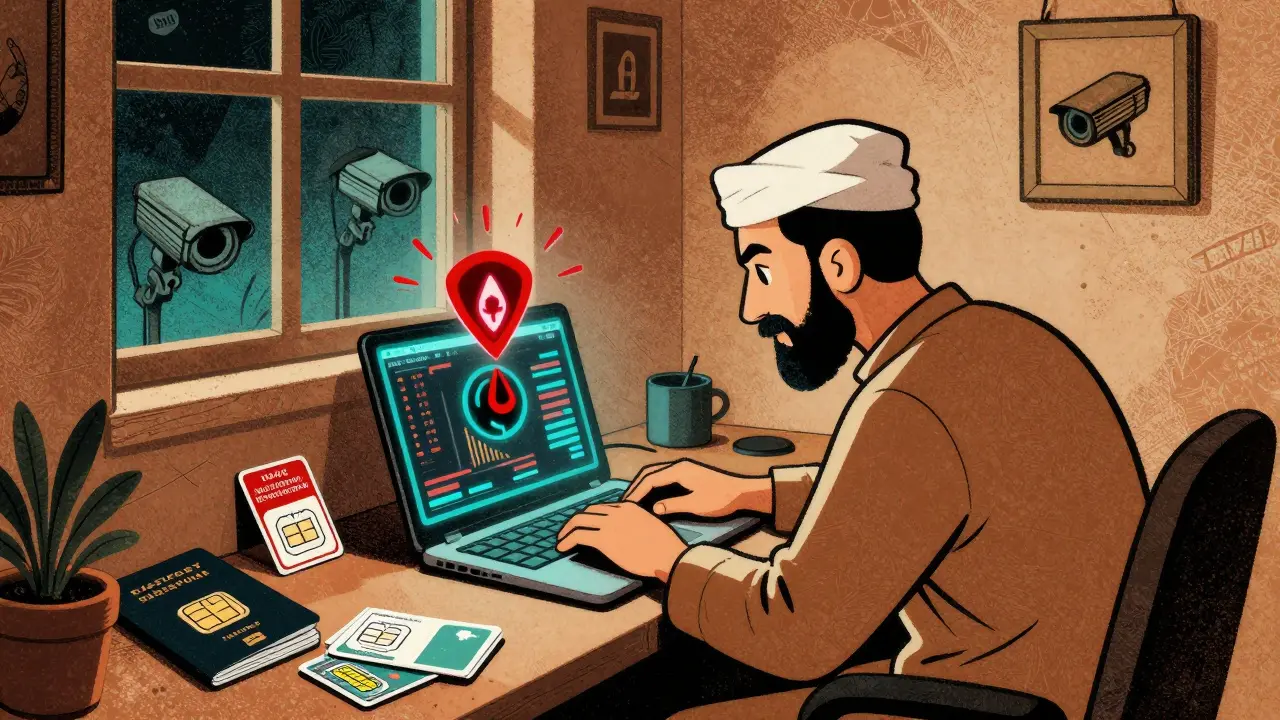
Iranian crypto traders aren’t just using VPNs to bypass internet restrictions-they’re risking everything to stay connected to the global market. In 2025, more than $3.7 billion in cryptocurrency flowed into and out of Iran, but since April, that number has dropped sharply. Why? Because the tools they’ve relied on for years-free VPNs, fake IDs, foreign bank accounts-are no longer enough. Detection systems have gotten smarter, faster, and cruelly precise.
How Iran’s Crypto Market Got So Big
Iran’s crypto scene didn’t explode overnight. It grew out of necessity. With inflation hitting 40% and the rial losing value daily, people turned to Bitcoin and Ethereum as a store of value. But international exchanges like Binance and Kraken blocked Iranian IPs. So traders turned to VPNs. At first, it was easy. Binance didn’t require ID verification until late 2021. Users signed up with just an email, connected through a VPN, and traded. No questions asked. That changed when Binance, under pressure from global regulators, started blocking Iranian users. But by then, the underground infrastructure was already in place. Iranian traders didn’t give up. They built something far more dangerous: full identity spoofing kits. These aren’t just VPNs. They’re packages that include fake foreign passports, SIM cards from Europe or Canada, international bank accounts (IBANs), and even verified phone numbers that can receive SMS codes. One trader in Tehran told Reuters he spent $800 on a complete setup to access Kraken. He called it his "financial lifeline."The Hidden Danger: Free VPNs Are a Trap
Most Iranian traders start with free VPNs. They’re cheap, easy to find, and advertised on Telegram channels. But here’s the brutal truth: nearly every free VPN used in Iran is either monitored, sold data, or both. In 2025, blockchain intelligence firms found that over 60% of Iranian crypto transactions originating from free VPN services had matching IP addresses linked to known surveillance operations. Some services even logged users’ wallet addresses and sold them to Iranian authorities. It’s not just about privacy. Free VPNs are slow, unreliable, and drop connections without warning. And when that happens during a trade? Your real Iranian IP gets exposed. Exchanges like Binance and Coinbase use real-time geolocation tools. If your transaction comes from a VPN that suddenly switches to an Iranian IP, your account gets frozen-no warning, no appeal. One trader in Mashhad lost $42,000 in ETH after his free VPN dropped mid-trade. He tried contacting support. The reply: "We detected activity from a restricted jurisdiction. Your funds are held pending investigation." He never got them back.How Exchanges Know It’s You-Even With a VPN
It’s not just your IP address. Exchanges now use device fingerprinting. That means they check your browser type, screen resolution, installed fonts, even how you move your mouse. If your device has been used on an Iranian exchange like Nobitex before, and then suddenly appears on Binance through a VPN, the system flags it. Transaction patterns matter too. Iranian traders often send small amounts first-$50, $100-to test the connection. Then they move larger sums. That pattern is easy to spot. So is the fact that 87% of all Iranian crypto volume goes through Nobitex, and over $2 billion of that moves on the TRON network. Blockchain analysts can trace those flows like breadcrumbs. Once they identify a wallet linked to Nobitex, they track where it sends funds. If it sends to a wallet that later connects via a VPN to Binance? That’s a red flag. In October 2024, two blockchain analytics firms launched a bounty program: pay $5,000 for verified wallet addresses linked to Iranian traders using VPNs. The goal? To help exchanges freeze accounts before large transfers happen. By January 2025, over one million Iranian bank accounts were frozen by the Central Bank of Iran for suspected crypto activity. The crackdown wasn’t just digital-it was financial.The Underground Economy: Fake IDs and Foreign Numbers
The traders who still have access aren’t using free tools. They’re using paid, underground services that cost $300-$1,200 per setup. These aren’t shady hackers. They’re ordinary Iranians-teachers, mechanics, students-who’ve turned circumvention into a business. One provider in Shiraz offers a "Complete International Identity Package": a Canadian SIM card, a verified PayPal account, a UK IBAN, and a pre-configured VPN that auto-switches if the connection drops. But even these high-end setups have flaws. The SIM cards can be deactivated if the provider is reported. The IBANs can be flagged for suspicious deposits. And if you use the same device across multiple platforms, fingerprinting catches you. Worse, the Iranian government is now monitoring these services. In 2025, Iran Cyber Police (FATA) raided three underground vendors in Tehran, seizing servers that stored thousands of fake documents and wallet addresses. The seized data was handed to international exchanges. Many traders lost access overnight.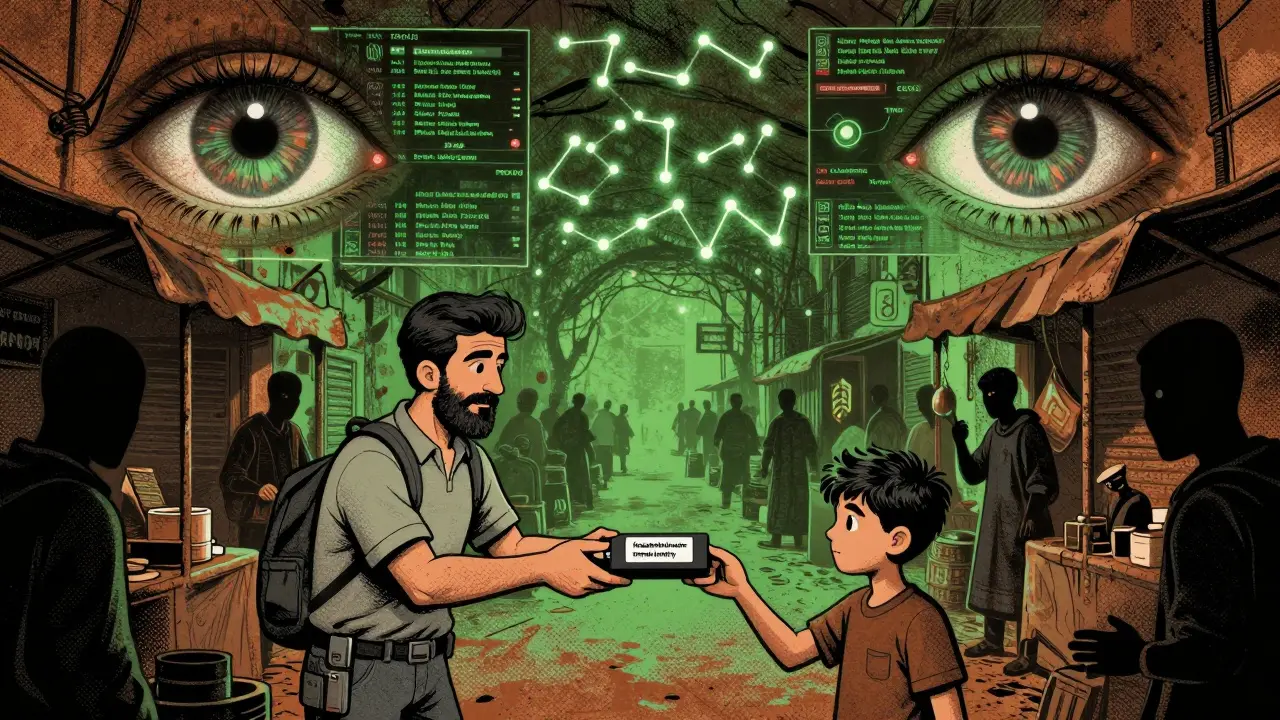
What Happens When You Get Caught
Getting caught isn’t just about losing your crypto. It’s about legal risk. While Iran doesn’t ban cryptocurrency outright, it bans unlicensed trading. The Central Bank says any crypto transaction not routed through approved channels is illegal. And if you’re using a VPN to access a foreign exchange? That’s considered an act of financial evasion. Traders who’ve been caught report being summoned by FATA for questioning. Some were forced to sign confessions. Others had their phones seized and were told to hand over wallet passwords. In rare cases, people were fined up to 50 million tomans (roughly $1,200)-a year’s salary for many. The real tragedy? Many lost their life savings. One trader in Isfahan had $85,000 in Bitcoin. He used a paid VPN and a fake German ID. His account was frozen in May 2025. He appealed. Binance never responded. He later found out his wallet address had been flagged by a blockchain analytics firm in the U.S. and sold to the exchange. He still checks his wallet every day. It’s empty.The New Normal: Avoiding Detection Is Getting Harder
The days of simple VPN + email sign-up are over. Exchanges now combine multiple layers of detection: IP, device, behavior, transaction history, and even timing. If you log in at 3 a.m. Tehran time, send a withdrawal to a known Iranian-linked wallet, and use a browser with Persian language settings? You’re flagged. Even Hamster Combat, a crypto-based mobile game that lets users earn small amounts of crypto by tapping a screen, has become popular-not because it’s fun, but because it doesn’t require KYC. It’s a workaround. A way to earn crypto without triggering exchange monitors. But it’s not a solution. It’s a bandage on a wound that’s getting worse.What Traders Should Do Now
If you’re still trading from Iran, here’s what you need to know:- Never use free VPNs. They’re surveillance tools in disguise.
- Don’t reuse devices. If you used one device on Nobitex, don’t use it on Binance-even with a VPN.
- Don’t send funds to known Iranian wallets. Even if you think it’s "safe," blockchain analysts track every link.
- Use hardware wallets. Keep your keys offline. If your account is frozen, at least your coins aren’t tied to an exchange.
- Expect the worst. If you’ve traded through a VPN, assume your activity is known. Prepare for account freezes. Don’t keep more than you can afford to lose.
What’s Next?
The Iranian government isn’t backing down. The Central Bank is pushing for a national digital currency, and mining is being brought under state control. Meanwhile, international exchanges are getting better at identifying Iranian users-even when they use the most advanced circumvention tools. The cat-and-mouse game continues. But the mice are running out of holes.What Happens If You Stop Using a VPN?
If you stop using a VPN and try to trade directly from Iran, you won’t be able to access most international exchanges. They’ll block you instantly. But you might be able to use Nobitex or other local platforms. The catch? They’re under surveillance. Your transactions are logged. Your identity is tied to your real name and ID. And if the government decides to crack down again-as they did in January 2025-you could lose everything, including your freedom.Can You Trust Any Exchange?
No. Not anymore. Binance, Kraken, Coinbase-they all block Iranian users now. Even if you get in, they can freeze you without warning. Nobitex lets you trade, but it’s a government-licensed platform. Your data is shared with authorities. There’s no safe option. Only less dangerous ones.Is Crypto Even Worth It in Iran Right Now?
For some, yes. The rial still crashes. Inflation still eats salaries. Crypto is still the only way to preserve value. But the cost has changed. It’s no longer just about profit. It’s about survival. And survival now comes with risk-legal, financial, and personal. The traders who still do it aren’t gamblers. They’re desperate. And they’re running out of time.Can I use a VPN to trade crypto in Iran without getting caught?
It’s becoming nearly impossible. Even the best paid VPNs can be detected through device fingerprinting, transaction patterns, and behavioral analysis. Exchanges now track users across multiple signals-not just IP addresses. If you’ve ever used a local exchange like Nobitex, your wallet is already flagged. Using a VPN won’t erase that history.
Why are free VPNs so dangerous for Iranian crypto traders?
Many free VPNs are operated by entities linked to Iranian surveillance agencies. They log your browsing activity, wallet addresses, and even keystrokes. Some sell this data to blockchain intelligence firms. Others simply drop connections during trades, exposing your real Iranian IP. You’re not staying anonymous-you’re handing over your identity.
What happens if my crypto account gets frozen?
Once frozen, recovery is rare. Exchanges like Binance and Coinbase have automated systems that lock accounts flagged for Iranian activity. Appeals are often ignored. If your funds were sent from a wallet linked to Nobitex or another Iranian platform, the exchange may have received your data from blockchain analytics firms. You’ll likely lose your assets permanently.
Is it legal to use a VPN for crypto in Iran?
Iran doesn’t have a clear law banning VPNs, but using them to access foreign crypto exchanges violates Central Bank regulations. The government considers this financial evasion. If caught, you could face fines, interrogation by Iran Cyber Police, or forced surrender of wallet passwords. There’s no legal protection.
Why do so many Iranian crypto transactions go through TRON?
TRON has low transaction fees and fast confirmations, making it ideal for frequent trades. But that also makes it easier for blockchain analysts to track. Over $2 billion of Nobitex’s volume in 2025 moved on TRON, creating a clear pattern. Once analysts identify one Iranian-linked TRON wallet, they can trace dozens more.
Are there any safe crypto platforms for Iranians right now?
No platform is truly safe. International exchanges block Iranian users. Local exchanges like Nobitex are monitored by the government. Even decentralized platforms can be compromised through wallet tracking. The only way to reduce risk is to use hardware wallets, avoid reusing devices, and never connect to known Iranian-linked wallets.
Tre Smith
January 12, 2026 AT 07:47The data here is technically sound but dangerously oversimplified. Blockchain analytics firms don't just track wallet links-they correlate behavioral biometrics across 14 different vectors, including keystroke dynamics and mouse trajectory patterns during login. The claim that free VPNs are the primary vulnerability? Misleading. The real exploit is device fingerprinting persistence. Even if you change IPs, your browser's WebGL fingerprint, font stack, and canvas rendering hash remain identical. Iranian traders using paid VPNs with spoofed identities are still getting caught because they reuse the same hardware. This isn't a VPN problem-it's a device hygiene failure.
Ritu Singh
January 14, 2026 AT 01:00They say it's about surveillance but what they don't tell you is that the entire crypto infrastructure in Iran is a psyop designed by Western intelligence to destabilize the economy. The free VPNs? They're honey pots. The blockchain analytics firms? CIA front companies. The TRON network? A Trojan horse built to track the rial's collapse in real time. You think you're escaping inflation? No. You're feeding data to the very system that wants to collapse your currency. The Central Bank isn't cracking down on crypto-it's letting you dig your own grave with your own hands. And the worst part? You're proud of it.
kris serafin
January 14, 2026 AT 18:50Biggest tip I can give: use a hardware wallet like Ledger + Tor + a burner Android phone bought with cash. Never log into your wallet on the same device you use for social media or local exchanges. Also, use Tails OS if you can-it wipes itself after every reboot. And yes, emojis are mandatory here: 🚫📱🚫VPN🚫Nobitex✅HardwareWallet✅. Seriously, if you're still using a phone you've had for 3 years to trade crypto from Iran, you're not being clever-you're being a walking target. I've helped 12 Iranians avoid freezes this year. You can too. Just stop being lazy.
Jordan Leon
January 16, 2026 AT 15:29There is a quiet tragedy here that transcends finance. These traders are not merely circumventing regulations-they are attempting to preserve dignity in the face of systemic erosion. The rial’s collapse is not an economic event; it is a social unraveling. To risk imprisonment, fines, and the loss of life savings for the chance to hold value is not greed-it is an act of quiet resistance. The tools they use-VPNs, fake IDs, hardware wallets-are not merely technological workarounds. They are artifacts of survival. The state’s response, while legally justified, is morally indefensible. When a government forces its citizens into cryptographic shadows to protect their own sustenance, it is not enforcing law-it is enforcing despair.
Rahul Sharma
January 17, 2026 AT 23:49