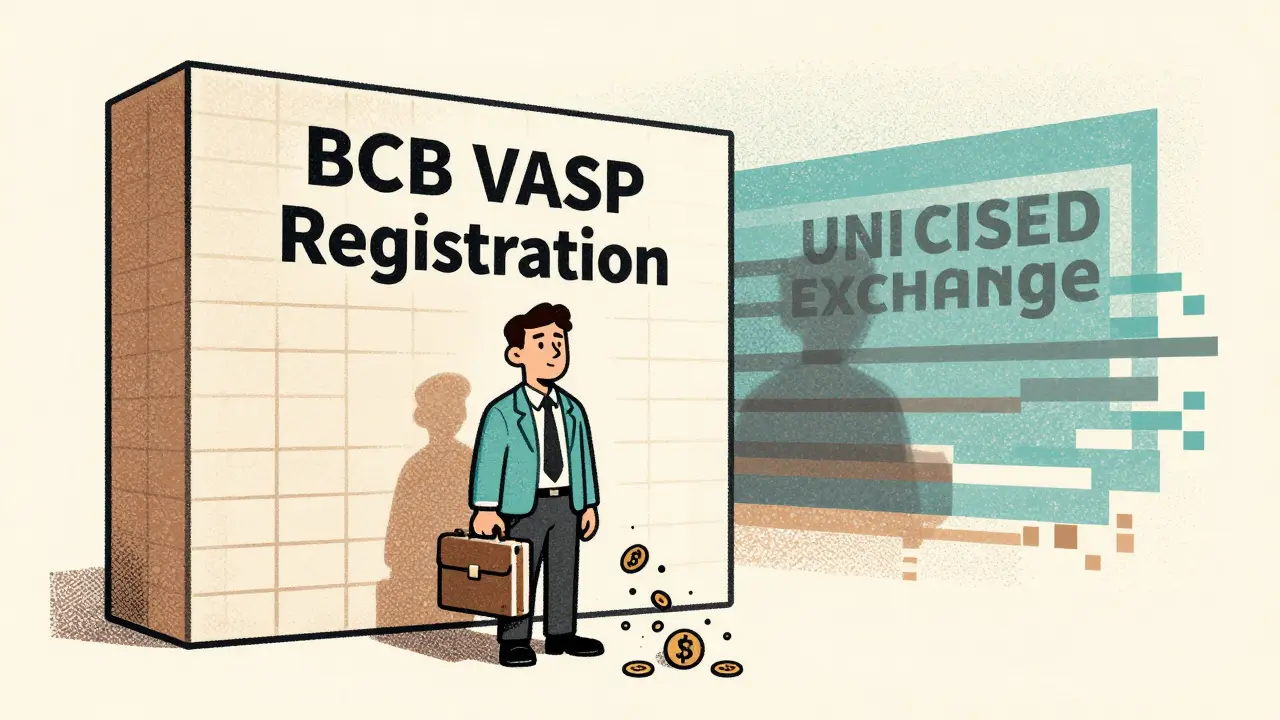
If you're running or using a crypto exchange in Brazil, you're not operating in a legal gray zone anymore. Since June 2023, Brazil’s Central Bank (BCB) has required all cryptocurrency businesses to register and follow strict financial rules. This isn't a suggestion. It’s the law. And if you’re ignoring it, you’re risking your business - or worse, your money.
There’s No Such Thing as a 'Crypto License' - But You Still Need One
Don’t look for a form called ‘Crypto Exchange License.’ You won’t find it. Brazil doesn’t have a separate category for crypto businesses. Instead, any company offering crypto trading, custody, or conversion services must register as a Virtual Asset Service Provider (VASP) with the Central Bank of Brazil. This is the same body that regulates banks, payment processors, and forex platforms. That means crypto exchanges are treated like financial institutions - not tech startups. The legal foundation for this is Law No. 14.478/2022. It doesn’t spell out every detail, but it gives the Central Bank full authority to set the rules. And they’re using it. As of 2026, over 120 crypto platforms have registered with the BCB. That’s up from just 18 in early 2024. The number keeps climbing because unregistered platforms are being blocked from Brazilian banking channels. If your exchange can’t connect to a Brazilian bank, you can’t take deposits. You’re dead in the water.The Real Rules: What the Central Bank Actually Demands
The Central Bank doesn’t publish a public checklist. But based on enforcement actions and leaked compliance guidelines, here’s what they’re checking:- Customer ID verification: Every user must be identified with government-issued ID, proof of address, and biometric data (like facial recognition). No anonymous accounts.
- Transaction reporting: All trades, deposits, and withdrawals must be reported to the BCB in real time - including wallet addresses, timestamps, and amounts.
- Anti-money laundering (AML) systems: You need automated tools that flag suspicious behavior, like rapid transfers between wallets or sudden large deposits from unknown sources.
- Travel Rule compliance: If you send crypto to another exchange or wallet outside Brazil, you must send the sender’s and receiver’s full names, IDs, and addresses - just like wire transfers.
The $10,000 Rule That’s Changing Everything
Here’s where things get serious. In September 2024, the Central Bank proposed new rules for electronic foreign exchange platforms. On the surface, it’s about forex. But here’s the catch: if your crypto exchange lets users buy Bitcoin with BRL and send it overseas - or convert USDT to USD and withdraw it to a foreign bank - you’re now under these rules too. The key part? Individuals can’t send more than $10,000 per transaction. That applies to every single transfer, no matter how many times you do it in a day. If you’re a trader moving $50,000 in ETH to a foreign exchange, you now need to break it into five separate transfers - and each one gets flagged, logged, and reviewed. This isn’t just a speed bump. It’s a structural barrier. High-frequency traders, hedge funds, and institutional investors can’t operate the way they used to. Even retail users who regularly send crypto to overseas wallets are now slowed down. And every transaction must show the full cost - no hidden fees, no surprise spreads. You have to display the exact amount the recipient will get before they confirm. Industry insiders say this rule was designed to stop capital flight. But it’s hitting crypto harder than traditional finance. Why? Because crypto moves faster, and users expect to send large sums instantly. Now, they can’t.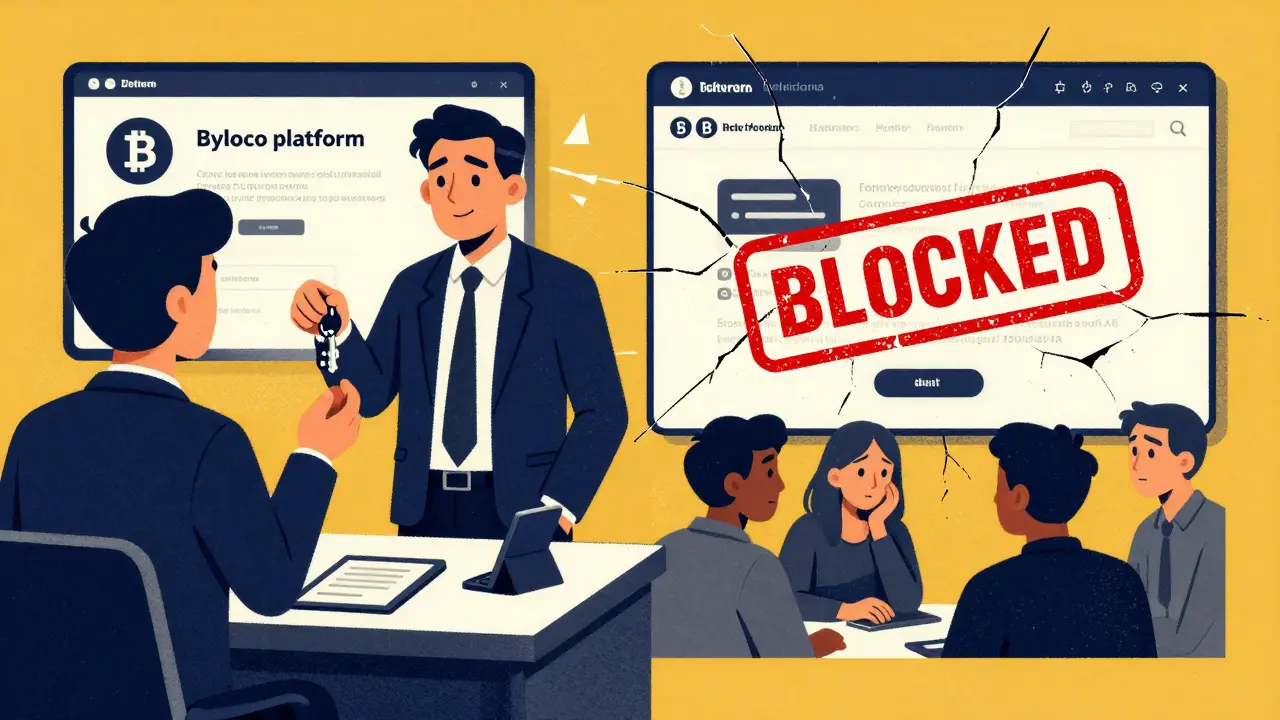
Who’s Affected? Everyone - Even Foreign Exchanges
You might think, “I’m based in the U.S. or Europe. Brazil doesn’t affect me.” Wrong. If your exchange - Binance, Coinbase, Kraken, or any other - allows Brazilian users to deposit BRL or withdraw USD, you’re subject to Brazilian law. The Central Bank doesn’t care where your servers are. They care where your users are. In late 2025, the BCB started blocking access to unregistered foreign exchanges for Brazilian banks. If you try to deposit BRL into Coinbase from Itaú or Bradesco, the transaction gets rejected. No warning. No email. Just silence. And if you use a P2P platform to bypass this? The BCB now monitors peer-to-peer apps too. They’ve started working with app stores to remove unlicensed platforms from Google Play and Apple App Store in Brazil. The message is clear: If you want Brazilian customers, you play by Brazilian rules. No exceptions.What Happens If You Don’t Comply?
The penalties aren’t fines. They’re shutdowns. - First offense: Your platform gets flagged. Banks freeze your corporate accounts. You can’t move money in or out. - Second offense: The BCB files a formal complaint with the Federal Police. Your directors can be investigated for money laundering. - Third offense: Your company is permanently banned from operating in Brazil. Your assets may be seized. In 2025, two Brazilian crypto founders were arrested for operating unlicensed platforms. One had been running a small exchange for five years. He thought he was safe because he didn’t hold funds. He was wrong. The BCB considers any platform that connects buyers and sellers to be a VASP - even if it’s just a website with a chatbot.
How to Get Licensed (Step by Step)
If you’re serious about operating in Brazil, here’s what you need to do:- Register as a legal entity in Brazil: You need a CNPJ (Brazilian corporate tax ID). Foreign companies must open a local subsidiary.
- Apply to the Central Bank: Submit your business plan, ownership structure, AML policies, and technical documentation. Expect a 6-12 month review process.
- Integrate with BCB’s reporting system: You’ll need to connect your platform to the BCB’s real-time transaction monitoring system. This requires API access and constant uptime.
- Partner with licensed financial institutions: Only banks and payment processors approved by the BCB can handle your deposits and withdrawals.
- Display all fees upfront: Every trade, withdrawal, and conversion must show the final amount the user will receive before confirmation.
The Bigger Picture: Why Brazil Is Doing This
Brazil isn’t trying to kill crypto. It’s trying to control it. The country has one of the highest crypto adoption rates in Latin America. Over 30 million Brazilians own digital assets. But they’re also one of the world’s top countries for money laundering via crypto. The BCB sees regulation as a way to protect consumers, stop crime, and bring billions of dollars in hidden transactions into the formal economy. By tying crypto to the existing financial system - banks, forex rules, AML checks - they’re making it harder to use crypto for evasion. And it’s working. In 2025, crypto-related money laundering cases in Brazil dropped by 68% compared to 2023. The goal isn’t to ban crypto. It’s to make it as transparent as a bank transfer.What’s Next?
The Central Bank hasn’t finalized the forex rules yet. But the draft is locked in. Implementation is expected by mid-2026. When it happens, every crypto exchange serving Brazil will have to comply - or lose access to the entire market. Expect more: - Mandatory insurance for custody services - Limits on leverage for crypto trading - Daily transaction caps for retail users - Tax reporting integration with the Federal Revenue Service (Receita Federal) The era of loose crypto rules in Brazil is over. The game has changed. If you’re still treating crypto like a side hustle, you’re already behind.Can I still trade crypto in Brazil if I’m not licensed?
Yes, but only as a user. Individuals can still buy, sell, and hold crypto. But if you’re running a platform that connects buyers and sellers - even just a website with a chatbot - you need to be licensed. Unlicensed platforms are being blocked from banking services and app stores.
Do foreign exchanges like Binance or Coinbase need to get licensed in Brazil?
Yes. If they allow Brazilian users to deposit BRL or withdraw USD, they’re legally required to register with the Central Bank. Many have started local subsidiaries. Others have blocked Brazilian users entirely to avoid compliance costs.
Why is there a $10,000 limit per transaction?
The limit is part of new forex rules that now apply to crypto exchanges facilitating cross-border transfers. It’s meant to stop large-scale capital flight and money laundering. Even if you’re not laundering money, the rule still applies. You can’t send $50,000 in one go - you have to split it up, and each transfer gets logged.
How long does it take to get licensed by the Central Bank of Brazil?
The process takes 6 to 12 months. You need a Brazilian legal entity, a detailed compliance plan, and technical integration with the BCB’s reporting system. Most startups can’t complete it without legal and technical consultants.
What happens if I ignore the rules and keep operating?
Your bank accounts will be frozen. Your platform will be blocked from payment processors. You could face criminal charges for operating without a license. In 2025, two exchange owners were arrested. The Central Bank doesn’t warn you twice.


Pramod Sharma
January 15, 2026 AT 16:14Brazil’s move isn’t about killing crypto-it’s about bringing it into the light. The $10k limit? It’s not punishment. It’s a firewall against chaos. People forget: crypto’s speed is its danger. When money moves faster than oversight, everyone loses. This isn’t regulation for control-it’s regulation for survival.
Liza Tait-Bailey
January 16, 2026 AT 11:46so like… if i just buy btc on binance and hold it, im fine? but if i try to send 15k to my friend in argentina? boom. blocked. feels like they’re treating us like criminals just for wanting to move money. 😔
Deb Svanefelt
January 17, 2026 AT 12:05I’ve spent months studying this. What’s happening in Brazil is quietly revolutionary. They’re not banning decentralization-they’re forcing it to grow up. No more hiding behind ‘tech startup’ labels. If you’re handling money, you’re a financial institution. Period. The $10k cap? It’s not about restricting freedom-it’s about protecting people from themselves. Imagine a grandma sending her life savings to a fake exchange because she didn’t realize it was a scam. This stops that. The compliance costs are brutal, yes-but the alternative is a Wild West where only the ruthless survive. Brazil chose order over illusion.
And let’s be honest: if you’re running an exchange and you can’t afford $150k in compliance, maybe you weren’t ready to be a financial player anyway. This isn’t oppression. It’s maturity.
The real tragedy? The people who thought they could outsmart the system. The ones who built chatbot exchanges and called it ‘innovation.’ They didn’t get shut down because they were too small. They got shut down because they were dangerous. And now, the market is cleaner. Stronger. Real.
Foreign exchanges that ignore this? They’re not being ‘anti-Brazil.’ They’re being suicidal. Brazil has 210 million people. 30 million own crypto. That’s not a niche. That’s a national economy. You don’t walk away from that. You adapt. Or you disappear.
I’ve seen this play out before-in banking, in fintech, in insurance. The first wave of players think regulation is a barrier. The second wave realizes it’s a moat. Brazil just built a damn good one.
Rod Petrik
January 18, 2026 AT 21:27theyre using this to track everything bro… the BCB is just a front for the deep state to monitor every crypto move… they already know which wallets you own… they’re building a global digital ID system… you think the $10k limit is about money laundering? nah… its about control… mark my words… next theyll ban private wallets… then theyll force you to use their own crypto… 🤫💰👁️
nathan yeung
January 20, 2026 AT 10:11Honestly? If you're a small dev trying to build something in crypto and you're not rich, Brazil just made it impossible. But honestly? Maybe that's okay. The bad actors are getting cleaned out. The real players will pay the cost. The rest? They were never building for the long game anyway.