Crypto Bear Market Duration Calculator
Estimated Bear Market Duration:
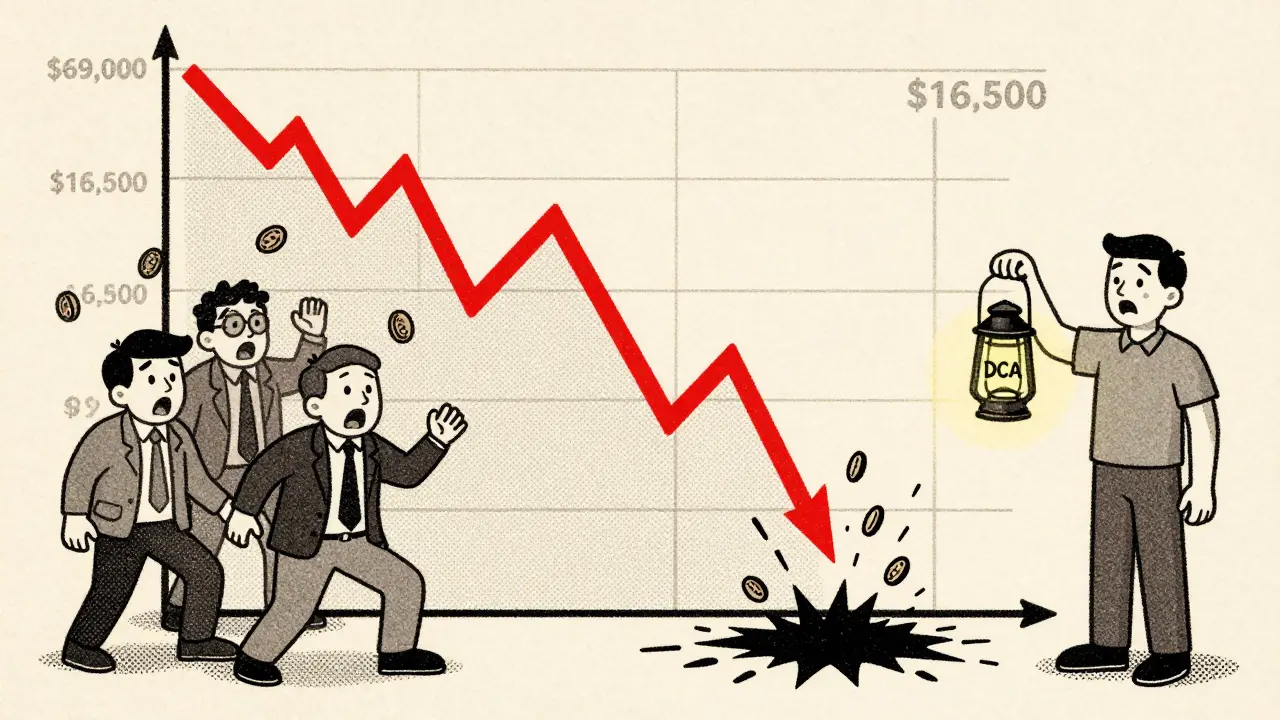
When Bitcoin dropped from $69,000 to $16,500 between late 2021 and early 2023, many investors panicked. Some sold everything. Others held on, wondering: how long do crypto bear markets last? The answer isn’t simple, but history gives us a clear pattern - and new forces are changing it.
What Counts as a Crypto Bear Market?
A bear market in crypto isn’t just a small dip. It’s when prices fall 20% or more from recent highs and stay low for months. This isn’t a quick correction - it’s a sustained loss of confidence. Trading volume drops. New buyers disappear. People stop talking about moonshots. Instead, they talk about survival. The last major bear market, from November 2021 to January 2023, saw Bitcoin lose 75.9% of its value. That’s not just a correction - it’s a wipeout for leveraged traders. But even that wasn’t the longest on record. The 2017-2018 bear market lasted 13 months. The 2011-2012 one stretched over 18 months. So when someone says, “This is the worst ever,” they’re usually wrong. Crypto has been through worse.How Long Do They Usually Last?
Looking at the last five major bear markets, the average duration is about 10 months. But that’s just the middle of the road. Some last as short as 4-5 months. Others drag on for 12-14 months. The longest recorded crypto bear market lasted 1 year and 8 months. Here’s the pattern: after a big bull run, crypto enters a bear phase. That phase typically lasts 12-14 months. Then, slowly, prices stabilize. Trading picks up. Institutional money starts flowing back in. And then - boom - the next bull market begins. This isn’t random. It’s tied to Bitcoin’s halving cycle. Every four years, the reward for mining Bitcoin is cut in half. That usually triggers a bull run 6-12 months later. That bull run lasts about 12-18 months. Then comes the bear market. It’s almost like clockwork.Why Do Bear Markets Last So Long?
It’s not just about price. It’s about psychology. When prices fall, fear takes over. People see their portfolios shrink. They stop checking their apps. They delete their wallets. That’s when the real damage happens - not from the drop, but from the panic selling that follows. Then there’s liquidity. In bull markets, there’s so much money flowing in that big trades don’t move the price. In bear markets, that dries up. A single large sell order can crash prices. That makes the drop feel worse than it is. And when prices drop fast, more people get liquidated - especially those using high leverage. That creates a feedback loop: more liquidations → more selling → lower prices → more panic. Regulation also plays a role. When the SEC cracks down on exchanges or delays ETF approvals, uncertainty grows. That uncertainty extends bear markets. The 2022-2023 bear market was prolonged by the FTX collapse and the SEC’s lawsuits against Coinbase and Binance. Those events didn’t cause the bear market, but they made it worse.
How Is This Bear Market Different?
The bear market that started after the April 2024 Bitcoin halving is already breaking old rules. Historically, after a halving, Bitcoin would surge 2-3x over the next year. Then it would crash 75-85% over the next 12-14 months. But after the 2024 halving, Bitcoin only dropped 35% - and that was over 18 months, not 12. That’s unusual. Why? Institutional money. BlackRock, Fidelity, and other big players started buying Bitcoin directly through spot ETFs. In Q3 2024 alone, BlackRock’s Bitcoin ETF bought over 28,450 BTC - worth $1.85 billion. That’s not speculation. That’s long-term accumulation. It acts like a floor under the price. Institutional holdings now make up 27% of Bitcoin’s circulating supply. In 2020, it was 8%. That’s a massive shift. These players don’t sell when prices dip. They buy more. That’s why the 2024-2025 bear market feels different. It’s not a crash. It’s a slow, controlled correction. Also, regulatory clarity is improving. The EU’s MiCA rules are in effect. The SEC has approved Bitcoin ETFs. That reduces one of the biggest sources of fear in past bear markets: “Will the government shut this down?”What About Recovery Time?
A bear market doesn’t end when prices stop falling. It ends when they recover to their previous high. And that takes much longer. Bitcoin took about 1,000 days (nearly 3 years) to recover from its 2018 low. That’s not unusual. Most assets take longer to recover than they do to crash. The reason? People forget. They lose faith. They move on. But here’s the good news: recovery is getting faster. In 2015, it took Bitcoin 18 months to recover from its last bear market. In 2020, it took 10 months. In 2024, with institutional buyers stepping in, recovery could take just 6-8 months. Analysts at JPMorgan and Standard Chartered now predict bear markets will shrink to 6-8 months by 2027.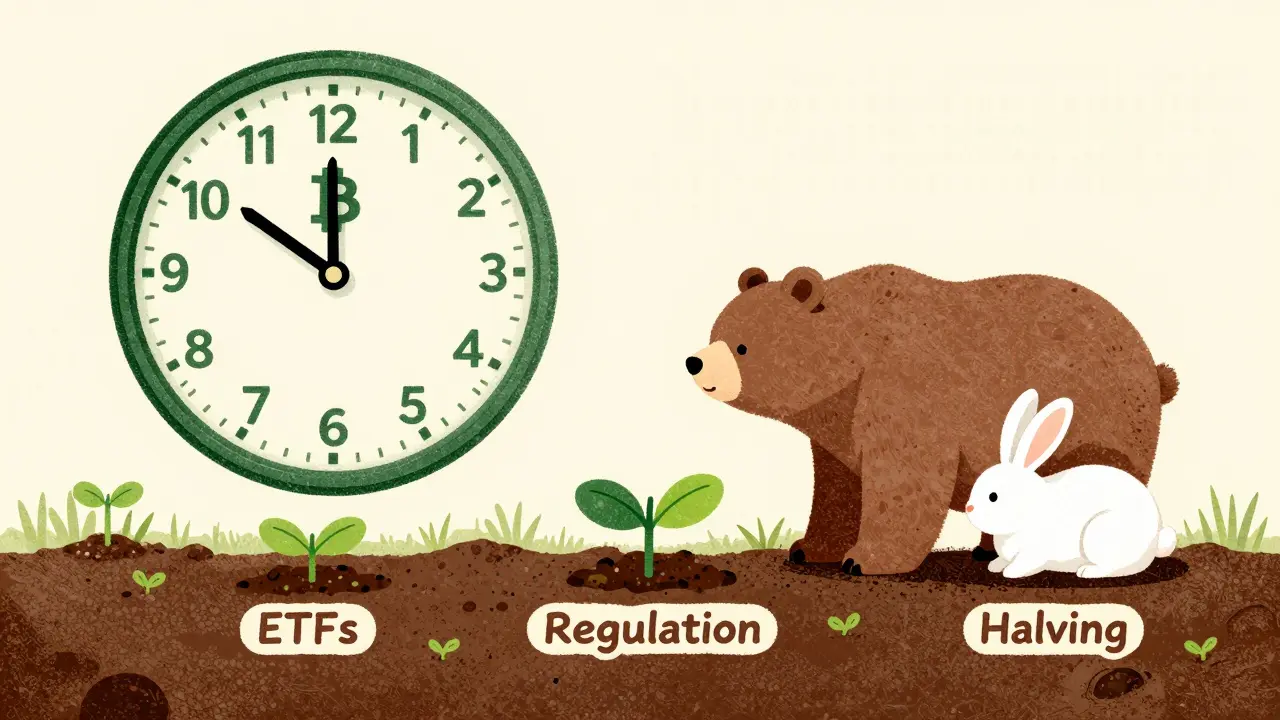
What Should You Do During a Bear Market?
Don’t panic. Don’t sell everything. Don’t try to time the bottom. Here’s what actually works:- Dollar-cost average - Buy a fixed amount of Bitcoin or Ethereum every month, no matter the price. This is how most people who made money in 2022-2023 did it.
- Keep 3-6 months of expenses in stablecoins - That way, you can buy the dip without selling your long-term holdings.
- Avoid leverage - 87% of liquidations during the 2022 bear market happened to traders using 10x or higher leverage. Don’t be one of them.
- Learn - Use the time to study on-chain metrics like NUPL and MVRV. Learn how to read support and resistance levels. Take free courses from Binance Academy or Coin Bureau. The best investors aren’t the ones who guess right - they’re the ones who know what to look for.
- Track sentiment - When fear & greed index hits below 20, that’s often the best time to buy. When everyone’s giving up, smart money is getting in.
How Do Crypto Bear Markets Compare to Stock Markets?
Stock bear markets last longer - usually 1 to 2 years. The 2008 financial crisis saw the S&P 500 drop 57%. That took 17 months to bottom out. But the recovery? It took 4 years. Crypto moves faster. It’s more volatile. It’s more emotional. But it’s also more responsive to new money. When institutions start buying Bitcoin, prices react in weeks, not months. That’s why crypto bear markets are getting shorter - not because the market is less risky, but because smarter money is entering.What’s Next?
The next 12-18 months will tell us if the old rules are dead. If Bitcoin stays above $40,000 through 2026, and institutional buying continues, then bear markets may become rare. Maybe we’ll see 4-6 month corrections instead of year-long winters. But if regulatory crackdowns return - say, the SEC bans staking or imposes heavy taxes on crypto transactions - then we could see a longer, deeper bear market. The market isn’t just driven by price. It’s driven by trust. And trust takes time to rebuild. Right now, the signs point to shorter, shallower bear markets. The infrastructure is stronger. The money is smarter. The players are more experienced. The next time Bitcoin drops 30%, don’t panic. It might just be the start of the next bull run.How long do crypto bear markets usually last?
Historically, crypto bear markets last between 9 and 14 months, with an average of about 10 months. The shortest ones last 4-5 months, while the longest reached 1 year and 8 months. The 2021-2023 bear market lasted 14 months, matching the typical pattern.
Is the 2024-2025 bear market different from past ones?
Yes. Unlike past bear markets, which saw 75-85% price drops, the 2024-2025 correction only reached about 35%. This is due to institutional buying through Bitcoin ETFs, with firms like BlackRock and Fidelity accumulating Bitcoin steadily. Their long-term buying acts as a price floor, reducing volatility and shortening the bear phase.
Can Bitcoin recover quickly after a bear market?
Recovery takes longer than the drop. Bitcoin took nearly 3 years to recover from its 2018 low. But recovery is speeding up. After the 2020 bear market, it took just 10 months. With institutional support, analysts now expect recovery to take 6-8 months in future cycles, compared to 12-18 months in the past.
Should I sell my crypto during a bear market?
No - unless you need the cash. Selling during a bear market locks in losses. The best strategy is dollar-cost averaging: buy small amounts regularly, no matter the price. This lowers your average cost and prepares you for the next bull run. Most successful crypto investors didn’t time the bottom - they stayed consistent.
What causes crypto bear markets to end?
Bear markets end when buying pressure returns. That usually happens when: 1) institutional investors start accumulating, 2) regulatory uncertainty clears (like ETF approvals), 3) Bitcoin’s halving cycle triggers renewed speculation, and 4) fear drops to extreme levels (fear & greed index below 20). The combination of these factors signals that the market is ready to turn.
Are crypto bear markets getting shorter?
Yes. Analysts from JPMorgan, Standard Chartered, and Bloomberg predict bear markets will shrink to 6-8 months by 2027. This is due to increased institutional involvement, mature derivatives markets, and better infrastructure. The market is maturing - it’s no longer just speculative trading. Real money is staying in.


Elizabeth Miranda
December 8, 2025 AT 02:11Been holding since 2020 and honestly, the emotional toll was worse than the price drop. I stopped checking my portfolio for six months. When I finally looked again, I was up 3x. Sometimes the best trade is the one you don’t make.
Also, nobody talks about how much easier it is to buy BTC when it’s $30K versus $60K. The market doesn’t care if you’re scared-it just moves.
Stay calm. Stack sats. Repeat.
Chloe Hayslett
December 9, 2025 AT 13:12Oh wow, so now we’re pretending crypto isn’t just a speculative casino because BlackRock’s got a ETF? Nice try, Wall Street shill.
They didn’t ‘save’ the market-they just got a license to launder retail losses under the guise of ‘institutional trust.’ Same game, different suit.
Neal Schechter
December 10, 2025 AT 13:15Real talk: the halving cycle still matters, but the game changed when ETFs went live. Before, you needed a brokerage account and a whole lot of trust in exchanges. Now, your 401(k) can hold BTC without you even knowing it.
That’s not speculation-that’s infrastructure. People are buying Bitcoin like they buy Apple stock now. No panic, no FUD, just steady accumulation.
Also, if you’re still using leverage, you’re not investing-you’re gambling with rent money. Just sayin’.
Cristal Consulting
December 12, 2025 AT 01:38DCA is your best friend. Seriously.
Buy every payday. No matter what.
That’s it. No fancy charts. No Twitter gurus. Just consistency.
You got this.
Ben VanDyk
December 13, 2025 AT 21:58Wait, so the bear market lasted 14 months and now you’re saying it’s gonna be 6-8 months next time? That’s like saying ‘the last plane crash was 10 years ago, so flying’s definitely safer now.’
Also, who’s paying for all these ETFs? The same people who bought Tesla at $1000? Just saying.
Shane Budge
December 14, 2025 AT 00:34How much BTC do institutions actually hold? 27% sounds high, but is that of total supply or just what’s on exchanges?
sonia sifflet
December 15, 2025 AT 04:28You Americans think Bitcoin is a financial revolution but in India we know it’s just another pyramid scheme wrapped in blockchain buzzwords. The halving? It’s a marketing tactic. The ETFs? A regulatory shell game. The only thing growing here is the number of people losing money.
Real wealth is built in agriculture, education, manufacturing-not in digital gambling with a whitepaper.
Adam Bosworth
December 16, 2025 AT 18:53bro i just sold my last 0.3 btc at 42k bc my rent was due and now it’s at 68k and my ex just posted a pic of her new tesla and i’m crying in my car listening to lo-fi beats and i hate everyone and i hate myself and why did i listen to that guy on youtube who said ‘hold through the pain’ WHY DID I LISTEN TO HIM
Uzoma Jenfrancis
December 16, 2025 AT 19:25Western narratives always paint crypto as a global movement. But in Nigeria, we use crypto to survive-buying fuel, sending remittances, paying school fees. Your ETFs won’t feed our children. Your ‘institutional floor’ doesn’t matter when your naira is collapsing.
Don’t confuse your investment strategy with our survival mechanism.
Renelle Wilson
December 17, 2025 AT 01:01It is imperative to acknowledge the profound structural evolution that has occurred within the digital asset ecosystem over the past decade. The transition from a predominantly retail-driven, speculative environment to one increasingly underpinned by fiduciary-grade institutional capital represents not merely a cyclical shift, but a paradigmatic realignment in market dynamics.
Furthermore, the maturation of regulatory frameworks-exemplified by the European Union’s MiCA directive and the U.S. Securities and Exchange Commission’s approval of spot Bitcoin ETFs-has significantly mitigated systemic uncertainty, thereby reducing the duration and depth of corrective phases.
It is also noteworthy that behavioral patterns among participants have evolved: the prevalence of dollar-cost averaging, the decline in leveraged trading, and the proliferation of educational resources have collectively fostered a more resilient investor base.
Historical comparisons, while instructive, must be contextualized within the current technological and institutional landscape. The 2018 bear market occurred in a world without ETFs, without custodial infrastructure, and without institutional accountability.
Thus, to assert that bear markets are ‘shorter’ is not to diminish their severity, but rather to recognize that the mechanisms of recovery have become more efficient, more transparent, and more anchored in real economic utility.
Patience, discipline, and education remain the cornerstones of long-term success-not timing, not hype, not memes.
Let us not mistake liquidity for stability, nor volume for value. The market is maturing. And those who adapt, rather than resist, will thrive.