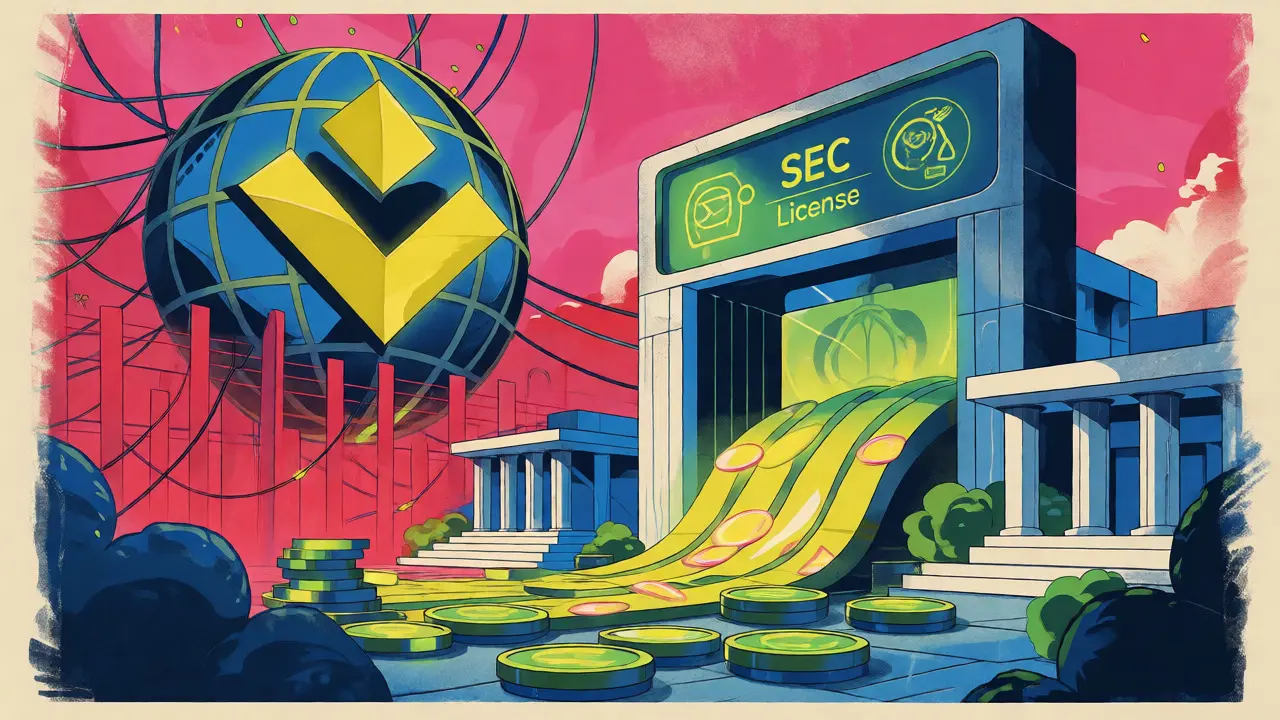
Think your favorite crypto exchange is safe just because you can still log in? In Nigeria, that assumption might cost you. As of late 2025 and heading into 2026, the landscape has shifted from a simple "ban" to a complex web of licenses, suspensions, and functional restrictions. If you are trading Naira for Bitcoin or Ethereum, you need to know exactly which platforms are legally cleared to operate and which ones are operating on borrowed time.
The short answer? There isn't one single list of "banned" names like there was in 2021. Instead, Nigeria now operates under a licensing regime. If an exchange doesn't have a license from the Securities and Exchange Commission (SEC), it effectively faces a ban on local fiat operations. This distinction matters. You might still be able to trade crypto-to-crypto on some global giants, but moving money in and out of your bank account is where the walls close in.
The End of Blanket Bans: How Nigeria’s Rules Changed
Rewind to February 2021. The Central Bank of Nigeria (CBN) told banks to cut ties with crypto businesses. It was a hard stop. Fast forward to today, September 2026, and the story is different. The CBN lifted those banking restrictions in late 2023, opening the door again. But this time, they didn’t leave it wide open. They installed a gatekeeper.
The game-changer was the Investments and Securities Act (ISA) 2025. Signed by President Bola Ahmed Tinubu, this law reclassified digital assets as securities. That means if you want to run an exchange here, you aren't just running a tech platform; you're handling financial instruments. You need permission. Specifically, you need a Virtual Asset Service Provider (VASP) license from the SEC.
This shift created two distinct groups of exchanges:
- Licensed Platforms: These are fully legal. They can accept Naira deposits, pay out to bank accounts, and operate openly.
- Unlicensed/Restricted Platforms: These can often still facilitate crypto-to-crypto trades, but they cannot legally handle Naira transactions through local banking partners. Access might be blocked at the ISP level, or users may face friction when trying to cash out.
Binance: Banned or Just Restricted?
You’re probably wondering about Binance. It’s the biggest name in the room, so what’s its status? Technically, Binance isn't "banned" in the sense that your account gets deleted overnight. However, it faces severe operational restrictions that feel like a ban for the average user.
In early 2024, Binance suspended Naira P2P trades. Local internet service providers began blocking access to the domain. Today, if you try to deposit Naira directly from a Nigerian bank account into Binance, you’ll hit a wall. You can still hold Bitcoin or USDT on the platform, and you can trade them against other cryptocurrencies. But converting that crypto back to Naira and sending it to your GTBank or Zenith account? That’s the tricky part.
Most Nigerians use workarounds, like VPNs to access the site or using third-party payment processors for P2P transfers. But remember: relying on a workaround puts you in a regulatory gray area. If the SEC decides to tighten enforcement further in 2026, these loose threads could snap.
Who Is Actually Licensed Right Now?
If you want peace of mind, stick to the players who have done the paperwork. The SEC has been slow but steady in granting licenses. As of mid-2026, a handful of domestic platforms have secured full approval. These companies underwent rigorous vetting for Anti-Money Laundering (AML) compliance and Know Your Customer (KYC) standards.
Two names consistently pop up in official SEC announcements:
- Quidax: One of the first movers. They built their infrastructure specifically to meet Nigerian regulatory demands. Their ability to process local bank transfers reliably makes them a go-to for many traders.
- Busha: Another early adopter of the compliance framework. Like Quidax, Busha offers direct integration with Nigerian banks, allowing for seamless Naira deposits and withdrawals without the headache of P2P risks.
Other international exchanges are in the pipeline. Some are applying, others are waiting for clearer tax guidelines before committing. But until you see a platform listed on the SEC’s official register of licensed VASPs, treat it with caution.
| Exchange | Regulatory Status | Naira Deposits/Withdrawals | User Experience Note |
|---|---|---|---|
| Quidax | Licensed VASP | Direct Bank Integration | High reliability; fully compliant with ISA 2025. |
| Busha | Licensed VASP | Direct Bank Integration | User-friendly interface; strong local support. |
| Binance | Restricted/Unlicensed for Fiat | Suspended/Indirect | Crypto-to-Crypto works; Naira requires P2P/Workarounds. |
| Coinbase | No Local License | Not Supported Directly | Global platform; no direct Naira banking rails. |
| Bybit | Restricted | P2P Only | Popular for derivatives; fiat off-ramps rely on P2P trust. |
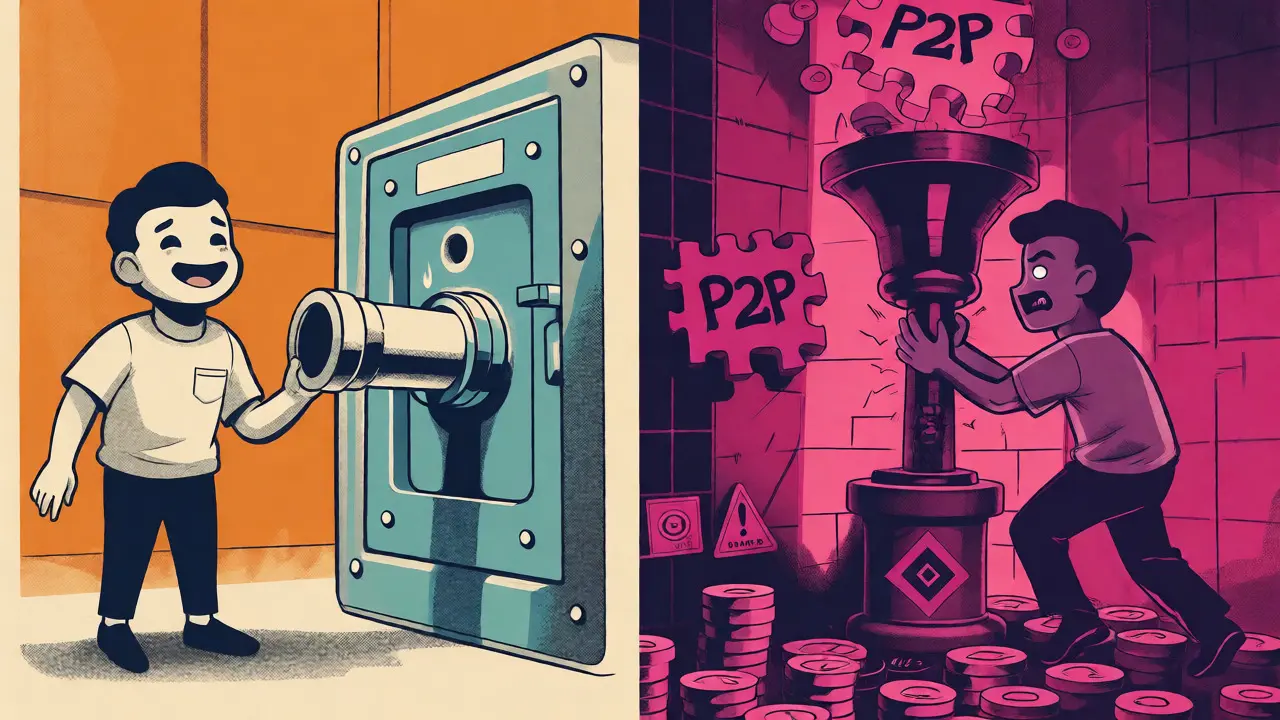
The Tax Trap: Why Unlicensed Platforms Are Riskier Now
It’s not just about whether you can buy Bitcoin. It’s about what happens when you sell it. The Nigeria Tax Administration Act (NTAA) 2025 introduced strict compliance rules. While the main implementation kicks in fully in 2026, the pressure is already building.
Here is the scary part for users of unlicensed exchanges: If the government cracks down on a platform for non-compliance, they can freeze assets. More importantly, the new laws impose heavy penalties on VASPs that fail to report transactions. A defaulting exchange could face fines starting at ₦10 million ($6,693) for the first month of non-compliance, plus ₦1 million every month after that.
Why does this matter to you? Because unlicensed exchanges often pass these costs-or the risk of shutdown-onto you. Licensed platforms absorb these compliance costs as part of doing business. Unlicensed ones might suddenly raise fees, limit withdrawal speeds, or restrict features to stay afloat. Don’t let a lower fee today cost you your entire portfolio tomorrow.
How to Check if Your Exchange Is Safe
Don’t take marketing claims at face value. "Coming soon to Nigeria" isn't the same as "Licensed." Here is a quick checklist to verify an exchange's standing before you deposit significant funds:
- Check the SEC Register: Visit the official SEC website. Look for the list of registered Digital Asset Exchanges. If the name isn't there, they don't have a license yet.
- Look for the VASP Number: Legitimate licensed exchanges will display their registration number prominently in their footer or About section.
- Test the Banking Rails: Can you deposit Naira directly from your bank app? If the only option is P2P (Peer-to-Peer), the exchange likely lacks direct banking partnerships due to regulatory hurdles.
- Review Recent News: Search for recent press releases from the SEC regarding that specific company. Has there been a warning issued? A suspension notice?
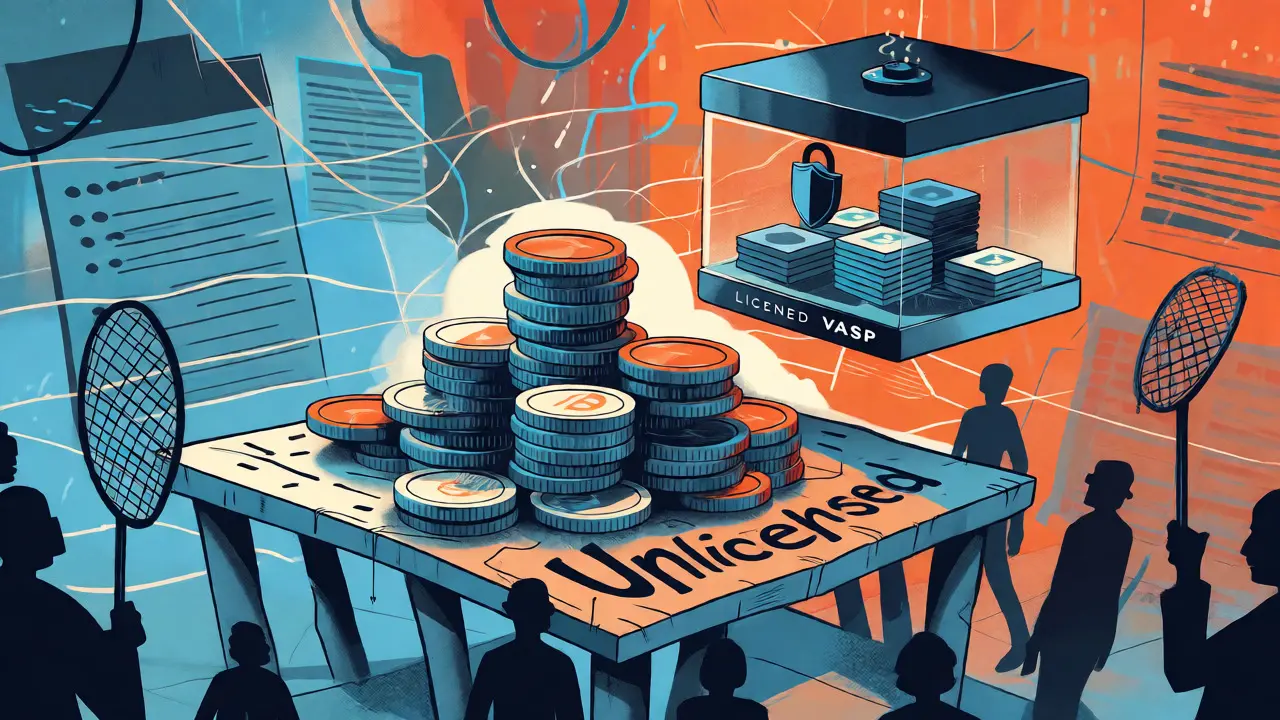
What Happens If You Use a Banned Platform?
So, you ignored the warnings and used an unlicensed exchange. What’s the worst-case scenario? For most retail users, nothing immediate happens to your personal wallet. The SEC targets the businesses, not typically the individual traders holding small amounts.
However, the risks are real:
- Liquidity Issues: If an exchange loses its banking partner, you might find yourself stuck with crypto you can't easily convert to cash.
- Access Blocks: ISPs can block domains at any time. If you rely on a specific app that gets geo-blocked, you lose easy access to your funds.
- Fraud Exposure: Licensed exchanges are required to segregate customer funds. Unlicensed ones might mix your money with theirs. If they go bust, you become an unsecured creditor.
The Economic and Financial Crimes Commission (EFCC) has also stepped up investigations into crypto-related fraud. Using unregulated platforms increases your exposure to scams that lack the oversight protections found on licensed sites.
The Future: DeFi and Stablecoins Next?
Nigeria’s crypto market is huge. Between July 2024 and June 2025, the country received an estimated $92.1 billion in cryptocurrency value. That’s nearly double South Africa’s activity. Regulators know they can’t ignore this volume forever.
Expect the net to widen. The SEC is currently reviewing applications for Decentralized Finance (DeFi) protocols and stablecoin issuers. While Bitcoin and Ethereum are clear-cut securities or commodities depending on classification, things get fuzzy with yield-bearing tokens. By late 2026, we might see specific bans on certain high-risk DeFi projects that promise unrealistic returns, similar to how Ponzi schemes are explicitly targeted under the new law.
For now, the smart play is simple: Stick to the licensed few. The convenience of a global giant like Binance isn't worth the regulatory uncertainty when you can move Naira instantly on Quidax or Busha. Keep your eye on the SEC updates, because in Nigeria, the rules change fast.
Is Binance completely banned in Nigeria?
No, Binance is not completely banned. Users can still access the platform for crypto-to-crypto trading. However, direct Naira deposits and withdrawals via local banks are suspended. Most users rely on Peer-to-Peer (P2P) trading or VPNs to maintain access, placing it in a restricted rather than prohibited category.
Which crypto exchanges are licensed in Nigeria?
As of 2026, platforms like Quidax and Busha have received formal licensing from the Securities and Exchange Commission (SEC). These platforms are authorized to handle Naira transactions and operate within the legal framework established by the Investments and Securities Act (ISA) 2025.
Can I be fined for using an unlicensed crypto exchange?
Generally, regulators target the exchange operators, not individual users. However, using unlicensed platforms exposes you to risks such as frozen withdrawals, lack of consumer protection, and potential difficulties in proving ownership of funds during disputes. The primary financial penalties apply to the VASPs themselves.
What is a VASP license in Nigeria?
A Virtual Asset Service Provider (VASP) license is a permit issued by the SEC allowing a company to offer crypto services like trading, custody, and transfers. It ensures the provider complies with Anti-Money Laundering (AML) and Know Your Customer (KYC) regulations, providing a layer of security for Nigerian investors.
Are taxes higher on unlicensed exchanges?
The tax rate itself hasn't changed drastically, but compliance costs do. The Nigeria Tax Administration Act imposes strict reporting duties. Unlicensed exchanges may struggle to provide proper tax documentation, potentially complicating your personal tax filings or leading to indirect costs passed on through higher fees.

Newman Thurairatnam
September 18, 2026 AT 14:57It is with a heavy heart and a skeptical eye that I observe this regulatory charade. The government does not care about your Bitcoin; they care about the surveillance state. :(
They claim it is for "security," but in truth, it is for control. Every transaction is watched. Every wallet is mapped. This VASP license is merely a leash put on the dogs of finance. We are not free traders anymore; we are monitored subjects. :(
keanu macasieb
September 19, 2026 AT 23:27USA made it. USA lost it. Now Nigeria copies our mistakes because they love bureaucracy more than freedom.
Binance getting choked out? Good. Let them rot. If you need a VPN to trade, you already lost the war against the deep state.
Andy Hunns
September 21, 2026 AT 08:14I am absolutely terrified right now! 😱 You don't understand the danger! If you aren't using Quidax or Busha, you are literally handing your life savings to criminals!
I tried to use Bybit last week and my heart stopped! 😰 What if they freeze it? What if the EFCC comes knocking at MY door?! I can't sleep knowing my funds are on an unlicensed platform! It's dangerous! It's reckless! Why would anyone risk it?! 😭
Christy Keirn
September 22, 2026 AT 00:15Oh please. Spare me the drama.
Some people here act like holding crypto is a moral crusade. It’s just money. And like all money, it gets taxed and regulated eventually. Grow up. 🙄
If you’re too lazy to check the SEC register, that’s on you. Don’t blame the "deep state" for your own incompetence.
Anthony Fudge
September 22, 2026 AT 10:28This is fascinating actually, because when you really dig into the history of financial regulation in emerging markets, you start to see a pattern where governments try to capture value from informal economies by formalizing them, which often ends up killing the very innovation that made those economies vibrant in the first place, especially when you consider how much volume was flowing through P2P channels before these strict KYC/AML requirements were enforced, because let's be honest, most of those transactions weren't happening for illicit reasons but rather because the traditional banking rails were too slow or too expensive for everyday users who just wanted to send value across borders without paying 5% fees to Western Union, so now that we have this new ISA 2025 framework, I wonder if we will see a resurgence of DeFi protocols that bypass these centralized exchanges entirely, or if the regulators will find a way to tax the smart contracts themselves, which seems technically difficult but politically inevitable given how much revenue they are missing out on compared to what they could collect if they had full visibility into every single swap and yield farm interaction that happens on-chain, and honestly, it makes me think about whether we are moving toward a world where privacy is a luxury good only available to the wealthy who can afford offshore jurisdictions, while the average Nigerian trader has to jump through hoops just to cash out their earnings, which feels less like progress and more like a regression in terms of financial accessibility and autonomy for the common person.
Rebecca Frank
September 23, 2026 AT 02:50It is simply irresponsible to keep assets on platforms that haven't done their due diligence. Compliance isn't optional; it's basic decency towards other investors.
We should support companies that follow the rules, not reward those that cut corners.
Jacquelyn Miller
September 23, 2026 AT 18:04Is it... really? ... Or is it just another layer of control? ... Think about it. ... The "ban" wasn't a ban, it was a filter. ... A sieve for the compliant. ... Everything else falls through. ... Into the void. ... Or into the hands of the few. ... Who knows? ... Maybe we are all just pawns in a game we didn't agree to play. ... Just saying. ... ;)
Manoj Ramachandran
September 24, 2026 AT 15:20I appreciate the detailed breakdown provided in the post. It is quite helpful to have such clarity amidst the confusion.
From a personal perspective, having reliable access to local bank transfers via licensed entities like Quidax provides a sense of security that global giants, despite their size, currently lack in this specific jurisdiction. It allows for peace of mind when managing daily finances.
I hope more platforms achieve this status soon, as competition usually benefits the consumer. Thank you for sharing this update.
Manish Pahuja
September 25, 2026 AT 08:30Keep grinding fam! 💪 The market moves fast, so stay sharp and stick to what works. Whether it's Binance or Quidax, just make sure you're safe and making moves. You got this! 🚀