You’ve probably heard of Dogecoin or Shiba Inu. But have you heard of Catson? It’s a new player in the crowded world of meme coins, riding the wave of internet culture on the Base blockchain. If you’re wondering what this cat-themed token is all about, why it exists, and whether it’s worth your attention, you’re in the right place. We’ll break down the facts, the hype, and the risks so you can make an informed decision.
At its core, Catson is a speculative meme cryptocurrency token deployed on the Base Layer-2 network, marketed with a 'Boys Club' gang aesthetic featuring characters like Pepe and Brett. It doesn’t offer utility, governance, or staking rewards. Instead, it relies entirely on community sentiment, viral marketing, and a specific tokenomics strategy involving massive supply burns. Before you consider buying even a fraction of a cent’s worth, you need to understand exactly what you’re dealing with.
The Origin Story: A Character, Not a Company
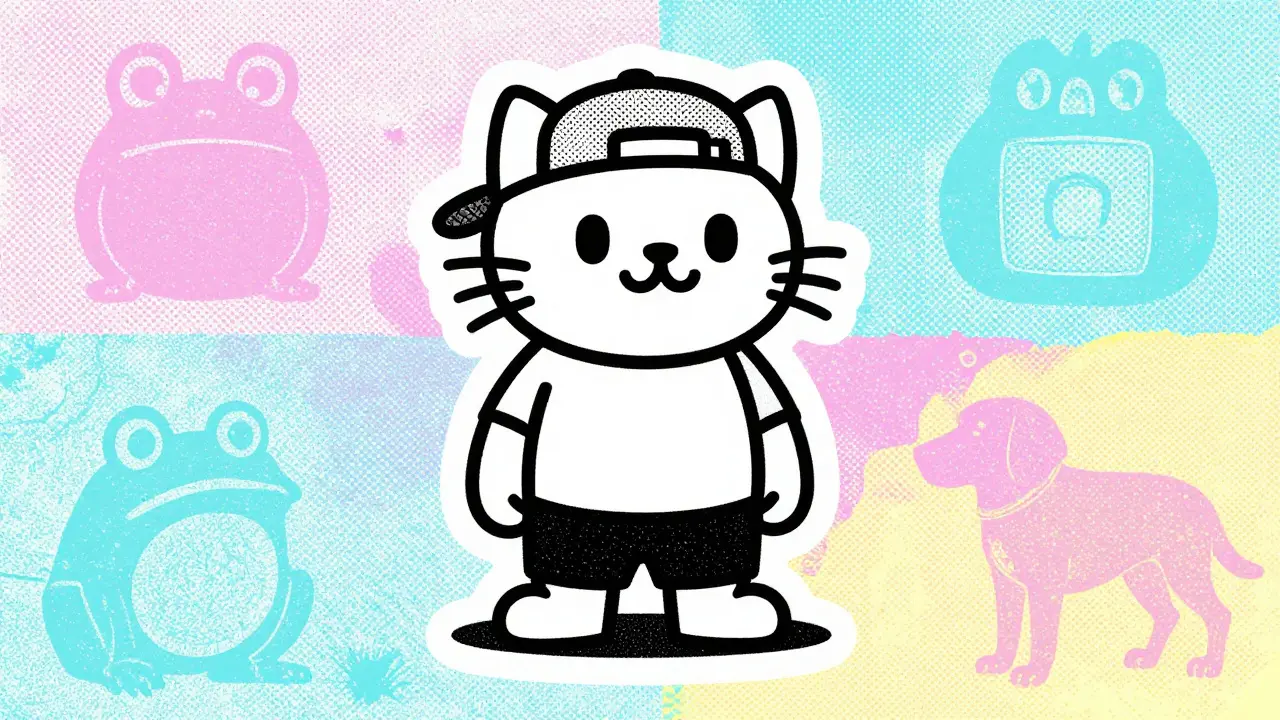
Unlike traditional cryptocurrencies that launch with whitepapers, roadmaps, and named founders, Catson emerged from the ether of anonymous internet culture. The project centers around a character named “Catson,” described as a fun-loving, carefree cat who is part of the “Boys Club” gang alongside other meme icons like Pepe and Brett. This narrative ties directly into the broader meme ecosystem on the Base chain, which has seen a surge in tokens inspired by Matt Furie’s Boys Club comics.
There is no public team behind Catson. No CEO, no CTO, no corporate entity. The smart contract was deployed anonymously, and ownership has been renounced. This means the creators gave up control over the code, preventing them from changing fees, minting new tokens, or blacklisting addresses. While this sounds secure, it also means there’s no one to call if something goes wrong. You are trading based purely on trust in the community and the mechanics of the contract itself.
Tokenomics: The Burn Mechanism Explained
The main selling point of Catson is its aggressive supply reduction strategy. Here are the key numbers you need to know:
- Maximum Supply: 1,000,000,000 (1 billion) CAT tokens.
- Circulating Supply: Approximately 430,000,000 CAT tokens.
- Burned Percentage: Reported between 56% and 57% of the total supply.
When a token is “burned,” it is sent to a wallet address from which it can never be retrieved-effectively removing it from circulation forever. The claim here is that over half of the initial supply has already been bought from the market and burned. This reduces the total number of tokens available, which theoretically increases scarcity. If demand stays the same while supply drops, price should rise. However, remember that this is a self-reported figure. Without an independent audit verifying the transaction hashes of these burns, we have to take the developers’ word for it.
| Attribute | Value | Context |
|---|---|---|
| Total Max Supply | 1,000,000,000 | Hard cap; cannot exceed this number |
| Circulating Supply | ~430,000,000 | Tokens currently in wallets and exchanges |
| Burned Supply | ~570,000,000 | Removed from circulation permanently |
| Liquidity Status | Burned | LP tokens sent to dead address; cannot be withdrawn |
| Contract Ownership | Renounced | Deployer lost admin privileges; code is immutable |
Market Performance: Micro-Cap Reality
If you’re looking for stability, look elsewhere. Catson is a micro-cap asset. As of recent data, its market capitalization hovers around $15,000 to $25,000. To put that in perspective, major meme coins like Dogecoin or Shiba Inu have market caps in the billions. Even leading tokens on the Base chain often reach hundreds of millions at their peaks.
The price of CAT has seen extreme volatility. It hit an all-time high of roughly $0.002705 but has since crashed by over 98%, trading closer to $0.000034. Daily trading volume is incredibly low-often less than $5 in a 24-hour period on decentralized exchanges like Uniswap V2 (Base). This lack of liquidity means that even small buy or sell orders can cause significant price swings. You might see a green candle on your chart, but try to sell a large amount, and you could face massive slippage or fail to find a buyer at all.
How to Buy Catson (CAT)
Because Catson is not listed on major centralized exchanges like Coinbase Spot or Binance for direct trading, you’ll need to use a decentralized exchange (DEX). Here is the step-by-step process:
- Get ETH: Buy Ethereum on a major exchange like Coinbase or Kraken.
- Bridge to Base: Transfer your ETH to the Base network using a bridge service like the official Base Bridge or third-party tools like Orbiter.
- Connect Wallet: Use a Web3 wallet like MetaMask or Rabby, ensuring it’s connected to the Base network.
- Swap on DEX: Go to Uniswap V2 (Base) or Bitget Swap. Paste the official Catson contract address:
0xcA8e8d244f0d219a6Fc9e4793C635cEA98d0399C. - Execute Trade: Swap your WETH or ETH for CAT. Be mindful of gas fees and slippage settings due to low liquidity.
Note: Always double-check the contract address. Scammers often create fake tokens with similar names. The only legitimate Catson token is the one deployed on Base with the specific address above.
Risks and Red Flags
Meme coins are inherently risky, but Catson has several specific red flags you should weigh carefully:
- No Utility: There is no product, game, or service attached to CAT. Its value is derived solely from speculation and meme culture.
- Low Liquidity: With daily volumes under $10, exiting a position can be difficult without crashing the price.
- Unverified Claims: The 57% burn claim is not independently audited. While the contract is renounced, past vulnerabilities before renouncement cannot be patched.
- Anonymity: No team identity means no accountability. If the community loses interest, the project dies instantly.
- Competition: The Base chain is flooded with meme coins. Catson competes with established projects like BRETT and PEPE-themed assets that have larger communities and higher visibility.
Expert analysis from major firms like Messari or Delphi Digital does not cover Catson. This absence indicates it hasn’t reached the threshold for institutional or serious retail scrutiny. You are operating in the wild west of crypto.
Is Catson a Good Investment?
Let’s be clear: Catson is not an investment in the traditional sense. It’s a speculative bet on internet virality. If you enjoy meme culture, follow the Boys Club narrative, and want to gamble with money you can afford to lose entirely, Catson offers that opportunity. The renounced contract and burned liquidity do provide some protection against a classic “rug pull” where developers drain the funds.
However, do not expect steady growth or dividends. The price is driven by hype, social media trends, and broader crypto market sentiment. If the bull market heats up, micro-caps like CAT might see sudden spikes. But they can just as easily drop to zero if interest fades. Treat any capital allocated to Catson as entertainment expenses, not portfolio allocations.
What is the contract address for Catson (CAT)?
The official contract address for Catson on the Base blockchain is 0xcA8e8d244f0d219a6Fc9e4793C635cEA98d0399C. Always verify this address on multiple sources before trading to avoid scams.
Can I buy Catson on Coinbase?
No, you cannot buy Catson directly on Coinbase Spot. Coinbase may list the price for informational purposes, but trading must be done on decentralized exchanges like Uniswap V2 (Base) or via swap services like Bitget Swap.
Why is Catson’s price so low?
Catson is a micro-cap meme coin with extremely low liquidity and high competition. Its price reflects limited trading volume and speculative demand rather than fundamental utility or widespread adoption.
Is the Catson team anonymous?
Yes, the team behind Catson is completely anonymous. The smart contract ownership has been renounced, meaning no individual or group controls the token’s parameters anymore.
What happens if the Catson community loses interest?
If the community loses interest, trading volume will likely dry up, making it nearly impossible to sell your tokens. The price could collapse to near-zero as buyers disappear, leaving holders with illiquid assets.