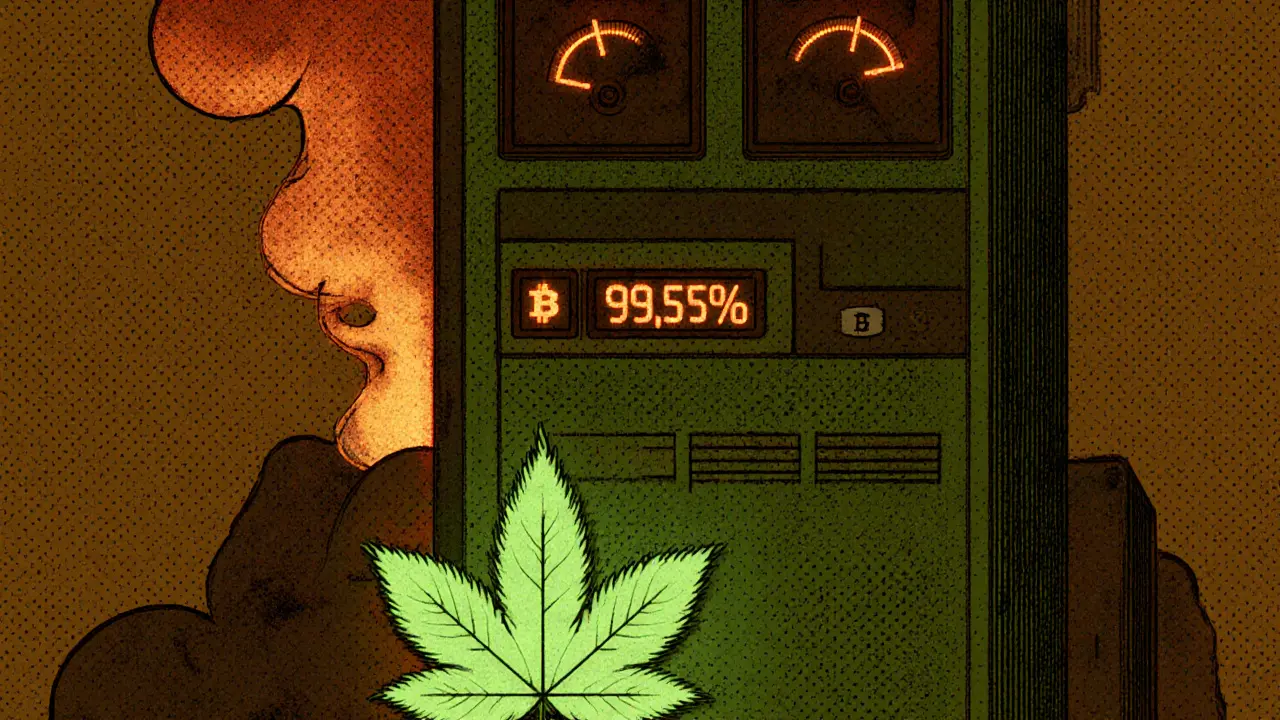
Green Blockchain Energy Calculator
Discover how much energy and carbon emissions are saved by using green blockchain technologies versus traditional Proof-of-Work systems. Input your transaction volume to see the real environmental impact.
Enter values above to see the energy comparison.
Why This Matters
Traditional Proof-of-Work blockchains like Bitcoin consume massive amounts of energy. Switching to green alternatives like Proof-of-Stake can reduce energy use by over 99% while maintaining security and decentralization.
Most people think of blockchain as digital money, smart contracts, or unbreakable ledgers. But few realize that the most popular blockchains, like Bitcoin and early Ethereum, are massive energy users. In fact, green blockchain isn’t just a buzzword-it’s the only way blockchain can survive the next decade. If you’re wondering how a technology known for mining rigs and electricity bills can ever be eco-friendly, you’re not alone. The truth is, green blockchain isn’t about making blockchain less powerful. It’s about making it smarter.
Why Traditional Blockchains Waste So Much Energy
Bitcoin’s original design relies on Proof-of-Work (PoW), a system where miners compete to solve complex math puzzles. The first one to solve it gets rewarded with new coins. Sounds fair, right? But here’s the catch: thousands of machines are running 24/7, using more electricity than entire countries. In 2024, Bitcoin’s annual energy use was estimated at over 150 terawatt-hours-more than Argentina or the Netherlands. Most of that power comes from fossil fuels, especially in regions where electricity is cheap and unregulated. This isn’t just a technical problem. It’s a credibility problem. As climate concerns grow, investors, regulators, and users are asking: Why should we trust a system that harms the planet? Green blockchain answers that question by rethinking how blocks are verified-not by brute force, but by design.How Green Blockchain Works: The Core Shift
Green blockchain doesn’t throw out decentralization or security. It swaps out the energy-hungry parts. The biggest change? Replacing Proof-of-Work with Proof-of-Stake (PoS) and similar systems. In Proof-of-Stake, instead of racing to solve puzzles, validators are chosen based on how many coins they “stake”-or lock up-as collateral. The more you stake, the higher your chance of being selected to verify the next block. No mining rigs. No overheating GPUs. Just a computer running quietly in the background. Ethereum switched to PoS in 2022 and cut its energy use by 99.95%. That’s not a small improvement. That’s a revolution. Other models like Delegated Proof-of-Stake (DPoS) and Proof-of-Authority (PoA) take this further. In DPoS, token holders vote for a small group of trusted validators. In PoA, identity and reputation replace financial stakes. Both use a fraction of the energy of PoW while keeping the network secure.It’s Not Just the Consensus Mechanism
Green blockchain isn’t just about changing how blocks are added. It’s about what powers those blocks. Even with PoS, computers still need electricity. That’s why leading green blockchain projects pair their networks with renewable energy. Some networks, like Algorand and Cardano, run their nodes on solar- or wind-powered data centers. Others partner with green energy providers to ensure every transaction is backed by clean power. Some even use excess renewable energy that would otherwise go to waste-like surplus solar from midday or wind during off-peak hours. Layer 2 solutions also play a big role. These are secondary systems built on top of the main blockchain to handle more transactions without overloading the base layer. Examples include Polygon for Ethereum and Lightning Network for Bitcoin. By batching thousands of transactions into one on-chain record, Layer 2 cuts down on the number of energy-intensive operations needed.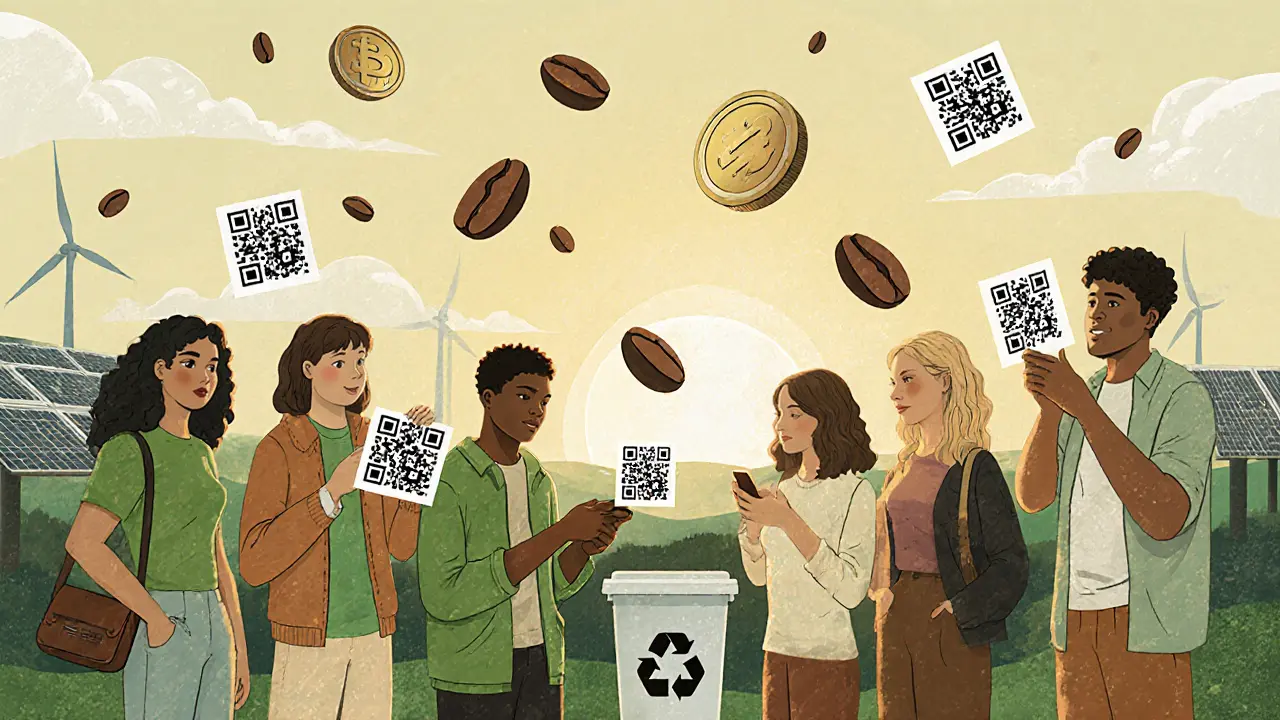
What Green Blockchain Actually Does in the Real World
Green blockchain isn’t just about being less harmful. It’s becoming a tool for environmental good. Take carbon credits. Companies used to track emissions and credits using paper forms or centralized databases-easy to manipulate, hard to verify. Now, platforms like ClimateChain and Veridium use green blockchain to record every ton of CO2 reduced or removed. Each credit is a unique digital token, traceable from creation to sale. No double-counting. No fraud. Just transparent, tamper-proof records. In agriculture, farmers in Kenya and Brazil use blockchain to prove their coffee or cocoa is grown sustainably. Buyers can scan a QR code and see the entire journey: soil type, water use, no deforestation, fair wages. That’s not marketing. That’s verified truth. Even waste management is getting a green blockchain upgrade. Cities in Germany and Canada are testing systems where recycling bins are tagged with blockchain IDs. When you recycle, your contribution is recorded and rewarded with small tokens. The data is public, so cities can track participation and optimize collection routes-all with minimal energy use.Challenges: Can Green Blockchain Be Secure Enough?
Critics say PoS and other alternatives are less secure than PoW. They argue that PoW’s energy cost is actually a feature-it makes attacks too expensive to attempt. If you want to hack Bitcoin, you’d need to control more than half the world’s mining power. That’s nearly impossible. With PoS, the attack vector changes. Instead of buying hardware, you’d need to buy a huge chunk of the network’s tokens. But here’s the twist: if you try to cheat, you lose your stake. It’s like betting your own money on a game-and if you cheat, you get kicked out and lose everything. That’s a powerful deterrent. Still, green blockchain projects are working hard to improve. Many now combine PoS with Byzantine Fault Tolerance (BFT) protocols, which ensure agreement even if some nodes act maliciously. Others use multi-signature approvals and decentralized governance to prevent centralization. The truth? No system is perfect. But green blockchain offers a better trade-off: near-zero energy use, strong security, and real environmental benefits. That’s a win most traditional systems can’t match.
Who’s Leading the Way?
Several blockchains have already made the switch and are setting the standard:- Ethereum: After its 2022 upgrade, it’s the largest green blockchain by market cap and developer activity.
- Cardano: Built from the ground up with PoS. Uses peer-reviewed research to guide every update.
- Algorand: Pure PoS with carbon-neutral operations. Powers projects like UNICEF’s digital ID systems.
- Solana: Uses a hybrid consensus model that’s fast and low-energy, though its centralization risks are debated.
- Polkadot: Allows multiple blockchains to connect securely while keeping energy use low through shared security.
What This Means for You
If you’re a developer, investor, or just someone who uses crypto: your choices matter. Every time you use a PoW-based blockchain, you’re indirectly supporting high carbon emissions. Every time you choose a green alternative, you’re voting for a cleaner digital future. You don’t need to be an expert to act. When you buy crypto, check which network it runs on. When you invest in a blockchain startup, ask how they handle energy. When you use an NFT or DeFi app, see if it’s built on Ethereum, Cardano, or something else. Green blockchain isn’t about giving up innovation. It’s about making innovation responsible. The technology that once symbolized disruption is now being reshaped by responsibility-and that’s the real breakthrough.What’s Next for Green Blockchain?
The next five years will be critical. As governments roll out carbon taxes on digital infrastructure, PoW blockchains may face legal restrictions. Some countries are already banning crypto mining for energy reasons. Others are creating tax breaks for green blockchain projects. We’ll also see more integration with IoT devices, smart grids, and climate monitoring systems. Imagine sensors in rainforests sending real-time deforestation data to a green blockchain, triggering automatic payments to local conservation groups. That’s not science fiction. It’s already being piloted in the Amazon. The goal isn’t to replace all blockchains overnight. It’s to make the default choice a sustainable one. And that’s exactly what’s happening.


Jess Bothun-Berg
November 30, 2025 AT 13:31Steve Savage
December 1, 2025 AT 22:25Joe B.
December 2, 2025 AT 06:45Rod Filoteo
December 4, 2025 AT 06:17Layla Hu
December 5, 2025 AT 04:16Nora Colombie
December 7, 2025 AT 03:01