Imagine a digital asset that started as a joke but now claims to be the backbone for fair airdrops across an entire blockchain. That is exactly where MSQ Cycle Burn (ticker: BURN) sits today. It is a micro-cap cryptocurrency built on the Internet Computer (ICP) blockchain, designed around a unique 'burn-to-mine' mechanic where users destroy ICP tokens to earn BURN rewards. But if you look at the charts right now, you might wonder why anyone cares. The price has crashed from its highs, trading volume is practically non-existent, and some data sources say it hasn't traded in weeks. So, what is going on with this coin?
This article breaks down the actual mechanics of how BURN works, why its market cap is so tiny, and whether its promise of becoming an "airdrop machine" holds any water in mid-2026. We will look past the hype and focus on the hard data from exchanges like MEXC, Bitget, and CoinGecko to give you a clear picture of the risks involved.
The Core Mechanism: Burning ICP to Mine BURN
To understand BURN, you first need to understand the Internet Computer Protocol (ICP). Unlike Ethereum or Bitcoin, ICP hosts smart contracts called canisters directly on its mainnet. MSQ Cycle Burn is one such dApp (decentralized application). Its core loop is simple but aggressive: users deposit ICP into the pool and permanently burn it. In return, they get a share of newly minted BURN tokens.
Think of it like a lottery where buying a ticket costs you real money (the burned ICP), and the prize is the new currency (BURN). The more ICP you burn, the bigger your initial share of the mining pool. However, there is a catch designed to prevent early whales from dominating forever. The system includes a decay mechanism. Every block, each participant loses a tiny piece of their share. This forces new entrants to have a fighting chance, creating a dynamic equilibrium rather than a static hierarchy.
Here is how the inflation model works, which is crucial for understanding supply:
- Initial Phase: Block rewards are high to encourage participation.
- Halving Schedule: The reward per block halves every 5,040 blocks (roughly one week).
- Block Time Adjustment: Once the reward hits 1 BURN per block, the time between blocks doubles every 5,040 blocks until it reaches 720 minutes (12 hours).
This structure mimics Bitcoin’s halving events but compresses them into a much shorter timeline. It creates an initial burst of inflation followed by a rapid slowdown in issuance. As of mid-2026, the total supply is capped around 10,200,000 BURN, but because of the burn mechanism, the circulating supply dynamics are complex and often reported inconsistently across platforms.
From Memecoin to "Airdrop Machine"
BURN didn’t start with a serious whitepaper. It launched in 2024 as a memecoin-a term usually reserved for tokens driven by community humor and speculation rather than utility. But the team behind MSQ.Burn quickly pivoted. They introduced Proof-of-Personhood and on-chain randomness features. Why? To solve a common problem in crypto: unfair distribution.
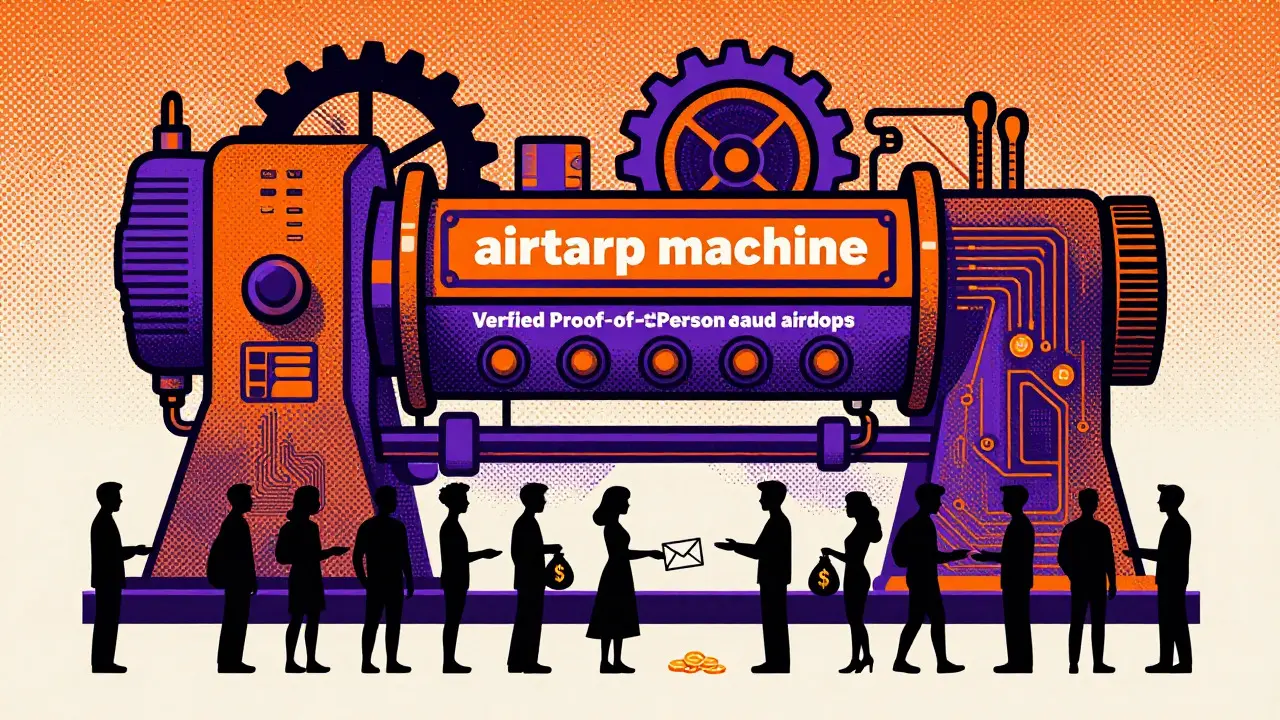
In typical memecoin launches, bots and wealthy insiders buy up most of the supply before regular people can participate. MSQ Cycle Burn aims to fix this by using its mining pool members as a verified base of unique humans. The long-term goal is to become an "airdrop machine." Other projects could theoretically use the BURN network to distribute their own tokens fairly among these verified participants.
It sounds ambitious. Instead of just being a speculative coin, BURN wants to be infrastructure. However, as of July 2026, there is no public evidence of major partner projects using this service. No named collaborations, no throughput metrics, and no case studies. It remains a theoretical roadmap item rather than a live feature generating revenue or adoption.
Market Data Reality Check: Volatility and Liquidity
If you are looking to trade BURN, you need to brace yourself for extreme volatility and thin liquidity. Let’s look at the numbers from reliable aggregators like CoinGecko, CoinMarketCap, and Bitget.
| Metric | Data Point | Source / Context |
|---|---|---|
| All-Time High (ATH) | $0.2187 | Bitget (Date unspecified, likely late 2024) |
| All-Time Low (ATL) | $0.003278 | Bitget (October 2025) |
| Current Price Range | $0.0008 - $0.012 | CoinGecko vs DexScreener (June-July 2026) |
| 24-Hour Volume | $1.05 - $5.10 | CoinGecko / LiquidityFinder (Extremely low) |
| Market Cap | ~$8,385 - $9,060 | CoinGecko / CoinMarketCap (Micro-cap status) |
Notice the drop from the ATH. From $0.21 down to less than a penny is a decline of over 95%. This is not unusual for microcaps, but it highlights the risk. You are not investing in a stable store of value; you are speculating on a niche experiment.
Liquidity is even more concerning. On ICPSwap, the primary decentralized exchange for ICP-based tokens, the 24-hour trading volume was recorded at just $1.06 in late June 2026. Another tracker, LiquidityFinder, showed $5.10 in volume. What does this mean for you? If you try to sell a significant amount of BURN, you will face massive slippage. Your sell order could crash the price further because there simply aren't enough buyers in the pool to absorb the sale.
Why Are There So Many Data Discrepancies?
If you check different sites, you will see conflicting information. Some say the circulating supply is 10.2 million; others say zero. Some show a price of $0.13 (from late 2024); others show $0.0008 (mid-2026). This confusion stems from two factors:
- Supply Definition: Because BURN is mined via burning ICP, the "circulating" supply depends on how many tokens have actually been claimed and moved out of the smart contract. Some aggregators count the total issued supply (10.2M), while others only count tokens actively held in wallets (which may appear lower or fluctuate wildly).
- Data Lag and Delisting: A Portuguese version of CoinGecko noted that BURN stopped trading on all listed exchanges nine days prior to July 1, 2026. When a token stops trading on major venues, price feeds go stale. Aggregators then rely on older data or single, illiquid DEX pairs, leading to wild discrepancies.
Always cross-reference multiple sources. Never trust a single price feed for a microcap like BURN.
Risks and Considerations for Investors
Before you consider burning your ICP to mine BURN, weigh these specific risks:
- Irreversibility: Burning ICP is permanent. Once you send ICP to the burn address, it is gone forever. You are betting entirely on the future value of BURN.
- Liquidity Trap: With daily volumes under $10, exiting your position can be difficult. You might hold BURN tokens that are worth thousands on paper but cannot be sold without crashing the price to near zero.
- Lack of Institutional Coverage: There are no analyst reports, no rating agencies, and no academic studies covering MSQ Cycle Burn. It is purely community-driven and speculative.
- Regulatory Uncertainty: Like most unregistered securities or commodities in crypto, BURN operates in a gray area. Changes in regulation regarding token burns or proof-of-personhood could impact its viability.
The project’s ranking hovers between #5,400 and #10,000 depending on the platform. This places it firmly in the "high-risk, experimental" category. It is not a blue-chip asset, nor is it a widely adopted utility token yet.
Is MSQ Cycle Burn Worth Your Attention?
For the average investor, probably not. The liquidity is too thin, and the price action is dominated by noise rather than fundamentals. However, for developers or enthusiasts deeply embedded in the Internet Computer ecosystem, BURN offers an interesting case study in tokenomics. It attempts to solve the "fair launch" problem through mechanical constraints (decay and burning) rather than just promises.
If you are curious, start small. Use a separate wallet, burn only what you can afford to lose completely, and monitor the official channels for any updates on the "airdrop machine" functionality. Until we see actual third-party projects utilizing the BURN network for distributions, it remains a speculative bet on a novel idea rather than a proven tool.
What is the current price of MSQ Cycle Burn (BURN)?
As of mid-2026, the price of BURN is highly volatile and varies significantly between data providers due to low liquidity. Reports range from approximately $0.0008 on CoinGecko to slightly higher figures on decentralized screens like DexScreener. Always check multiple sources as prices can be stale or inaccurate for micro-caps.
How do I earn BURN tokens?
You earn BURN by participating in the on-chain mining pool on the Internet Computer blockchain. This requires you to deposit ICP tokens and permanently burn them. Your share of the BURN rewards is proportional to the amount of ICP you burn, though this share decays over time to allow new participants to join.
Is BURN a safe investment?
No. BURN is considered a high-risk, speculative micro-cap asset. It has experienced drops of over 95% from its all-time high, has extremely low trading volume (often under $10/day), and lacks institutional backing or formal analyst coverage. Only invest funds you are prepared to lose entirely.
What is the total supply of BURN?
The total supply of MSQ Cycle Burn is approximately 10,200,000 tokens. However, the circulating supply is often reported inconsistently across platforms, ranging from zero to the full 10.2 million, depending on how each aggregator defines active circulation versus issued supply.
Where can I trade BURN?
BURN is primarily traded on ICPSwap, a decentralized exchange native to the Internet Computer. It has also been listed on centralized exchanges like MEXC and Bitget in the past, but liquidity on these venues has been very low. Recent data suggests trading activity may have paused or become negligible on many platforms as of mid-2026.