When you hear "crypto exchange," you probably think of Binance, Kraken, or even Uniswap. But what if the platform you're considering doesn't fit neatly into any of those boxes? That's where Tegro comes in - not just a trading platform, but a hybrid ecosystem trying to do too many things at once. And that’s exactly why you need to look closer before you put any money in.
What Is Tegro, Really?
Tegro isn’t a traditional exchange like Coinbase. It doesn’t hold your coins. It doesn’t even use the usual automated market maker (AMM) model that powers Uniswap or PancakeSwap. Instead, it’s built around an advanced orderbook system - the kind you’d find on centralized exchanges - but running on a decentralized, non-custodial backbone. That means you keep control of your wallet, but you get the speed and precision of a professional trading interface. It’s also not just about trading. Tegro tacks on a Web3 gaming marketplace where you can buy, sell, or trade NFTs from games like Axie Infinity. Then there’s Tegro Money - a payment processor for businesses that lets merchants accept crypto payments without 3D Secure, which is huge for mobile apps and fast-service industries like ride-sharing or food delivery. And finally, there’s a bounty system: gamers get paid to complete tasks in other games, and employers post rewards for specific achievements. So you’ve got trading, gaming, and payments - all tied together with a single token: TGR. Sounds ambitious? It is. But ambition doesn’t equal reliability.The Tech Behind Tegro
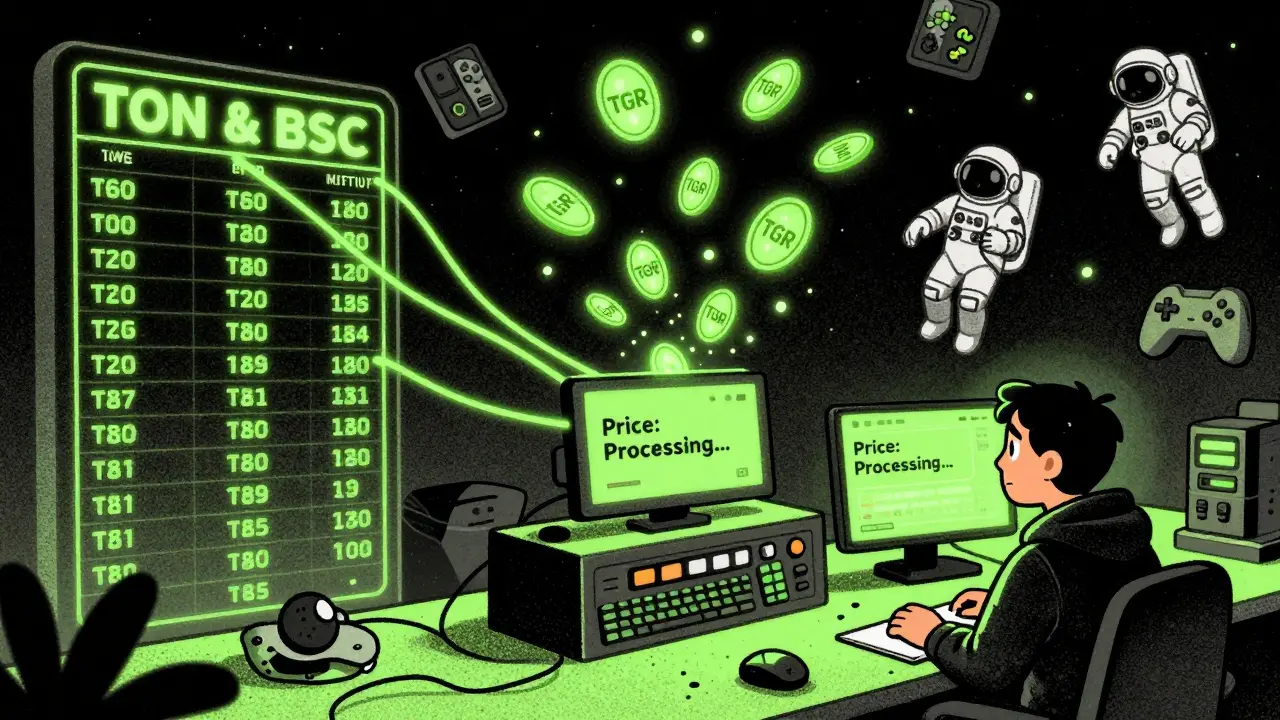
Tegro operates across two blockchains: The Open Network (TON) and Binance Smart Chain (BSC). This cross-chain setup lets users move assets between them without needing a third-party bridge. That’s smart design - bridges have been hacked for billions in losses over the last two years. But Tegro doesn’t say how secure its own bridge is. No audit reports. No public details. Just promises. The orderbook system is its standout feature. Unlike AMMs that rely on liquidity pools and can suffer from slippage on large trades, Tegro’s orderbook matches buyers and sellers directly. It claims gasless quotes - meaning you can see prices and place orders without paying upfront gas fees. That’s rare on DeFi platforms. But how? Is it using private mempools? Flashbots? The documentation doesn’t say. That’s a red flag. It also claims MEV protection. Maximum Extractable Value attacks - where miners or bots front-run your trades - are a real problem on Ethereum and BSC. Tegro says it blocks them. But without showing the mechanism - whether it’s time-locking orders, using encrypted mempools, or something else - you’re just taking their word for it.The TGR Token: What’s It Actually For?
TGR is the glue holding Tegro together. You use it to pay for trading fees, game marketplace commissions, merchant services via Tegro Money, and even to claim bounties. Sounds useful? Maybe. But here’s the problem: no one knows how many TGR tokens exist. Total supply? Unknown. Circulating supply? Not published. Vesting schedules? Missing. Staking rewards? No info. The token is listed on Blockspot.io, but the price, market cap, and liquidity data are either blank or stuck on "processing." That’s not normal. Even obscure tokens have some visibility on CoinGecko or CoinMarketCap. Tegro’s doesn’t. You can’t even find which exchanges list TGR. No liquidity pools on Uniswap. No trading pairs on DEXs. If you can’t buy it easily, how are you supposed to use it? And if no one’s trading it, how does it hold value?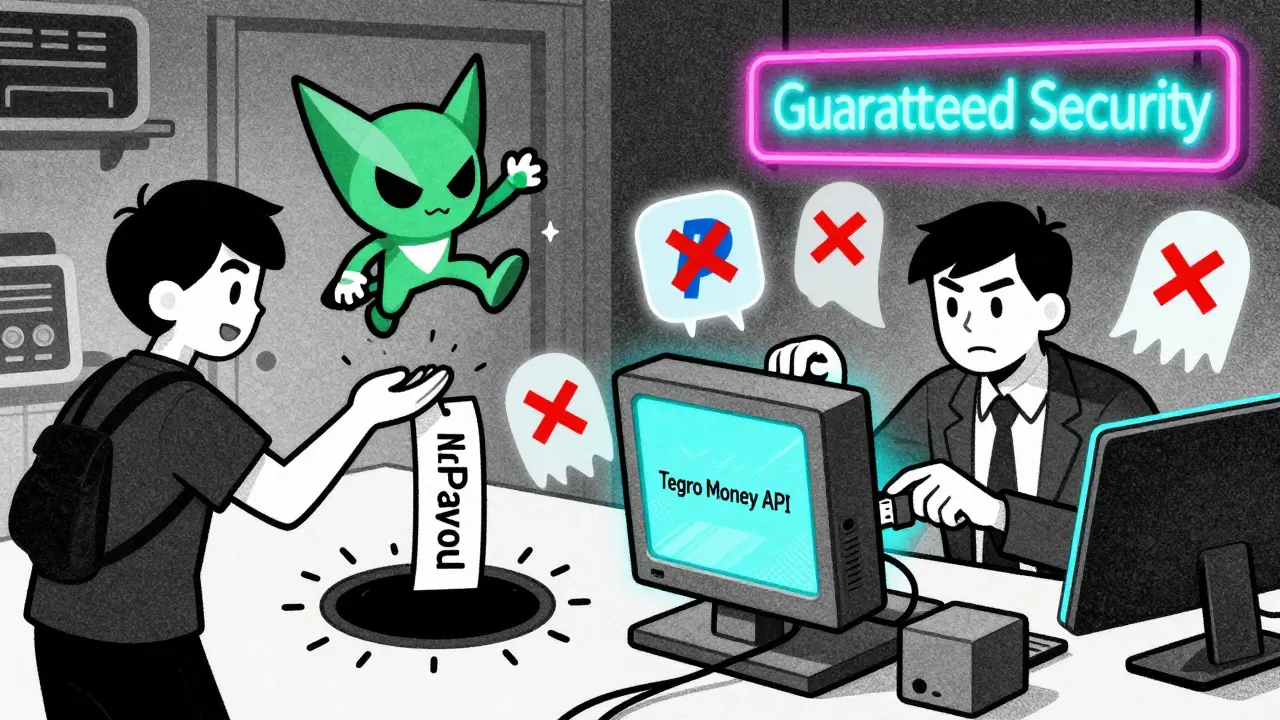
Gaming and the Bounty System
This is where Tegro tries to stand out. The gaming marketplace lets you trade in-game items as NFTs. The bounty system lets you earn crypto by playing games - like leveling up an Axie Infinity character or winning a match in a competitive title. It’s like Fiverr meets Web3 gaming. The interface is flashy: neon astronauts, glowing progress bars, 3D animations. It’s designed to hook younger users. But flashy doesn’t mean functional. There’s zero public data on how many bounties are posted daily. How many users are active? How many payouts have been processed? No case studies. No screenshots of real transactions. Just a concept. And what about game developers? Tegro claims to offer "Tegronomics" - economic frameworks to help them build sustainable in-game economies. But no developer has publicly confirmed integration. No game has launched on the platform. It’s all hypothetical.Tegro Money: Payments for Real Businesses
Tegro Money is the most grounded part of the platform. It lets businesses accept crypto payments via API - with support for mobile wallets, recurring subscriptions, and even AFT (Card2Account) payments for quick loan repayments. The documentation includes PHP code examples and seems technically solid. For small businesses or apps that need fast, low-friction payments - like a ride-hailing app or a gaming subscription - this could be useful. But again: no fee schedule. No comparison to Stripe or PayPal Crypto. No uptime stats. No customer testimonials. You’re being asked to integrate a payment system with no track record.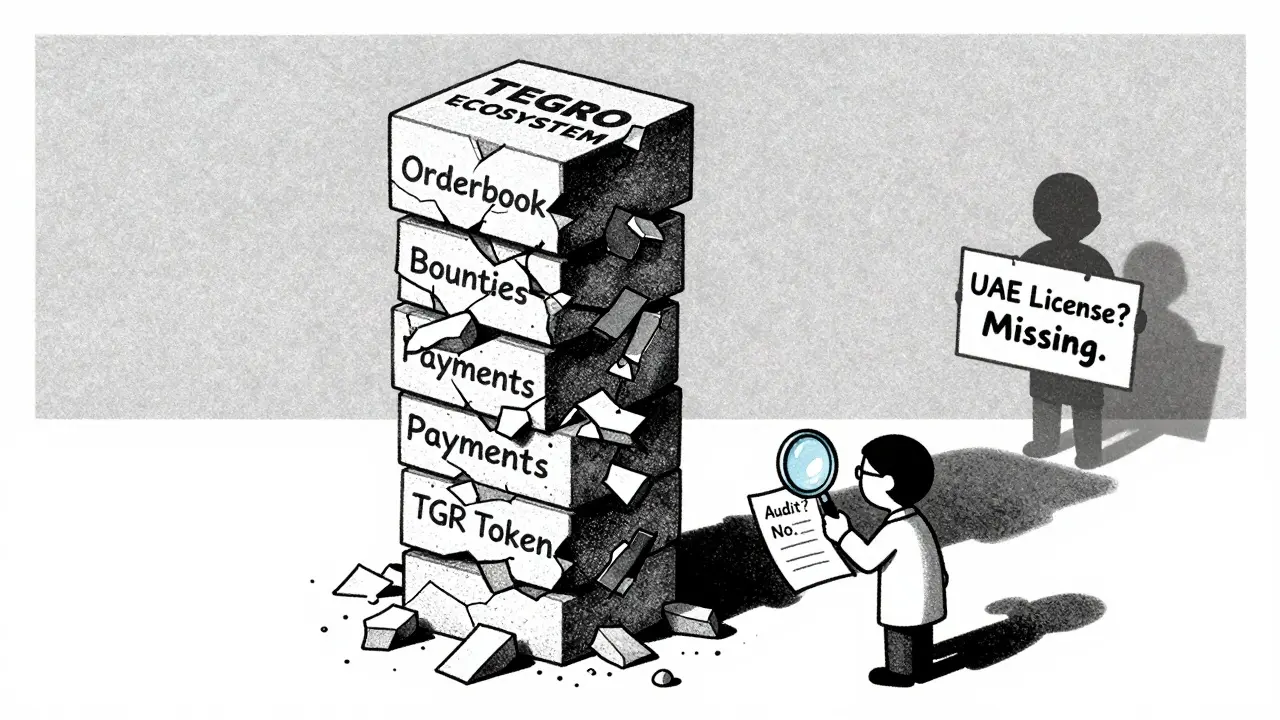
Security? Transparency? Where’s the Proof?
Let’s be blunt: Tegro is built on a foundation of assumptions. - No smart contract audits published. - No bug bounty program details. - No incident response plan. - No team bios. - No regulatory licenses. - No user reviews on Trustpilot, Reddit, or Bitcointalk. The GitHub repo under TegroTON has 40 followers. That’s not a community. That’s a ghost town. There are zero recent commits. No pull requests. No active development. And here’s the kicker: Tegro says it’s headquartered in the UAE. But no license from the UAE’s Virtual Assets Regulatory Authority (VARA) is listed. No legal terms. No privacy policy. If something goes wrong - your funds get stuck, a bug wipes out your order, or the platform vanishes - you have zero recourse.Who Is This For?
Tegro isn’t for beginners. It’s not even for most intermediate users. This is a platform built for: - High-frequency traders who want gasless quotes and MEV protection (but can’t verify if those features work). - Crypto gamers who want to cash out NFTs or complete bounties (but have no proof that payouts are reliable). - Merchants who want to bypass 3D Secure (but risk integrating with an untested system). If you’re looking for a safe place to trade Bitcoin or Ethereum? Stick with established exchanges. If you’re curious about Web3 gaming? Try ImmutableX or Enjin - they’ve been around for years with audits, partnerships, and real users. Tegro feels like a prototype that got marketed as a product. It has interesting pieces - the orderbook, the bounty system, the payment API - but none of them are proven. Without data, without transparency, without accountability, it’s a gamble.Final Verdict: Proceed With Extreme Caution
Tegro isn’t a scam. Not yet. But it’s dangerously close to being one. It’s built on ambition, not evidence. It makes bold claims - gasless trading, MEV protection, a $2 trillion gaming market - but offers zero proof. No audits. No user data. No liquidity. No team. No regulatory standing. If you still want to try it:- Start with $10, not $1,000.
- Test the orderbook with tiny trades.
- Try a single bounty - see if you get paid.
- Check if Tegro Money processes a real payment.
Is Tegro a centralized or decentralized exchange?
Tegro is a decentralized exchange (DEX) with a non-custodial orderbook system. Unlike centralized exchanges like Binance, Tegro doesn’t hold your funds. You trade directly from your wallet. But unlike most DEXs that use automated market makers (AMMs), Tegro uses an orderbook - similar to what you’d find on a centralized platform - making it more familiar to advanced traders.
Can I buy TGR token on major exchanges like Binance or Coinbase?
No, TGR is not listed on any major exchanges including Binance, Coinbase, Kraken, or Uniswap. There are no public trading pairs, no liquidity pools, and no verified market data. The only place it’s mentioned is on Blockspot.io, where price and supply data are either missing or stuck in "processing." Without a way to buy it easily, the token’s utility is severely limited.
Has Tegro been audited? Is it secure?
There is no public record of any smart contract audit for Tegro’s trading, gaming, or payment systems. No audit firm names, no dates, no reports. The platform claims MEV protection and a non-custodial model, but doesn’t explain how. Without audits, you’re trusting code that’s never been independently reviewed - a major risk in DeFi.
What blockchains does Tegro support?
Tegro currently supports cross-chain trading between The Open Network (TON) and Binance Smart Chain (BSC). It allows users to move assets between these two networks without third-party bridges. However, details about the bridge’s security, transaction speed, or failure rates are not disclosed, which introduces risk - especially given the history of bridge exploits in the crypto space.
Is Tegro regulated or licensed?
Tegro claims to operate from the United Arab Emirates, but there is no public evidence it holds any license from UAE’s Virtual Assets Regulatory Authority (VARA) or any other financial regulator. No KYC/AML procedures, terms of service, or privacy policy are published. This lack of legal transparency makes it risky for users who need compliance or legal recourse.
Are there real users or reviews of Tegro?
There are no verifiable user reviews on Trustpilot, Reddit, Bitcointalk, or any crypto review site. The GitHub repository has only 40 followers and no recent activity. No case studies, success stories, or user testimonials exist. Without community feedback, you have no way to judge reliability, customer support, or platform stability.
Can businesses use Tegro Money for payments?
Yes, Tegro Money offers API integration for merchants to accept crypto payments with features like recurring billing, mobile wallet support, and AFT (Card2Account) for fast loan repayments. Code examples in PHP are available. However, there are no published fee structures, uptime guarantees, or customer support details. Integrating it means trusting an untested system with no track record.
What’s the point of the Tegro bounty system?
The bounty system connects "bounty posters" - people who need gaming tasks done, like leveling up an Axie Infinity character - with "bounty hunters" who complete them for rewards in TGR. It’s meant to create income for gamers. But there’s no data on how many bounties are posted, how often payouts occur, or whether users have successfully been paid. Without proof of functionality, it remains an untested concept.


Angelica Stovall
March 14, 2026 AT 15:58Taylor Holloman.
March 15, 2026 AT 15:38Bryan Roth
March 17, 2026 AT 01:00sai nikhil
March 17, 2026 AT 11:50Sahithi Reddy
March 17, 2026 AT 18:04George Hutchings
March 18, 2026 AT 15:33Henrique Lyma
March 19, 2026 AT 12:16Steph Andrews
March 19, 2026 AT 19:59Prakash Patel
March 20, 2026 AT 02:04