
You type "Coingi" into your browser. The site loads. You see a flat 0.20% fee structure. It looks clean. It looks simple. But then you try to find a recent review, a Reddit thread, or even a single news article from the last two years. Nothing. Just silence.
This isn't just bad marketing. In the world of cryptocurrency exchanges, silence is dangerous. When you deposit money into an exchange, you are trusting them with your assets. If no one is talking about the platform, how can you trust it? This review cuts through the noise to answer the real question: is Coingi still operational, and should you risk your capital on a platform that has vanished from public radar?
The Vanishing Act: Where Did Coingi Go?
To understand Coingi, we have to look at its history. Launched in 2014 by a team based in Estonia, Coingi was once a notable name in the European crypto scene. At its peak, it supported over 150 cryptocurrencies and offered a sleek interface for spot trading. It was designed to be user-friendly, bridging the gap between fiat currency and digital assets.
However, as of mid-2026, Coingi has effectively disappeared from the active market. While the domain may still resolve, there is zero evidence of active liquidity, customer support responses, or new feature updates. Major industry trackers like CoinMarketCap and CoinGecko have either removed Coingi from their lists or marked it as inactive. This absence is not a minor oversight; it suggests the platform has ceased operations, merged silently, or been abandoned.
Why does this matter? Because in crypto, "inactive" often means "unreachable." If you have funds stuck on an exchange that no longer processes withdrawals, you are out of luck. Unlike a bank account where federal insurance might protect you, crypto exchanges operate in a gray area. If the keys to the cold storage wallets are lost or stolen, your money is gone forever.
Fee Structure: A Snapshot of the Past
If you dig into archived data from when Coingi was active, you will find a fee model that was actually quite competitive. Here is what traders used to pay:
- Trading Fee: A flat 0.20% for both makers (those who add liquidity) and takers (those who remove liquidity). This was lower than the industry average of 0.25%-0.30% at the time.
- Bitcoin Withdrawal: 0.001 BTC per transaction. This aligned with standard network costs during that period.
- Fiat Deposits: Accepted via wire transfer. Notably, they did not support credit card deposits, which limited instant funding options.
This simplicity was Coingi's selling point. No tiered structures, no hidden VIP levels. Just a flat rate. However, comparing these historical fees to today's market is misleading. Platforms like Kraken now offer maker fees as low as 0.16% and taker fees of 0.26%, while Binance offers even lower rates for high-volume traders. More importantly, those platforms are alive, liquid, and regulated. A low fee means nothing if you cannot withdraw your profit.
| Feature | Coingi (Archived) | Kraken (Active) | Coinbase (Active) |
|---|---|---|---|
| Status | Inactive / Unknown | Operational | Operational |
| Making Fee | 0.20% | 0.16% - 0.00% | 0.40% - 0.10% |
| Taking Fee | 0.20% | 0.26% - 0.00% | 0.60% - 0.10% |
| Fiat Deposit | Wire Transfer Only | Wire, ACH, Debit Card | Bank Link, Wire, Card |
| User Reviews (2025-2026) | None Found | Extensive | Extensive |
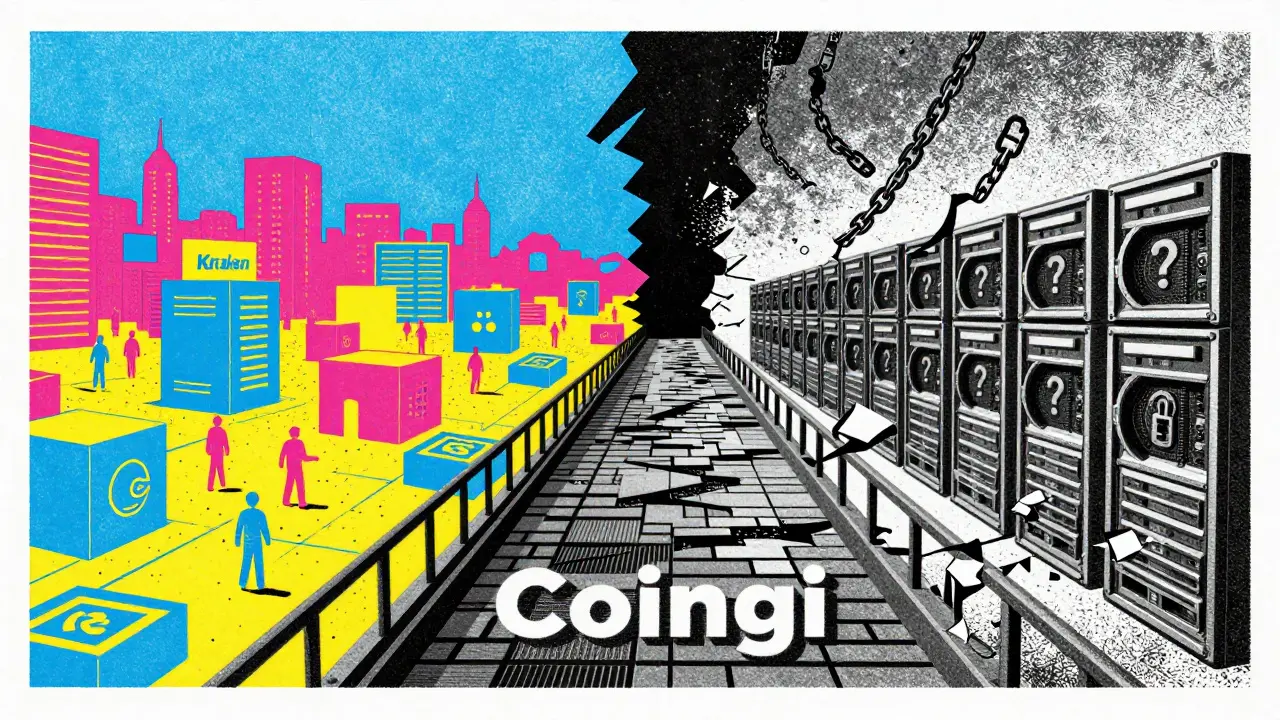
The Red Flags: Why Silence Is Scary
When evaluating any financial service, transparency is key. Coingi fails every major transparency test in 2026. Let's break down why this is a dealbreaker.
No User Feedback Loop
Go to Trustpilot, Reddit, or Twitter/X. Search for "Coingi exchange." You will find old threads from 2018 or 2019 discussing bugs or slow withdrawals. But nothing from 2024, 2025, or 2026. In the crypto community, users talk loudly about problems. If an exchange stops working, people scream online. The fact that there is *no* screaming suggests there are no users left to scream. Or worse, the few remaining users are too scared to speak up because they know they won't get help.
Lack of Regulatory Clarity
In 2026, regulatory pressure is higher than ever. The SEC in the US, the MiCA framework in Europe, and other global bodies are cracking down on unlicensed exchanges. Established players like Gemini and Coinbase invest millions in compliance. Coingi has no visible regulatory footprint. There is no record of them holding a current Money Transmitter License in the US or an e-money license in the EU. Trading on an unregulated platform means you have zero legal recourse if something goes wrong.
Security Opacity
We don't know how Coingi stores funds. Do they use multi-signature cold wallets? Do they have insurance coverage for digital assets? Most major exchanges publish security audits from firms like CertiK or Hacken. Coingi has no recent audit reports. Without knowing how your assets are protected, you are gambling with your principal.
Better Alternatives for Your Trading Needs
If you were considering Coingi for its low fees or simple interface, you are in luck. The market has evolved, and several active exchanges offer better security, lower fees, and superior features. Here is where you should go instead.
For Low Fees & Advanced Traders: Kraken
Kraken is a veteran in the space, founded in 2011. They are known for robust security and transparent proof-of-reserves. Their fees are competitive, especially if you trade actively. They support hundreds of coins and offer advanced order types. If you liked Coingi's flat fee idea, Kraken's tiered system rewards volume without sacrificing safety.
For Beginners & Fiat Onboarding: Coinbase
If you wanted Coingi because it accepted wire transfers easily, Coinbase is the gold standard for fiat integration. While their standard fees are higher, their "Advanced Trade" interface brings fees down significantly. Being a publicly traded company (NASDAQ: COIN) adds a layer of accountability that private, obscure exchanges lack.
For Global Access & Variety: Binance
If you missed Coingi's wide selection of altcoins, Binance offers the deepest liquidity and the widest range of tokens. Despite past regulatory hurdles, they remain the largest exchange by volume. For users outside the US, Binance.com is fully operational. US residents can use Binance.US, though with fewer listings.
What To Do If You Have Funds on Coingi
If you read this and realize you still have Bitcoin or Ethereum sitting in a Coingi wallet, act immediately. Do not wait for a "system update" that may never come.
- Attempt a Small Withdrawal: Try to withdraw a tiny amount (e.g., $10 worth of crypto) to a personal hardware wallet like Ledger or Trezor. If this fails, you likely have a bigger problem.
- Contact Support: Use every available channel-email, live chat, social media. Document every interaction. Take screenshots of errors or non-responses.
- Check Community Channels: Look for old Discord servers or Telegram groups associated with Coingi. Sometimes, former employees or other stranded users share workarounds or information about asset recovery.
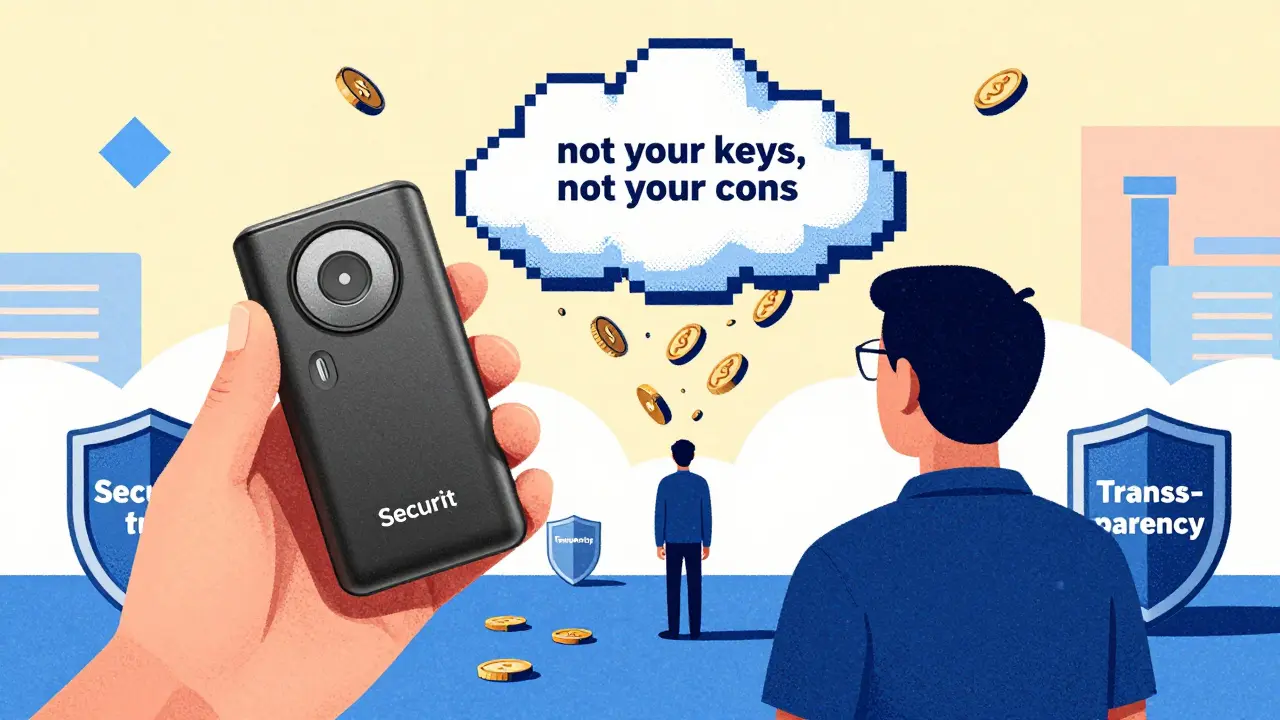
- Accept the Loss: If the platform is truly dead, your funds may be unrecoverable. Treat this as a hard lesson: Not your keys, not your coins. Never leave significant long-term holdings on any centralized exchange.
Final Verdict: Stay Away
Coingi was once a decent option in 2015. In 2026, it is a ghost town. The combination of missing user reviews, lack of regulatory presence, and apparent cessation of operations makes it a high-risk proposition. There is no reason to onboard with a platform that has vanished from the map.
The crypto market is crowded with excellent, safe, and cheap alternatives. Don't let nostalgia or outdated blog posts lure you into a dead end. Choose an exchange that is loud, transparent, and accountable. Your financial security depends on it.
Is Coingi exchange still working in 2026?
There is no verifiable evidence that Coingi is actively operating in 2026. The platform appears to have ceased regular trading activities, lacks current user reviews, and is absent from major exchange aggregators. Users should assume the platform is inactive and avoid depositing funds.
Are Coingi fees really 0.20%?
Historically, yes. Coingi advertised a flat 0.20% trading fee for both makers and takers. However, since the platform's status is unclear, these fees may no longer apply or may be irrelevant if withdrawals are blocked.
Can I deposit money using a credit card on Coingi?
No, Coingi historically only accepted wire transfers for fiat deposits. They did not support credit or debit card payments. Given the platform's current status, all deposit methods are likely suspended.
Is Coingi regulated by the SEC or FinCEN?
There is no public record of Coingi holding active regulatory licenses from the SEC, FinCEN, or major European authorities in 2026. Operating without clear regulatory oversight increases the risk for users.
What is the best alternative to Coingi?
For low fees and security, Kraken is a top choice. For ease of use and fiat integration, Coinbase is recommended. Both platforms are heavily regulated, have active communities, and provide transparent proof of reserves.

mark valmart
May 28, 2026 AT 04:22man this is exactly why i keep my shit on a ledger now. seeing these ghost exchanges just confirms what we all know. dont trust the platform.
Craig Swanson
May 29, 2026 AT 09:55Listen to me closely because I am going to say this once and you need to hear it loud and clear. You are playing with fire by even looking at Coingi right now. The silence isn't peaceful, it's predatory. When an exchange stops updating its security protocols and vanishes from CoinGecko, they aren't taking a vacation, they are liquidating or abandoning ship while you sleep. I have seen too many good people lose their life savings because they thought 'low fees' meant 'safe bet'. It doesn't mean that. It means 'high risk of rug pull'.
You need to move your assets to a cold wallet immediately if you have any exposure here. Do not wait for a withdrawal confirmation that will never come. Contact support? Please. They are ghosts. Document everything yes, but don't expect a reply. This is a hard lesson in sovereignty over your own capital. Take control. Get off centralized platforms that operate in the shadows. Your financial freedom depends on your ability to recognize danger before it consumes you. Be aggressive about your security. Demand transparency or walk away. There are plenty of regulated options like Kraken or Coinbase that actually answer emails. Don't be lazy with your money.
Diana Morris
May 29, 2026 AT 19:45stop wasting time on dead links. just use kraken.
Bill Gunn
May 31, 2026 AT 16:22Hey folks! 👋 Bill here. Just wanted to add some color to this grim picture 🎨. It’s like finding a favorite diner from the 90s only to see it boarded up with no explanation. Spooky! 🏚️
The thing about Coingi is that they had such a clean aesthetic back in the day. Flat 0.20% fees were dreamy for us low-volume traders who didn’t want to deal with complex tiered structures. But as Craig pointed out, safety > savings every single time. 🛡️💰
If anyone is feeling lost about where to go next, think of it like upgrading from a flip phone to a smartphone. Yes, there’s a learning curve, but the features and security are worlds apart. Kraken is like the sturdy, reliable pickup truck of exchanges-maybe not flashy, but it’ll get you home safe. Coinbase is more like the Tesla-polished, user-friendly, and publicly accountable. 🚗⚡
Don’t let the nostalgia trap you. The crypto world moves fast, and standing still is moving backward. Stay shiny and secure! ✨🔐
Joshua Alcover
June 2, 2026 AT 09:26One must interrogate the epistemological foundations of trust in decentralized financial architectures when faced with such ontological voids as the Coingi phenomenon. The absence of regulatory oversight constitutes a fundamental breach of the social contract inherent in fiat-to-crypto liquidity provision mechanisms. Furthermore, the cessation of operational transparency suggests a deliberate obfuscation strategy indicative of bad faith actors operating within unregulated jurisdictions. We cannot simply accept the narrative of 'vanishing' without scrutinizing the underlying geopolitical and economic pressures that precipitate such institutional collapse. Is it merely market forces? Or is it a systemic failure of governance frameworks that allowed such entities to flourish without adequate fiduciary accountability? The pseudo-philosophical implications of holding assets on a platform with no verifiable existence challenge our very understanding of property rights in the digital age. One must ask: does ownership exist if the custodian has ceased to exist? This is not merely a technical issue; it is a crisis of confidence in the entire speculative asset class.
saradee dee
June 3, 2026 AT 09:46Oh my goodness this is so sad 😢 I can’t believe people are still losing money like this. It feels like everyone should be working together to protect each other instead of letting these shady sites disappear. I hope everyone who got stuck finds a way to recover their funds somehow. Let’s spread the word so no one else gets hurt. Peace and love to all the victims 💖✨
Barclay Chantel
June 4, 2026 AT 14:23How utterly tedious. The masses flock to these unregulated garbage heaps because they lack the intellectual fortitude to understand basic risk assessment. If you are using an exchange that isn’t listed on major aggregators, you deserve to lose your money. It is a simple matter of personal responsibility and moral failing. Stop whining about 'ghost platforms' and start educating yourself on proper due diligence. The fact that this article needs to exist proves the general public is intellectually bankrupt. Pathetic.
Hadleigh Edwards
June 6, 2026 AT 11:49I have been thinking about this situation for quite some time and I feel compelled to share my perspective on the broader implications of what we are witnessing here with Coingi and similar platforms that seem to fade into the ether without a trace. It is really quite fascinating how the market self-corrects in such a brutal yet efficient manner, eliminating those who do not adhere to the highest standards of transparency and operational integrity, which serves as a powerful reminder to all participants in the cryptocurrency ecosystem that vigilance is not just a suggestion but an absolute necessity for survival and prosperity in this rapidly evolving landscape. We must remember that every transaction is a vote for the kind of financial system we wish to inhabit, and by choosing reputable, regulated exchanges like Kraken or Coinbase, we are actively participating in the construction of a more stable and trustworthy future for digital assets, thereby ensuring that our investments are protected against the whims of rogue operators who prioritize short-term gains over long-term sustainability and user trust. It is truly encouraging to see communities coming together to share information and warn others about potential pitfalls, as this collective wisdom is invaluable in navigating the complexities of modern finance, and I remain optimistic that as education spreads and awareness grows, we will see a significant reduction in these types of incidents, leading to a healthier and more robust market environment for everyone involved.
Miss Masquer
June 8, 2026 AT 07:44As someone who has traveled extensively through the cultural landscapes of both traditional banking systems and the emerging frontier of cryptocurrency exchanges across different continents including North America and Europe, I find myself deeply concerned about the lack of standardized consumer protection protocols that appear to be enforced upon these digital intermediaries. The experience of dealing with Coingi reminds me uncomfortably of certain informal banking arrangements I encountered in developing economies where trust was placed solely on the honor of the operator rather than any legal framework or insurance policy, which ultimately led to significant financial hardship for many innocent individuals who simply sought convenience and lower fees. It is crucial that we advocate for stronger international regulations that hold these platforms accountable regardless of their physical location, ensuring that users from Canada to the United States to India are afforded the same level of security and recourse when their assets are held in custody. Until such global standards are established, we must remain cautious and skeptical of any platform that operates outside the mainstream view, treating their silence not as peace but as a warning sign of impending disaster.
Dana Rapoport
June 8, 2026 AT 07:52The silence of Coingi speaks volumes about the transient nature of value in unanchored systems. We project stability onto interfaces that may already be hollow shells. To engage with such opacity is to invite chaos into one's portfolio. Restraint is the ultimate form of power here. Walk away.