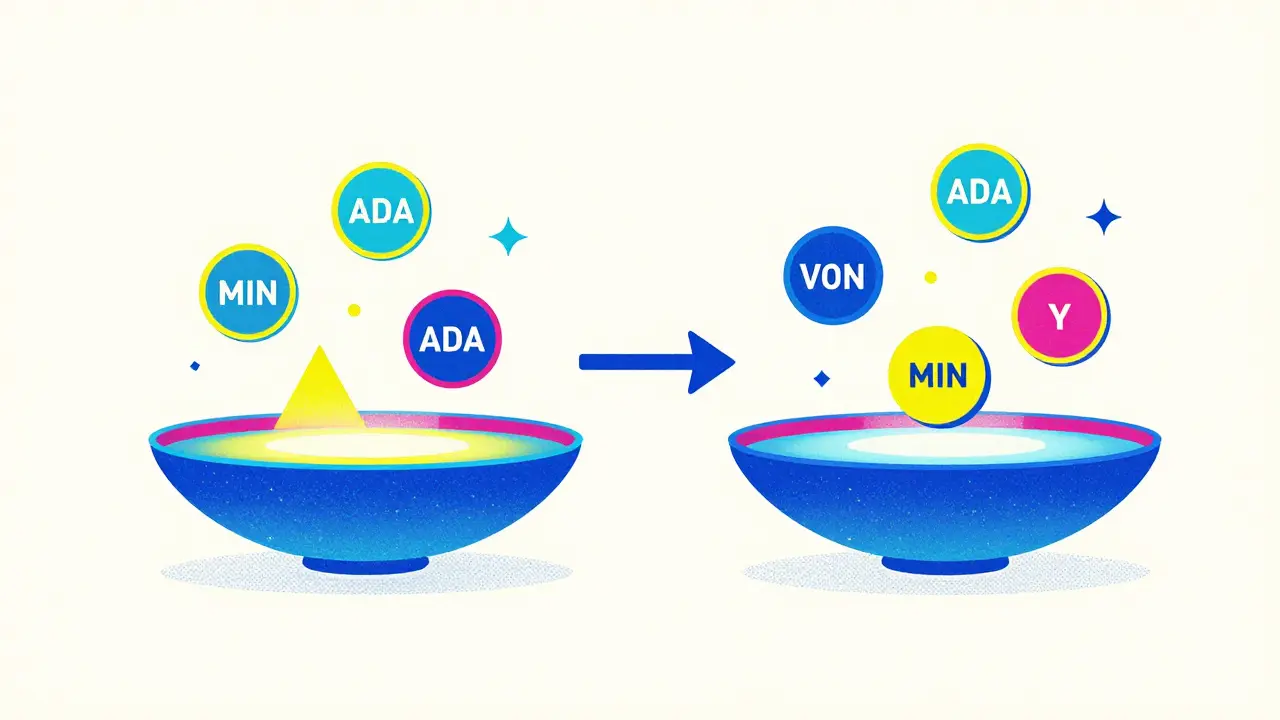
Ever tried swapping tokens on a blockchain only to get hit with gas fees that eat half your profit? It’s frustrating. That’s exactly why the Minswap is a leading decentralized exchange (DEX) built specifically for the Cardano blockchain has gained so much traction since its launch in 2021. If you are holding ADA or other Cardano-native assets, Minswap isn’t just an option; it’s often the most logical place to trade.
But is it still worth your time in mid-2026? With competitors like SundaeSwap and WingRiders fighting for market share, you need to know what makes Minswap tick. This review breaks down the user experience, the economics of the native MIN token, and whether this platform can handle your DeFi needs without breaking the bank or your browser.
What Is Minswap and How Does It Work?
Minswap operates as an Automated Market Maker (AMM). In plain English, this means there is no central order book matching buyers and sellers. Instead, liquidity providers deposit pairs of tokens into pools, and smart contracts handle the trades automatically. When you swap, say, ADA for DJED (Cardano’s stablecoin), you are trading against these pools.
The key differentiator here is the infrastructure. Minswap was one of the first major DEXs to build natively on Cardano using Plutus smart contracts. Unlike Ethereum-based exchanges that rely on Layer 2 solutions to keep costs down, Minswap leverages Cardano’s inherently low transaction fees. This allows for micro-transactions and frequent trading strategies that would be impossible on more expensive networks.
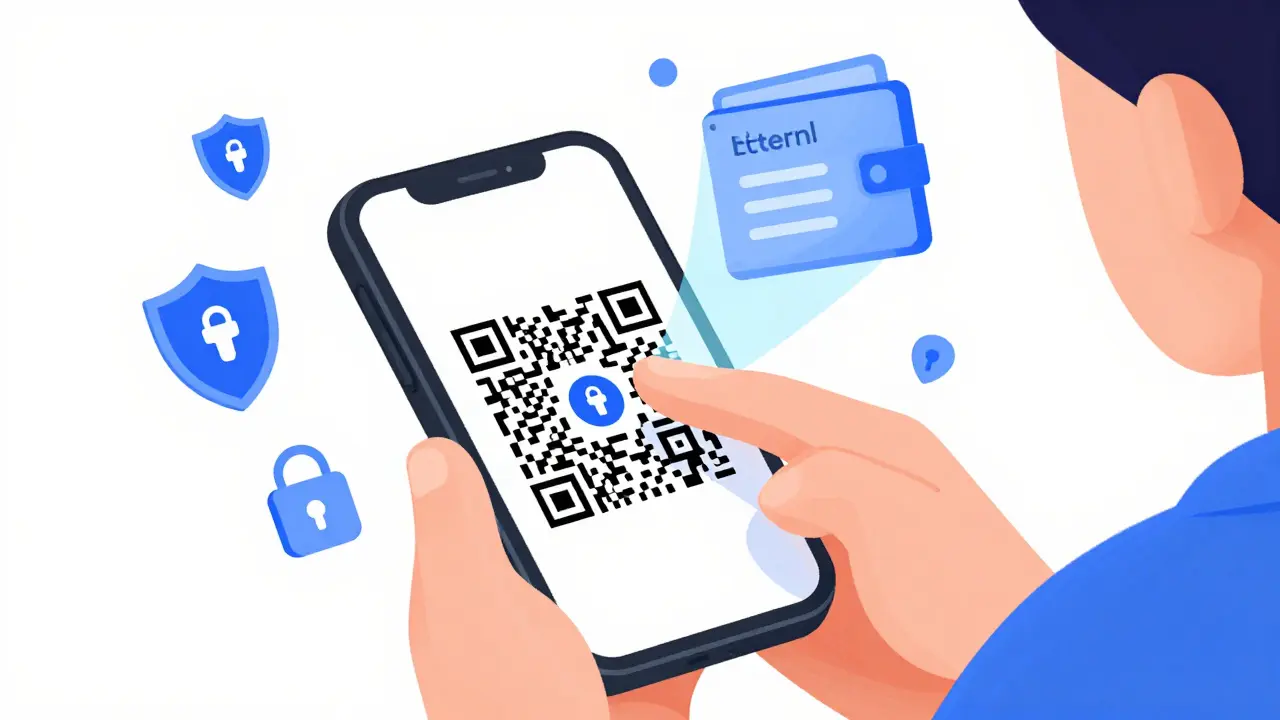
The interface is clean and intuitive. You connect your wallet-most users prefer Eternl or Nami because they are optimized for Cardano-and select the tokens you want to swap. The slippage tolerance is adjustable, which is crucial during high volatility periods. One feature many beginners miss is the "slippage warning" system, which prevents failed transactions by alerting you if the price moves too much before your trade confirms.
User Experience: Speed, Fees, and Accessibility
Let’s talk about the money part. Transaction fees on Cardano are typically fractions of a cent, regardless of network congestion. However, Minswap charges a small swap fee, usually around 0.3% for standard pools. This fee goes directly to the liquidity providers, incentivizing them to keep the pools deep and liquid. For most retail traders, this is negligible compared to the 1-2% spreads you might find on centralized exchanges or higher gas costs on Ethereum.
Speed is another strong suit. Transactions on Minswap usually confirm within seconds. There is no waiting for block confirmations that take minutes, which is common on older blockchains. The mobile experience via WalletConnect is seamless. You can scan a QR code from your phone app, approve the transaction on your screen, and walk away. It feels modern and responsive.
However, accessibility has improved but still requires some technical know-how. You cannot use a credit card directly on Minswap. You must have a non-custodial wallet funded with ADA. If you are new to crypto, this barrier exists. But once you have your wallet set up, the learning curve flattens out quickly. The dashboard provides real-time charts, historical data, and pool statistics, giving you enough information to make informed decisions without leaving the site.
The MIN Token: Staking and Governance
Holding the native MIN token does more than just give you bragging rights. It is the lifeblood of the Minswap ecosystem. Here is how it works:
- Staking Rewards: By staking your MIN tokens, you earn a portion of the trading fees generated across the entire platform. This creates a passive income stream for holders.
- Governance Rights: Minswap is community-driven. Stakers vote on proposals regarding fee structures, new pool launches, and treasury spending. Your stake equals your voting power.
- Discounts: Some pools offer reduced fees for MIN stakers, making active trading cheaper if you hold the asset.
The distribution model was notable from day one. There were no venture capital allocations or private sales. The MIN tokens were distributed fairly through liquidity mining and community rewards. This decentralization means no single entity controls the majority of the supply, reducing the risk of a massive dump by early investors.
In 2026, the staking mechanism remains robust. The annual percentage yield (APY) fluctuates based on trading volume and total staked MIN, but historically, it has offered competitive returns compared to other DeFi protocols. Just remember: staking carries risks. If the price of MIN drops significantly, the value of your rewards may not offset the loss in principal.
Security and Trust Factors
When you put money into a DeFi protocol, security is non-negotiable. Minswap has undergone multiple independent audits by reputable firms. These audits check the smart contract code for vulnerabilities that hackers could exploit. While no system is 100% hack-proof, regular audits and bug bounty programs significantly reduce risk.
Because Minswap is non-custodial, you retain control of your funds at all times. The exchange never holds your assets. They sit in your wallet until you initiate a swap, and then they move directly to the recipient address. This eliminates the risk of exchange insolvency-a fear that plagues centralized platforms like FTX or Mt. Gox.
That said, user error is the biggest threat. If you sign a malicious transaction or connect your wallet to a phishing site disguised as Minswap, your funds are gone. Always double-check URLs. Bookmark the official site. Never share your seed phrase. These basic hygiene practices are your best defense.
Minswap vs. Competitors: How Does It Stack Up?
Cardano’s DeFi space is crowded. SundaeSwap, WingRiders, and Indigo Protocol are direct competitors. So, why choose Minswap?
| Feature | Minswap | SundaeSwap | WingRiders |
|---|---|---|---|
| Launch Year | 2021 | 2021 | 2022 |
| Native Token | MIN | SUNDAE | WING |
| Key Feature | High Liquidity Depth | Community Governance | Leveraged Trading |
| Swap Fee | ~0.3% | ~0.3% | Variable |
| Best For | General Swaps & Staking | DAO Participation | Advanced Traders |
Minswap generally leads in terms of total value locked (TVL) and daily trading volume. Higher liquidity means less slippage when you make large trades. If you are moving significant amounts of ADA, Minswap is often the safer bet to get the best price. SundaeSwap is a close second and offers strong governance features, while WingRiders caters more to advanced users looking for leveraged positions.
For the average user who wants to swap tokens efficiently and earn steady staking rewards, Minswap’s combination of depth and simplicity makes it a top contender.
Potential Risks and Limitations
No investment is without risk. Here are the downsides to consider:
- Impermanent Loss: If you provide liquidity, you face impermanent loss. This happens when the price ratio of the two tokens in your pool changes drastically compared to when you deposited them. You might end up with less value than if you had just held the tokens in your wallet.
- Smart Contract Risk: Despite audits, bugs can exist. A vulnerability in the core protocol could lead to fund loss. Diversify your exposure; don’t put all your crypto in one DEX.
- Regulatory Uncertainty: DeFi regulations are evolving globally. Changes in law could impact how DEXs operate or access to certain features in specific jurisdictions.
- Token Volatility: The MIN token itself is volatile. Its price depends on speculation and utility. Don’t invest money you can’t afford to lose.
Final Verdict: Is Minswap Worth It?
If you are already in the Cardano ecosystem, Minswap is essential. It offers a reliable, low-cost way to swap tokens and a transparent way to earn yields through staking. The lack of VC influence and fair token distribution add a layer of trust that is rare in crypto.
It is not perfect. The interface can feel overwhelming to absolute beginners, and impermanent loss is a real risk for liquidity providers. But for anyone serious about DeFi on Cardano, Minswap provides the depth, security, and functionality needed to trade confidently. Start small, learn the mechanics, and let the compounding rewards work for you.
Is Minswap safe to use?
Yes, Minswap is considered safe due to multiple independent security audits and its non-custodial nature. However, always ensure you are using the official website and never share your private keys. Smart contract risks always exist in DeFi.
How do I start using Minswap?
First, download a Cardano-compatible wallet like Eternl or Nami. Fund it with ADA. Then, visit the Minswap website, connect your wallet via WalletConnect, and you can begin swapping tokens or providing liquidity.
What is the minimum amount to swap on Minswap?
There is no strict minimum, but you need enough ADA to cover the transaction fee (usually less than $0.01) and the token amount you wish to swap. Very small amounts may result in poor exchange rates due to slippage.
Can I use Minswap on my mobile device?
Yes, Minswap is fully responsive and works well on mobile browsers. You can also use it through mobile wallets that support WalletConnect, allowing you to manage trades on the go.
How does Minswap compare to centralized exchanges like Binance?
Minswap is decentralized, meaning you control your funds and no KYC (identity verification) is required. Centralized exchanges hold your funds and require ID. Minswap is better for privacy and self-custody, while CEXs may offer easier fiat on-ramps.
Jessie Smith
July 7, 2026 AT 04:13look, most of you are missing the point entirely. its not about the swap fees or whatever. its about the philosophical implication of a truly decentralized market maker on a proof-of-stake chain that actually cares about sustainability. while ethereum burns forests to process your meme coin trades, minswap sits there quietly executing logic via plutus contracts without melting the polar ice caps. it is elegant in its inefficiency if you will, but efficient in its outcome. i have been observing the liquidity pools for months and the depth is simply superior because the community understands the value proposition rather than just chasing yield farming scams.
Drew M
July 7, 2026 AT 23:35Oh my gosh, yes! 🌟 Finally someone said it! I love how clean the interface is compared to those other messy platforms 😍 It feels so premium using Minswap honestly 💎✨ The staking rewards are just the cherry on top of an already amazing sundae (pun intended lol) 🍨🙌
Deep Rahman
July 9, 2026 AT 05:53I think we need to consider the broader context of what this means for the average person who wants to participate in the financial system without being controlled by big banks or central authorities because when you look at the history of money and trade you see that people always want freedom and choice and Minswap provides that choice in a way that is accessible even though it requires some learning which is part of the journey towards financial literacy and independence from traditional systems that have failed us many times over.
Melissa Beckwith
July 9, 2026 AT 11:49The article mentions impermanent loss but fails to adequately explain the mathematical underpinnings of why this occurs in constant product AMMs versus concentrated liquidity models. Most users here do not understand that providing liquidity is essentially a delta-neutral strategy that earns fee income at the cost of directional exposure risk, and without understanding the convexity of the price curve relative to your entry point, you are simply gambling rather than investing. I have analyzed the pool data for ADA/MIN and the volatility skew suggests that long-term LPs are often worse off than HODLers unless volume is exceptionally high, which brings me to my next point about the actual utility of the MIN token beyond governance rights which seem largely ceremonial given the low participation rates in proposals.
Josephine Finlayson
July 10, 2026 AT 21:09I really appreciate the detailed breakdown provided in the original post; it is very helpful for newcomers like myself who are trying to navigate this complex space! ; ) I have found that taking it slow and reading up on each feature before committing funds is the best approach, and I believe that everyone should feel empowered to learn at their own pace without feeling pressured by FOMO! : ) Let us all support each other as we explore these new technologies together! ^_^
Tuan Nguyen
July 11, 2026 AT 16:38This entire narrative is built on sand. The Cardano ecosystem is bloated with redundant DEXs that offer no real innovation, merely rebranding basic Uniswap v2 mechanics with slightly different UI wrappers. Minswap is not 'leading' in any meaningful technological sense; it is leading in marketing spend and community cultism. The Plutus smart contract advantage is negligible when you consider the gas costs on L2s have dropped to near zero, rendering the 'low fee' argument obsolete for anyone trading more than trivial amounts. You are ignoring the opportunity cost of capital locked in inefficient pools.
Nick G
July 12, 2026 AT 18:50It is fascinating to observe how cultural perspectives on finance influence our adoption of decentralized technologies, as individuals from different backgrounds bring unique values to the table regarding trust and autonomy, and while some may view the technical complexity as a barrier, others see it as a necessary gatekeeper that ensures only those willing to educate themselves participate, thereby creating a more resilient and informed community that can withstand the inevitable regulatory pressures and market fluctuations that characterize this evolving landscape of digital assets.