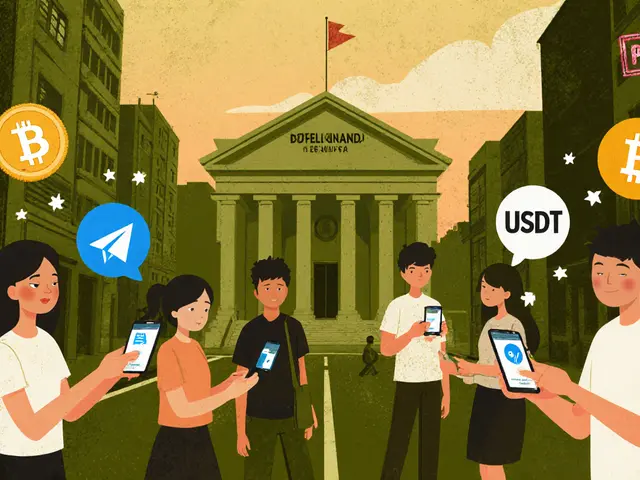
Imagine a government that doesn't pay its soldiers in cash or food, but in stolen Bitcoin. This isn't a scene from a spy thriller; it is the current reality of the Democratic People's Republic of Korea (DPRK). While the world watches missile tests and nuclear drills, a quieter, more pervasive war is being fought on the blockchain. North Korea has turned cybercrime into a state industry, stealing billions of dollars in cryptocurrency to fund its weapons of mass destruction (WMD) programs.
This shift represents a fundamental change in how isolated regimes operate. Traditional sanctions target banks and shipping routes. But when money becomes code, borders disappear. The regime uses these digital heists not just for survival, but for expansion. Understanding this mechanism is crucial for anyone involved in finance, technology, or national security. It explains why your exchange might be hacked, why sanctions seem to fail, and how a country with one of the world's smallest economies sustains a massive military apparatus.
The Scale of the Theft
The numbers are staggering. Between 2017 and 2023, North Korean hacking groups stole an estimated $3 billion in cryptocurrency. This isn't petty theft; it is industrial-scale looting. According to the Annual Threat Assessment of the U.S. Intelligence Community for 2025, the DPRK continues to steal hundreds of millions of dollars annually from victims across the United States and other countries. These funds flow directly into Pyongyang’s coffers, bypassing every traditional financial checkpoint.
United Nations investigators have identified 58 suspected North Korean cyberattacks during this period alone. Each attack is coordinated by hacking groups that report directly to the regime's primary foreign intelligence organization. The money doesn't sit idle. It is laundered through complex networks and funneled back to support nuclear development, missile testing, and conventional weapons manufacturing. This creates a dangerous feedback loop: the more they hack, the stronger their military becomes, which in turn allows them to exert more pressure on global markets.
Methods of Acquisition: From Mining to Hacking
Not all crypto revenue is created equal. Researchers at the Harvard Belfer Center have documented three distinct methods North Korea uses to acquire digital assets. Understanding these methods helps explain why some strategies faded while others exploded in popularity.
- Cryptocurrency Mining: This involves solving mathematical problems to validate transactions and earn rewards. While legal in many jurisdictions, it is inefficient for North Korea. The country lacks reliable electricity infrastructure, making large-scale mining costly and slow. As a result, this method contributes minimally to their overall revenue.
- Initial Coin Offerings (ICOs): Similar to stock market IPOs, ICOs allow companies to raise capital by selling new tokens. North Korea attempted this route once, notably with the fraudulent Marine Chain operation in 2018. However, regulatory scrutiny and market saturation made this a dead end. There has been only one major documented case, proving it was never a scalable strategy.
- Cryptojacking and Direct Theft: This is the killer app for the DPRK. It involves hijacking systems, stealing private keys, and draining wallets. Unlike mining, this requires no infrastructure-just skill and access. It poses the highest threat level due to the volume of stolen assets and the speed at which funds can be moved. This method effectively evades international sanctions because decentralized finance (DeFi) platforms do not require traditional banking intermediaries.
The shift toward direct theft reflects a strategic evolution. Early hacks were clumsy, targeting individual users. Today, the operations are sophisticated, targeting the very foundations of the crypto economy.
Social Engineering: The Human Vulnerability
If you think hackers are just lines of code attacking firewalls, you are missing the biggest risk factor: people. North Korean operatives have mastered social engineering. They don't just break in; they trick their way in. Hackers infiltrate crypto firms by faking credentials, resumes, and documents, often disguising themselves as American, Canadian, or Japanese nationals.
Reports detail instances where operatives pretended to be freelance blockchain developers or government officials. They conduct video interviews, speak fluent English, and mimic cultural nuances perfectly. Once hired, they gain access to internal systems, private keys, and seed phrases. This "insider threat" model is devastating because it bypasses technical defenses entirely. Why crack a password when you can ask the employee who holds it?
Supply chain attacks are another favorite tactic. By compromising software vendors or service providers, North Korean groups can infect multiple targets simultaneously. The FBI has warned that these social engineering schemes are becoming increasingly prevalent, exploiting the trust-based nature of remote work in the tech industry.

The Laundering Pipeline: Mixing and Moving
Stealing the money is only half the battle. The real challenge is spending it without getting caught. This is where crypto mixers come in. A mixer is a service that pools cryptocurrency from multiple sources and redistributes it, obscuring the original source of the funds. Think of it like dropping a red ball into a giant washing machine full of white balls. When they come out, you can't tell which is which.
North Korean operatives use these mixers to mask the origins of stolen tokens before converting them into usable fiat currency or stablecoins. The process is rapid and automated. The FBI has tracked specific movements of stolen funds over 24-hour periods, showing how quickly assets are shuffled across dozens of addresses. For example, TraderTraitor-affiliated actors, also known as the Lazarus Group and APT38, moved approximately 1,580 bitcoin from several heists. They currently hold funds worth more than $40 million in bitcoin across six specific wallet addresses, including 3LU8wRu4ZnXP4UM8Yo6kkTiGHM9BubgyiG and 39idqitN9tYNmq3wYanwg3MitFB5TZCjWu.
This laundering capability undermines the transparency that blockchain technology promises. While the ledger is public, the identity behind the address is not. Mixers exploit this gap, allowing illicit funds to blend into legitimate traffic.
Key Actors: Lazarus Group and APT38
Behind these operations are highly organized units. The Lazarus Group is the most notorious, responsible for some of the largest crypto heists in history, including the $61 million SteemCoin heist and the $320 million Axie Infinity exploit. APT38, a subset or related group, focuses heavily on financial crimes and supply chain compromises. These groups are not rogue elements; they are state-sponsored entities reporting to the Reconnaissance General Bureau (RGB), North Korea's primary foreign intelligence agency.
| Tactic | Complexity | Risk Level | Primary Target |
|---|---|---|---|
| Social Engineering | High | Medium | Employees/Insiders |
| Phishing | Low-Medium | High | Individual Users |
| Smart Contract Exploits | Very High | Low | DeFi Protocols |
| Exchange Hacks | High | Medium | Custodial Wallets |
The sophistication of these groups means they adapt quickly. When regulators tighten rules on centralized exchanges, they move to decentralized protocols. When security firms patch known vulnerabilities, they develop new exploits. Their goal is consistent: generate revenue for the Kim regime with minimal exposure.

Global Response and Sanctions Evasion
The international community is aware of the threat, but stopping it is difficult. The United States has announced efforts to disrupt these revenue streams, offering rewards of up to $15 million for information leading to the disruption of North Korean crypto operations. U.S. Senators Elizabeth Warren and Jack Reed have pressed Treasury and DOJ officials to redouble efforts, particularly after high-profile incidents like the Bybit hack.
South Korea has also shifted its strategy. Published in June 2023, the National Security Strategy moves beyond defensive cybersecurity to include offensive capabilities. This aligns with U.S. directions and aims to deter attacks by threatening retaliatory cyber actions. A trilateral working group with Japan and the United States was formed in November 2023 to coordinate responses.
However, sanctions face inherent limitations. The decentralized nature of cryptocurrency means there is no central bank to freeze accounts. DeFi platforms operate globally, often outside any single jurisdiction. North Korea exploits these gaps, using shell companies and offshore servers to maintain anonymity. The Justice Department has filed charges against nine individuals in alleged schemes to generate revenue for the regime, but prosecuting state-sponsored actors remains a legal and logistical nightmare.
What This Means for You
You might wonder why this matters if you aren't a government official. If you hold cryptocurrency, invest in crypto startups, or work in tech, you are part of the ecosystem North Korea targets. The theft of hundreds of millions of dollars destabilizes markets, erodes trust in digital assets, and increases costs for security compliance.
For investors, it highlights the risks of custodial services. Exchanges are prime targets because they hold large amounts of user funds in hot wallets. For employees in tech companies, it underscores the importance of verifying identities and securing access controls. Social engineering is the weakest link, and North Korea knows it.
The proliferation of these theft operations is expected to continue. As long as the regime faces economic isolation, cybercrime will remain its primary export. Georgetown Journal of International Affairs analysis from May 2024 indicates that these activities will likely expand, supporting foreign policy goals and military ambitions. The fight against North Korean crypto theft is not just a security issue; it is a structural challenge to the integrity of the global financial system.
How much money has North Korea stolen in cryptocurrency?
Between 2017 and 2023, North Korea stole an estimated $3 billion in cryptocurrency. Recent assessments indicate they continue to steal hundreds of millions of dollars annually, with specific recent operations involving over $40 million in bitcoin held in identified wallets.
Who are the main hacking groups involved?
The primary groups are the Lazarus Group and APT38, also known as TraderTraitor. These groups are state-sponsored and report directly to North Korea's Reconnaissance General Bureau, the country's main foreign intelligence agency.
Why is cryptocurrency effective for funding WMD programs?
Cryptocurrency allows North Korea to bypass traditional international sanctions. Because digital assets are decentralized and do not require banking intermediaries, the regime can move funds globally without triggering alerts from financial institutions. Mixers further obscure the trail, making it hard to trace the money back to Pyongyang.
What is social engineering in this context?
Social engineering involves tricking people into revealing sensitive information or granting access. North Korean hackers fake resumes and identities to get jobs at crypto companies. Once inside, they steal private keys and seed phrases, avoiding the need to break complex technical security measures.
How are governments responding to these threats?
Governments are increasing coordination. The U.S. offers rewards up to $15 million for information disrupting these operations. South Korea has adopted a more offensive cybersecurity strategy. International bodies like the UN track attacks, and agencies like the FBI monitor wallet addresses to identify and potentially freeze stolen assets.